How to Travel With a Cat in the Car, From Vet Trips to Long Road Trips
Whether it’s a ten-minute vet run or a two-day move, how to travel with a cat in a car comes down to the same plan: keep your cat zipped in a carrier for the whole drive, on the floor behind a front seat or belted onto the back seat, never up front. Practice with short drives first, keep the car cool and quiet, and open a door only once your cat is secured.
How to travel with a cat in a car: a secured carrier, a quiet car and a plan for every stop
Five rules cover every trip:
- Zipped while moving. A loose cat can get under the pedals or slip out a window.
- Secured in place. Wedged into a rear footwell or belted onto the back seat.
- A calm car. A comfortable temperature, low volume and gentle braking.
- Doors open only when your cat is secured: zipped in, or harnessed with the leash in your hand.
- Never alone in a parked car. Cars heat up fast, even in shade with the windows cracked.
Before the trip: carrier practice and a short test drive
Many cats panic in the car because the carrier only appears on vet day. Leave it open at home for a few weeks, with familiar bedding and the odd treat inside, until your cat naps in it by choice. Our guide to getting a cat used to a carrier has the full plan.
Then add the car in small steps, as VCA outlines in Road Trips and Car Travel With Your Cat, from a lap of the house in the zipped carrier to a drive around the block. Once that goes calmly, rehearse the real trip, ending every practice at home with a treat:
- Build up to 10- and then 20-minute drives, a few days apart.
- Secure the carrier where it will ride on the trip, then brake gently in an empty lot to check it doesn’t slide or tip.
- Add a practice stop: park, wait a few minutes, offer water through a side opening and drive on.
If your cat drools, vomits or cries without settling on short drives, ask your veterinarian about motion sickness and travel stress before a long trip.
Where to put a cat carrier in the car
Choose a spot where the carrier can’t slide or tip in a hard stop and where air still reaches the mesh. International Cat Care’s advice on traveling with your cat names two:
- The floor behind a front seat. The footwell holds the carrier low and snug; a rolled towel fills any gap. Keep at least one mesh side clear.
- The back seat, belted in. Run the seat belt around the carrier, buckle it, then push the carrier to check it stays put.
Never use the front passenger seat, where an airbag deploys with great force, or your lap. Skip a closed trunk and an SUV’s cargo area too, where a carrier is hard to secure and out of reach. Two cats travel better in two carriers.
Carrier or backpack: what each one does on a car trip
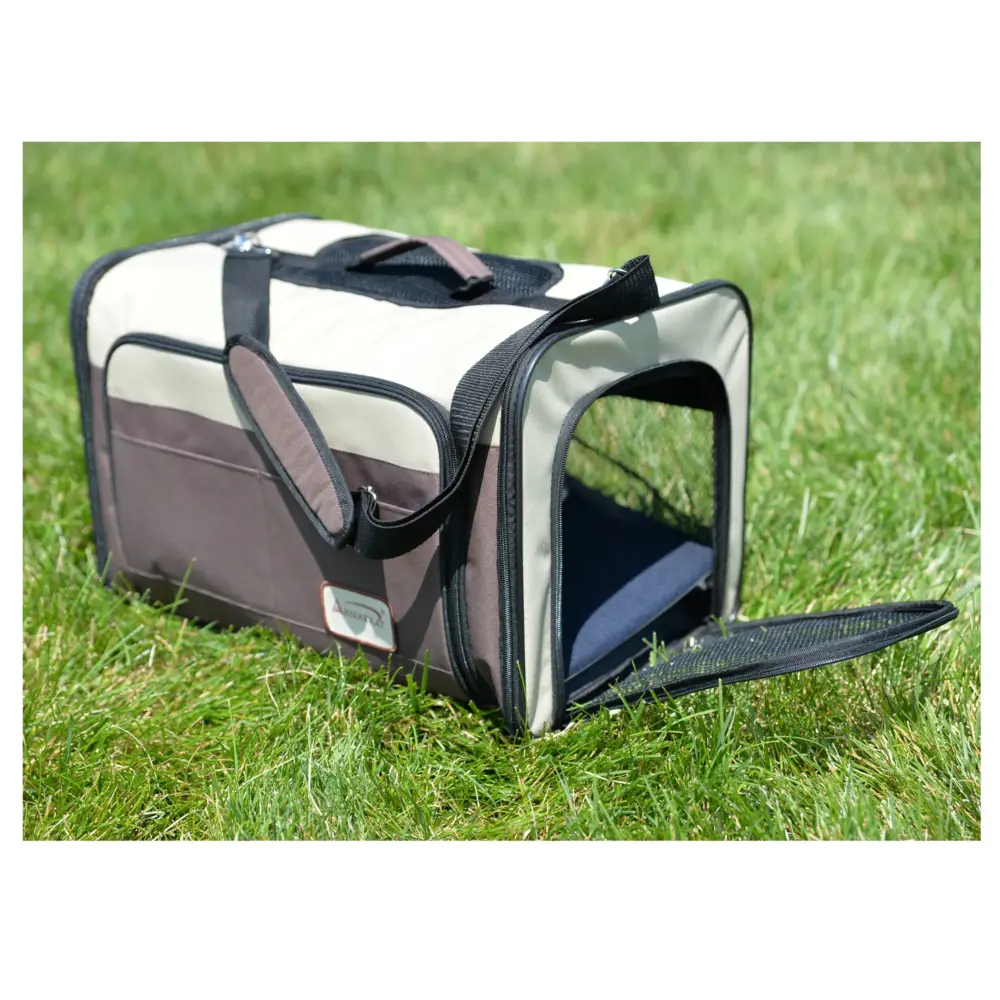
The Armarkat soft-sided pet carrier with an expandable canopy has three zip openings, so you can lower your cat in through the top and reach in from either side; mesh panels give airflow and a view out, and inside are a lounge pad and a pocket for a toy or treats. Expand the canopy while parked so your cat can stretch, and close it again for the road.
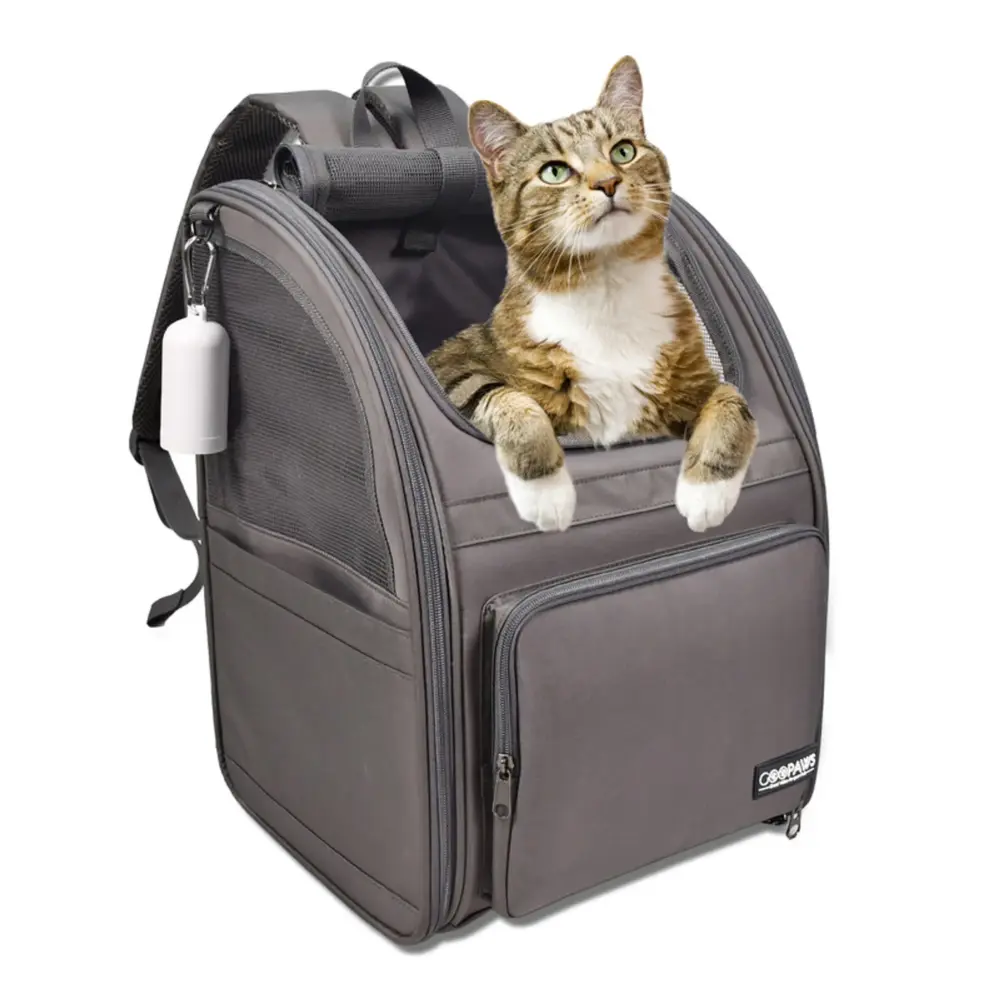
The GOOPAWS Cat & Small-Dog Carrier Backpack covers the walk from the car to the vet’s door or a hotel lobby, hands free. It takes pets up to 25 lb, with top and side openings, a fleece-lined pad and a safety strap inside. In the car, set it down like any carrier. For long drives, our guide on whether cat backpacks are safe explains why a carrier with room to stretch is kinder.
Neither is a crash restraint: a carrier keeps your cat contained, so placement and careful driving still matter. Both are in our travel and car accessories.
-
GOOPAWS
Cat and Small-Dog Carrier Backpack
$51.95
-
Armarkat
Soft-Sided Pet Carrier
$65.95

What to pack for a cat on a long drive
A vet visit needs only the carrier, an absorbent pad and a towel. For a road trip with a cat, add:
- Spare absorbent pads, a blanket that smells of home and a light towel to drape over the carrier.
- Your cat’s usual food in meal portions, unbreakable bowls and water from home; VCA notes that unfamiliar water can upset some stomachs.
- A small litter tray or dishpan, the litter your cat already uses, a scoop, bags, paper towels and gloves.
- Vaccination records including rabies, any medications and your veterinarian’s number.
- ID: a microchip registered to your current phone number, a breakaway collar with a tag and a recent photo.
- A harness and a light leash, only if your cat already wears one calmly.
Bringing a dog too? Our road trip with a dog checklist covers the dog’s side of the car, and our other car travel guides cover restraints and seat covers.
During the drive: temperature, quiet and checking in
Temperature. Warm or cool the car before your cat gets in, keep sun off the carrier and don’t aim a vent into it. Cats rarely pant, so if yours pants or breathes with its mouth open, pull over safely and cool the car. Call a veterinarian if it doesn’t settle quickly or your cat seems weak.
Quiet. Keep music low and corners gentle. A light towel over part of the carrier helps some cats settle; leave a mesh side clear, and skip the towel on hot days.
Checking in. Some cats cry for a few minutes, others on and off all the way. Talk calmly, but don’t unzip the carrier while moving. If your cat vomits or soils the pad, swap it through a side opening at the next safe stop, and call your veterinarian about repeated vomiting.
Rest stops, litter and water without an escape
The risky moment at a stop is a door opening, so use the same routine every time:
- Park in the shade, away from the fuel pumps and the busiest part of the lot.
- Check that the carrier is fully zipped before anyone opens a door.
- Take turns so someone always stays with your cat. Driving alone, pay at the pump and take the carrier with you for restroom or food stops.
- Offer water in a small dish through a side opening. If your cat won’t drink, try at the next stop.
- Offer litter only to a harness-trained cat: with every door and window shut and the leash clipped on, set the tray behind a front seat and open the carrier. Otherwise keep it closed: International Cat Care notes cats are unlikely to use a tray on the road, which is why the carrier is lined.
- Zip your cat back in before any door opens.
A harness at rest stops, only for a cat already trained to one
Rest areas are loud and full of dogs, so even a harness-trained cat is often happiest stretching in the closed car. Never try a harness for the first time on a trip; start at home with our guide to harness training a cat.
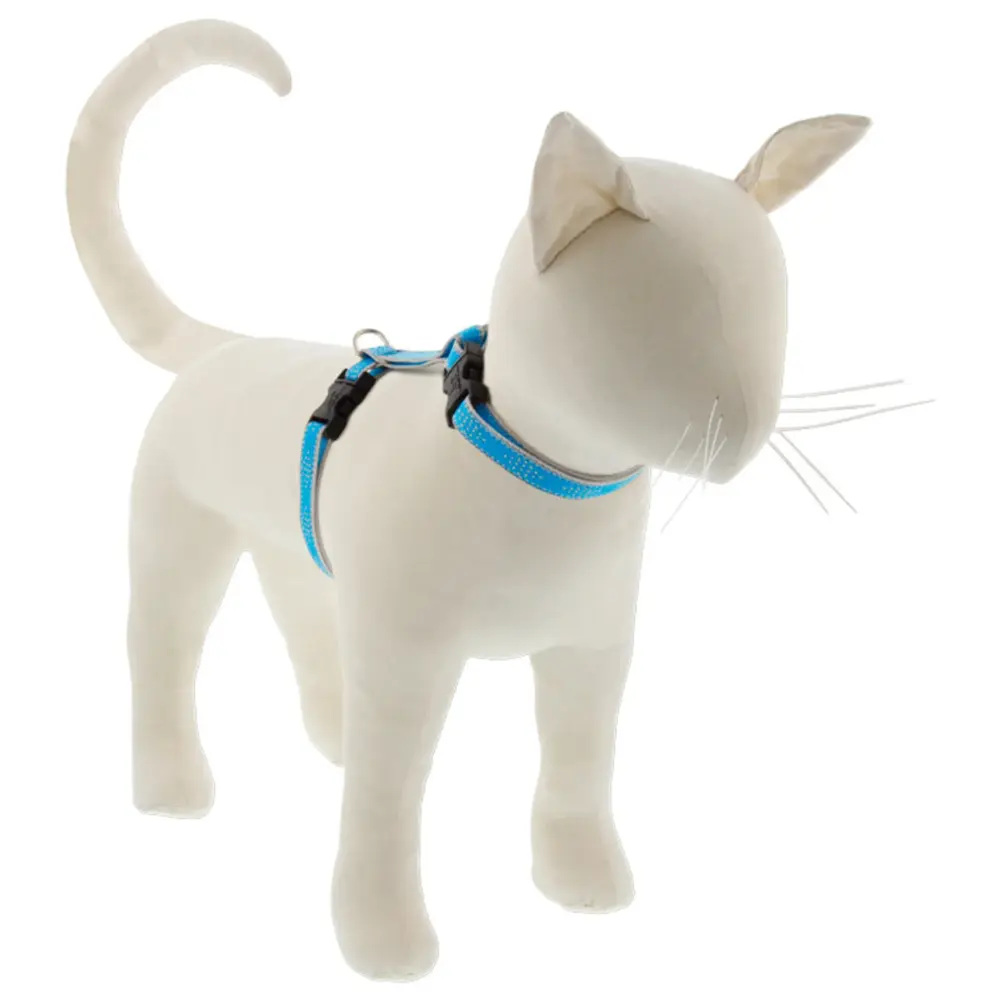
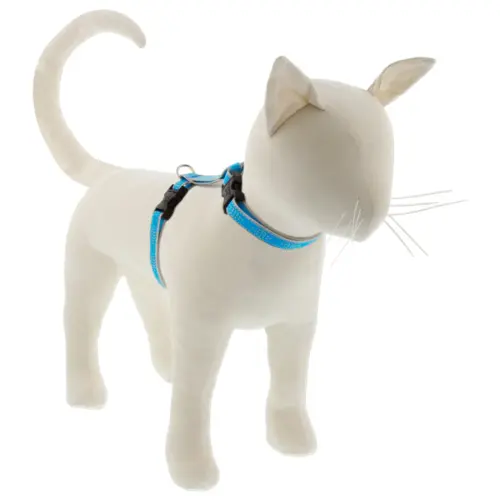
For a trained cat, put the harness on before you leave and check the fit at each stop. The Lupine Pet Reflective H-Style Cat Harness is light and cat-specific, with adjustable neck and girth straps, quick-release buckles and a reflective weave, in 9–14 in and 12–20 in girth sizes. Keep hold of the leash; no harness is impossible to slip out of.
-
Lupine Pet
Reflective H-Style Cat Harness
$28.95
Hotels and arriving somewhere new
Overnight stops
- Confirm your cat is welcome when you book.
- Before you open the carrier, close the windows and block gaps under the bed and behind furniture.
- Set up litter, water and the carrier in the bathroom, and keep your cat shut in there whenever the room door might open. Hang the do-not-disturb sign.
- In the morning, zip your cat in before carrying bags out.
Moving with a cat by car
On moving day, shut your cat in a quiet room with a sign on the door before the boxes go out. Load your cat last and carry them into the new home first, straight to one secure room with litter, water, food, familiar bedding and the open carrier. Open up the rest a room at a time.
If your cat goes outdoors, International Cat Care advises keeping them in for at least two to three weeks after a move. Update the microchip and ID tag with your new address. Moving to another state? The state you move to sets the entry rules, which can include a health certificate or rabies vaccination, so ask your veterinarian a few weeks ahead.
Cat car travel FAQ
Can a cat travel in a car without a carrier?
No. Even a relaxed cat can end up under the brake pedal, distract the driver or slip out an open door, so keep yours in a secured carrier for the whole drive.
How long can a cat travel in a car?
There’s no set limit for every cat. Offer water at regular stops, and split a long move across days with an overnight stop where your cat can eat, drink and use a tray. Ask your veterinarian first about kittens, seniors, pregnant cats and cats with health conditions.
Should I feed my cat before a car trip?
Skip the meal right before you leave: International Cat Care suggests withholding food for about four to five hours beforehand in case your cat is sick, while offering water until you go. Kittens and cats with diabetes or other conditions may need a different plan, so ask your veterinarian.
How do I keep my cat calm in the car?
Practice short drives, use bedding that smells of home, partly cover the carrier and keep the car quiet. If you use a synthetic feline pheromone spray on the bedding, International Cat Care suggests waiting at least 15 to 20 minutes before your cat goes in. For a cat that stays very distressed, ask your veterinarian about options.
Related guides
-
Guide
Camping With a Cat: Is Yours Ready, and How to Keep Them Safe at Camp
Camping suits a confident, harness-trained cat, and only with someone always beside them. How to tell if yours is ready, rehearse at home, make the tent or car a safe base, handle litter and food at camp, explore on a leash and find a cat who slips away.
-
How-to
Taking a Dog on Public Transit: Rules, Carriers and Practice Rides
How to get a small dog onto the bus or subway calmly: what to look for in your transit agency’s pet policy, choosing a carrier by your dog’s size and your own back, carrier training at home, short off-peak practice rides, stairs, crowds and heat, and how service animal rules differ.
-
Checklist
Pet Emergency Kit Checklist: What Your Dog or Cat Needs to Evacuate
Everything your dog or cat needs to evacuate with you: records and ID, two weeks of food, water and medicine, a carrier or harness per pet, sanitation and first aid, plus where pets can stay and when to refresh the kit.