Outdoors & Adventure Guide
Camping With a Cat: Is Yours Ready, and How to Keep Them Safe at Camp
Short answer
Yes, if your cat is confident outdoors, already walks on a harness and rides calmly in a carrier. At camp, someone is always with your cat: leash in hand, or zipped into the tent with you, where the bed and litter box live. Start with one mild night close to home; a nervous cat is happier with a sitter.
Is your cat a camping candidate?
Backyard harness walks are the starting point, not the finish line. A campground adds strangers, dogs on every loop, slamming car doors, smoke, real darkness and a bed that smells unfamiliar. Good signs your cat can handle it:
- Explores outdoors on a slack leash. Not just tolerating the harness indoors, but poking around a yard for 15 minutes or more, tail up.
- Rides in a carrier without long distress. A cat who cries all the way to the vet arrives at camp already worn out.
- Recovers quickly from a surprise. A barking dog earns a stare, not a frantic bolt for cover.
- Settles somewhere new. Eating and using the litter box within a day at a hotel or a relative’s house is a good sign.
Think twice if your cat hides from visitors for hours, has never been outdoors, is a kitten not yet fully vaccinated, or is older or has a health condition. Flat-faced breeds such as Persians cope poorly with heat. If you’re unsure, a sitter at home is a kind choice, not a failure.
A vet check before the first trip
A few weeks ahead, ask your veterinarian about vaccinations, including rabies, and the flea, tick and heartworm prevention that suits the area. VCA’s guide to leash walking your cat also puts ID and a microchip first. Bring a copy of the rabies certificate, which some campgrounds ask for, confirm the microchip is registered to your cell number, and note the emergency vet nearest the campground.
Safety note
Never treat your cat with a dog’s flea and tick product. The FDA’s advice on the safe use of flea and tick products is clear: if the product is for use on dogs, don’t use it on cats. If your dog is coming too, the FDA also says to keep a treated pet apart until the product dries, so your cat can’t groom it off.
Rehearse camp at home first
If your cat isn’t yet relaxed in a harness, start with our week-by-week plan for how to harness train a cat; the rehearsals below assume that part is done.
The carrier becomes the bedroom
At camp the carrier is where your cat sleeps, waits out busy moments and rides home, so it should already feel like a den; our guide to getting a cat used to a carrier has the plan. Then practice zipping your cat in for 20 or 30 minutes while you cook dinner nearby.
Pitch the tent in the living room
Set the tent up indoors or in the yard for a few days. Feed a meal inside, let your cat explore the corners and door flaps, and watch what happens at the mesh. A cat who climbs or claws the walls should sleep in the carrier at camp.
A backyard evening
Spend an evening outside together as the light goes: harness on, leash in hand, the carrier open beside your chair. Insects, barking dogs and a neighbor’s grill make a fair preview of a campground. If your cat stays curious and keeps checking back with you, try a night in the backyard tent. Rehearse the drive as well, with the carrier secured as our guide to traveling with a cat in the car describes; a carrier keeps your cat contained, but it is not a crash restraint.
Start one more habit now: shake the treat bag before every meal. Within a few weeks the sound means food, and it becomes your best tool if your cat ever hides at camp.
Setting up a safe base at camp
Decide which base keeps your cat contained, with you beside it, at each point of the day.
| Base | Works well for | Watch out for |
|---|---|---|
| Zipped tent | Evenings and nights with you inside | Sun heat, claws and open zips |
| Carrier | Sleeping, cooking, packing up | Too cramped for a whole day |
| Car | Quiet breaks with you beside it | Heats fast; never leave your cat |
| Cabin | A first trip with solid walls | Door traffic; pet rules vary |
Making the tent a cat room
- Close every zipper fully, with the pulls up high where a paw can’t work them apart. A cat can slip through a gap you barely notice.
- Make a door rule: before anyone unzips the tent, someone knows where the cat is. The vestibule counts as outdoors.
- Set the open carrier, a familiar bed and the litter box inside, with the litter as far from the bed as the tent allows.
- Lay a camping pad or folded blanket under your cat’s bed; a tent floor turns cold overnight.
- Take the harness off when you settle down to sleep, since a strap can snag; ID stays on a breakaway collar.
Camping in an RV instead? See our guide to RV travel with a cat.
Safety note
Never leave a cat alone at camp: not in the tent, the car or the carrier, and never on a tie-out. A tent or car in the sun heats up fast, a frightened cat can claw through mesh, and a cat who is shut in or tied can’t get away from a dog or a wild animal. Great Basin National Park’s pet regulations, for example, require pets to be in a carrier, a cage or on a leash no longer than 6 feet, and never left unattended or tied to an object. Plan for someone to stay with your cat while others hike or shower.
Heat, cold and the signs to watch
Cats rarely pant, so panting or open-mouth breathing is a warning sign, and the ASPCA’s hot weather safety tips list heavy panting or trouble breathing, drooling and weakness among the signs of overheating; move your cat into shade and call a veterinarian. On cold nights, keep your cat in your sleeping area, and call a vet about one who stays shivery or sluggish after warming up.
-
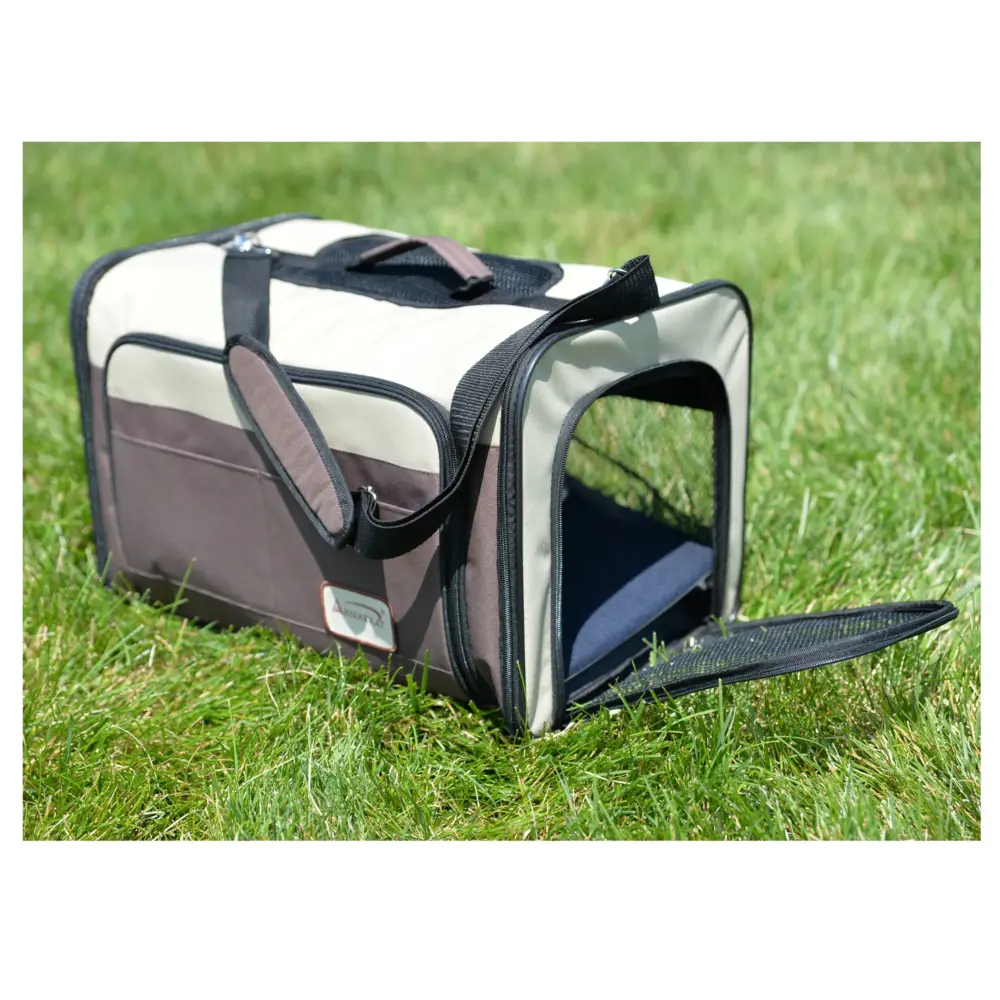
Armarkat
Soft-Sided Pet Carrier, View product
$65.95
Why it fits: A carrier that doubles as a tent bedroom, with an expandable canopy for stretching out and a top opening for lifting your cat in fast.
-
GOOPAWS
4-in-1 Self-Warming Cat Cave Bed, Choose color
$40.95
Why it fits: A hideout to lay on the tent floor once it smells of home; use it as a cave, mat or sack, and it traps body heat on cool nights. 21 x 17 x 3 in.


Whichever carrier you use, your cat should be able to stand, turn around and lie down inside it before it becomes the bedroom. Sharing the tent with a dog as well? Give your cat a high or enclosed spot and keep the carrier dog-free.
Litter, food and water at camp
A litter setup your cat will use
- Bring your cat’s usual litter plus an extra day’s worth; a new type is one more reason to refuse the box.
- Use a small box or a sturdy disposable tray, introduced at home a week before.
- Keep it inside the tent, so your cat never has to be outside alone to reach it.
- Offer it after meals and on waking; many cats hold on for hours somewhere new.
- Scoop into a bag that seals and take it to the campground trash, a wildlife-resistant bin where there is one, rather than leaving it at the site overnight.
Don’t bury used litter, scatter it in the woods or drop it into a vault toilet, and bag anything your cat leaves on a leash walk.
Safety note
Stress can upset a cat’s eating and toilet habits. A cat who goes a day without eating needs a call to your veterinarian. A cat who strains in the box with little or nothing coming out, especially a male, needs help right away: International Cat Care says a blocked bladder must be treated as an emergency.
Food and water
Pack your cat’s usual food in meal portions, plus a spare day, and feed at set times rather than leaving a bowl down. Wet food smells strong to wildlife, so pick up leftovers once your cat walks away and store food and bowls the way the campground tells you to store your own; Rocky Mountain National Park’s food storage rules, for example, count pet food and bowls as food items. Never keep cat food in the tent overnight.
Bring water from home, offer it often and keep your cat from drinking out of streams, lakes or puddles. Wet food at mealtimes adds water for a cat who drinks little away from home.
Exploring on harness and leash
Leash time at camp is short, slow and close to the site. Let your cat sniff around the picnic table, the edge of the clearing and the shade under the car, and follow rather than lead. Ten or fifteen minutes is plenty for a first outing; head back while your cat is still curious.
- Use a lightweight leash about 4 to 6 feet long. VCA advises against retractable or long leashes, which let a cat reach a tree or a fence.
- Hold the leash, or loop it around your wrist when you sit; never tie it to a tree, table or stake, even while you cook.
- Recheck the fit before every outing: one or two fingers flat under each strap. Our comparison of H-style and vest cat harnesses covers how each holds a cat who pulls backward.
- Carry your cat, or use a backpack, past the busy spots: the bathhouse, the playground and the loop road.
- Keep clear of the fire ring and the stove, which stay hot long after the flames die, and out of drifting smoke.
- Steer away from unfamiliar plants your cat might chew, and check for ticks each evening where the CDC tells pet owners to look: the ears, eyelids, under the collar and front legs, between the toes and around the tail.
- Use insect repellent only if it is labeled for cats, and keep citronella candles and bug coils out of reach.
-
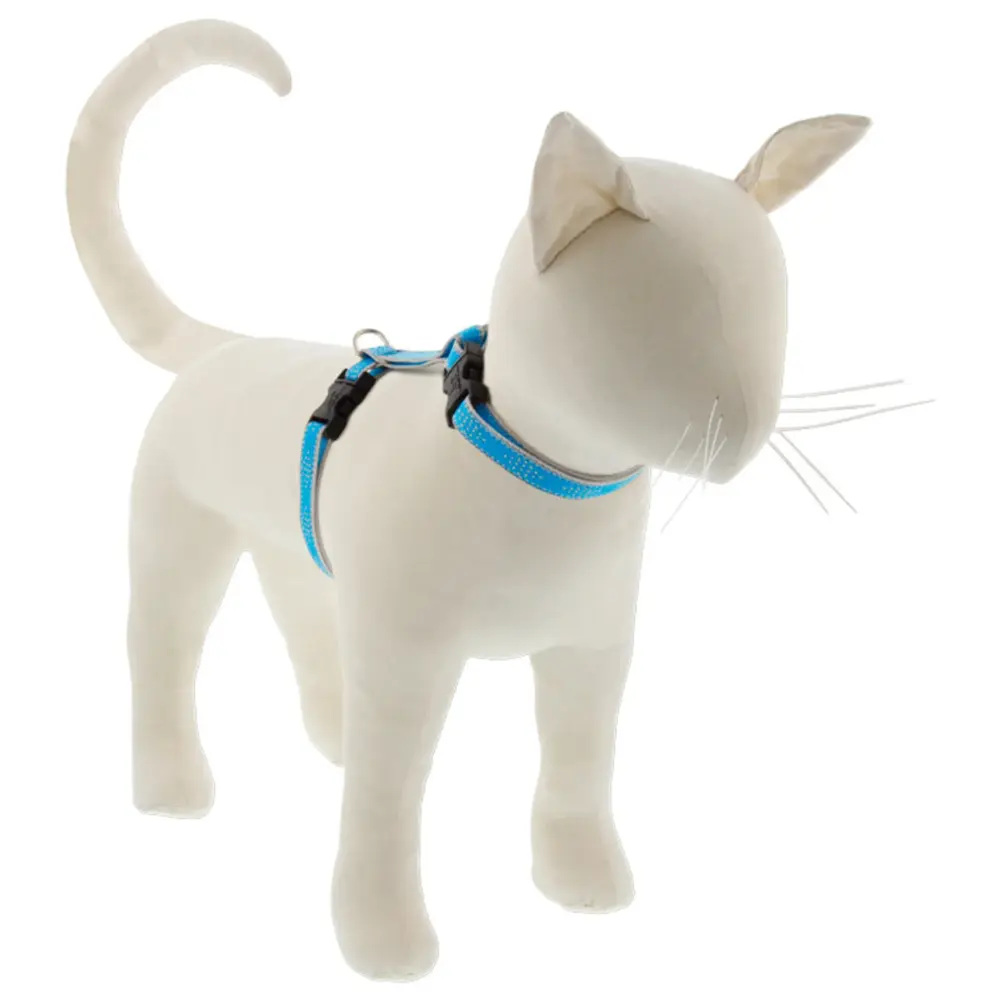
Lupine Pet
Reflective H-Style Cat Harness, Choose size & design
$28.95
Why it fits: A lightweight H-style harness made for cats, with a reflective weave for visibility at dusk; two girth ranges, 9 to 14 in and 12 to 20 in.
-
GOOPAWS
Cat and Small-Dog Carrier Backpack
$51.95
Why it fits: A ventilated backpack for cats up to 25 lb, for carrying your cat past the bathhouse and loop road; clip the inside safety strap to the harness.
Currently out of stock
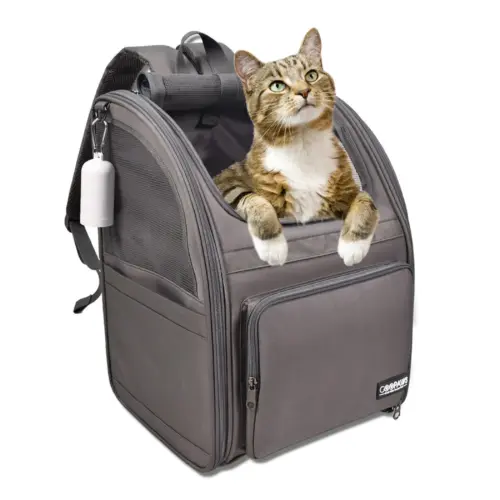
A backpack suits short stretches, not a whole afternoon: keep it in the shade, zipped, and check on your cat every few minutes. Its 25 lb rating is a load limit, not a fit check.
Wildlife, dogs and a cat who slips away
Wildlife and loose dogs
Outdoors, a cat is both hunter and hunted: the National Park Service’s page on cats as predators and prey warns that roaming cats risk becoming prey or being attacked by dogs, and that cats kill billions of wild animals, from birds to small mammals, each year. Have your cat back in the tent by dusk, and don’t let a leashed cat chase birds or chipmunks.
Dogs are everywhere at a busy campground. If an off-leash one approaches, pick your cat up, turn away and walk back to the tent. A slammed car door, a generator starting or a firework can set off a bolt, one more reason the leash stays in your hand.
Tip
Make a camp tag. Write your site number and a second contact who isn’t on the trip on a temporary tag for the breakaway collar, since your own phone may have no signal. Take a few clear photos of your cat on the first morning, too.
If your cat slips away
- Don’t chase. A frightened cat runs from footsteps; stop, crouch and call softly, shaking the treat bag you practiced with.
- Search close by first: under your car, neighboring vehicles and trailers, woodpiles and dense brush. International Cat Care’s advice on a lost cat notes cats are often found close to home, which at camp means near your site.
- Tell the campground host or ranger right away, and ask neighbors to check under their rigs and inside their vestibules.
- Leave the open carrier and your cat’s bedding at the site, but no food out overnight where it can draw wildlife.
- Search again after dark, when the campground is quiet enough for a hiding cat to hear you call.
- Stay an extra night if you can: iCatCare warns a frightened cat may take several days to come out of hiding. If you must leave, give the host your number and a photo.
Then report your cat missing to the microchip registry, the nearest shelter and local vets; our checklist for what to do if your dog or cat is lost covers posters and shelter visits too.
Choosing a campsite and a short first trip
- Read the pet policy before you book. A campground’s pet rules apply to your cat: leash limits, whether pets may be left at the site and any vaccination paperwork.
- Pick a drive-in site with shade. The car stays a few steps away, so you can retreat to it or leave quickly.
- Go to the quiet end of a loop. Stay away from the bathhouse, the playground and the busiest dog-walking path.
- Book one night, close to home, in mild weather. Spring and fall weekdays tend to be calmer than summer weekends.
Agree on your exit before you go. If your cat refuses food, hides the whole time, yowls for hours, keeps trying to bolt or shows signs of heat stress, pack up and drive home. The next trip can be shorter, or your cat can stay home with a sitter.
The harness and cave bed are in our cat essentials, and the carrier and backpack are in our travel and car accessories.
Related guides
-
Guide
How to Travel With a Cat in the Car, From Vet Trips to Long Road Trips
From a ten-minute vet run to a two-day move: where the carrier goes, how to practice, what to pack, and how to handle rest stops, hotels and moving day without giving your cat a chance to bolt.
-
Guide
When to Call the Vet About a Cat: Signs That Cannot Wait
Cats hide illness, so by the time something looks obvious it is often urgent. This guide sorts common signs by urgency, covers the feline emergencies people miss, and explains how to get a reluctant cat to the clinic.
-
Guide
When to Call the Vet About a Dog: Emergency and Same-Day Signs
Sorting a worrying symptom into emergency, same-day or monitor is the decision every owner faces at ten at night. This guide groups the common ones, explains what to have ready when you call, and does not attempt to diagnose anything.