Car Travel Guide
RV Travel With a Cat: Carrier, Litter Box and Escape Routes
Short answer
For RV travel with a cat, your cat rides in a carrier wedged on the floor or belted to a seat, never loose or in a towed trailer. Once parked, the litter box usually goes in the shower or tub. Contain your cat before slides move or doors open, and never leave them without working cooling or heating.
Before the first trip: parked practice, then short drives
Even a cat that copes with car rides can find an RV strange: new smells, a floor that rocks underfoot and noises a house never makes. The advantage is that the rig can become familiar before it ever moves. For a very fearful cat, a senior who struggles with change or a cat with a health condition, ask your veterinarian first, and consider a sitter for long trips.
Practice in the parked rig
- Start with the carrier at home. If it only appears on vet day, our guide to getting a cat used to a carrier comes first.
- Carry your cat into the parked RV in the carrier, with every door and window shut, then open it and let them explore. Keep visits short and end each with a meal or treat.
- Watch where your cat goes. Every gap they squeeze into, under the dash, behind a drawer or inside the bed base, goes on your list of spots to block.
- Set up the litter box in its permanent spot and feed some meals in the rig.
- Run the water pump, furnace, air conditioner, generator and leveling jacks while your cat is inside, so the noises aren’t new on the road. Put your cat in the carrier before any slide moves.
- If you can, spend a night in the parked rig before one somewhere new.
Then short drives
Next comes motion, built up from a lap of the block to 20-minute drives; our guide to traveling with a cat in the car has the steps, plus feeding before you leave and motion sickness. Make the first real trip short, close to home, in mild weather and at a site with full hookups.
ID and paperwork for a home on wheels
Put your cell number, not just a home address, on the microchip record and on a tag on a breakaway collar, and keep copies of the rabies certificate and vaccination records in the rig. Crossing state lines or a border? Check the USDA’s pet travel page, which covers interstate and international trips, and ask your veterinarian well ahead.
While the RV is moving: a carrier that can’t slide
Some motorhome owners let a calm cat roam while they drive, but a cat can end up under the brake pedal, and a hard stop throws anything loose forward. VCA’s guide to road trips and car travel with your cat says to keep your cat appropriately restrained during travel, and in an RV that means the carrier for the whole drive.
In a motorhome or camper van
- The floor, wedged between a seat base and a fixed cabinet or behind a cab seat, with a rolled towel filling any gap and the mesh left clear for air.
- A seat with a working seat belt, forward-facing if your layout has one. Run the belt around the carrier and pull it snug without crushing it, then push the carrier to check it stays put.
Skip the front passenger seat, where an airbag deploys, and anywhere a carrier can slide or fall from: the bed, the dinette table, the dashboard or the cab-over bunk. Keep it out of direct sun through the big windows. Whatever carrier you use, check the maker’s size and weight limits against your cat, who should be able to stand up and turn around inside.
In a travel trailer or fifth wheel
Your cat rides in the tow vehicle with you, never in the trailer. Back there you can’t see or hear your cat, nothing controls the temperature while you drive, and the contents shift on every bump. In the truck or SUV, set the carrier up as you would in a car: in the footwell behind a front seat or belted onto the back seat.
Stops: the parked rig becomes a room
Here an RV beats a car. With the engine off and every door shut, a calm cat can come out to drink and use the box. Make that room the closed bathroom, not the whole rig: a cat loose in a 30-foot coach can take a long time to find. Zip your cat back in before the engine starts or anyone opens the entry door.
Safety note
A carrier keeps your cat contained and out from under your feet; it is not a crash restraint. Placement and smooth driving still do most of the work.
A litter setup that survives driving days
In an RV the box needs a spot that works parked and moving, stays out of the only walkway and never has to be shifted. The small-space thinking in where to put a litter box in a small apartment applies, with one extra test: will it stay put on a bumpy road?
Where the box goes
- The shower stall or tub is the usual choice: the walls hold the box in place and catch the scatter. You will move it whenever someone showers.
- A lower cabinet or wardrobe floor with a cat-sized opening cut into the door frees up the shower, if you own the rig and don’t mind modifying it. Check that air moves through the space.
Keep it away from food and water, and check your cat can reach it with the slides in: in some floor plans a retracted slide blocks the bathroom. A high-sided or covered box keeps more litter in. Bring plenty of your cat’s usual litter, since a sudden switch can put some cats off the box, and scoop at least daily with the vent fan running; a small space holds odor.
On driving days
- Scoop just before you pack up.
- Check the box can’t slide: walls in a shower, non-slip shelf liner or a wedge anywhere else.
- At a stop, open the bathroom to your cat with the entry door shut. Many cats won’t use a box on a travel day, which is why International Cat Care suggests lining the carrier with absorbent pads.
- At the next site, put the box and mat back exactly where they live before the carrier opens.
Safety note
Don’t rinse litter down the shower drain or flush it in the RV toilet. Clumping litter can clog drains and holding tanks; bag it for the campground trash.
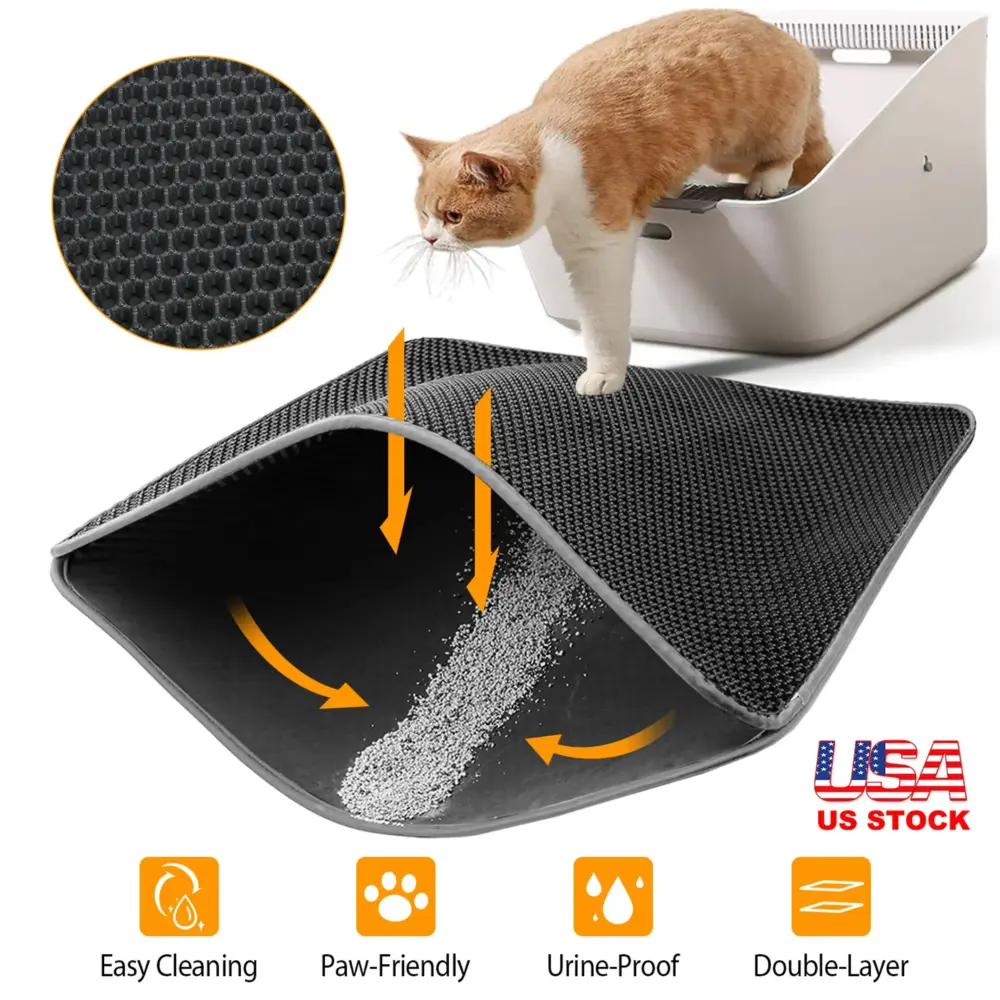
In a space this small, stray granules soon reach the bed and the entry steps. A mat at the box exit catches them from paws; our guide to stopping cat litter tracking covers the box and the litter itself.
-
Double-Layer Honeycomb Cat Litter Trapping Mat, View product
$53.95
Why it fits: Lay it at the shower or cabinet exit to catch litter from paws before it spreads across a small RV floor. It opens like an envelope to pour litter back, and the base is waterproof.
-
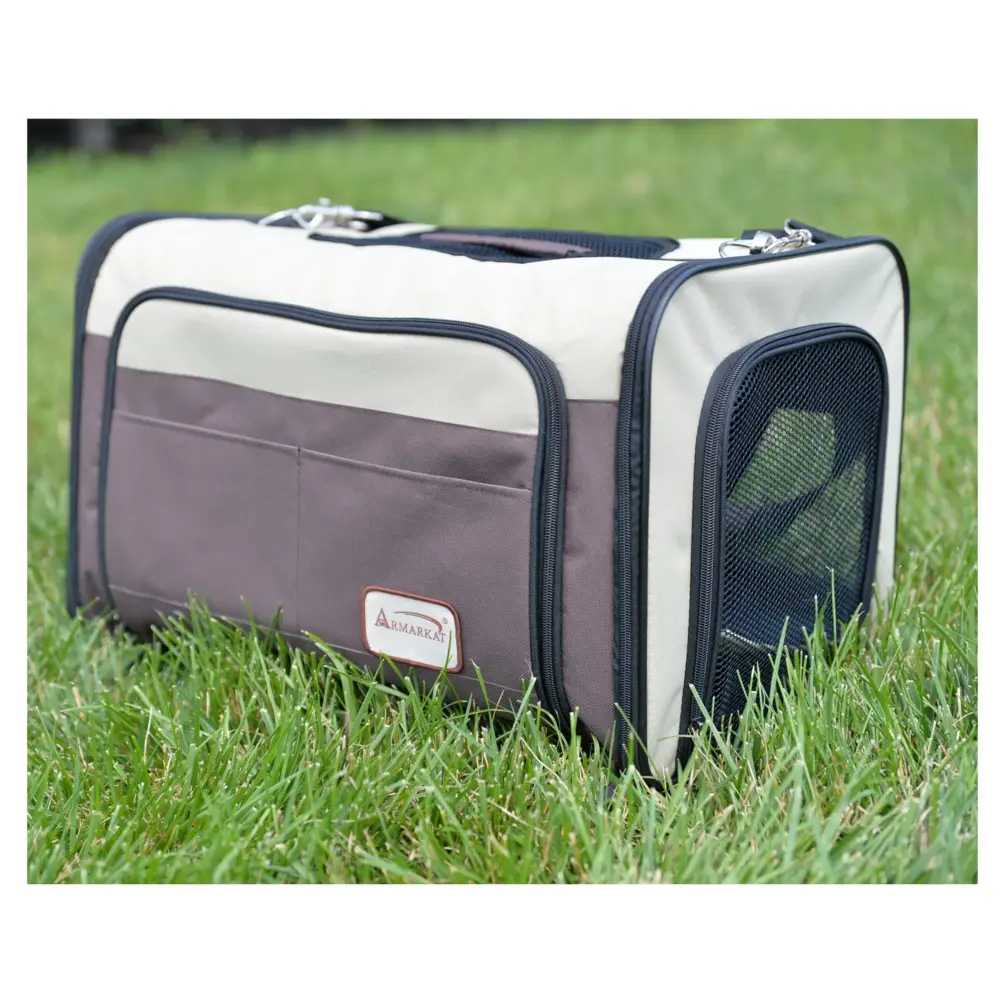
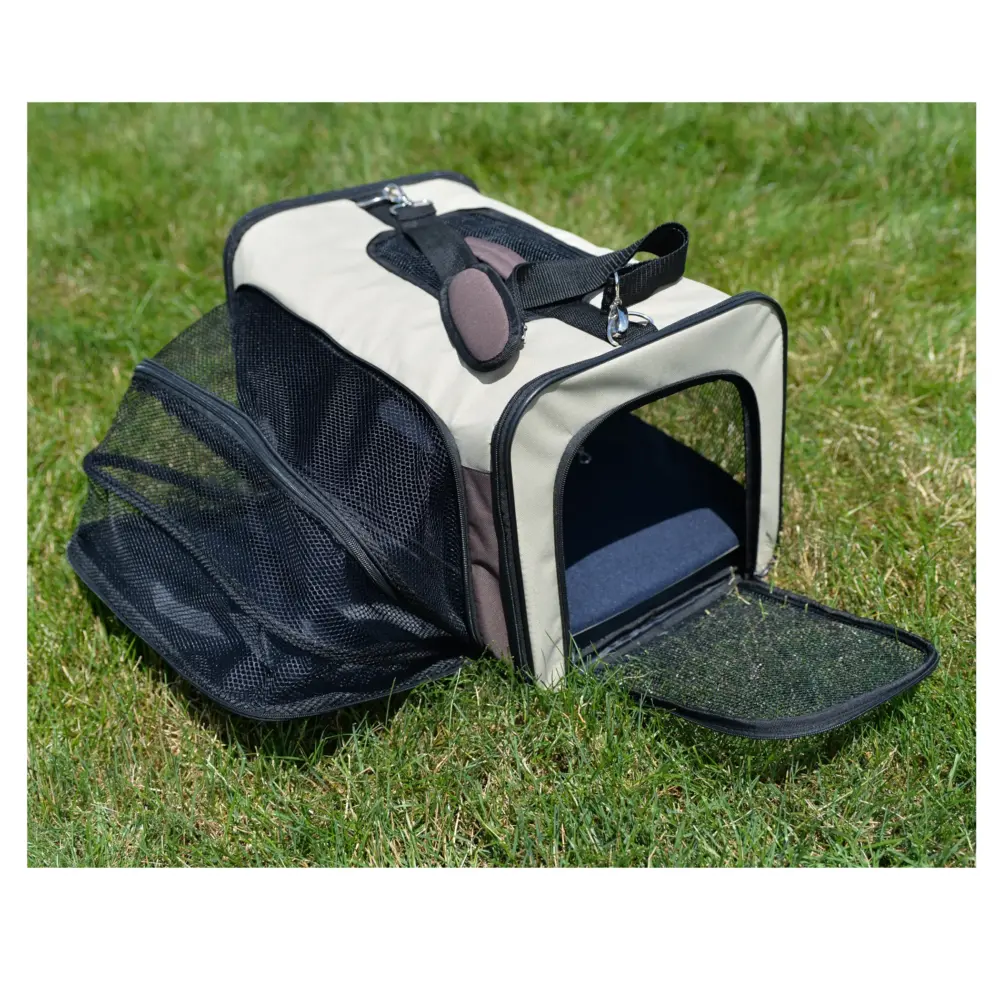
Armarkat
Soft-Sided Pet Carrier, View product
$65.95
Why it fits: Three zip openings, including the top, let you lower your cat in fast before a slide moves; the canopy expands for stretching while parked, and it folds flat to stow in a small rig.


Slide-outs, doors and windows: closing the escape routes
An RV has more ways out than an apartment, and a cat that slips out at a campground lands somewhere it has never been. No rig is impossible for a determined cat to get out of, so the routine matters as much as the hardware.
Slide-outs
Slide rooms create the dark gaps cats love: behind a sofa or dinette in the slide, beneath its floor and beside it, and a cat tucked into one can be trapped or hurt when the slide moves. Before you run a slide in or out, see your cat go into the carrier or the bathroom and close the door, every time. Check the slide areas with a flashlight before letting your cat out.
The entry door and screen door
At a campsite the entry door opens constantly, and in warm weather it often stands open behind only the screen. RV screen doors are light, and many have a small sliding panel for reaching the door handle that a cat can learn to push open. A rigid guard over the lower screen helps, and so does one rule: nobody opens the main door until they know where the cat is. During hookups, unloading or visits, shut your cat in the bathroom.
Windows, vents and hiding spots
RV window screens are often thin, and some are held in only by clips, so open only the windows your cat can’t reach, and only while you’re there; use the roof vents for airflow. Block the hiding spots you found during practice, such as gaps around the dash and bed-base storage, and latch the cabinets.
If your cat gets out
Tell the campground office or host straight away, ask neighbors to check under their rigs, and call the local shelter and nearby veterinary clinics. International Cat Care’s advice on a lost cat holds at a campground too: cats are often found close to home, which means close to your rig. Call your cat at night, when it’s quiet enough for a hiding cat to hear you, set their bedding outside the door, and stay an extra day if you can.
Power loss while parked and leaving your cat alone
A parked RV runs on systems that can fail without warning: the pedestal breaker trips, a storm takes out the park’s power, the generator runs dry or shuts off for quiet hours. Your cat can’t open a window.
Heat
Rooftop air conditioners usually need shore power or a generator, so when either stops, the cooling stops too. The National Weather Service’s page on children, pets and vehicles warns that slightly open windows don’t significantly slow a vehicle’s heating, and that dangerous overheating can happen on a mild day in the 70s. An RV holds more air than a car, but without cooling it is still a closed vehicle in the sun. The ASPCA’s hot weather safety tips list heavy panting or trouble breathing, drooling and weakness among the signs of overheating. If you see them, move your cat somewhere cool and call a veterinarian straight away.
Cold
Most RV furnaces burn propane but need the 12-volt battery to run their fan and controls, so a flat battery or an empty tank means no heat. Check both before a cold night, give your cat a warm, enclosed bed off the floor, and keep any space heater out of reach and off when no one is awake to watch it. Our plan for keeping pets warm during a power outage goes further. Test the carbon monoxide and propane alarms before each trip; a cat shut inside can’t leave if generator exhaust drifts in.
Leaving your cat in the rig
VCA, the ASPCA and the National Weather Service all warn never to leave a pet alone in a parked vehicle, and an RV turns back into one the moment its power or air conditioner fails. On hot or very cold days, don’t leave your cat at all. For a short errand in mild weather, with the climate control running:
- Check the campground’s pet rules; some don’t allow pets to be left alone.
- Use a remote temperature monitor that alerts your phone if the heat climbs or the power drops (we don’t sell these), stay close, and go back at once if it goes off.
- Leave water and the litter box within reach, and a note on the door with your cell number.
An arrival routine at each new site
The view changes at every site, but the inside of the rig doesn’t have to. Follow one order each time:
- Keep your cat in the carrier, or shut in the bathroom with the carrier open, while you back in, level, hook up and run out the slides.
- Close the entry door and check the window screens and the screen-door panel.
- Put the litter box and mat in their spot, set out water and food, and unpack the bed your cat hides in.
- Open the carrier and let your cat come out when ready. Leave it open as a safe base.
- Keep door traffic low for the first hour, and make sure everyone knows the cat is out.
For a familiar hideout to unpack at each new site, the GOOPAWS 4-in-1 self-warming cat cave bed (21 x 17 x 3 in) works as a cave, mat or sack, and traps your cat’s own body heat on chilly nights.
Leaving a site: the same routine in reverse
On departure day, your cat goes into the carrier before the slides come in, the jacks go up or the door is propped open for packing. Do a last flashlight check of the slide areas, then go.
Time outside the rig, on a harness and leash, is its own skill; our guide to camping with a cat covers the campsite. For the indoor setup, browse our cat essentials.
Related guides
-
Guide
Should You Get a Second Cat? How to Tell if Yours Would Welcome One
A second cat can be good company or a daily source of stress. Learn what lonely behavior often means, what makes a cat likelier to accept a newcomer, which pairings tend to work, what one more cat takes in space, money and time, and what to try first.
-
How-to
How to Introduce a New Cat to Your Cat: A Step-by-Step Plan
A staged plan for adding a cat to a home that already has one, from a transition room and scent swaps to sightings and short supervised meetings, with how long each stage takes, the body language to watch and what to do if it goes wrong.
-
How-to
How to Help a Cat Adjust to a New Home After Moving
A settling plan that starts at the new front door: what goes in the base room, how arrival day and hiding should go, why the old bed and litter stay, when to open more rooms, how to secure doors and screens, how long settling takes and when to call your veterinarian.