Seasons & Gifts Checklist
How to Keep Pets Warm During a Power Outage: A Winter Storm Plan
Short answer
Before the house cools, move your pets into one small room with a door, block the drafts, and pile in beds and blankets they can burrow into. Keep grills, camp stoves and generators out of the house. If that room keeps getting colder, or a pet won’t stop shivering, take them somewhere with heat.
Power outage checklist for pets at a glance
Most of this works best in the first hour, while the house still holds its heat:
- One room: pets, beds, water and a litter box in a small room with a door, and you in it too.
- No drafts: door shut, a towel along the gap, curtains closed.
- Deep bedding: rimmed beds, blankets to burrow under, padding beneath on cold floors.
- Extra layers: a coat for a small or thin-coated dog who already wears one.
- No flames or fumes: flashlights, not candles; grills and generators stay outside.
- Water and meals: fresh water twice a day, the usual food at the usual times.
- Short potty trips: on leash, with a flashlight, paws dried afterward.
- A way out: carriers ready and a warmer place lined up.
Ready.gov’s pet preparedness guidance suggests two kits: a larger one for sheltering in place and a lightweight one for evacuating. This page is the stay-home plan for a cold, dark house; the grab-and-go bag is in our pet emergency kit checklist. If your heat works and you just want warmer nights, see how to keep a dog warm at night or how to keep an indoor cat warm in winter.
Before the storm: a pet kit for staying home
When a winter storm or ice storm is in the forecast, check these off for every pet in the house:
- Several days of water per pet, in sealed jugs, beyond what the people need, as Ready.gov advises
- Several days of your pet’s usual food: dry, or cans small enough to finish in one meal
- A refill of each daily medicine, and your veterinarian’s advice on any that need the fridge
- Extra blankets, towels and fleece throws, plus dry spares
- Litter, and a spare litter box for the warm room
- Flashlights or headlamps, spare batteries and a battery-powered room thermometer
- Carbon monoxide detectors with batteries or battery backup, tested
- ID tags on every collar, plus leashes and your packed evacuation kit by the door
- Carriers out of storage and open, with a towel inside
- Your veterinarian’s and the nearest emergency clinic’s numbers on paper, and a charged power bank
Why these items matter
Water comes first because it can stop with the power: a well pump goes quiet, and pipes in a cold house can freeze. Small cans matter because an opened can needs the fridge, and Ready.gov’s power outage advice says a closed refrigerator keeps food cold for only about four hours. The same page says to discard medicine that needs refrigeration after more than a day without power, unless the label says otherwise, so ask your veterinarian now how that applies to your pet’s.
Carriers come out early because a frightened cat in a dark house hides where you can’t reach it. Once the storm arrives, keep cats indoors: International Cat Care warns that storms can be disorienting, and a cat outside may lose its way or get hurt.
Tip
Birds, reptiles and fish depend on heat lamps, tank heaters and filters, and are far more vulnerable to a cold house than a dog or cat. Ask your veterinarian now about safe backup heat for them.
Pick one warm room and block the drafts
The AKC’s advice on keeping a dog warm without power includes closing off rooms you aren’t using, because a smaller space holds heat better than a whole house. Choose a small room with a door, few windows and as few outside walls as possible, where you can stay too. Leave space for a bed per pet with water and the litter box at the far end. Then seal it up:
- Shut the door and lay a rolled towel or draft stopper along the bottom. No door? Hang a heavy blanket across the doorway.
- Close the curtains or pin a blanket over each window. On a sunny afternoon, open south-facing ones for a few hours, then close them before sunset.
- Put rugs, foam mats or folded blankets under every bed on tile, hardwood or concrete.
- Drape a blanket over the top and three sides of a crate, leaving the front open for air.
- Set a battery thermometer on the floor where your pets sleep, and check it morning and night.
That floor reading, not how you feel in a coat, is what your pets live in. Let pets that get along sleep near each other and near you; shared body heat keeps working when nothing else does.
Bedding that holds warmth without electricity
A bed with no cord only holds the heat a pet makes, so build it to trap that heat:
- Walls around the body. A cave, a covered crate or a raised rim, sized for your pet curled up, keeps warm air close.
- Something to burrow under. A loose fleece a pet can pull over itself or push off, not one tucked in.
- Padding underneath. On a cold floor, what is under the bed matters as much as the blanket on top.
- Dry bedding. Snowy paws and damp coats soak a bed, and a damp bed pulls heat away, so keep a dry spare.
Heated beds and heating pads stop with the power. If a generator runs one, the usual rules apply: lowest setting, part of the bed only, never inside a closed crate.
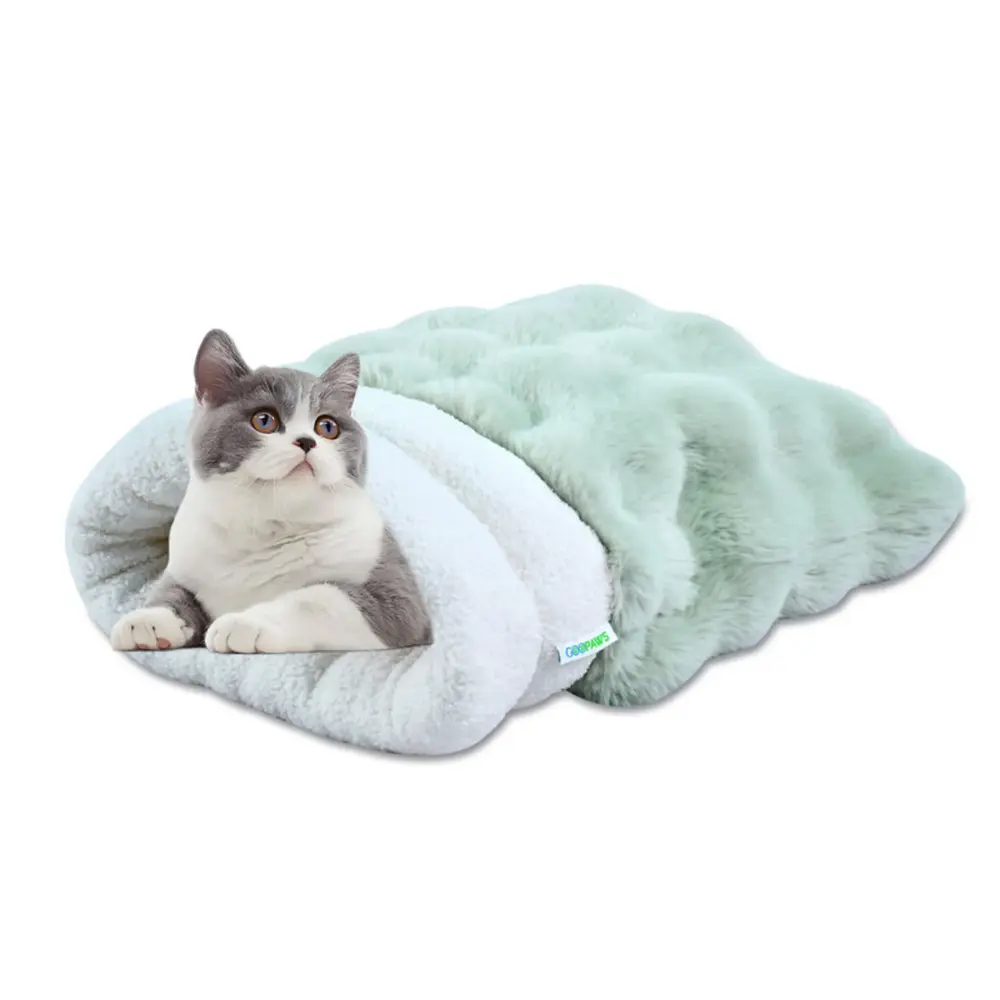
These picks are limited to Nilosi’s catalog: the cave is a cat bed, and the cuddler suits cats and small dogs. For a bigger dog, a covered crate or a nest of blankets on a thick rug does the same job.
-
GOOPAWS
4-in-1 Self-Warming Cat Cave Bed, Choose color
$40.95
Why it fits: Traps the body heat of a cat curled inside, with nothing to plug in; use it as a closed cave or flat as a mat. Sized 21 x 17 x 3 in.
-
Armarkat
Ultra-Plush Cuddler Bed for Cats & Small Dogs, Choose size
Price range: $55.95 through $72.95
Why it fits: A thick plush cover that holds warmth, with a raised rim for a cat or small dog to curl against; two sizes, the Small 22 x 22 x 8 in.


Small, thin-coated and older pets: extra layers
The AKC’s guide to hypothermia in dogs names small dogs, seniors, puppies and short-coated dogs as the ones that lose heat fastest. International Cat Care adds cats that are inactive, have lost weight or muscle, or struggle to hold their body temperature. Give these pets the warmest spot first:
- A coat or sweater indoors for a small, short-coated or lean dog who already wears one calmly, while you are there to check it
- No coat for a thick double-coated dog, which usually does fine with extra bedding
- A low bed and an extra blanket for a stiff senior, with no jump to reach the warm spot
Check a dressed dog every few hours, and take the coat off if it twists, rubs under the legs or your dog starts panting. The DCNY Ranch Dog Coat comes in small-dog sizes XXS to Medium; its Sherpa Lined Denim style has a sherpa lining, and wide hook-and-loop closures at the chest and belly make it easier to put on and take off. The AKC advises making sure a dog is already comfortable in clothing before a storm; see getting a dog used to wearing a coat.
Signs a pet is getting too cold
Shivering and curling up for warmth are early signs of hypothermia in the AKC’s guide; sluggishness and slow reactions can follow. Move a cold pet to the warmest spot, wrap it loosely in dry blankets, and call your veterinarian; don’t press anything hot against the skin.
Safety note
Newborn puppies can develop hypothermia even at normal room temperature, the AKC notes, and kittens can’t control their own body temperature in their first weeks of life. If you have a young litter, or a pet that is ill or recovering from surgery, call your veterinarian at the start of a long outage about moving them somewhere heated.
Carbon monoxide, fire and heater safety
The worst risks in a cold outage often come from the ways people try to stay warm. Carbon monoxide has no color or smell, and Ready.gov warns that it can kill people and pets alike. Dogs may show signs before you do: as VCA Animal Hospitals explains, they are smaller and breathe faster. These rules from the CDC’s carbon monoxide guidance protect everyone in the room:
- Run a generator only outside, more than 20 feet from windows, doors and vents
- Never heat the house with a gas oven or stove
- Never burn charcoal indoors, or use a camp stove or a portable flameless chemical heater inside
- Never run a car or truck in an attached garage, even with the garage door open
- Keep battery or battery-backup carbon monoxide detectors near every sleeping area, yours and your pets’
Signs of carbon monoxide poisoning in dogs include weakness, sleepiness, rapid breathing and confusion. VCA’s advice if you suspect it: get every person and pet into fresh air, call 911, then call your veterinarian.
Candles, fireplaces and space heaters
- Light: flashlights and battery lanterns, not candles or oil lamps. A wagging tail or a curious cat can tip a flame onto bedding.
- Fireplaces and wood stoves: have them cleaned and inspected before you rely on them, as the AKC advises, and keep a screen in place. International Cat Care warns that open fires, wood stoves and space heaters can burn cats.
- An electric space heater on a generator: tip-over shutoff, a hard, level floor, well clear of beds and blankets, and never running in a room you’ve left.
Water, food and quick potty breaks in the cold
- Fresh water at least twice a day from your stored supply, in a bowl that won’t tip onto the bedding
- The food your pet already eats, on the usual schedule
- A little extra food if your veterinarian agrees; the ASPCA notes that pets burn extra energy staying warm
- Dogs on leash for every potty trip, even in a fenced yard
- A cleared or stamped-down patch close to the door, so trips stay short
- A flashlight on every trip, since porch lights and streetlights may be out
- Paws and belly cleaned and dried after every trip outside
- Cats kept inside, with the litter box in the warm room and scooped daily
The ASPCA’s cold weather safety tips explain the leash rule: dogs can lose their scent in snow and easily become lost. They also advise washing and drying your pet’s feet and stomach to remove ice, salt and chemicals. If water is rationed, large pet wipes such as Mr. Peanut’s Naturals Pet Wipes (150 per container, each 6 × 10 in) clean paws without touching your stored supply; finish with a dry towel. Once the sidewalks are clear, check how cold is too cold to walk a dog before a longer walk.
When it’s too cold to stay, and where pets can go
No single indoor temperature says when to leave; judge by the room and your pets. Ready.gov’s outage advice is to go to a community location with power when the cold is extreme. Move your pets when:
- The warm room keeps getting colder even after you’ve closed it off
- The utility expects the outage to last days rather than hours
- A pet keeps shivering, seems sluggish or won’t settle once wrapped up (call your veterinarian, too)
- You have a young litter, a frail senior or a pet with a medical condition
- Pipes have burst, or the only heat you have can’t be run safely indoors
Where pets can stay
- Friends or family with heat. Ready.gov suggests arranging in advance with friends, neighbors or relatives who can care for your pets, or collect them if you can’t get home.
- A kennel or a vet clinic that boards. Call to ask whether it has power and space, and which vaccination records it needs.
- A pet-friendly hotel with power. The AKC suggests locating pet-friendly warming centers and hotels with power in your area.
- A warming center or shelter. Ask before you go: Ready.gov notes that many public shelters and hotels don’t allow pets inside. Your local emergency management office can tell you which places take them.
Take your pets with you. If the place you’re going won’t take them, arrange a friend or a kennel instead of leaving them alone in a house that’s too cold for you. Put cats in carriers and dogs on leash before the front door opens, and bring your emergency kit if you’ll be away overnight. For the walk to the car, drape a towel over part of a carrier, leaving the mesh clear for air. Two picks from Nilosi’s catalog for the move:
-
Armarkat
Soft-Sided Pet Carrier, View product
$65.95
Why it fits: A way to move a cat or small dog to a warmer house, with three zip openings for loading and a lounge pad inside; check its size first.
-
Flipo
Fold-A-Bowl Dog Water Bottle with Fold-Out Bowl, Choose color
$28.95
Why it fits: Water for the drive or a wait somewhere new: a 26 oz bottle whose cover folds out into a bowl, with a closure that does not leak in a bag.


What to skip in a cold, dark house
- Baths and wet grooming. A damp coat holds heat poorly, so wait until the heat is back.
- Hot-water bottles against the skin. A sleeping pet may not move away in time; wrap a warm, not hot, one in a towel, tuck it under the bedding, and skip it for chewers.
- The garage or the car as a pet room. Both get colder than the house, and fumes from a car or generator collect in a garage.
- Waiting until dark to decide. Driving, catching a cat and finding a room all get harder at night, so if the forecast says days, move pets in daylight.
A summer outage turns the problem around; for the hot-weather version, see how to keep a dog cool without AC.
Related guides
-
Checklist
Winter Hiking With a Dog: Checklist for Cold, Ice and Short Days
A winter trail-day checklist: plan a shorter, sheltered route around daylight, keep your dog leashed and off frozen water, pack water that won't freeze and a coat for dogs who feel the cold, check paws for ice balls and salt, and know when to turn back.
-
Checklist
What to Tell Your Dog Walker: A Handover Checklist
Everything a new dog walker needs on one page: where the gear lives and how it goes on, how your dog walks, leash and route rules, medications and treats, emergency contacts, the door routine, weather rules and a first walk together.
-
Checklist
Traveling With a Senior Dog in the Car: A Checklist for Easier Rides
A car-trip checklist for an older dog: what to ask your veterinarian before a long drive, how to help a stiff dog in and out without a jump, a padded, secured spot in the back seat, hot and cold cars, more frequent stops, and the medications and records to keep in the cabin.