Senior Pets Checklist
Traveling With a Senior Dog in the Car: A Checklist for Easier Rides
Short answer
See your veterinarian a few weeks before a long drive, and rehearse with a shorter one. Lift or help your dog in instead of letting them jump, give them a padded back-seat spot on a harness and tether or in a secured crate, keep the cabin comfortable, and stop more often than for a younger dog.
Plenty of 12-year-old dogs still perk up at the sound of car keys. What changes with age is everything around the ride: the jump in and out, hours in one position, a cabin that runs hot or cold, a bladder that won’t wait as long and a medication schedule. For the packing list any dog needs, start with our road trip with a dog checklist; this page covers what changes for an older one.
Senior dog car-trip checklist at a glance
- A vet check a few weeks out, and a test drive as long as one leg of the trip
- A way in and out that isn’t a jump
- A padded back-seat spot on a harness and short tether, or a strapped-down crate
- A waterproof layer under the bedding, and towels for small leaks
- A cooled car in summer; a warmed car and a blanket in winter
- Shorter legs between stops, set by your dog’s potty schedule at home
- Medications, records and recent lab work in the cabin, not the trunk
- Your dog’s own bed and a rug for slick floors at the other end
- Someone with your dog at every stop, so they’re never alone in a parked car
Before the trip: a vet check and a short test drive
A checkup a few weeks before a long drive leaves time to adjust medications, fill prescriptions and try anything new at home first.
Questions for your veterinarian
- Is this drive, with these gaps between stops, realistic for my dog right now?
- Can I get enough of every medication for the trip plus a few spare days?
- Would a nausea or anxiety medication help, and should I try a dose at home first?
- Is my dog’s pain or stiffness managed well enough for hours of lying still?
- Does a heart or breathing problem change how I should manage heat in the car?
Breakfast is the snag people miss. VCA’s road trip advice is to skip breakfast on travel day to head off nausea, but some medications are given with food, so ask how to handle both rather than quietly skipping a dose. And don’t fill gaps from your own medicine cabinet: several common human pain relievers are dangerous for dogs, so give only what your veterinarian prescribes.
A test drive that matches one leg
A week or two ahead, drive for about as long as you plan to go between stops, with the bedding, tether and water set up as they will be on the day. Watch how your dog gets in and out, whether they settle, how soon they need a potty break, whether the harness rubs, and how they move that evening and the next morning. Stiffness afterward, or a dog who never settled, means shorter legs or a two-day drive; a dog who is miserable throughout may be happier at home with a sitter.
Getting an older dog into the car without a jump
A jump into a high seat, and even more the drop back down onto pavement, is a lot to ask of stiff joints. If your dog has started to hesitate at the car door, take them at their word: lift or help them every time, at home and at every stop.
Lifting a dog you can carry
- Let your dog see you coming, then touch them gently before you lift. An older dog with fading sight or hearing can startle.
- Crouch with your knees bent, one arm under the chest just behind the front legs and the other under the rump, behind the back legs.
- Stand up using your legs, not your back, holding your dog close and level against your body.
- Set them on the seat on all four feet, and keep a hand on them while you clip the tether to the harness.
- To get out, reverse it: leash on, tether off, then lift them down onto flat ground, not a curb edge or ice.
Never lift by the front legs, the collar or the scruff. If lifting makes your dog yelp or stiffen, or they have a back or neck problem, ask your veterinarian to show you a hold that suits them.
A dog too big to lift
- A second person to lift the hindquarters while your dog puts their front paws on the seat
- A towel or support sling under the belly, just in front of the back legs, to help weak hind legs step up
- A ramp or pet steps; we don’t sell either, so check the maker’s weight rating, the grip and how it attaches
- Practice at home with treats, days ahead, not for the first time at a dark rest stop
A comfortable, secured spot in the back seat
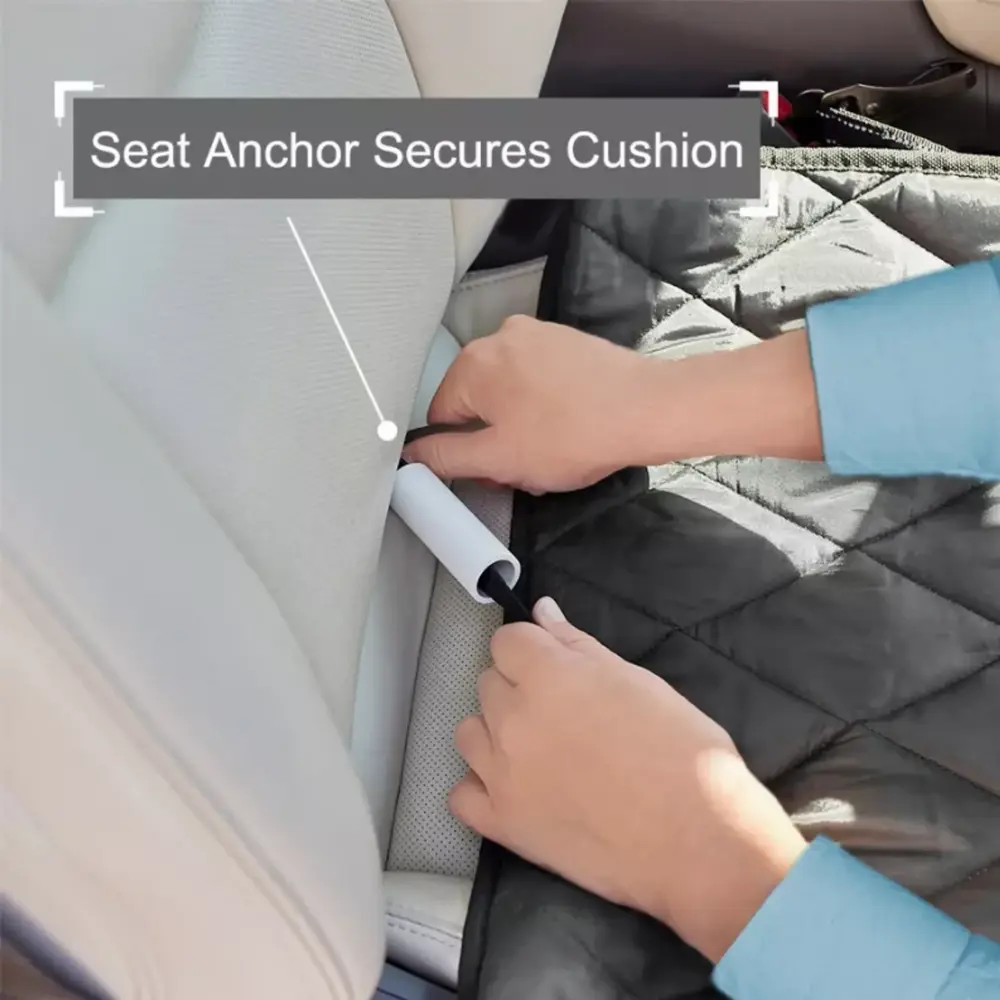
An older dog usually spends the drive lying down, so the surface under them matters more than the view. The spot still has to hold them in place: in the back seat, away from the passenger airbag, on a harness and tether or in a crate that can’t slide.
- A firm, flat pad or folded blanket across the seat, clear of the seat-belt buckle
- A waterproof cover underneath, plus a towel on top you can swap at a stop
- A harness that doesn’t rub, with the tether on the back ring, never a collar
- A tether long enough to lie down and turn, and no longer: no reach to the front seats, the footwell or a window
- Or a crate with bedding, if your dog already rests in one, strapped so it can’t slide or shift
Firm beats fluffy. A stiff dog sinks into a deep, squashy bed and struggles to stand, and a thick bed can slide on a sloping seat. A firmer pad lets your dog shift and get up easily.
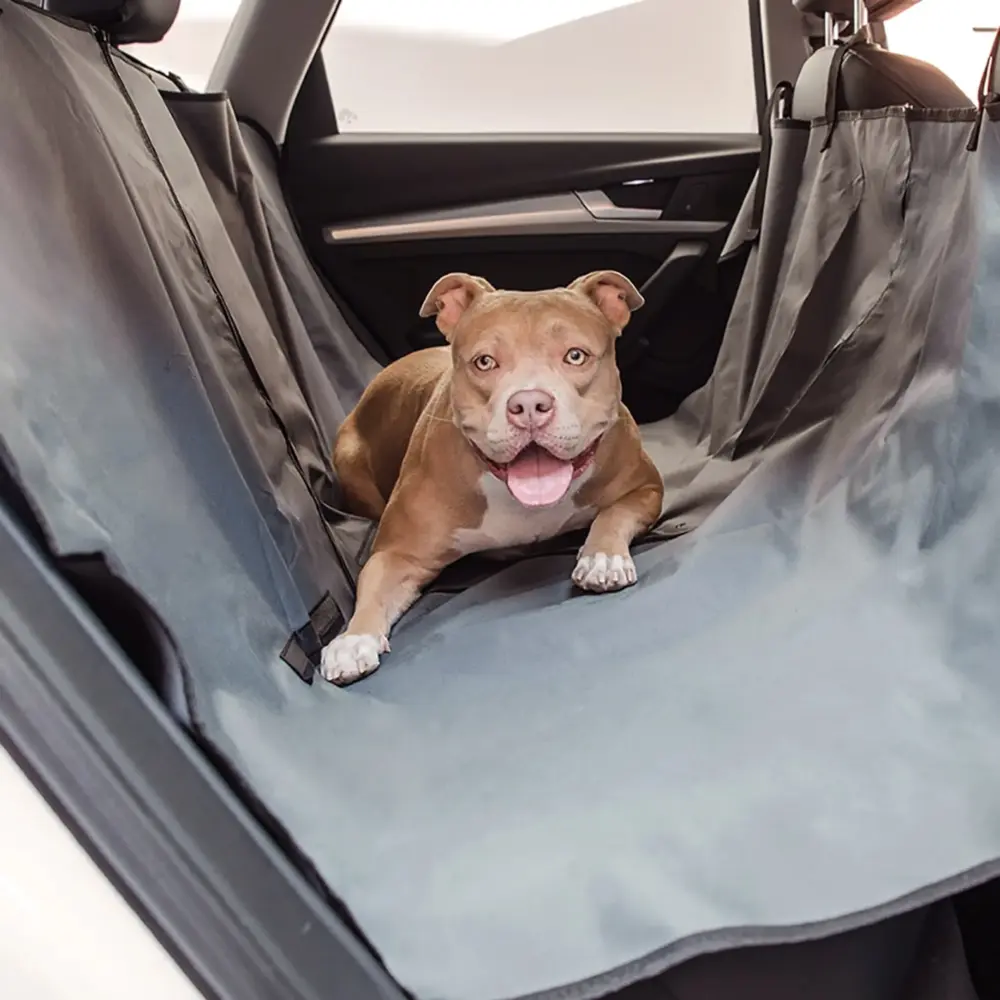
Close off the footwell. A hammock-style cover clips to the rear and front headrests, so its front edge rises from the seat cushion as a fabric wall across the footwell and the gap between the front seats. A stiff dog who shifts or slides meets that wall, not a drop. Ours measures 58 × 57 in; our guide to choosing a dog hammock or seat cover shows how to measure your back seat first.
Tether or crate. A tether keeps your dog in their spot, but it is not crash protection; our guide to setting up a dog seat belt or booster seat has the fit check. The ASPCA’s travel safety tips call a secured crate the safest option in an accident, and a crate-trained senior may rest best in a familiar one. Our comparison of a crate and a seat belt tether covers sizing a crate and strapping it down.
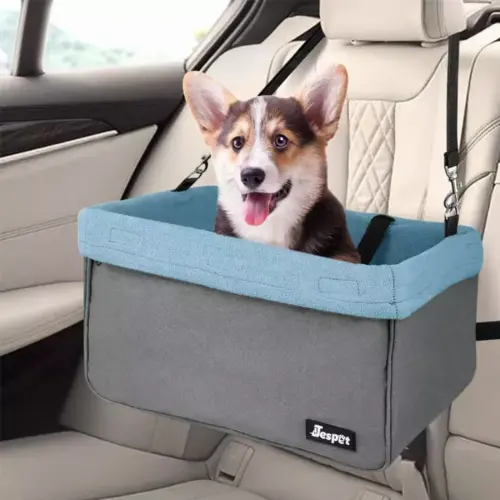
Small seniors. A booster suits a small dog you lift in anyway. Ours holds pets up to 24 lb on a 16 × 13 in seat, so check that your dog can turn and lie down in it.
Leaks are worth a mention. The waterproof layer takes care of the seat, but if your dog has started leaking urine while lying down, tell your veterinarian rather than just packing more towels.
These four from our catalog fit this setup. The picks are limited to what Nilosi stocks, and we don’t sell crates, ramps or orthopedic travel beds.
-
GF PET
Waterproof Dog Car Hammock Seat Cover, View product
$60.95
Why it fits: Waterproof hammock that walls off the footwell, so a stiff dog who shifts meets no drop; 58 x 57 in, so measure first. Not a restraint.
-
Adjustable Dog Car Seat Belt Tether, View product
$23.95
Why it fits: Keeps an older dog on the padded spot; clip it to a harness, set for lying down and short of the front seats. Fits most seat belts, not all.
-
GOOPAWS
Dog Booster Car Seat with Safety Tether, Choose color
$53.95
Why it fits: A cushioned booster for a small senior you lift in anyway; built-in tether, holds pets up to 24 lb, seat 16 x 13 in, so check the fit.
-
Mr. Peanut’s
PetTrek Padded Harness and Leash Set, Choose size & color
Price range: $24.95 through $26.95
Why it fits: A padded harness to clip the tether to, spreading pressure across the chest; sizes XS to L, so measure the widest part of the chest first.


Temperature: older dogs in hot and cold cars
Age makes both ends of the thermostat harder. The AKC notes that overweight or elderly dogs are more susceptible to overheating, partly because older dogs more often have conditions such as heart disease, and it lists senior dogs among those at higher risk of losing body heat quickly in the cold. A stiff, tethered dog also can’t easily move away from a sunny window or a draft.
Warm days
- Cool the car before your dog gets in, and aim the vents at the back seat
- Shade the rear side windows, and seat your dog on the shady side
- Lay a cooling mat on part of the seat, with bare seat left to move onto
Our Chillz Cooling Gel Mat cools when your dog lies on it and recharges on its own, with no water, ice or power, and it folds for the car. It cools your dog, not the air. The full warm-weather routine is in our guide to keeping a dog cool in the car.
Cold days and holiday drives
- Warm the cabin before your dog gets in, and check that the heat reaches the back seat
- A blanket from home that your dog can lie on or move off
- A coat for rest stops if your senior is small or thin-coated, taken off once the car is warm again
- No heated seat under your dog, who may not be able to move off it if it gets too warm
For a small dog, our DCNY Ranch Dog Coat comes in XXS to M, with wide hook-and-loop closures at the chest and belly that make dressing easier.
Safety note
Never leave an older dog alone in a parked car, in any weather. Heat builds quickly even on a mild, sunny day, and in winter a parked car holds the cold. Take turns at the restroom, use drive-throughs, or bring your dog with you.
Water, potty and stretch stops
General road-trip advice is a break every couple of hours. For an older dog, let their usual gap between potty breaks at home set the longest leg, stop sooner if they’re drinking more than they used to (and mention the extra thirst to your veterinarian), and treat every stop as a stretch break too: many older dogs are stiff for the first few steps after lying still.
The routine at each stop
- Park on level ground near grass, away from moving traffic
- Clip the leash on before the tether comes off, then lift or help your dog down
- Give them a minute to stand and stretch, then walk slowly on grass, not ice or gravel
- Offer water once they’ve settled, and check for harness rubbing and damp bedding
- Help them back in, tether on, leash off, and look back to see that they’ve lain down
Keep the leash short at unfamiliar rest areas: a dog with fading hearing may not hear you call. And if the whole drive is much longer than the test drive your dog handled comfortably, split it over two days, with a ground-floor hotel room so there are no stairs at bedtime.
Two things from our catalog make each stop simpler:
-
Flipo
Fold-A-Bowl Dog Water Bottle with Fold-Out Bowl, Choose color
$28.95
Why it fits: Water at every stop without hunting for a bowl: 26 oz with a fold-out bowl, and a wrist strap that leaves a hand free to steady your dog.
-
Mr. Peanut’s
Naturals Pet Wipes
$26.95
Why it fits: Cleans paws and coat after a muddy stop or a small accident; 150 thick wipes, 6 x 10 in, so one does the job. Keep them in the cabin.
Currently out of stock


Medications, records and an overnight bag
Keep this bag within reach of the front seat, not in the trunk, which gets hot in summer and cold in winter.
- Every medication and supplement in its labeled container, for the trip plus a few spare days
- A written schedule of doses and times, and your vet’s advice on shifting them across a time zone
- A list of medications, doses and prescription details, in case you need a refill on the road
- Vaccination records, recent lab work and your veterinarian’s phone number
- Emergency veterinary hospitals near your route and destination, saved in your phone
- Your dog’s own bed, plus a washable rug for a slick floor where they’ll sleep
VCA’s road trip advice includes vaccination certificates and recent lab work along with your dog’s medications. Those papers let an emergency veterinarian who has never met your dog start from the right place.
At the other end, keep meals, pills and walks at their usual times. Staying with relatives? Our houseguest checklist for staying with family with a dog covers the questions to ask your hosts, resident pets and a quiet room of your own.
What to skip for an older traveler
- The front seat. An airbag can injure a dog in the passenger seat, however calm they are.
- Extra tether length for comfort. A longer strap lets a dog reach the footwell or the gap between the front seats. Set it for lying down, and no longer.
- Pushing through to save an hour. An older dog who has a hard day in the car can pay for it the following morning. Arriving a little later costs you less.
Signs your dog needs a longer break or a vet
Older dogs often show discomfort quietly. Cornell’s guide to recognizing pain in dogs describes signs you can spot at a stop or from the front seat. Pull over for a longer, quiet break if you see:
- Pacing, or standing up again and again instead of settling
- Panting that doesn’t ease once the car is cool and your dog is resting
- Whimpering or groaning when they move
- Difficulty getting up, or limping after a stop
If your dog settles after a slow walk and some water, shorten the remaining legs. If the signs keep coming back, call your veterinarian for advice before you drive on.
Safety note
Get veterinary help now for signs of overheating the AKC lists, such as frantic panting, thick saliva, bright red gums, labored breathing, weakness or an inability to stand, or vomiting and diarrhea, and for shivering that doesn’t stop once your dog is warm, collapse or a seizure. Until you reach help, the AKC advises moving an overheated dog somewhere cooler and wetting the coat down to the skin with cool, not cold, water; in the car, run the air conditioning. Have your dog checked even if they seem to recover.
A holiday drive with an older dog goes best when it’s planned around them: an easy way in and out, a firm, padded spot to lie on, short legs between stops and someone always with them.
Related guides
-
Checklist
Winter Hiking With a Dog: Checklist for Cold, Ice and Short Days
A winter trail-day checklist: plan a shorter, sheltered route around daylight, keep your dog leashed and off frozen water, pack water that won't freeze and a coat for dogs who feel the cold, check paws for ice balls and salt, and know when to turn back.
-
Guide
How to Travel With a Dog in a Pickup Truck: In the Cab, Not the Bed
Your dog rides in the cab, never the open bed. See where a dog sits in a crew, extended or regular cab, how to tether and cover truck seats, how to get in and out of a tall cab, and why a parked truck is no place to wait.
-
Checklist
What to Tell Your Dog Walker: A Handover Checklist
Everything a new dog walker needs on one page: where the gear lives and how it goes on, how your dog walks, leash and route rules, medications and treats, emergency contacts, the door routine, weather rules and a first walk together.