Road Trip with a Dog Checklist: What to Pack for the Car, the Stops and the Night Away
For a road trip with a dog, pack a harness and seat belt tether or a secured crate, ID and vaccination records, your dog’s usual food and water from home, a leash and bags for stops, a clean-up kit and a familiar bed. Test the setup on a short drive a week ahead, stop every couple of hours, and never leave your dog alone in a parked car. The road trip with a dog checklist below groups it all.
Your road trip with a dog checklist, grouped by where you’ll need it
Here is what to pack for a road trip with a dog. Anything you’ll need at a stop rides in the cabin, with the leash and bags in a door pocket.
For the car
- A harness your dog already wears comfortably
- A seat belt tether, or a crate secured so it can’t slide
- A washable hammock or seat cover
- A blanket or toy that smells of home
Documents and ID
- An ID tag with your cell number, plus a temporary tag for where you’ll stay
- Rabies and vaccination records, on paper and on your phone
- Medications in their labeled containers
- Your vet’s number and a recent photo of your dog
Food and water
- Your dog’s usual food, portioned by meal, plus a day or two extra, the scoop and a can opener
- Water from home or bottled water
- A water bottle with a built-in bowl, the bowls from home and treats
Stops, clean-up and the night away
- A leash, a spare leash and plenty of poop bags
- Large pet wipes, an old towel and paper towels
- Zip-top bags, disposable gloves and a trash bag
- A basic pet first-aid kit and a flashlight for stops after dark
- Your dog’s bed, their crate if they sleep in one, and a favorite chew
Car setup: restraint, seat cover and a test drive
Restraint: a tether clipped to a harness
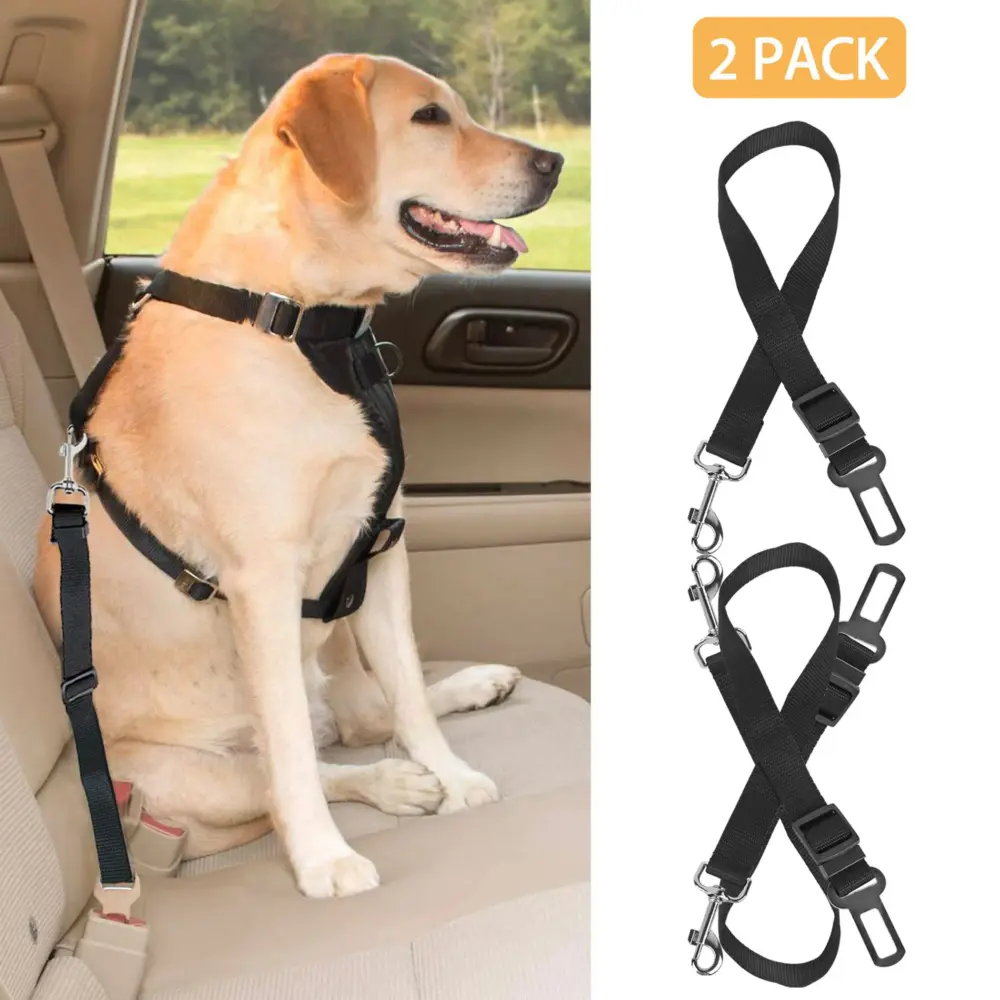
A seat belt tether plugs into the seat-belt buckle and clips to the back of your dog’s harness, never the collar. Set the length so your dog can sit, stand and lie down but can’t reach the front seats or a window. The Adjustable Dog Car Seat Belt Tether, 2 Pack has an adjustable length, a metal carabiner and a buckle tab that fits most vehicle seat belts, two to a pack.
A tether keeps your dog out of the front, which cuts distraction, but don’t rely on it, or on a seat cover or booster, in a collision. If your dog is crate-trained, the ASPCA’s travel safety tips call a crate, secured so it can’t slide or shift, the safest option in an accident. For tether length and small-dog boosters, see choosing and setting up a dog seat belt or booster seat.
Seat cover: protection, not restraint
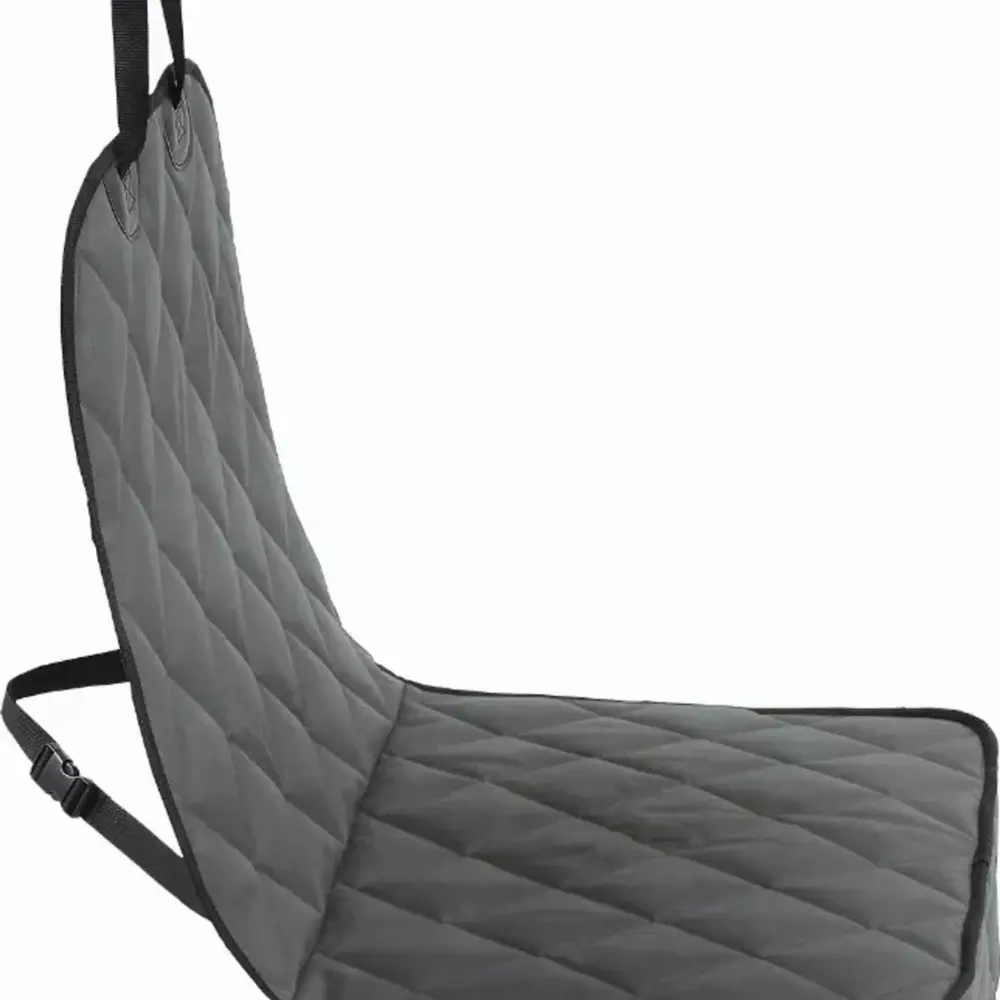
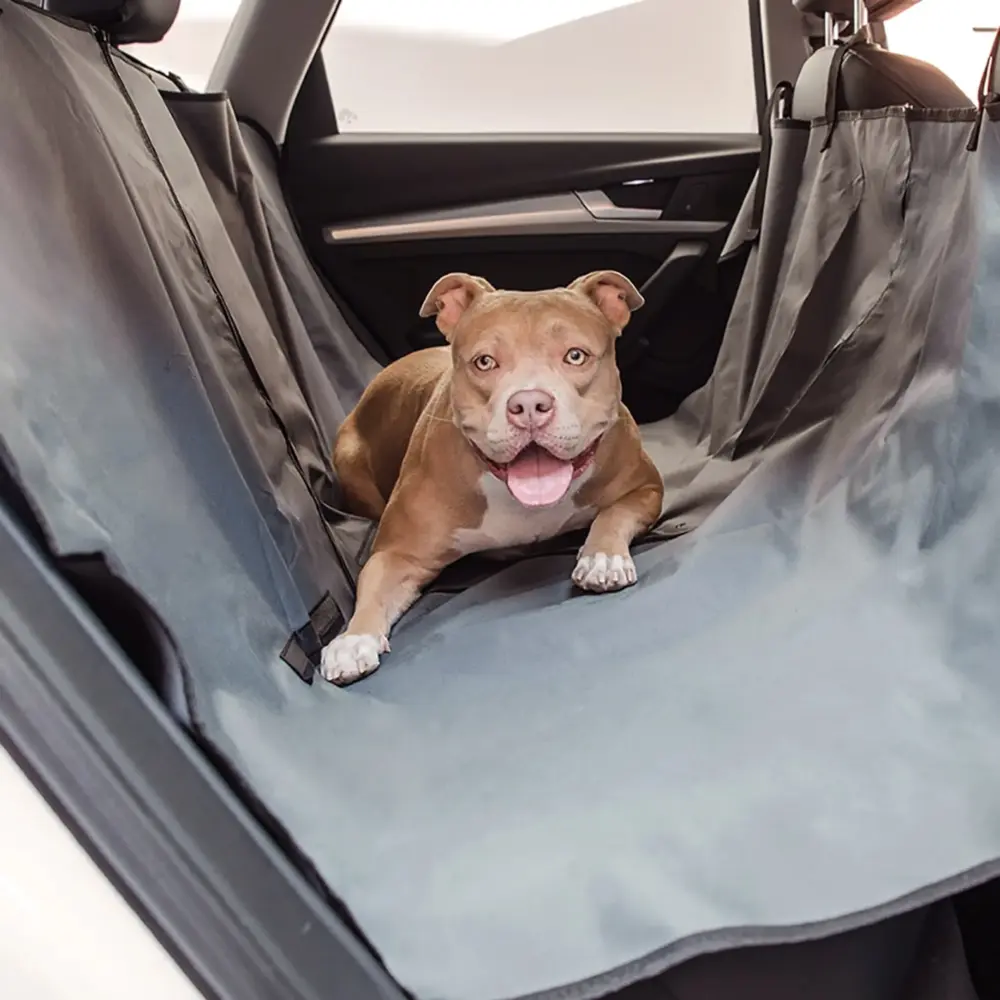
The GF PET Waterproof Dog Car Hammock Seat Cover clips around the headrests to cover the rear bench, the rear backrests and the backs of the front seats, and its seat-belt openings keep the buckles free for a tether. It doesn’t hold your dog in place. It measures 58 × 57 in, so measure your back seat first; our guide to choosing between a dog hammock and a seat cover shows how.
Windows and a test drive
Open rear windows no more than a crack and switch on the window lock. A week before you leave, take a 30- to 60-minute drive with everything in place and one stop somewhere new, to check the tether length and rehearse the stop routine below.
If your dog drools, whines or can’t settle, start weeks ahead. Knowing how to get a dog used to car rides comes down to short, calm sessions, from the parked car to a quiet ten-minute loop. Ask your veterinarian about car sickness well before the trip. Ordering new gear? Leave time for delivery; see our shipping details.
-
Adjustable Dog Car Seat Belt Tether
$23.95
-
GF PET
Waterproof Dog Car Hammock Seat Cover
$60.95

Documents, ID and crossing state lines
A dog who slips a collar at a gas station is lost somewhere unfamiliar. Check the tag is readable, add a temporary one with the number or address where you’ll stay, and confirm the microchip registration lists your current phone number.
Crossing state lines? Each state sets its own entry rules for pets, which can include a health certificate; the USDA’s APHIS pet travel pages list them by state, and a USDA-accredited veterinarian can issue a certificate if you need one. Save your vet’s number and find emergency vets near your route and destination.
Food, water and whether to feed before the drive
Bring the food your dog already eats, portioned by meal, and water from home or bottled water, since a sudden change of either can upset a stomach.
The ASPCA suggests a light meal three to four hours before departure, while VCA’s veterinarians suggest skipping breakfast on travel day and feeding a small meal on arrival, since an empty stomach lowers the risk of nausea. Ask your veterinarian which suits your dog, especially a puppy, and don’t feed in a moving car.
At stops, a bottle with a built-in bowl beats an open bowl sloshing in the footwell. The Flipo Fold-A-Bowl Dog Water Bottle holds 26 oz (770 ml), its food-grade TPU cover folds out into a bowl, the push-button closure doesn’t leak in a bag, and the wrist strap leaves a hand free for the leash.
Excited dogs often drink little on the road, so offer water at every stop once your dog has settled, and call your veterinarian if your dog refuses water all day or seems unwell.
How often to stop on a road trip with a dog, and what to do at each stop
Plan a break every couple of hours, and never stretch a leg past your dog’s usual gap between potty breaks at home. Stop sooner for puppies, seniors and restless dogs, and look ahead for rest areas with a pet area.
Someone should always stay with your dog: take turns at the restroom, or pay at the pump and use drive-throughs if you’re alone. A parked car can get dangerously hot in a very short time, even with the windows open, and in winter it holds the cold.
The routine at every stop
- Open the door partway, blocking the gap with your body, and clip the leash on before you unclip the tether; an excited dog in a strange place can bolt.
- Get out on the side away from traffic and walk straight to the pet area.
- Allow a potty break and a few minutes to sniff, then bag the waste.
- Offer water somewhere quiet, away from engine noise.
- Wipe mud, grit or road salt off paws before your dog gets back in.
- Load in reverse: dog in, tether on, leash off, door closed. Check the tether isn’t wrapped around a leg.
Adding a trail walk? Check the park’s dog rules first, since dogs aren’t allowed on every trail, and carry all your dog’s water. For more than a leg stretch, pack from a day-hike checklist for hiking with a dog, not the car kit.
A clean-up kit for paws, spills and accidents
Keep the kit in a bag behind the passenger seat. Mr. Peanut’s Naturals Pet Wipes are 6 × 10 in and thicker than standard pet wipes, so one does the job without tearing, and there are 150 in a container. Wipe between the pads and toes, too.
If your dog is sick in the car, pull over somewhere safe, clean up with gloves and paper towels and seal the mess in a zip-top bag. If it happens every trip, or continues after the drive, talk to your veterinarian. Back home, wash the hammock cold on a delicate cycle and lay it flat to dry; our guide on how to get dog smell out of a car covers the rest.
-
Flipo
Fold-A-Bowl Dog Water Bottle with Fold-Out Bowl
$28.95
-
Mr. Peanut’s
Naturals Pet Wipes
$26.95


The night away: hotel rooms and a familiar bed
Book a pet-friendly room ahead and confirm the policy with the hotel itself, not just the booking site: fees, size limits, how many dogs, and whether a dog may be left alone in the room, which many hotels don’t allow.
- Ask for a ground-floor room near an exit for late and early walks.
- Before your dog explores, check the floor and under the bed for dropped pills or food.
- Set up your dog’s bed from home in a quiet corner, away from the door.
- Keep your dog leashed in hallways and the lobby, and meals and walks near their usual times.
Staying with family? Settle your dog in a quiet room with their own bed before the house fills up; our Thanksgiving dog safety plan covers bringing a dog to someone else’s home.
Holiday drives: traffic, cold cars and short days
A Thanksgiving road trip with a dog, or a December drive to family, adds three things to plan for.
- Traffic: holiday jams can add hours, so pack extra water, food and bags, and stop when your dog needs to, not when traffic clears. Leaving early or splitting the drive over two days helps.
- Cold: small and short-coated dogs may need a coat at windy rest stops; see our dog coats and clothes.
- Short days: clocks go back in early November, so afternoon stops can fall after dark. Choose well-lit rest areas, carry a light and use a reflective collar or harness.
More planning help is in our car travel guides.
Dog road trip FAQ
How long can a dog ride in a car?
There’s no set daily limit. A healthy adult dog used to the car can usually manage a long day with a break every couple of hours, while puppies, seniors and nervous travelers do better with shorter days. Whining, pacing or panting that won’t settle means it’s time to stop.
Can my dog ride loose in the back seat?
It’s safer not to. A loose dog can climb into the front, distract the driver or jump out the moment a door opens. Use a harness and tether or a secured crate, and keep your dog out of the front seat and away from its airbag.
How do I keep my dog calm on a long car ride?
Walk your dog before you set off, keep the car cool and quiet, and bring a blanket that smells of home. If your dog pants, drools or panics on every drive, ask your veterinarian about car sickness or anxiety before the trip.
Related guides
-
Checklist
Renting a Car With a Dog: Pet Policy, Seat Covers and a Clean Return
A checklist for a rental car and a dog: where to find the real pet policy and what to ask, a cover and tether for a car you haven’t seen, photos at pickup, brushing and paw habits on the road, and a half-hour clean for hair, sand and smell before you hand back the keys.
-
Checklist
Traveling With a Senior Dog in the Car: A Checklist for Easier Rides
A car-trip checklist for an older dog: what to ask your veterinarian before a long drive, how to help a stiff dog in and out without a jump, a padded, secured spot in the back seat, hot and cold cars, more frequent stops, and the medications and records to keep in the cabin.
-
Checklist
Taking Your Dog to the Beach: Checklist for Sand, Salt Water and Heat
A beach-day checklist for dog owners: the rules to check before you go, water so your dog doesn't drink the ocean, hot sand and heat, waves and rip currents, and a fresh-water rinse before a covered ride home.