Outdoors & Adventure Checklist
Taking Your Dog to the Beach: Checklist for Sand, Salt Water and Heat
Short answer
Check the beach’s dog rules for your date, then pack drinking water and a bowl, shade, poop bags, two towels and a jug of rinse water. Skip the midday sand, don’t let your dog drink seawater and stay close in the waves. Rinse off salt and sand before a covered ride home.
Beach day checklist at a glance
Taking your dog to the beach goes more smoothly if you pack the bag the night before, so the morning is just filling the water jugs and loading the dog. Each group is explained below.
Before you leave
- The beach’s current dog rules: season, hours, leash length and dog zones
- The surf forecast and any water-quality advisory for that beach
- ID tags on the collar and up-to-date microchip details
- The number of the emergency veterinary clinic nearest the beach
On your dog
- A collar carrying current ID tags
- A harness, plus a fixed-length leash no longer than the beach allows
- A dog life jacket with a lift handle, for a weak swimmer or choppy water
- Sunscreen made for dogs, for a pink nose or thin coat, if your veterinarian agrees
Water, shade and play
- Drinking water from home, more than you expect to use
- A bottle with a built-in bowl, or a bowl and a bottle
- A beach umbrella or pop-up shade
- A towel or mat for your dog to lie on in the shade
- A brightly colored toy that floats
Clean-up and rinsing
- Poop bags and a pouch to carry full ones to a bin
- A separate jug of fresh water for rinsing
- Two towels: one for the rinse, one kept dry for the car
- A paw cleaner cup and a tub of large pet wipes
- A plastic bag for wet, sandy towels and toys
For the drive home
- A waterproof hammock or seat cover, fitted before you leave home
- A seat-belt tether and harness, or the crate your dog usually rides in
- An old towel for the footwell or cargo floor
Before you go: dog rules, seasons and leash zones
Dog rules at the beach vary from town to town, and on the same beach from month to month. Some beaches welcome dogs only outside the summer season, some only early or late in the day, and some only in a marked zone. Check the town, county or park’s own page shortly before you go, then read the signs at the entrance.
Cape Cod National Seashore shows how specific it gets. Its pet rules require a 6-foot leash and keep pets off lifeguard-protected beaches in summer, though leashed dogs may pass through. Five beach and marsh areas close to pets every year from April 1 to October 15 to protect shorebirds. The park warns that closures can change daily and that the signs on the beach take precedence over its website. Look for:
- Season and hours. Whether dogs are allowed on the date you’re going, and at what times.
- Leash rules. The required length, and whether an off-leash area is fenced or just marked.
- Where dogs may go. The dog zone itself, plus boardwalks, paths and beach showers.
- Clean-up. Picking up is expected everywhere, and bins may be only at the entrance.
- Passes and paperwork. Some dog beaches ask for a permit, a day pass or proof of rabies vaccination.
An off-leash beach is a hard test of recall. If your dog doesn’t come back reliably at the park, a shoreline full of gulls, picnics and other dogs is no place to find out, so keep the leash on.
Fresh water, and why seawater makes dogs sick
Fetch, swimming and chasing waves make a dog thirsty, and the ocean is right there. The AKC explains why salt water is bad for dogs: the extra salt draws water from the blood into the intestines, which leads to vomiting, diarrhea and dehydration, and large amounts can cause salt poisoning. A dog who swims will swallow a little, so the aim is to keep your dog’s thirst ahead of the ocean:
- Bring drinking water from home. Taps and fountains can be far from the dog area or turned off out of season.
- Offer it often, before your dog is thirsty enough to drink from the waves, and after every swim or game.
- Take a break away from the water about every 15 minutes, as the AKC suggests, with a drink in the shade.
- Redirect a dog who starts lapping at the surf with a cue, a toy or a walk up the beach.
- Keep fetch in the water short, since each retrieve can mean another mouthful of seawater.
Safety note
Vomiting, diarrhea, weakness, tremors, seizures, confusion or any odd behavior at the beach or in the hours after is a reason to call your veterinarian straight away, even if the signs seem mild. Tell the clinic your dog was swimming, drinking seawater or eating sand.
Shade is the other half. Set up an umbrella or pop-up shade where your dog can lie on a towel instead of bare sand, and move the towel as the shade moves. For the hours between taps and bins, two things from our catalog go in the beach bag:
-
Flipo
Fold-A-Bowl Dog Water Bottle with Fold-Out Bowl, Choose color
$28.95
Why it fits: Fresh water on the sand without a separate bowl: the cover of the 26 oz bottle folds out into a bowl, and a wrist strap frees a hand.
-
Yucky Puppy
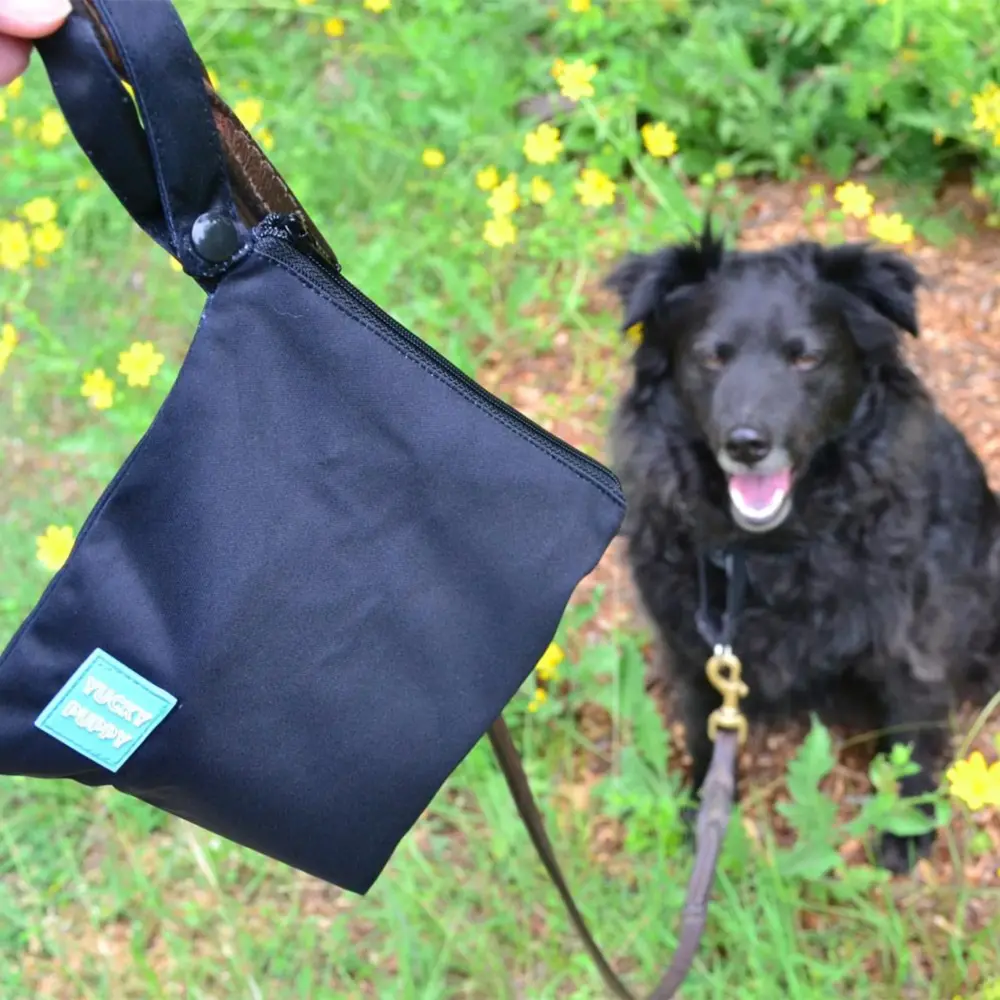
Waterproof Poop Bag Holder, Choose size
Price range: $23.95 through $24.95
Why it fits: Somewhere for full bags until you reach a bin, which may be back at the lot: a zippered, waterproof pouch that clips to the leash.


Hot sand, sun and heat
Around midday, the AKC’s beach tips warn, sand can get hot enough to burn paw pads. Walk along the water’s edge, where the sand is wet and cooler, use booties only if your dog already wears them, and go early in the morning or late in the afternoon, when the beach is cooler and quieter. The parking lot and boardwalk can be the hottest stretch, and the ASPCA advises not letting dogs linger on hot asphalt; our guide to how hot is too hot to walk a dog explains how to check the ground.
Sun on noses and ears
Dogs with white or thin coats and light-pigmented noses are more likely to sunburn, the AKC says, and the spots to protect are the bridge of the nose, the ear tips, the skin around the lips, the groin and the inner thighs. Shade does most of the work. If you add sunscreen, use one labeled for dogs; the AKC advises against zinc oxide and PABA, which are toxic to dogs if licked off, and your veterinarian can suggest a product.
Signs your dog is too hot
Heat is the bigger danger on a summer beach, and VCA notes that flat-faced breeds such as pugs, boxers and bulldogs can show signs of heatstroke when it’s only moderately warm and humid. The ASPCA lists the signs of overheating as heavy panting or trouble breathing, a faster heart rate, drooling, weakness, stupor or collapse.
Safety note
If you see those signs, stop. Move your dog into shade, pour cool, not cold, water over the head, belly, armpits and feet, and let moving air help, as VCA’s heatstroke guidance describes. It advises against ice packs and against covering the dog with wet towels. Then head straight to a veterinarian: VCA calls heatstroke an immediate medical emergency, and complications can develop later, even in a dog who seems to recover.
The car is not a waiting room either. The ASPCA warns that a pet left alone in a parked car can suffer fatal heatstroke, so if lunch is somewhere dogs can’t go, one person stays outside with the dog.
Waves, currents and dogs who don’t swim
Not every dog is a strong swimmer, and the ocean adds waves and currents. For a dog new to the water, the AKC suggests letting them learn at their own pace. Start in calm, shallow water with you close by, let your dog choose how far to go, and never toss a dog in.
- Check conditions. Look at the surf forecast, which rates rip-current risk as low, moderate or high, and ask a lifeguard about rough waves or strong currents. The National Weather Service notes that rip currents often form on calm, sunny days.
- Fit a life jacket. The AKC recommends one for inexperienced swimmers and wherever there are waves or currents. A handle on top lets you lift your dog out of the water.
- Know who’s watching. Dog areas can sit outside the lifeguarded stretch, as at Cape Cod, so agree beforehand who keeps eyes on the dog in the water.
- Scan the sand. The AKC warns of jellyfish and stingrays near shore. Also steer your dog away from dead fish, fishing line and hooks.
- Skip suspect water. The CDC’s algal bloom advice is to check advisories and keep pets out of water that smells bad, looks discolored or has foam or scum. If your dog goes in, rinse them with tap water before they lick their fur.
Safety note
If a current carries your dog out, don’t swim out after them. NOAA’s rip current safety advice for helping someone in trouble applies here too: don’t become a victim yourself. Alert a lifeguard, call 911 if there isn’t one, throw something that floats, never go in without a flotation device, and keep calling your dog from the shore.
Rinsing off: salt, sand and ears
The ASPCA recommends rinsing your dog after a swim to get salt out of the fur. Do it at the beach, before salt dries into the coat and sand rides home in the car. Our guide to cleaning up a dog after swimming has the full rinse-and-dry routine, including thick coats and skin folds; at the beach, the short version is:
- Rinse with fresh water from your jug, or at a beach shower if dogs may use it, from the neck back, keeping it out of the eyes and ears.
- Clean sand from between the pads with a paw cleaner cup, and check the pads for cuts from shells.
- Dry the ear flaps and the opening you can see with a towel. Never push anything into the ear canal.
- Towel off with the dry towel, and wipe paws and face as your dog gets in.
The ears get the extra minute because, as the AKC explains, frequent time in water can trap moisture and heat in the ear, and floppy-eared dogs are at greater risk of ear infections. Head shaking, scratching, redness, discharge or a bad smell in the days after is a reason to see your veterinarian.
-
Bark Fifth Avenue
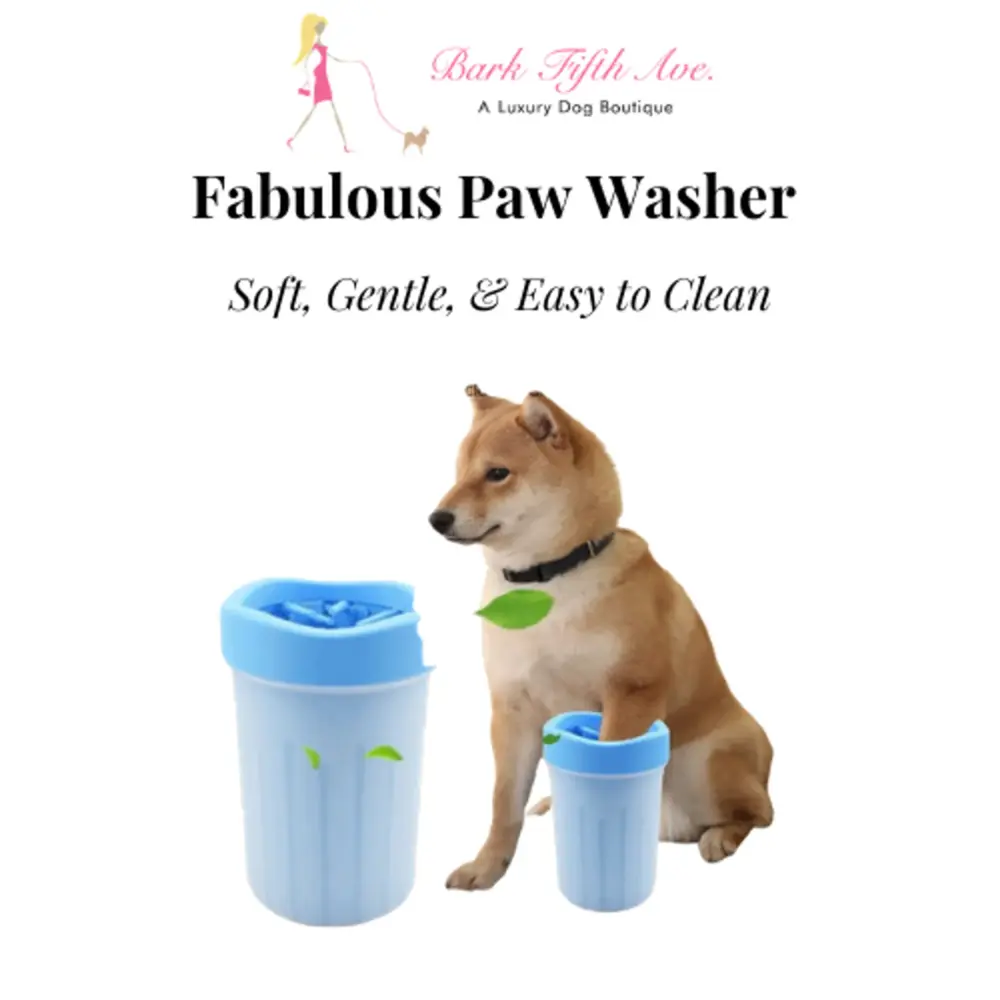
Fabulous Paws Dog Paw Cleaner Cup, Choose size & color
$31.95
Why it fits: Lifts sand from between the pads before the car: add a little fresh water, slip in a paw, twist the soft silicone bristles and pat dry.
-
Mr. Peanut’s
Naturals Pet Wipes
$26.95
Why it fits: A last wipe for paws and face after the rinse: 150 large, thick 6 x 10 in wipes, made to be gentle around eyes and ears.
Currently out of stock


The ride home: covering the seat and the floor
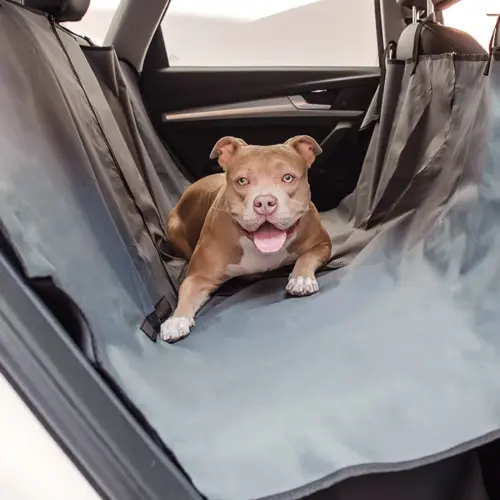
Even after a rinse, a beach dog gets in the car damp and a little sandy. Fit a waterproof hammock at home, not in the beach lot while you’re juggling a wet dog and a leash. Clipped to the headrests, it covers the back seat and the backs of the front seats, so salt water and sand land on something you can wash. Choosing one? Our comparison of dog hammocks and seat covers explains which suits your car.
- Lay an old towel in the footwells and on the cargo floor for sandy bags, shoes and feet.
- Put wet towels and toys in a plastic bag, not loose on the seat.
- Run the air conditioning for a few minutes before your dog gets in; a car parked at the beach heats up fast.
The hammock keeps the seat clean, but it won’t keep your dog on it. For that, clip a seat-belt tether to the back ring of a harness, not a collar, or use the crate your dog normally travels in. A tether keeps your dog from roaming the car, but it is not crash protection. More options are in our travel and car accessories.
-
GF PET
Waterproof Dog Car Hammock Seat Cover, View product
$60.95
Why it fits: Sand and salt water land on a washable layer instead of the upholstery: a 58 x 57 in waterproof back seat hammock. Measure your seat first.
-
Adjustable Dog Car Seat Belt Tether, View product
$23.95
Why it fits: Keeps your dog on the covered back seat instead of climbing into the front: the carabiner clips to a harness, never a collar. Two per pack.

Back home: coat, paws and the car
The beach rinse is a first pass. Once you’re home:
- Brush once dry. Dry sand shakes and brushes out of the coat more easily than wet sand. If the coat still feels salty or gritty, give a bath with a dog shampoo.
- Check paws again. Look between the toes for leftover sand and on the pads for small cuts. The door routine in how to clean dog paws after a walk works here too.
- Clear out the car. Shake the cover outside and wash it as its label directs, then vacuum the footwells and seat seams. Damp towels left in the car start the smell; see getting dog smell out of a car.
- Restock the bag. Rinse and dry the paw cup, and refill the wipes and bags.
The toy you throw matters more in water than on grass. Dog toys that float covers which materials stay up and which colours a dog can actually see.
What to leave at home
- A retractable leash. It runs past most leash limits, is hard to keep short in a crowd, and the thin cord wraps around legs, umbrellas and other dogs.
- A ball that collects sand. The AKC warns that eaten sand can block the intestines, and a ball coated in wet sand puts some in your dog’s mouth at every catch. For fetch in the water, the AKC suggests a brightly colored floating toy your dog can spot on the waves.
- Gear your dog hasn’t tried. Introduce a life jacket or booties at home first, not on the beach.
Sometimes the dog stays home too: on a hot, crowded summer day, a flat-faced, elderly or anxious dog may be happier with a quiet walk and a cool floor. Turning the beach day into a night away? Our dog camping essentials list covers the overnight gear.
Related guides
-
Checklist
What to Bring to the Dog Park (and What to Leave at Home)
A dog park checklist for the first visit and every one after: what goes on your dog and in your bag, what to leave at home, how to scout a park and use the double gate, the signs it's time to go, and a quick cleanup for paws and car seats before the drive home.
-
Checklist
Winter Hiking With a Dog: Checklist for Cold, Ice and Short Days
A winter trail-day checklist: plan a shorter, sheltered route around daylight, keep your dog leashed and off frozen water, pack water that won't freeze and a coat for dogs who feel the cold, check paws for ice balls and salt, and know when to turn back.
-
Checklist
What to Tell Your Dog Walker: A Handover Checklist
Everything a new dog walker needs on one page: where the gear lives and how it goes on, how your dog walks, leash and route rules, medications and treats, emergency contacts, the door routine, weather rules and a first walk together.