Outdoors & Adventure Buying guide
Dog Toys That Float: What to Bring to the Lake or Pool
Short answer
Toys float when they trap air or are made from closed-cell foam or buoyant fabric. Most plush toys sink once waterlogged, rope sinks immediately, and a punctured rubber ball fills and goes down. Pick something that floats high enough to be seen, in a colour that stands out against water rather than against grass, and rinse it after every session in salt water or a pool.
Our picks at a glance
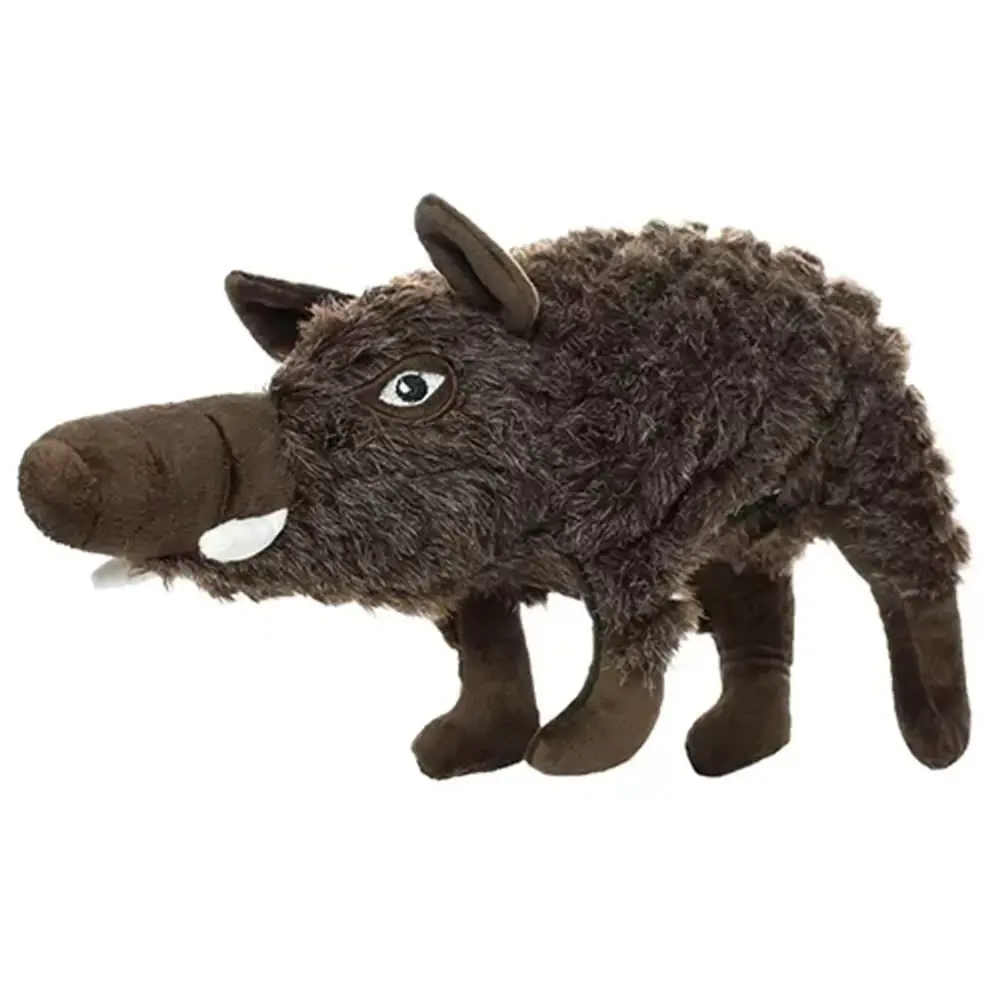
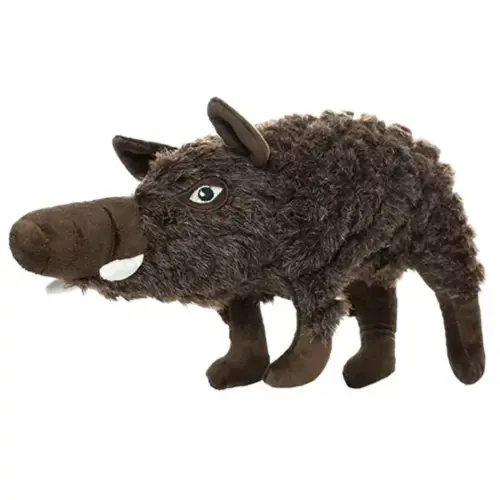
- Massive Javelina Dog ToyA full-size plush on two layers that floats and machine washes
- Fire Hose Crocodile Dog ToyFire-hose material with no stuffing to waterlog
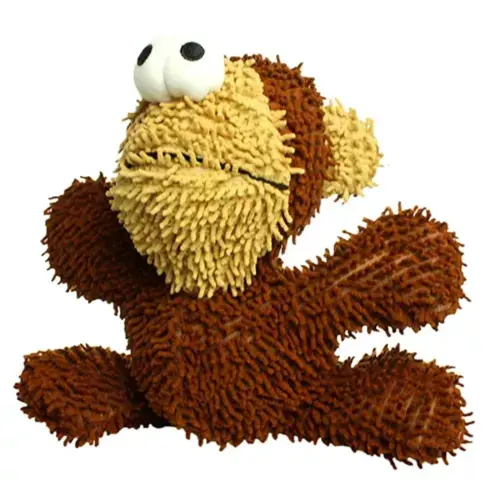
- Microfiber Ball Dog ToyA large plush ball that floats and washes
Why a normal toy fails in water
Three things go wrong. The toy sinks, the toy becomes invisible, or the toy comes home wet and stays wet. All three are predictable from the material before you buy.
Ordinary stuffed plush absorbs water through the fabric and the filling, which means it floats for a minute and then rides lower and lower until it goes under. Rope sinks on contact and holds water for days afterwards. A hollow rubber ball floats beautifully until the first puncture, then fills and sinks on the next throw.
Sinking is not just an inconvenience. A dog who sees a toy go under will often dive for it, and dogs who repeatedly submerge their heads while swimming can take in a dangerous amount of water.
Safety note
Water intoxication is rare but serious, and it happens to dogs who swallow large quantities of water while retrieving, diving for a sinking toy, or biting at a hose or a wave. Signs include staggering, vomiting, glazed eyes, bloating and lethargy. It is a medical emergency; go to a veterinarian immediately rather than waiting.
What makes a toy float
- Closed-cell foam, which traps air in sealed pockets and does not absorb water at all.
- Sealed air chambers in rubber or plastic, which work until something punctures them.
- Buoyant fabric construction, where layered synthetic materials hold enough air to stay up even when the surface is wet.
- Low-density plastics, which float on their own without needing trapped air.
- No absorbent filling. Anything that soaks up water will eventually ride low, whatever the outer fabric.
Several layered fabric toys built for tug and shake also float, which is useful because it means the same toy works in the garden and at the lake rather than needing a separate water toy. Check the maker’s description rather than assuming; two toys that look identical can behave completely differently once wet.
Visibility matters more than you think
This is the mistake almost everyone makes. A toy that is easy to see on grass can be nearly invisible on water, and the colours that work are not the ones you would guess.
Dogs are dichromatic. They see blues and yellows well and cannot distinguish red and orange from green the way we do, so a red toy on a lake is far harder for a dog to track than it is for you. Blue is the colour that stands out most reliably to a dog against both water and grass, with yellow a close second.
For you, the opposite is true: a bright orange or pink toy is the easiest for a human to spot in chop or glare. A toy that is one of those colours on top and blue or yellow elsewhere suits both of you, and a long shape is easier to see at distance than a ball.
| Condition | Hardest to see | Easier |
|---|---|---|
| Open water, bright sun | Red, dark green | Blue, yellow, white |
| Chop or waves | Anything small and round | Long shapes with a tail or limbs |
| Weedy pond | Green, brown | Blue, orange |
| Snow or foam | White | Blue, bright pink |
| Dusk | Everything | Stop playing in water at dusk |
Salt water, chlorine and rinse routine
Salt and chlorine both degrade fabric and rubber, and both leave residue that a dog then licks off the toy for the rest of the week. A rinse takes thirty seconds and roughly doubles the life of a water toy.
- Rinse the toy in fresh water before it dries, ideally at the beach tap rather than at home.
- Squeeze a fabric toy out rather than wringing it, which breaks down stitching.
- Hang it or stand it on end so water drains out instead of pooling inside.
- Dry it in the air and out of direct sun; a hot car is the worst place a wet toy can go.
- Machine wash fabric toys occasionally on a cool cycle, then air dry fully.
- Check seams and squeakers before the next trip, since wet fabric fails faster than dry.
Do not put a wet toy back in a sealed bag or a car boot. That is how a toy grows mould, and mouldy toys should be thrown away rather than washed. How to clean dog toys covers the wash cycles and what survives them.
Rope, fabric and the drying problem
Rope is the worst material for water on every count. It sinks, it holds water for days, it grows mould inside where you cannot see, and when it dries stiff it frays faster. If you use rope toys at all, keep them away from the water entirely.
Layered synthetic fabric handles water far better. It drains rather than absorbing, dries in hours rather than days, and most of it is machine washable. Natural fibres, felt and anything with a cardboard or wooden core are all unsuitable.
Size and throwing distance
Water toys need to be bigger than land toys, for two reasons. A toy that is easy to pick up on grass is harder to grab at the surface of moving water, and a small toy disappears between waves.
Length also helps a dog grab a floating toy without pushing it under. A long shape with a tail or limbs gives something to catch at an angle; a smooth ball tends to get nosed along the surface. The same rule about choking applies as on land: the toy should be clearly too large to fit behind the molars.
If you are throwing any distance, a launcher gets a toy out past the shallows. Keep the throws low and the sessions short, for the reasons in are ball launchers bad for dogs; swimming is gentler on joints than sprinting, but repeated entries and exits over rocks are not.
Our picks for the water
-
Mighty
Massive Javelina Dog Toy, Choose color
Price range: $48.95 through $55.95
Why it fits: A full-size plush on two layers that floats and machine washes, with enough body for a large dog to grab at the surface without pushing it under.
-
Fire Hose Crocodile Dog Toy, View product
$30.95
Why it fits: Fire-hose material with no stuffing to waterlog, in a long 26-inch shape that is easy to see and easy to grab in chop.
-
Mighty
Microfiber Ball Dog Toy, Choose color
Price range: $40.95 through $41.95
Why it fits: A large plush ball that floats and washes, big enough for a medium or large dog to carry and soft enough for the drive home.

Safety rules for water fetch
- Know the water before you throw anything into it: depth, current, weed and what is on the bottom
- Do not throw into waves that are breaking, or into any current your dog cannot swim against
- Keep sessions short; swimming is far more tiring than it looks
- Watch for a dog swimming lower in the water, which is the first sign of fatigue
- Stop if your dog is biting at the surface or swallowing water as they swim
- Rinse the dog as well as the toy after salt or chlorine
- Dry the ears properly afterwards; trapped water leads to infections
A life jacket is worth it for any dog swimming in open water, including strong swimmers, because tiredness in a current is the thing that goes wrong. Taking a dog to the beach covers tides, heat and sand, and cleaning a dog after swimming covers the rinse that prevents skin and ear problems.
Drying and storing between trips
Keep water toys separate from the house toys. A dedicated bag that lives in the car, emptied and dried after each trip, stops a wet toy ending up in the toy box and stops the sand coming indoors.
Inspect them before each outing rather than after. Wet fabric hides damage well, and a seam that opened at the lake is much easier to spot once the toy is dry at home. Anything frayed, split or holding water inside should be retired; when to throw away a dog toy covers the checks.
Common questions
Do tennis balls float?
A new one floats, though it sits low and waterlogs within a few throws. The abrasive cover is also hard on tooth enamel over time, so it is a poor choice as a regular water toy.
Will any toy that floats be safe to swim with?
Floating is the minimum rather than the whole test. It also needs to be too large to swallow, free of hard parts that could injure the mouth at speed, and free of long strands. Supervise every session.
My dog refuses to let go of a wet toy. What now?
Carry a second identical toy. Showing the fresh one is usually enough for a dog to drop the first, and it avoids a tug session with a tired dog standing in cold water.
Related guides
-
Checklist
When to Throw Away a Dog Toy: The Checks That Prevent an Emergency
Toys do not wear out quietly like a bed or a leash; they fail by releasing a piece small enough to swallow. This is a thirty-second weekly inspection, the signs that mean retire it now, and what to do if your dog has already swallowed part of one.
-
Buying guide
Gifts for Small Dogs: Beds, Coats, Car Seats and More That Fit
Gift ideas chosen by size, not breed: a rimmed cuddler bed, a coat in XXS to Medium, a booster seat for dogs up to 24 lb, a backpack carrier up to 25 lb, a padded XS or Small harness set and a 10-inch plush fox, plus the measurements to get before you order.
-
Buying guide
What to Get Your Dog for Christmas: Gifts for Tuggers to Nappers
Choose your dog's Christmas gift by what they already do: a stuffing-free fire hose toy for tuggers and shredders, a plush fox for gentle carriers, a lick mat or slow feeder for lickers and fast eaters, and a cuddler bed or coat for small dogs, plus safety checks, unwrapping and gifts to skip.