Toys & Play Guide
Are Ball Launchers Bad for Dogs? Joints, Adrenaline and How Much Is Too Much
Short answer
The launcher is not the problem; the pattern it enables is. Repeated flat-out sprints with hard stops and turns load joints heavily, and high-speed fetch raises arousal in a way that leaves some dogs less settled rather than more. Used two or three times a week, in short sessions, on good footing, with the ball thrown along the ground rather than at full stretch, a launcher is a reasonable way to exercise a high-energy dog.
The honest answer
There is no evidence that throwing a ball for a dog is inherently harmful, and plenty of dogs play fetch happily for a lifetime. What has changed is the volume. A launcher removes the natural limit that used to govern the game, which was how far and how often a person could throw.
A dog who used to get twenty throws now gets a hundred, each one further, each one ending in a skidding turn. That is a different activity, and it is the volume rather than the tool that deserves scrutiny.
What repetitive fetch does to a body
The sprint itself is not the issue. Dogs are built to run. The load comes from what happens at each end of the sprint.
- The acceleration. A standing start to full speed in a few strides puts peak force through the hindlimbs and the lower back.
- The braking turn. Stopping hard and pivoting to pick up a moving ball loads the stifle joint sideways, which is the direction the cruciate ligament resists.
- The jump and twist. Catching a ball in the air and landing on the front legs concentrates force through the shoulders and elbows.
- The surface. Wet grass, sand and smooth floors all let the feet slide at the moment of maximum load.
- The repetition. The first ten throws and the hundredth are not equivalent; a tired dog lands and turns worse.
None of this means a dog will be injured. It means the risk is cumulative and is easy to reduce without taking the game away.
The adrenaline problem
The behavioural side gets less attention than the physical one and matters just as much. Chasing a thrown object is self-rewarding at a level that very little else matches, and it is a short, intense loop that repeats without the dog having to think.
Some dogs come out of a long fetch session unable to settle. They pace, they stare at where the ball went, they bring you other objects, they struggle to sleep. That is not a dog who needs more exercise. That is a dog whose arousal has been driven up and never brought back down, and adding another session makes it worse rather than better.
The dogs this affects most are the ones people most often use a launcher for: fit, driven, working-line dogs with a lot of energy. The useful mental shift is to stop treating fetch as a way to tire a dog out and start treating it as a high-intensity activity that needs a warm-up, a limit and a wind-down. Signs your dog is bored covers what a dog in that state actually needs.
Dogs at higher risk
| Dog | Why | What to change |
|---|---|---|
| Puppies and adolescents | Growth plates are still open | Short, low throws along the ground; no jumping |
| Large and giant breeds | More mass through the same joints | Fewer repetitions, softer ground |
| Overweight dogs | Load scales with weight | Walk and swim first; build fitness before sprinting |
| Dogs with any joint history | Existing damage worsens with shear force | Speak to your veterinarian before any fetch programme |
| Unfit dogs on weekends only | Sudden intensity on untrained tissue | Build up gradually across the week |
| Flat-faced breeds | Breathing limits cooling and recovery | Very short rounds; stop on breathing, not interest |
How much fetch is reasonable
There is no official figure, and any number you see online is someone’s judgement rather than a finding. A sensible working rule for a fit adult dog is two or three sessions a week of ten to fifteen minutes, not a daily session that runs until the dog stops.
Judge by what happens afterwards rather than during. A dog who comes home, drinks, and goes to sleep has had an appropriate session. A dog who comes home wired, or who is stiff the next morning, has had too much.
- Warm up with five minutes of walking before the first throw
- Throw low and along the ground rather than high and far
- Stop while the dog still wants more, not when they stop
- Use flat, even footing; avoid wet grass and sand for repeated turns
- Break the session with a sit, a sniff or a short settle every few throws
- Finish with five minutes of walking and sniffing to bring arousal down
- Keep the whole thing under fifteen minutes
Safer ways to use a launcher
The launcher solves a real problem, which is that your shoulder gives out long before a fit dog does. Used deliberately it is a good tool.
- Roll rather than launch. A ball sent along the ground gives the same chase without the leap and the landing.
- Vary the direction. Throwing to the same side every time loads the same turn repeatedly.
- Throw before the dog is released, so they run to a ball that has already stopped rather than skidding to intercept it.
- Build in a wait. Asking for a sit before each throw turns the session into training and lowers the arousal spiral.
- Hide some throws. Send the dog to search for a ball they did not see land; sniffing is calming where chasing is not.
- Count, do not watch the dog. Decide on a number of throws before you start and stop at it.
Safety note
Never aim a launcher at a dog, a person or an animal, and keep others clear of the line of fire. Use one in open space only, and do not use it where a dog could run into a road, a car park or water with an unknown bottom.
Ball size and the choking risk
A ball that fits entirely into the back of a dog’s mouth can lodge in the throat, and this has killed dogs. The ball should be clearly too large to pass behind the molars, which for a large dog means something bigger than a standard tennis ball.
Tennis balls carry a second issue: the abrasive outer covering acts like sandpaper on tooth enamel over years of carrying. They are fine occasionally and a poor choice as the daily ball for a dog who holds one constantly.
Check the ball for splits as part of the weekly toy check, since a split ball can trap a tongue or come apart into swallowable pieces. When to throw away a dog toy has the full inspection.
Better games to mix in
If your goal is a tired, settled dog rather than a fast one, fetch should be one item on a varied list rather than the whole list. Sniffing and problem-solving produce the kind of tiredness that leads to sleep.
- Scatter feeding and search games, which use the nose and lower arousal rather than raising it
- Tug, which gives a full grab-and-shake sequence with a built-in off switch
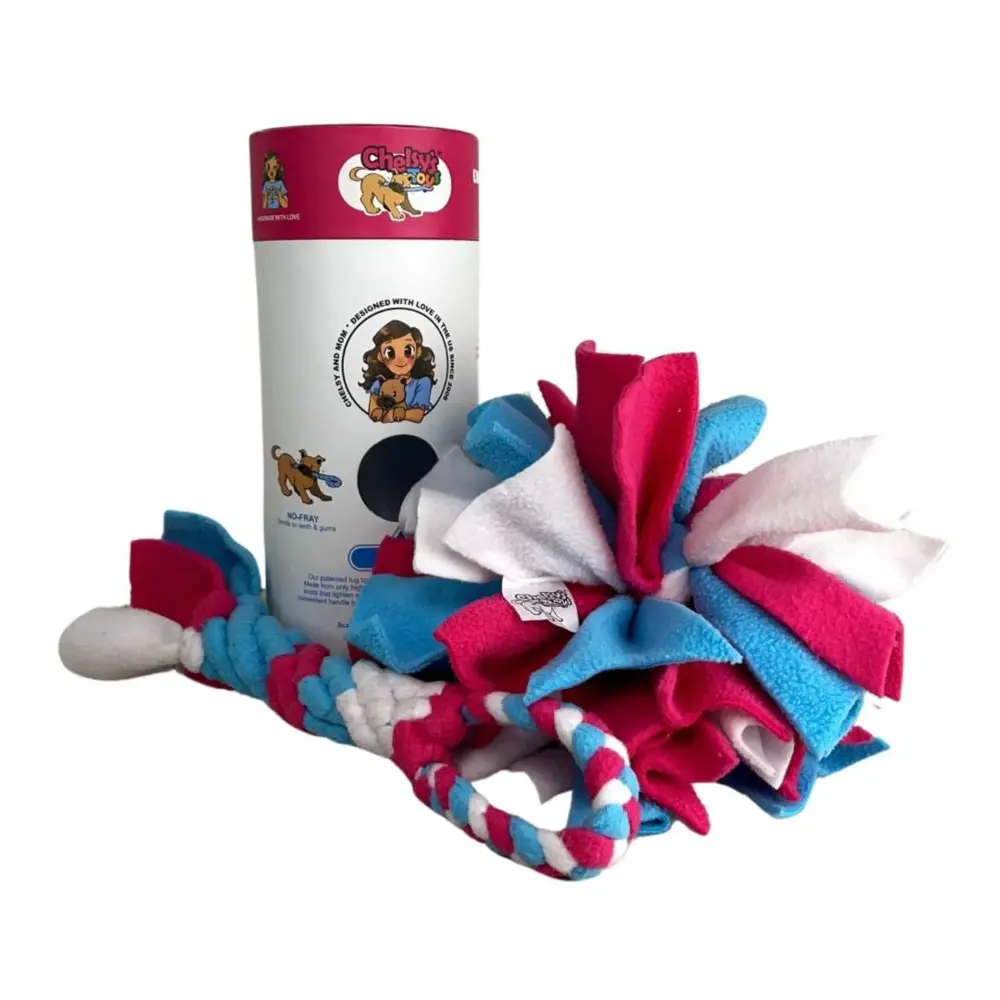
- Food puzzles and enrichment toys for the late afternoon slump, starting with a multi-mode enrichment tube
- Long-line walks on varied ground, where the dog chooses the pace
- Training sessions of five minutes, which tire a dog surprisingly well
- Swimming, where the water removes the impact from the exercise
-
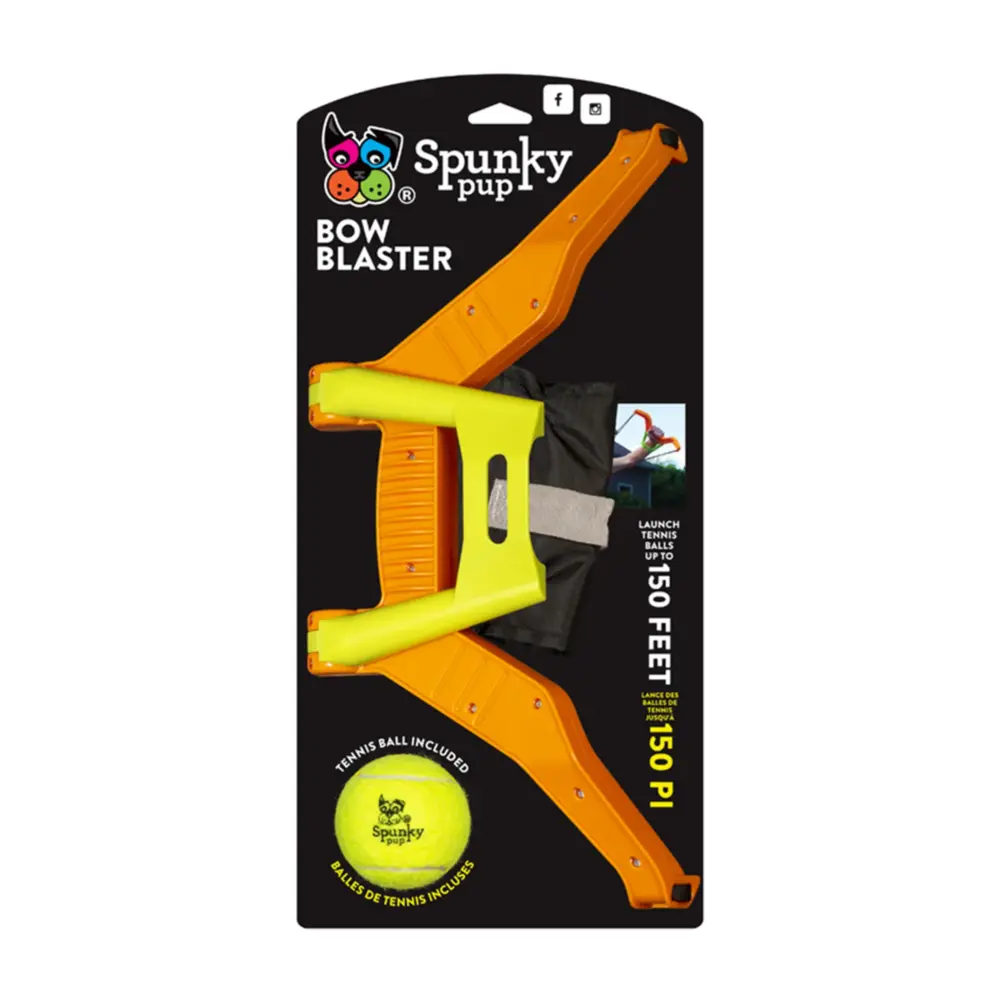
Spunky Pup
Bow Blaster Ball Launcher, View product
$34.95
Why it fits: A hand-held launcher that sends a ball far further than you can throw, folds flat for a car door and takes most toys in the pouch, not just one size of ball.
-
Mighty
Microfiber Ball Dog Toy, Choose color
Price range: $40.95 through $41.95
Why it fits: A large plush ball that is soft on teeth and big enough for a medium or large dog to carry without it sitting behind the molars.
-
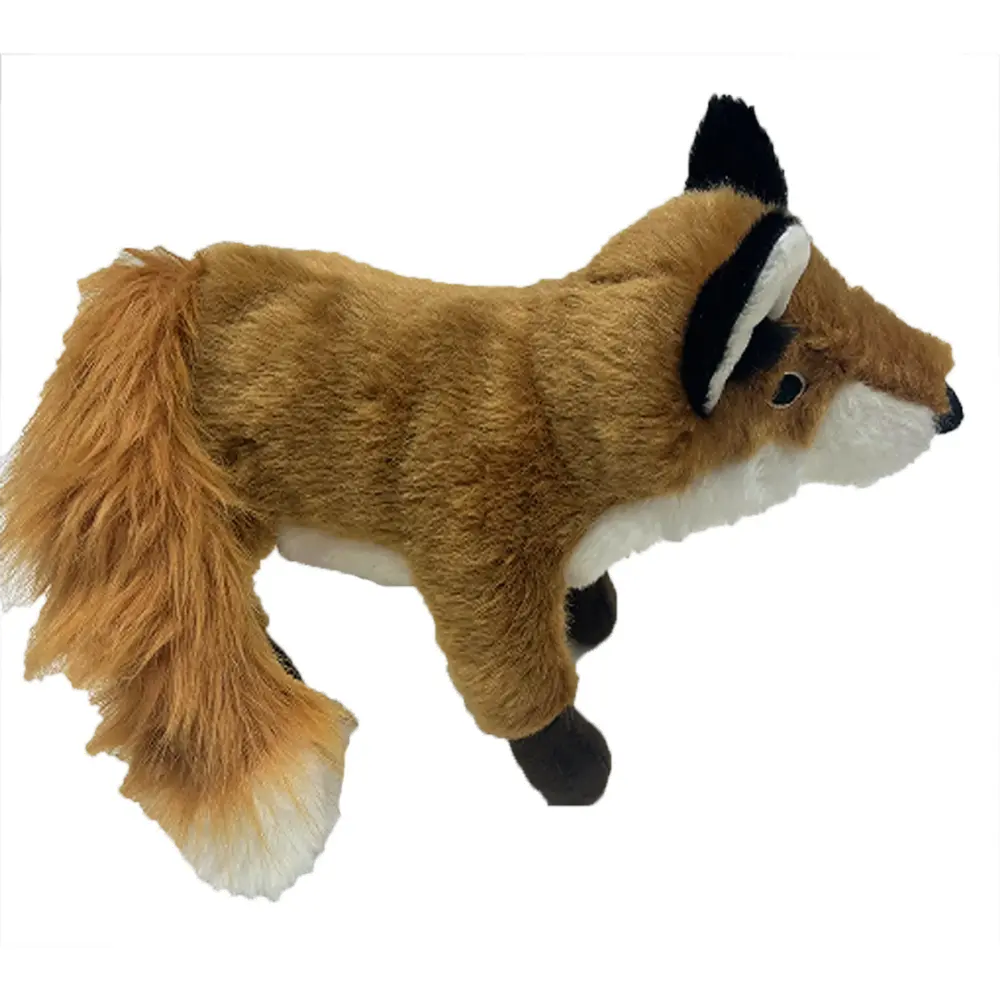
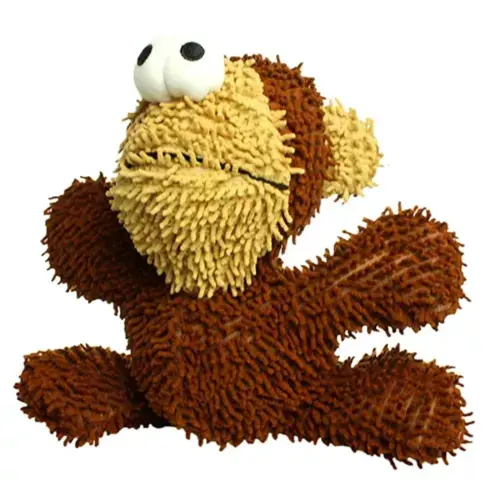
Realistic Plush Fox Dog Toy with Squeaker, View product
$30.95
Why it fits: A plush fox with a long tail, for the tug and shake games worth mixing in between throwing sessions.

Signs you have overdone it
Dogs are poor at stopping themselves during a game they find this rewarding, so the judgement has to be yours. Watch for these in the hours and the day afterwards.
- Stiffness or a short-strided gait the next morning
- Reluctance to go up stairs or jump into the car
- Licking at a joint, usually a wrist or a stifle
- Lying down during the session, then getting up to chase again
- Pacing and whining at home instead of sleeping
- Obsessive staring at the launcher, the cupboard or the garden
Any limp that lasts more than a day, or that appears suddenly mid-game, needs a veterinary appointment rather than rest and hope. A dog who cannot bear weight at all should be seen the same day. Signs a dog is in pain covers what changes before a limp appears.
Common questions
Is a launcher worse than throwing by hand?
Not in itself. It throws further, which means longer sprints and more speed into the turn, and it makes long sessions effortless for the human. Both of those raise the volume, which is what matters. Used with a throw count and low trajectories, it is no worse.
My dog is obsessed with the ball. Should I stop completely?
A full break of a few weeks helps many dogs reset, after which fetch can come back as a short, structured game among others. If your dog cannot settle at all without a ball, that is worth discussing with a qualified behaviour professional rather than managing alone.
What about frisbees?
The same logic applies, with more jumping and twisting. Keep discs low and let the dog take them off the ground rather than at full stretch in the air, which is where most disc injuries happen.
Related guides
-
Checklist
When to Throw Away a Dog Toy: The Checks That Prevent an Emergency
Toys do not wear out quietly like a bed or a leash; they fail by releasing a piece small enough to swallow. This is a thirty-second weekly inspection, the signs that mean retire it now, and what to do if your dog has already swallowed part of one.
-
Guide
Signs Your Dog Is Bored, and What Actually Fixes It
Boredom, anxiety and pain produce similar behaviour and need completely different responses. This guide separates them, explains why more walking often fails, and sets out a weekday plan that works.
-
Guide
Why Does My Dog Bring Me Toys? What It Means and How to Respond
A toy at the door is usually a greeting, an invitation to play or both. Learn to tell which, when to play, say hello or trade, and what to do when it turns into demand play or keep-away.