Toys & Play Checklist
When to Throw Away a Dog Toy: The Checks That Prevent an Emergency
Short answer
Retire a toy as soon as a piece can come off it. That means any opened seam, exposed filling, a loose or located squeaker, frayed rope strands, a cracked hard toy, or a chunk small enough to swallow whole. Check the toy box once a week rather than waiting for something to look obviously broken, because the dangerous stage comes before that.
Why toys are different from other gear
A worn bed is uncomfortable. A worn harness fits badly. A worn toy can kill a dog, and it usually does it on the day it first opens rather than after months of decline. That difference is why toys deserve their own inspection habit instead of being lumped in with the rest of the kit.
The two failure modes that matter are obstruction and laceration. Obstruction is a swallowed piece that will not pass: stuffing, a squeaker, a lump of rubber, a knot of rope. Laceration is a sharp edge on a cracked hard toy. Both can need surgery, and both are entirely preventable by throwing something away a week earlier than feels necessary.
The other reason toys get missed is emotional. People keep the toy their dog has loved since they were a puppy, long past the point where it should have gone. Take a photo of it and replace it.
The weekly thirty-second check
Do this on the same day you do something else routine, so it actually happens. Pick up each toy in turn and run through the list.
- Pull gently at every seam; does anything give or gape?
- Squeeze the body; can you feel a hard squeaker moving loose inside?
- Look for exposed filling, however small the opening
- Check limbs, ears and tails, which fail before the body does
- Run a hand over hard toys for cracks, splits or sharp edges
- Check rope ends for loose strands or a thinning middle
- On balls, look for a split in the shell and for teeth marks that have gone through
- Hold the toy up: is any piece now small enough for your dog to swallow whole?
Anything that fails one of these goes in the bin, not back in the box. If you find yourself negotiating with the list, that is the answer.
Retire it immediately if
- A seam has opened at all. Not when the hole gets bigger. At all.
- The squeaker is exposed or audibly loose. A located squeaker is a swallowing event waiting for an opportunity.
- Filling is visible. Even a tuft.
- A hard toy is cracked or has a sharp edge. Cracked plastic and nylon cut gums.
- A piece has already come off. Assume the next one will too.
- A ball has split or lost a chunk. A split ball can also trap a tongue.
- Rope has gone furry or thin anywhere. Strands are the problem, not the knot.
- The toy now fits entirely in your dog’s mouth. Toys shrink as they are chewed down; size out is as important as size in.
Squeakers and the bits inside
The squeaker is the single most swallowed component of a soft toy, because many dogs treat finding it as the entire point of the exercise. It is a rigid plastic disc or cylinder, roughly the size of a coin, and it does not show up well on an x-ray.
Plastic eyes, noses and sewn-on tags are the next group. On a cheap toy these are glued or lightly stitched, and a dog who works at the face will have one off within a session. Toys with embroidered features instead of plastic ones avoid the problem entirely and are worth choosing for a dog who starts at the face.
Some squeakers are built to keep working after being punctured, which removes the usual reason a dog digs deeper into the toy. That is a useful feature, not a reason to skip the weekly check.
Rope, fleece and fabric strands
Rope toys deserve a paragraph of their own because they fail in a way that does not look like failure. A frayed rope end looks harmless and shreds into long individual strands, which a dog swallows a few at a time without any drama.
Those strands are a linear foreign body, and they are among the worst things a dog can ingest. Rather than passing, a long strand can anchor at one end while the gut keeps trying to move it along, which damages the intestine along its length. Cats are at particular risk from the same mechanism with string and tinsel.
Safety note
If you use rope toys, keep them for supervised games only and retire them at the first sign of fraying. If you see string, thread or fabric at your dog’s rear end, do not pull it. Contact your veterinarian straight away.
Hard toys and teeth
Hard toys fail in two directions. They crack and produce sharp edges, and they stay intact and crack teeth instead. The rule of thumb used by veterinary dentists is simple: if you cannot make a dent in it with a thumbnail, or you would not want it dropped on your knee, it is too hard for a dog to chew.
Slab fractures of the upper carnassial tooth are a common and expensive consequence, and dogs rarely show pain in a way owners notice. Signs a dog is in pain covers the quiet changes worth watching for, including chewing on one side only.
What to do with a toy you are unsure about
- Take it away first and decide afterwards. Nothing is lost by a toy spending an hour on a shelf.
- Try to pull a piece off yourself with moderate hand pressure. If you can, your dog certainly can.
- Compare any detachable piece with your dog’s mouth. If it would fit in whole, it is a choking or obstruction risk.
- If the toy is salvageable, cut off the damaged part cleanly rather than leaving it to fray further.
- If it is a favourite, order the replacement before you throw the old one away, so there is no gap.
- Bin it rather than leaving it in the garden or the car, where it will find its way back.
If your dog swallowed part of a toy
Call your veterinarian rather than waiting. Tell them what the piece was made of, roughly how big it was, and when it happened, because the advice differs for a small piece of fabric and a rigid squeaker.
Signs that need an urgent appointment include repeated vomiting, refusing food, a painful or distended abdomen, straining without producing anything, drooling, lethargy, or a dog who cannot settle. Do not try to make a dog vomit at home unless a veterinarian has told you to, and never with anything sharp.
For anything lodged in the mouth or throat, where a dog is pawing at the face, gagging or struggling to breathe, that is an emergency. When to call the vet about a dog separates the same-day calls from the ones that cannot wait.
Keeping a rotation so retiring one is easy
The practical reason people keep a dangerous toy is that it is the only one the dog plays with. A rotation fixes that. Keep six to eight toys, have two or three out at a time, and swap them every few days. Dogs treat a toy that has been away for a week as a new toy, so a small collection goes a long way.
Rotation also makes damage obvious, because you are handling every toy regularly instead of stepping over the same three for months. For the wider wear schedule on beds, bowls and walking gear, see when to replace dog and cat gear, and for keeping the survivors clean, how to clean dog toys. Toys that go in the water need their own checks: see dog toys that float.
-
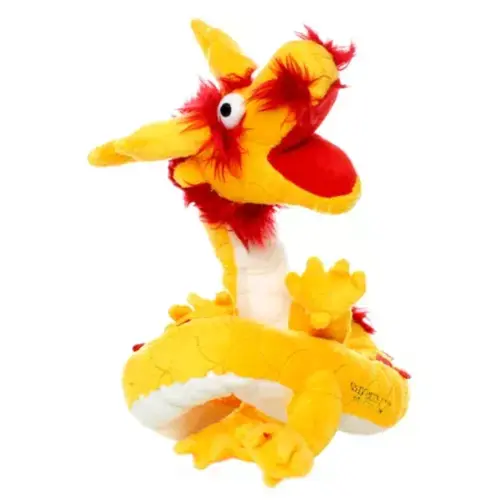
Mighty
Dragon Plush Dog Toy, Choose color
Price range: $40.95 through $43.95
Why it fits: A two-layer plush body, so a puncture meets a second material instead of becoming a tear. Still a supervised toy, not a leave-alone chew.
-
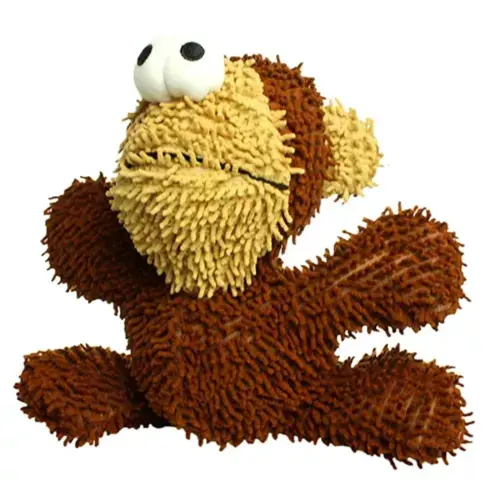
Mighty
Microfiber Ball Dog Toy, Choose color
Price range: $40.95 through $41.95
Why it fits: A plush ball on two layers, soft enough for indoor throwing and built to be shaken rather than chewed apart.
-
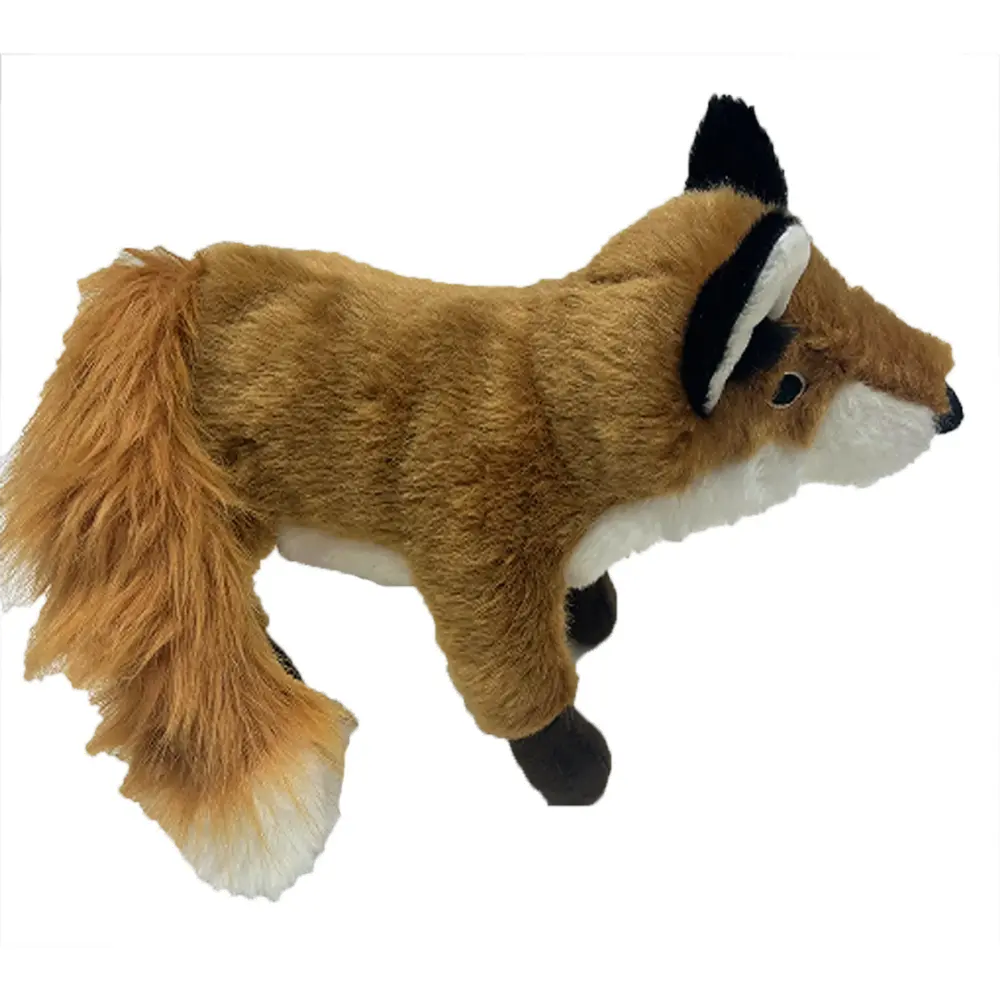
Realistic Plush Fox Dog Toy with Squeaker, View product
$30.95
Why it fits: A plush fox with the squeaker held in the body. A carrying and shaking toy for gentle to moderate chewers.
-
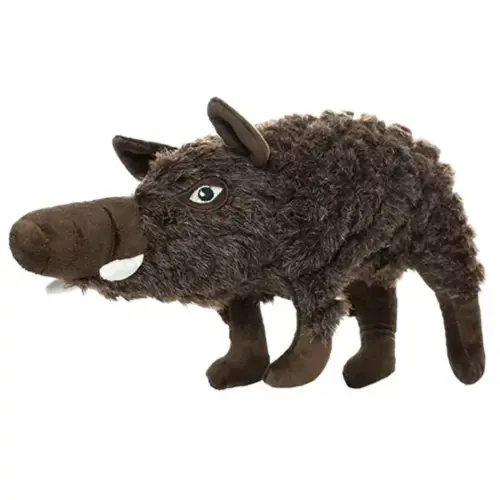
Mighty
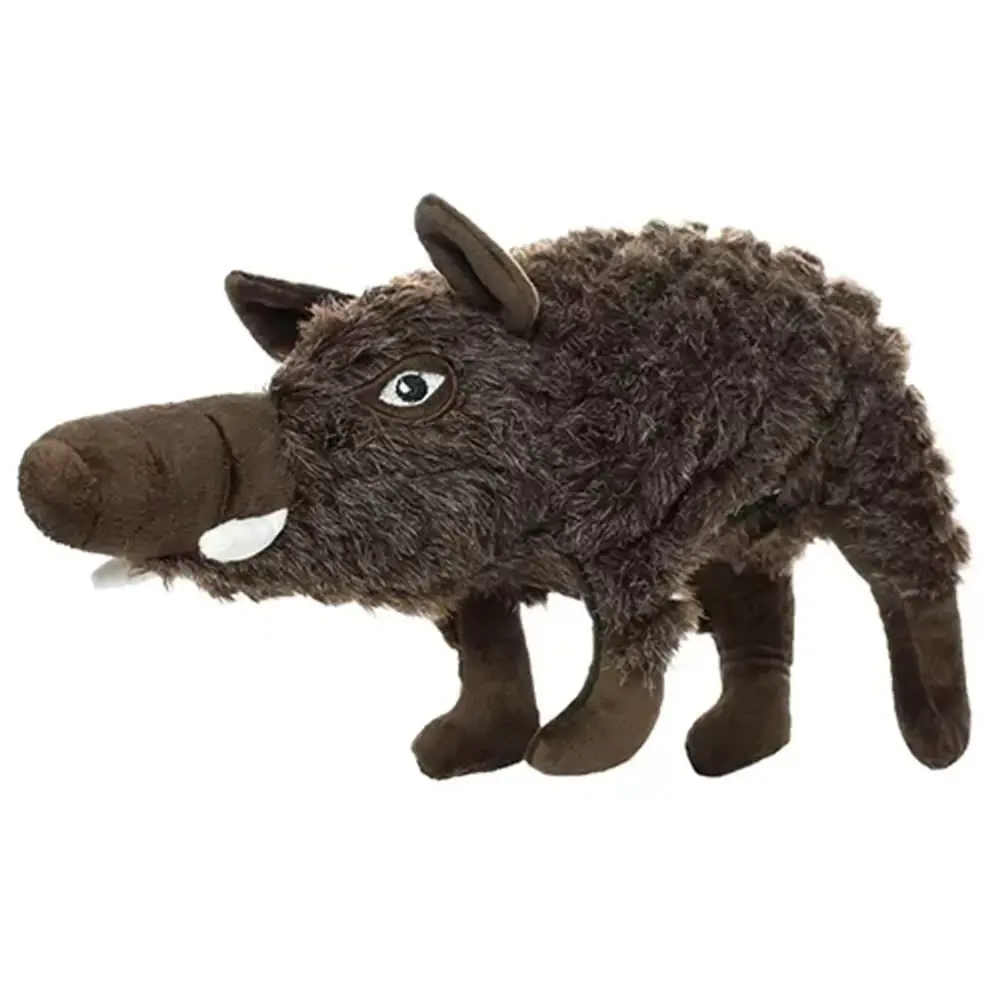
Massive Javelina Dog Toy, Choose color
Price range: $48.95 through $55.95
Why it fits: A full-size plush on two layers for large dogs who need something with enough body to grab and shake properly.

Common questions
How often should toys be replaced?
There is no fixed interval, because it depends entirely on the dog. Check weekly and replace on condition. A gentle dog may keep a plush toy for a year; a determined one may retire a toy in an afternoon.
Can I wash a toy instead of throwing it out?
Washing solves dirt, not damage. A clean toy with an open seam is still going in the bin.
My dog only has one toy they care about. What now?
Buy two of it now, keep one in a cupboard, and rotate them so both wear evenly and neither becomes irreplaceable. It is much easier to retire a toy when the identical replacement is already in the house.
Related guides
-
Guide
Are Ball Launchers Bad for Dogs? Joints, Adrenaline and How Much Is Too Much
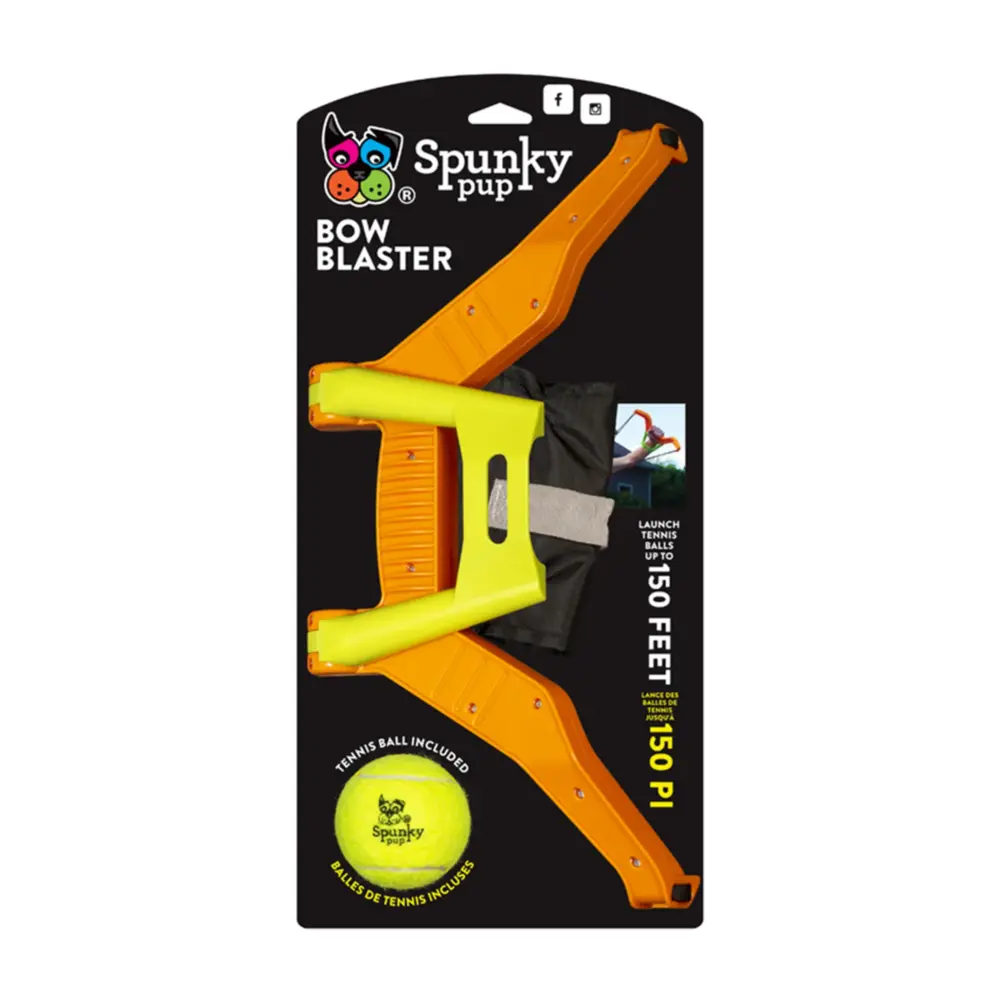
A launcher throws further than your arm and lets a dog sprint and brake repeatedly until something gives. This covers what repetitive fetch does to a body, the adrenaline problem behind the dog who never seems satisfied, and how to use a launcher without the downsides.
-
Comparison
Stuffed vs Stuffing-Free Dog Toys: Which Lasts, Which Is Safer
Both are plush toys, and they fail in completely different ways. This comparison covers why dogs gut a stuffed toy, what stuffing-free versions gain and lose, how layer counts change durability, and which one suits the way your own dog plays.
-
Buying guide
Dog Toys That Float: What to Bring to the Lake or Pool
A toy that sinks in two feet of lake water is a toy you have lost, and a wet toy that never dries turns mouldy in the car. This covers which materials float, why colour choice matters more on water than on grass, and the rinse routine after salt or chlorine.