Toys & Play Comparison
Stuffed vs Stuffing-Free Dog Toys: Which Lasts, Which Is Safer
Short answer
Stuffing-free toys suit dogs whose goal is to get the filling out, which removes the mess and the swallowing risk but not the chewing. Stuffed toys suit dogs who carry, shake and cuddle a toy rather than dismantle it, and they hold their shape for games of fetch and tug. The layer count under the fabric matters more for durability than whether there is filling inside.
The difference in one line
A stuffed toy has loose polyester fill inside a fabric shell. A stuffing-free toy is a flat shell with nothing inside it, usually with squeakers held in sewn pockets. Everything else about the two, including the fabric, the stitching and the number of layers, is independent of that choice.
That matters because people often buy stuffing-free expecting it to be the tougher option. It is not inherently tougher. It simply removes one specific failure, the one where a dog opens a seam and distributes the contents across the living room.
Why dogs gut a stuffed toy
Pulling the filling out of a toy is not naughtiness or boredom. It is the tail end of a sequence dogs are built for: grab, kill, open, consume. A plush animal with something soft inside is a very good match for that pattern, and many dogs work through it methodically, starting with the seams or the face.
Dogs who do this reliably are not going to be trained out of it, and there is no reason they should be. The sensible response is to give them a toy where the sequence is harmless, which is exactly what a stuffing-free toy does, and to supervise so the dismantling stops before anything gets swallowed.
Safety note
Swallowed stuffing is the real risk here, along with squeakers and plastic eyes. Small amounts of polyester fill often pass without incident, but a wad of it can block the gut, and that is a surgical emergency. If your dog has swallowed part of a toy, or is vomiting, off their food or straining, contact your veterinarian rather than waiting to see.
What stuffing-free toys do well
- No mess. A shredded stuffing-free toy is a flat piece of fabric, not a snowstorm.
- Less to swallow. There is no loose filling, which removes the most common thing dogs ingest from plush toys.
- Better for tug. A flat body gives a cleaner grip at each end than a round stuffed shape.
- They dry faster. Nothing inside to hold water, which matters for a toy that goes in the garden or a lake.
- They wash better. No clumping fill to redistribute itself in the machine.
The trade is that they are floppy. A stuffing-free toy does not throw well, does not hold a shape to be carried proudly around the house, and has much less appeal to the dogs who treat a plush toy as something closer to a companion.
What stuffed toys do well
- They throw. Weight and shape make a stuffed toy far easier to toss accurately indoors or in a garden.
- They hold a form. A dog can carry one by the scruff, shake it properly and settle with it.
- They absorb impact. Soft fill makes a toy quieter when it hits a floor or a wall.
- They suit gentle dogs. Many dogs never open a toy at all, and for them stuffing is simply a nicer toy.
- Comfort value. Some dogs take a particular plush toy to bed with them, and a flat one does not serve that purpose.
Side by side
| Stuffed | Stuffing-free | |
|---|---|---|
| Best for | Carriers, shakers, gentle players | Gutters and dedicated tuggers |
| Mess when it fails | Filling everywhere | A flat piece of fabric |
| Swallowing risk | Fill, squeaker, eyes | Squeaker only |
| Good for tug | Reasonable | Very good |
| Good for fetch | Very good | Poor, too light and floppy |
| Washing | Slow to dry, fill can clump | Fast, simple |
| Holds shape over time | Flattens gradually | Stays as it started |
The squeaker is a separate decision
Squeakers are what make many dogs engage with a plush toy in the first place. The noise resembles prey and triggers the same grab-and-shake sequence, which is why a silent toy often gets ignored and the same toy with a squeaker becomes the favourite.
They are also a hard object inside a soft one. A standard squeaker is a small plastic disc that should never be swallowed, which is the main reason to retire a plush toy once the seams open. Some toys use squeakers that keep working after being punctured, which removes the usual motivation to dig further into the toy to find the noise.
If your dog is specifically hunting the squeaker, a stuffing-free toy does not solve that on its own. What helps is a toy with the squeaker held in a sewn pocket rather than loose in the body, and ending the session once the dog has clearly located it.
Layers, stitching and what “tough” means
This is the part that actually predicts how long a plush toy survives, and it applies equally to both types. A single layer of fabric fails the moment a tooth punctures it, because the hole becomes a tear. Two or more layers behave very differently: a tooth that goes through the outer fabric meets a second material that flexes rather than ripping.
Two-layer plush toys pair a soft outer fabric with a non-woven fleece underneath. Four-layer construction adds industrial fabric of the kind used in luggage, plus an internal coating, which is why those toys survive tug games that destroy ordinary plush. Doubled stitching at the seams and limbs matters just as much, since seams fail before fabric does.
Tip
No toy is indestructible, whatever the construction. Layer counts change how long a toy lasts under normal play; they do not make a toy safe to leave with a determined chewer who is on their own.
Our picks
-
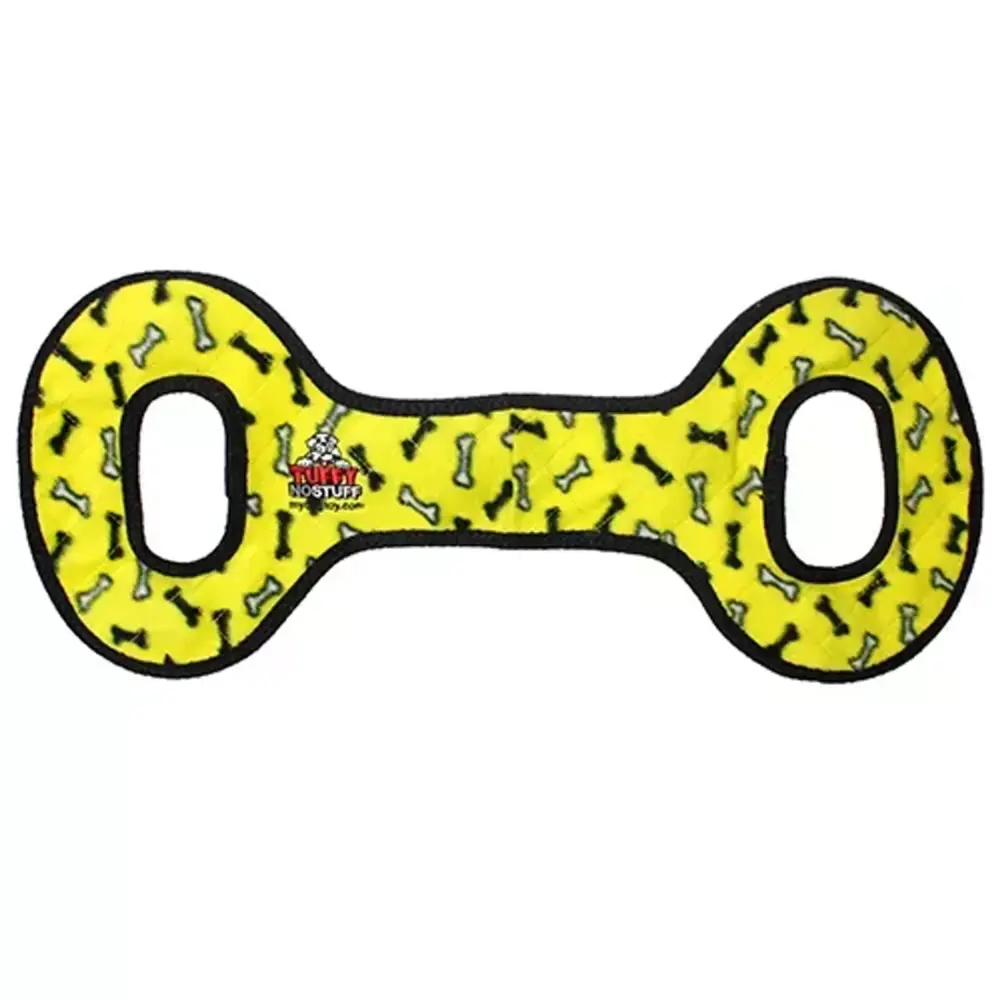
Tuffy
No Stuff Ultimate Tug-O-War, Choose color
$33.95
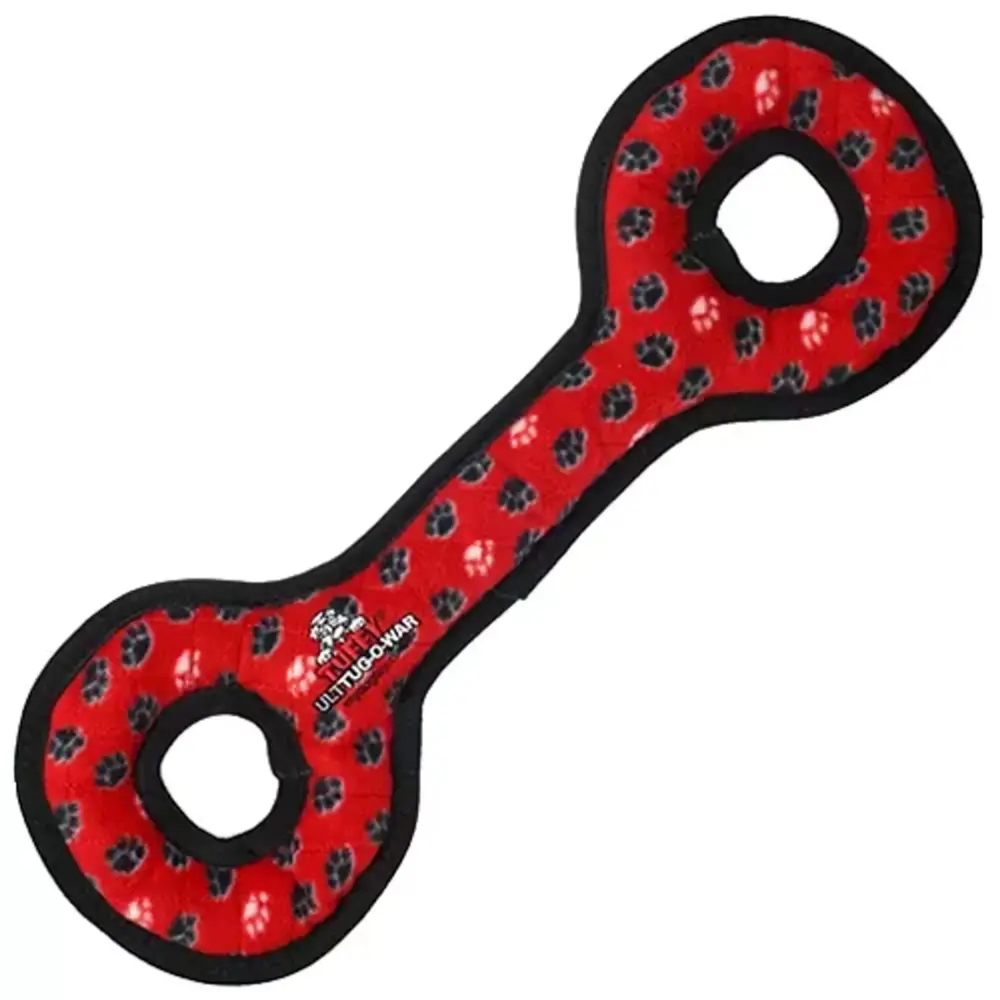
Why it fits: A stuffing-free bone-shaped tug with the same four-layer build as the filled versions. Nothing inside to pull out, two natural grip points.
-
Fire Hose Crocodile Dog Toy, View product
$30.95
Why it fits: Fire-hose material, no stuffing, and squeakers that keep squeaking once punctured, so there is less reason to dig for them.
-
Mighty
Dragon Plush Dog Toy, Choose color
Price range: $40.95 through $43.95
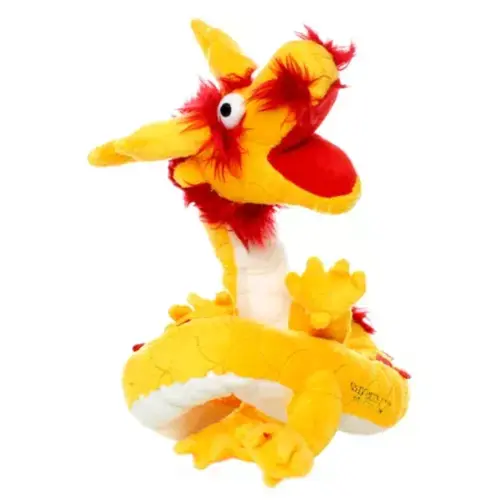
Why it fits: A stuffed plush on a two-layer body: soft plush over non-woven fleece, with limbs and a tail to grab.
-
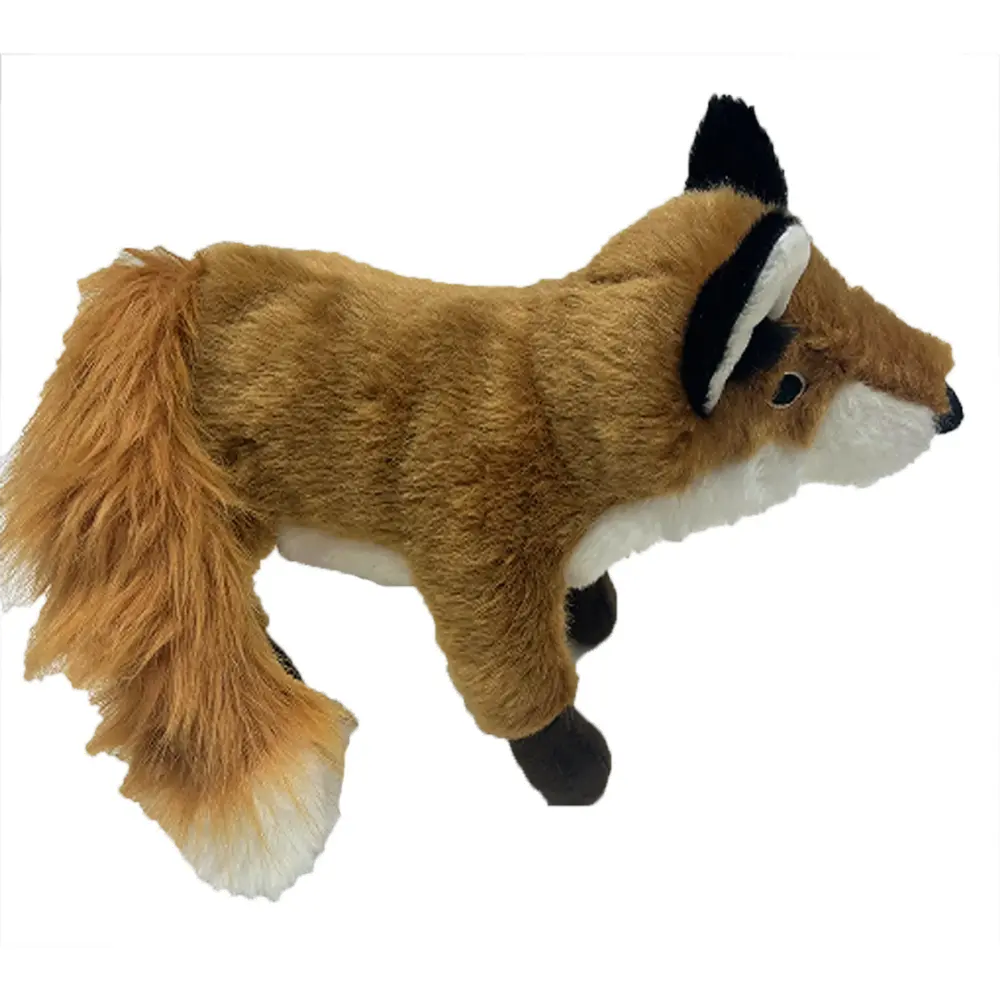
Realistic Plush Fox Dog Toy with Squeaker, View product
$30.95
Why it fits: A soft realistic fox with a long tail for tug and a squeaker in the body. Best for gentle to moderate chewers.


Which to buy for your dog
Watch what your dog does with the toy they already have. The behaviour tells you more than the breed or the size.
| Your dog | Buy |
|---|---|
| Opens every seam within a day | Stuffing-free, layered, supervised |
| Carries one toy everywhere | Stuffed, and buy a spare of the same one |
| Only interested if you hold the other end | Stuffing-free, long shape |
| Throws the toy for themselves | Stuffed, so it has weight |
| Chews rather than shakes | Neither; a plush toy is the wrong category |
| Takes a toy to bed | Stuffed, kept separate from the play toys |
A dog who goes through either type within hours is telling you that plush is not the right material at all. Toys for dogs who destroy toys covers the harder-wearing categories, and how to clean dog toys covers keeping either kind usable.
How long each one actually lasts
There is no honest number, because the variable that dominates is the individual dog rather than the toy. The same plush toy can last a year with one dog and twenty minutes with another, which is why durability claims on packaging are close to meaningless.
What you can predict is the order of failure. Seams go first, usually at a limb or where two fabrics meet. Then the stitching opens enough to expose the contents. Then whatever is inside comes out. A stuffing-free toy follows the same sequence and simply has less to release at step three.
The useful question is not how long a toy lasts but how it fails. A toy that goes flat and floppy is finished and harmless. A toy that opens and releases a squeaker is finished and dangerous. Buy for the second property.
Supervised play versus leaving a toy down
This distinction matters more than the stuffed-or-not question and gets far less attention. Plush toys of either kind are designed for games with you: tug, fetch, shake and carry. None of them are chew toys, and leaving one with a dog who settles down to work at it methodically is how both types end up destroyed.
A dog who needs something to chew needs a chew, not a plush toy. Keeping the plush collection for interactive play and putting it away afterwards extends the life of every toy in the box and keeps them interesting, since a toy permanently available stops being novel within a week.
If your dog destroys toys only when left alone with them, that is information about the alone time rather than about the toys. Keeping a dog busy while you work covers what to leave down instead.
Common questions
Is stuffing dangerous if my dog swallows some?
Small amounts often pass, but a quantity of it can obstruct the gut and that is an emergency. Do not wait for symptoms if you know a significant amount has gone down; call your veterinarian for advice.
Can I restuff a gutted toy?
You can sew it shut, and plenty of people do, but understand that you are rebuilding a toy your dog has already shown they can open. Retire it instead once the stitching is going, and keep the undamaged ones for supervised games.
Are stuffing-free toys good for puppies?
They are a sensible first plush toy, since puppies explore with their mouths and the filling is the part you least want them finding. Keep sessions supervised and swap to something else when the adult teeth are coming through.
Related guides
-
Checklist
When to Throw Away a Dog Toy: The Checks That Prevent an Emergency
Toys do not wear out quietly like a bed or a leash; they fail by releasing a piece small enough to swallow. This is a thirty-second weekly inspection, the signs that mean retire it now, and what to do if your dog has already swallowed part of one.
-
Guide
Is Tug of War Bad for Dogs? What the Game Actually Does
The idea that tug teaches a dog to challenge you has been repeated for decades and does not hold up. This guide covers what the game really does for a dog, the jaw and neck questions worth taking seriously, and the handful of rules that turn tug into training.
-
Guide
Why Does My Dog Bring Me Toys? What It Means and How to Respond
A toy at the door is usually a greeting, an invitation to play or both. Learn to tell which, when to play, say hello or trade, and what to do when it turns into demand play or keep-away.