Home & Cleaning How-to
How to Clean Dog Toys: Plush, Rubber, Rope and Fire Hose
Short answer
Check the care tag first: many plush and squeaky toys can be machine washed in a mesh bag on a gentle cycle. Rubber goes in the dishwasher only if it’s labeled dishwasher safe; hand wash the rest, plus rope and fire hose, in soapy water. Clean toys at least monthly and dry them completely.
How often to clean dog toys
The CDC’s guidance on cleaning pet supplies says to clean pet toys every month. Treat that as the minimum for toys that mostly sit in the basket: clean any toy sooner once it looks grubby or smells, and expect the favorite your dog carries everywhere to need it most often.
| Toy | Clean it | Watch for |
|---|---|---|
| Plush | Monthly, and when grubby | A musty smell, damp stuffing |
| Food toys | After every use | Dried food deep inside |
| Hard rubber | Monthly | Slime or grit in the grooves |
| Fire hose | Monthly, and after mud | Dirt packed into the seams |
| Rope | Monthly | Damp knots, a sour smell |
| Electronic | Monthly, cover by its tag | Hair wound into moving parts |
Clean sooner after mud, a beach day or a playdate where other dogs shared the toys. Soggy toys stashed under the sofa feed a stale smell too; our guide on how to get rid of dog smell in the house covers the beds, couch and carpet.
When to disinfect, too
Soap and water are enough for routine cleaning. The CDC advises disinfecting a sick pet’s toys each time you clean them, and cleaning and disinfecting more often if someone at home is at higher risk from germs: children under 5, adults 65 and older, pregnant people and anyone with a weakened immune system. Its methods:
- Hard toys: wash in soapy water, then soak for at least 10 minutes in 2 oz (1/4 cup) of household bleach per gallon of water. Rinse thoroughly and let them dry completely.
- Wipes or sprays: use an EPA-registered disinfectant exactly as its label says, including how long it stays on. Then rinse it off with water before your dog gets the toy back, since it goes straight into the mouth.
- Dishwasher-safe toys: a dishwasher cycle with the heated dry setting cleans and disinfects them.
- Soft toys: machine wash, then 30 minutes in the dryer on its highest heat, but only if the tag allows high heat.
If your veterinarian has diagnosed something contagious, ask how to handle the toys. Some germs call for a specific product, and an inexpensive toy may be better replaced than treated.
Safety note
Never mix bleach with other cleaners, ammonia and vinegar included. Keep plush and squeaky toys out of the bleach unless the tag allows it, because the solution soaks into the filling and is hard to rinse out.
What you need
Most of this is already at home; keep the brushes for pet gear only.
- A mesh laundry bag, or a pillowcase you can knot shut
- Mild, unscented laundry detergent and plain dish soap
- A bottle brush and an old toothbrush
- A basin or bucket for soaking
- Two old towels and a drying rack, ideally near a fan or an open window
- Household bleach or an EPA-registered disinfectant, only for disinfecting
- The care tag or packaging, and the manual for anything with batteries
Tip
The CDC says you can hand wash toys in the kitchen sink, but it may spread germs to your food, so clean and disinfect the sink and the area around it right afterward. A laundry sink or bathtub, cleared of people’s things, works too.
Plush and squeaky toys
Soft toys hold slobber, dirt and hair deep in the stuffing, so they are usually the first to smell. Humane World for Animals advises choosing soft toys that are machine washable, and when the tag allows it, the machine does most of the work.
- Check it over first. A toy with an open seam, loose eyes or ears, or stuffing poking through should be retired, not washed; it tends to come apart in the machine.
- Read the tag. Machine washable means the steps below; hand wash or surface clean means the hand method or a damp cloth. No tag? Hand wash.
- Get the hair and grit off. Pick off hair, and let dried mud crumble away outdoors first.
- Bag it in the mesh bag or knotted pillowcase, so any stuffing that escapes stays contained. Toys can share a load with dog towels and blankets.
- Wash on a gentle cycle at the temperature the tag allows, with a little unscented detergent and no fabric softener or scent booster; scent lingers in a toy your dog mouths for hours.
- Add an extra rinse, so no detergent stays in the filling.
- Press out the water in a towel instead of wringing, and squeeze the squeaker a few times to push out trapped water.
- Dry it through to the middle, in moving air or at the dryer setting the tag allows. Press the center of the body: any coolness means water is still inside.
Washing the dog bed too? The bagged toys can go in with its cover; see how to wash a dog bed for the bed itself, including beds that don’t unzip.
Hand washing a plush toy
Squeeze the toy over and over in warm water with a little mild detergent, so the water works through the stuffing, and let it soak for 10 to 15 minutes. Then rinse and squeeze it in clean water until no suds appear, press it dry in a towel and dry it like a machine-washed toy.
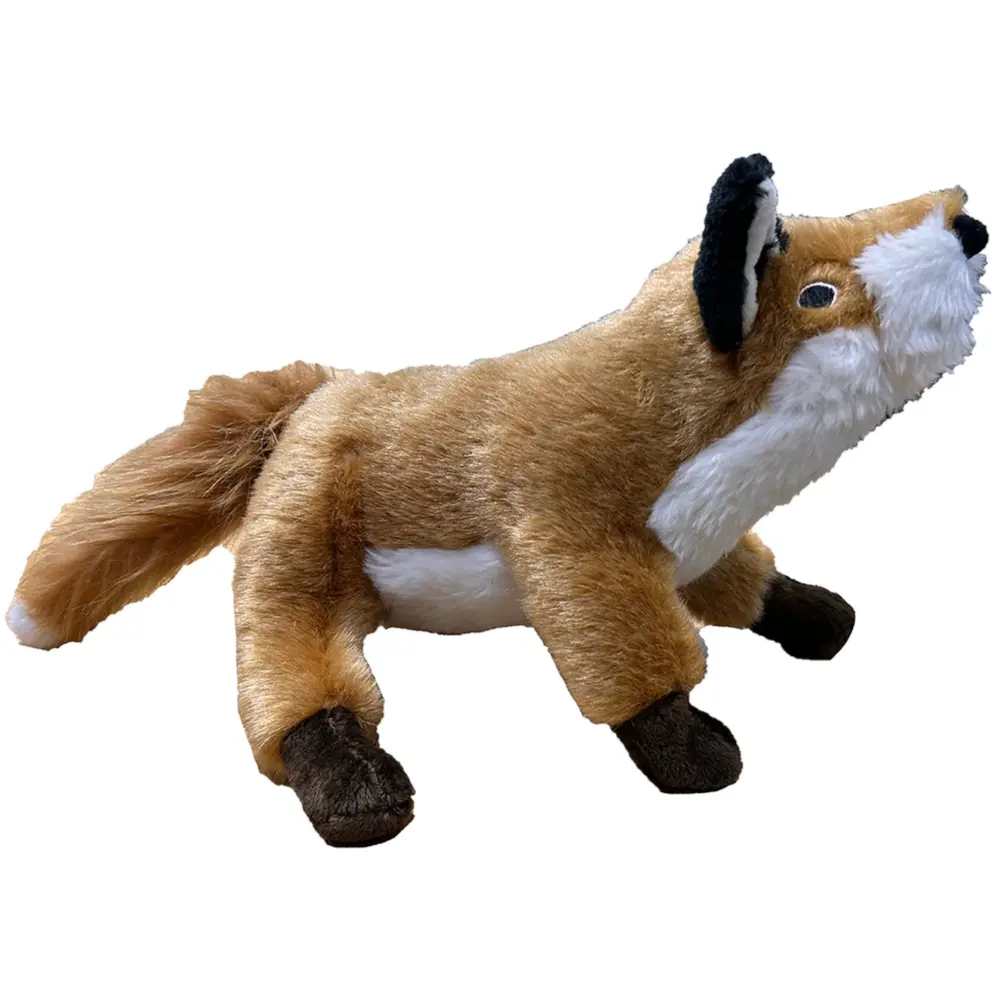
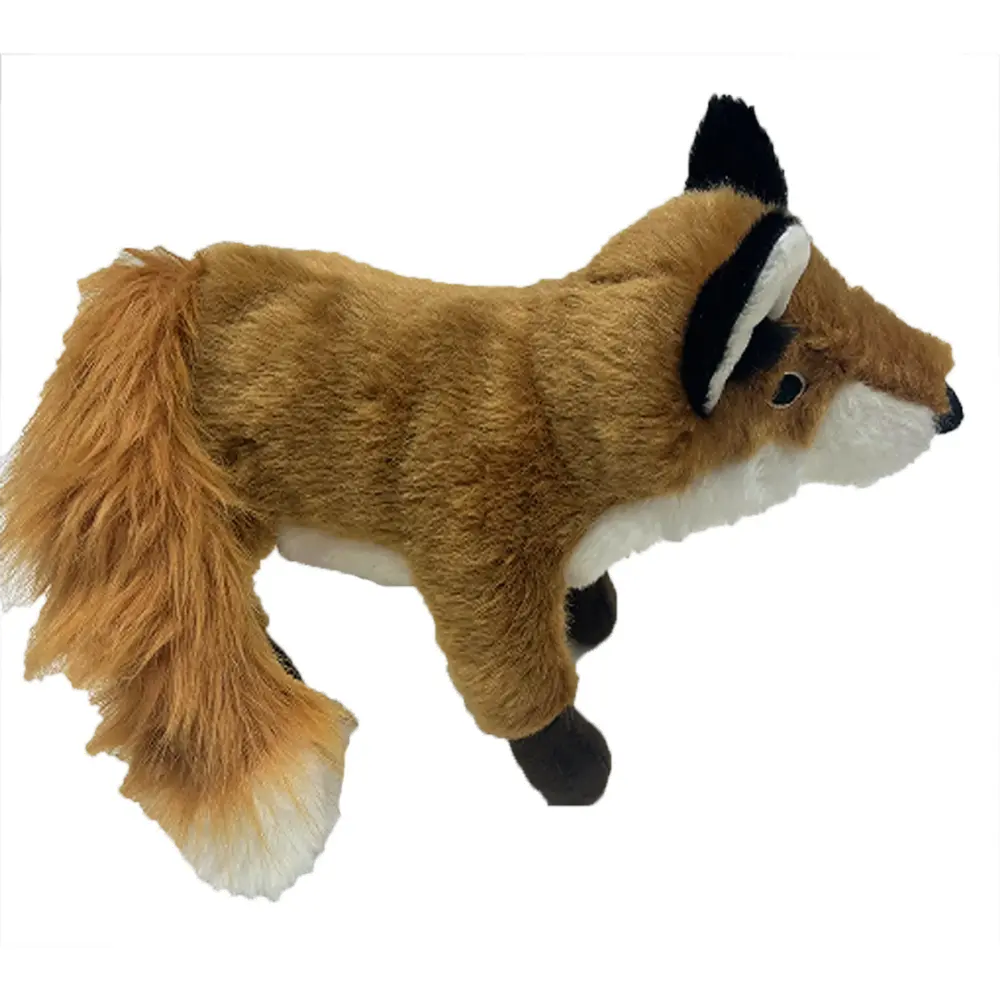
Our Realistic Plush Fox Dog Toy has a squeaker in the body and a 6-inch tail. Its product page lists no care instructions, so hand wash it unless the label that comes with it says otherwise, and expect the tail to dry before the body. Feel for a squeaker sitting loose near a seam while you’re at it; our guide to why dogs like squeaky toys covers squeaker safety.
Rubber and hard plastic toys
Rubber, vinyl and hard plastic don’t soak up water, so hot, soapy water and a brush do the job. The work is in the grooves, the textured nubs and any hollow center where slobber and food collect.
- Rinse it under hot running water to loosen slobber and grit.
- Soak it if food has dried on. About 10 minutes in hot, soapy water softens peanut butter or kibble paste. Let a frozen filling thaw first.
- Scrub every surface with dish soap and the toothbrush, working into grooves and between nubs.
- Clean the inside. Push the bottle brush through any hollow center or hole, and scrape out what clings to the inner wall.
- Rinse until it no longer feels slippery, then dry it hole-side down on a rack and look inside before you put it away.
Can dog toys go in the dishwasher?
Only if the toy is labeled dishwasher safe. The CDC notes that a dishwasher cycle with heated dry can clean and disinfect dishwasher-safe toys; scrape out food first and use the rack the label names. Keep unlabeled rubber out, since dishwasher heat can warp or crack some materials, along with anything that squeaks or has a sealed hollow that lets water in but not out.
Food toys and tennis balls
A rubber toy you fill with food is a food bowl as far as cleaning goes: wash it the same day, after every use. Felt-covered balls trap grit and slobber in the fuzz and are hard to get truly clean. Rinse them, let them dry fully, and replace any your dog has chewed through, which Humane World for Animals flags as a choking hazard.
Fire hose and other tough fabric toys
Fire hose and similar heavy woven fabrics have no stuffing to soak up water, but dirt works into the weave and especially the stitched seams, and the layers stay damp longer than you might expect.
- Rinse off mud the same day, before it dries into the weave.
- Scrub with warm, soapy water and a firm brush, running it along every seam and line of stitching, where grime packs in.
- Rinse well and press out the water in a towel, squeezing each squeaker as you go.
- Dry it in moving air, turning it over, until the seams feel as dry as the flat panels.
- Machine wash only if the tag allows it, in a mesh bag on a gentle cycle like plush.
Our Fire Hose Crocodile Tough Dog Toy is about 26 inches long and stuffing-free, with squeakers made to keep squeaking after a puncture. Its product page lists no care instructions either, so follow the label that comes with it; the long body drapes easily over a rack. Tough fabric still wears, so check the seams as you scrub; our guide to toys for dogs who destroy toys explains where fire hose gives way first.
Rope toys
Rope is the slowest toy to dry. Slobber soaks deep into the twisted fibers and the knots, and a rope put away damp soon smells sour.
- Soak it in hot, soapy water for 10 to 15 minutes, working the knots with your fingers under the water.
- Rinse in clean water, squeezing the knots until the water runs clear.
- Squeeze and towel it. Wring out what you can, then roll it in a towel and press.
- Hang it to dry by a loop or an end, somewhere with moving air. Thick knots can take a day or more.
- Check the center of each knot before it goes back in the basket; if it is still damp, wait.
If the tag allows it, a rope toy can go through the machine in the mesh bag with the plush toys, but it still needs the long hang-dry. Skip the microwave trick you may see suggested online: it doesn’t replace washing and drying, and a rope that isn’t evenly soaked can scorch.
Safety note
Retire a rope toy once it frays into loose strands your dog can pull off. Swallowed strands can cause a serious blockage in the gut, so if you think your dog has swallowed some, call your veterinarian promptly rather than waiting for signs.
Toys with batteries or electronics
Toys that roll, light up or make sounds pair a washable cover with electronics that shouldn’t get wet. Read the manual first, since models differ in what comes off and what can take water.
- Switch it off, unplug it from any charger and unwind hair from wheels or moving parts.
- Take off the fabric or plush cover and wash it by its own tag, usually by hand or in a mesh bag. A cover that doesn’t come off gets spot cleaned with a damp cloth.
- Wipe the shell with a barely damp, lightly soapy cloth, then a plain damp one, keeping water out of the charging port and buttons. Never submerge it unless the manual says it is waterproof.
- Charge it and refit the cover only once both are completely dry.
If your dog chews into the battery compartment or a battery goes missing, take the toy away and call your veterinarian right away.
Drying, storing and retiring toys
A toy that goes back damp undoes the wash. Let everything dry completely in moving air, then keep toys in an open basket or a bin with gaps rather than a sealed tub, so any leftover moisture can escape.
If you rotate toys, make swap day wash day: the set going into the cupboard gets washed and dried first, so the set coming out is ready to use. Our toy rotation plan shows how to split toys into sets.
Retire it instead of washing it
Humane World for Animals advises discarding toys once they are torn or start to break into pieces. While each toy is in your hands, also retire rope that sheds strands, rubber with cracks or chunks missing, anything worn small enough to swallow and any toy whose smell returns after a proper wash and a full dry. Our monthly wear check for pet gear covers the signs for each toy type, plus collars, harnesses, bowls and beds.
Need a replacement? These are the two dog toys in Nilosi’s catalog.
-
Realistic Plush Fox Dog Toy with Squeaker, View product
$30.95
Why it fits: A soft plush carry toy for gentle to moderate chewers, with a squeaker in the body; hand wash it unless its label says otherwise.
-
Fire Hose Crocodile Dog Toy, View product
$30.95
Why it fits: A stuffing-free fire hose toy for dogs who tear plush open, so there is no filling to soak up water; about 26 in long, with squeakers.


Both are for supervised play. Browse the rest of our toys and play range.
Troubleshooting a freshly washed toy
- It still smells after washing. Usually it dried too slowly or kept some detergent. Wash it again with an extra rinse and dry it near a fan; if the smell returns, retire it.
- The squeaker went quiet. Water is usually trapped around it. Squeeze it a few times and leave the toy squeaker-side down to drain; it may squeak again once dry.
- Dark spots inside a hollow toy. That is likely old food or mildew. Soak it and work the bottle brush inside; if you can’t reach the spots, replace the toy.
- Your dog ignores the freshly washed toy. It no longer smells familiar. A short game with you often brings the interest back.
Related guides
-
How-to
How to Teach a Dog to Fetch, Even One Who Won’t Bring It Back
Teach fetch from zero: choose a toy your dog can carry, start with short hallway throws, make the return the best part of the game and teach a drop without a tug-of-war. Then move outside on a long line, with breaks and water on hot days.
-
How-to
How to Teach Your Dog the Names of Toys, One Toy at a Time
A step-by-step naming game: one favorite toy and one name, then household distractions, a second toy and a real choice between two. See what to realistically expect, how to tell whether your dog knows the word or is reading you, and how to fix guessing and favorite-grabbing.
-
How-to
How to Stop a Puppy Biting: Toys, Calm Time-Outs and House Rules
Puppy biting is normal, but it shouldn’t be aimed at you. Here’s how to redirect teeth to tug and carry toys, end the game calmly when they land on skin, handle ankle and sleeve grabbing, set rules for kids and visitors, and tell when biting needs a trainer or veterinarian.