Toys for Dogs Who Destroy Toys: Choosing by Chewing Style

The right toys for dogs who destroy toys are the ones matched to how your dog plays: tough, stuffing-free toys for shredders and tuggers; soft plush only for gentle to moderate chewers and carriers. Supervise every session, put toys away when play ends and retire anything that starts to split. No toy is indestructible, so aim for one that holds up longer and is easy to check.
Short answer: match the toy, supervise, retire worn toys
- Shredders and tuggers: tough, stuffing-free toys. Carriers: soft plush. Long, steady grinders: a separate chew outlet; ask your veterinarian what suits their teeth.
- Stay in the room during play and put toys away afterward.
- Check seams after every session and retire a toy once it opens.
Choosing toys for dogs who destroy toys: four play styles
When a dog rips apart toys, it is rarely random. Dog chewing styles fall into four broad groups, and many dogs mix two. Watch a few sessions with an old toy and note what your dog goes for first. Whatever the style, choose a toy too big to fit entirely in your dog’s mouth.
The shredder
Shredders hunt for a weak point, such as a seam, ear or tag, and pull until the insides come out. Tough, stuffing-free toys with few parts to grab suit them better.
The tugger
Tuggers want something to pull against, usually you. Toys tend to fail where a mouth and a hand pull in opposite directions, so choose a long toy with room for both and keep it as a shared game.
The carrier
Carriers pick a toy up, walk it around, mouth it gently and may sleep beside it. Plush often lasts well with these dogs.
The steady chewer
Steady chewers lie down and grind with their back teeth for long stretches. Fabric toys, fire hose included, are made for play, not long solo gnawing. Give these dogs a separate outlet, and ask your veterinarian which chew items suit your dog’s teeth and size.
Why stuffing and loose parts matter
Stuffing, squeakers, plastic eyes and sewn-on tags are the parts most likely to end up inside a dog. Swallowed fabric or plastic can cause serious problems, and some dogs gulp what they tear off.
Pick up scraps as soon as a toy opens, and never leave a dog alone with a torn toy. If your dog swallows toy pieces, call your veterinarian promptly rather than waiting to see what happens.
Fire hose material: tougher, but seams still give way
Are fire hose dog toys safe? No toy is risk-free, but for supervised play, fire hose is a reasonable choice for many strong players. The material is made for durability, so it usually outlasts soft plush, though it still wears with use.
The weak points are seams, stitching and edges where panels meet, and a dog who works one seam will eventually open it. Check those lines after each session and retire the toy once threads pull loose, a seam opens, the material starts to split or a squeaker becomes reachable.
A stuffing-free fire hose toy with squeakers that keep working after a puncture
For shredders and tuggers, the Fire Hose Crocodile Tough Dog Toy is the toy in our range built for this job. It is made from real fire-hose material, is completely stuffing-free and measures about 26 inches long, with squeakers designed to keep squeaking after a puncture.
For a dog who rips apart toys, that means no filling to pull out and scatter, and squeakers that keep working even after a puncture. The long body leaves room for your hand and your dog’s mouth, which suits tug and fetch. It is still a toy for supervised play.
When soft plush still makes sense: gentle to moderate chewers, carriers and gentle tug
Not every dog needs the toughest option. The Realistic Plush Fox Dog Toy with Squeaker is soft and lifelike, about 10 inches from head to rear with a 6-inch tail and a squeaker in the body. It suits gentle to moderate chewers and carriers, and for a gentle dog it works for short tug games where your dog takes the tail; keep strong tuggers on a stuffing-free toy.
If your dog is a known shredder, this fox is not the right match, because it is made for gentle to moderate chewers. Choose a stuffing-free toy for that dog instead. With any dog, supervise play and remove the fox at the first sign of damage. For more options, browse our toys and play gear.
Playing tug well: house rules, a drop cue and ending the game
Tug is a good game for many dogs when it has rules. It gives a tugger a shared outlet and a natural place to practice letting go. If your dog has dental, neck or joint concerns, ask your veterinarian before you start.
- Keep the tug toy out of reach between games, so you decide when tug starts.
- Pull side to side at your dog’s height instead of lifting or jerking.
- Teach a drop cue: stop pulling, hold the toy still against your leg, wait for your dog to let go, say your cue and reward with food or another round.
- If teeth touch skin or clothing, let the toy go still and pause the game for a few seconds.
- Let your dog win some rounds so the game stays fun.
- End while your dog is still keen, trade the toy for a piece of food and put it away.
A second outlet: slow meals and lick mats
Some toy destruction is simply a dog looking for something to do with their mouth. If the destruction is new, sudden or happens mostly when your dog is left alone, ask your veterinarian, since it can have causes beyond play. Otherwise, a quieter outlet at other times of day can ease the pressure on toys.
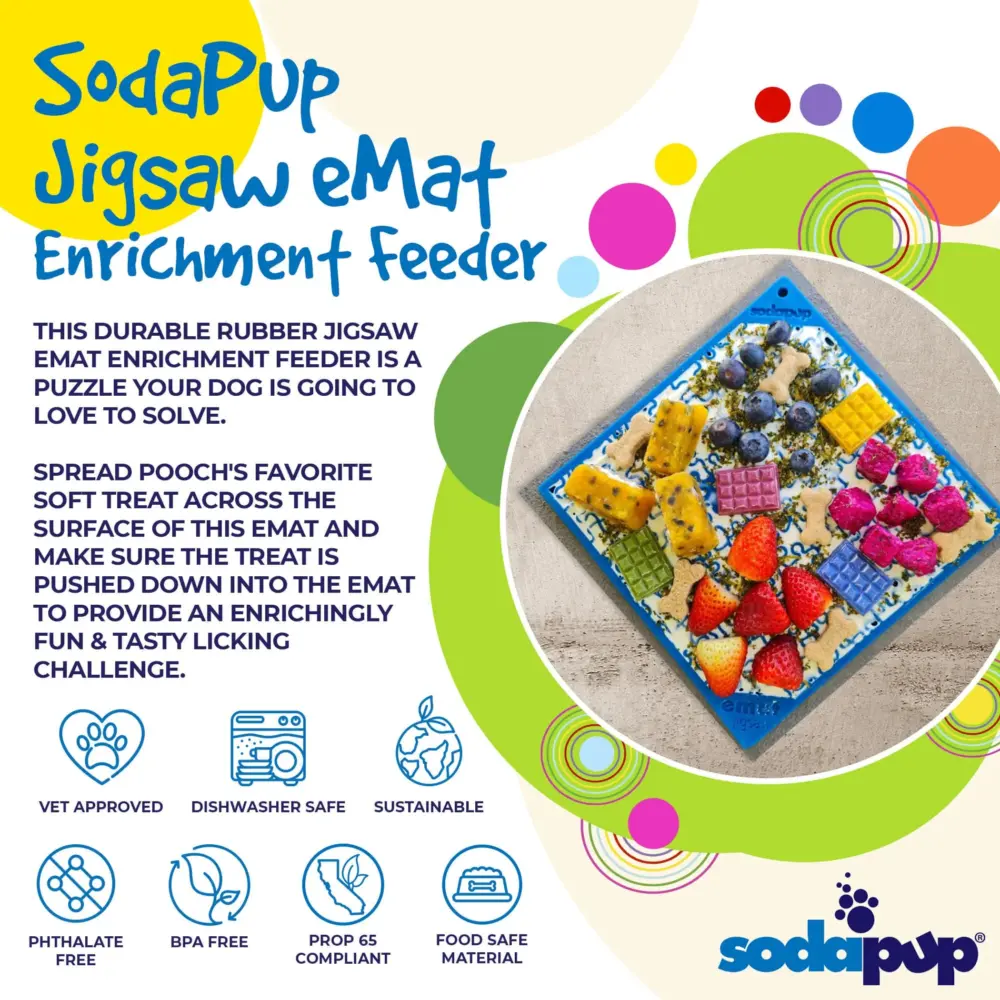
The SodaPup Jigsaw Enrichment Lick Mat has a jigsaw texture that holds soft food in its grooves, so licking it clean takes time. It is made in the USA by SodaPup from food-safe materials, is dishwasher safe, comes in green or pink and suits dogs of all sizes and cats. Freezing it makes the session last longer; our guide on what to put on a lick mat has spread and freezing ideas.
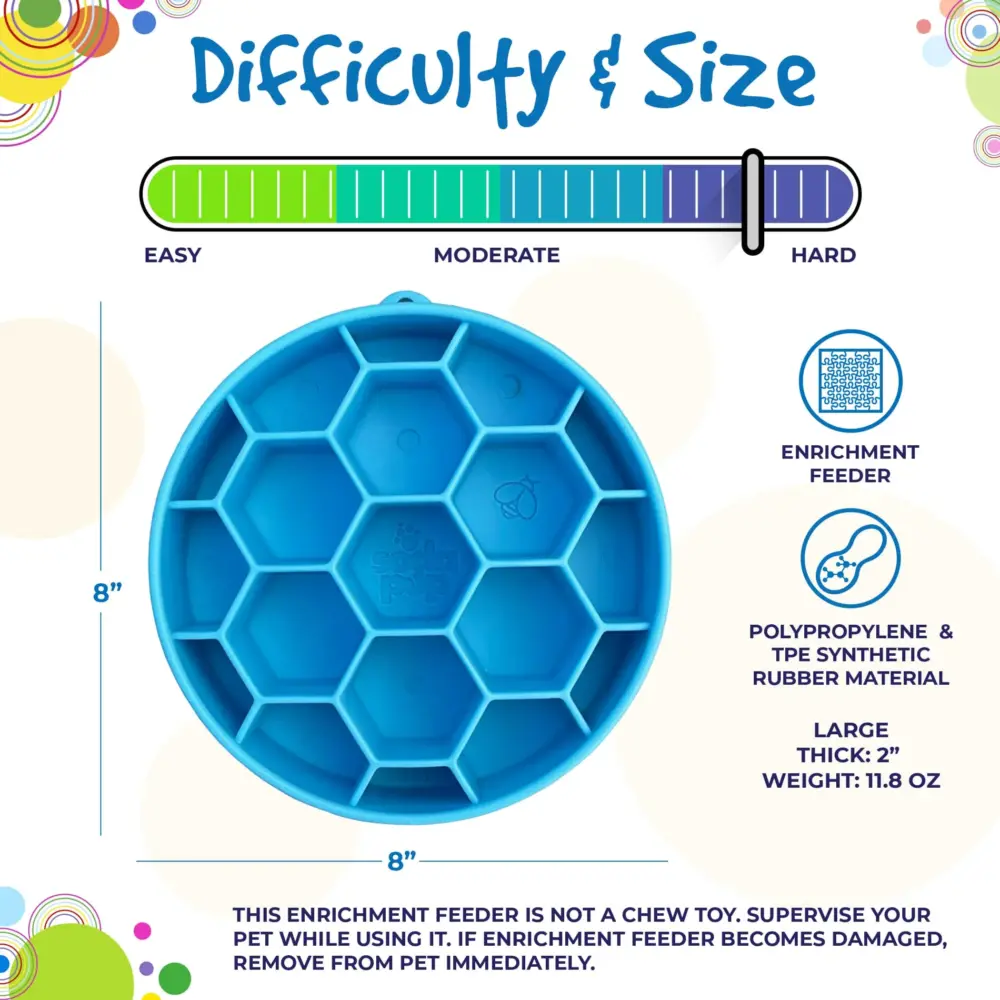
At mealtimes, the SodaPup Honeycomb Slow Feeder Dog Bowl spreads food across honeycomb ridges in a deep bowl, so a fast eater has to work around the pattern. It takes kibble, wet food or a frozen mix, is dishwasher safe and is made in the USA by SodaPup. Ask your veterinarian if you have questions about how fast your dog eats.
Neither is a chew toy, so stay nearby while your dog uses one and pick it up afterward. You can browse more feeding and enrichment supplies. Daily walks with time to sniff help too; our dog walking essentials guide covers what to bring.
Compare the crocodile, the plush fox, the lick mat and the slow feeder side by side below.
-
Fire Hose Crocodile Dog Toy
$30.95
-
Realistic Plush Fox Dog Toy with Squeaker
$30.95
-
SodaPup
Honeycomb Slow Feeder Dog Bowl
$30.95
-
SodaPup
Jigsaw Enrichment Lick Mat for Dogs & Cats
$25.95




Inspect, rotate and retire: a quick checklist
Knowing when to replace dog toys matters as much as choosing them. Run through this list after each session.
- Seams: no loose threads, gaps or popped stitches.
- Insides: no stuffing, foam or inner lining showing.
- Squeakers: still sealed inside the body, not loose or reachable.
- Parts: ears, tails, legs and tags still firmly attached.
- Size: not worn down or torn into a piece small enough to swallow.
- Condition: clean and dry before it goes back into storage.
Rotating helps too. Keep two or three toys out, store the rest and swap every few days, so older toys stay interesting and each one gets a regular look. If a toy fails any of the first five points, throw it away. If it is only dirty, wash and dry it before it goes back into storage.
FAQ: dogs who rip toys apart
What toys can my dog not destroy?
None. No toy is indestructible. Tough, stuffing-free toys such as fire hose usually last longer, but they still need supervision and regular checks.
Are stuffing-free toys better for dogs who rip toys apart?
Usually, yes. There is no filling to pull out and there are fewer loose parts, but seams and squeakers can still fail, so inspect them after each session.
Is tug of war good for dogs?
For many dogs, yes. Tug with clear rules is a good outlet and a chance to practice a drop cue. Check with your veterinarian first if your dog has dental, neck or joint concerns.
How do I know what kind of chewer my dog is?
Watch a few sessions with an old toy. Seam-pulling suggests a shredder and pulling against you a tugger. Gentle carrying points to a carrier and long back-teeth grinding to a steady chewer. Many dogs mix two.
When should I throw away a dog toy?
As soon as a seam opens, stuffing or a squeaker shows, a part comes loose or the toy is worn small enough to swallow.
For the narrower question of filled plush against flat, see stuffed vs stuffing-free dog toys, and when to throw away a dog toy covers the inspection that keeps any of them safe.
Related guides
-
Buying guide
What to Get Your Dog for Christmas: Gifts for Tuggers to Nappers
Choose your dog's Christmas gift by what they already do: a stuffing-free fire hose toy for tuggers and shredders, a plush fox for gentle carriers, a lick mat or slow feeder for lickers and fast eaters, and a cuddler bed or coat for small dogs, plus safety checks, unwrapping and gifts to skip.
-
How-to
Back-to-School Routine for Dogs: Helping Your Dog Adjust
A two-week plan for families whose dog got used to company all summer: move wake-up, walks and meals early, give a real morning walk and a breakfast that takes time, cover the empty midday, keep departures calm, and know the signs that call for a veterinarian or trainer.
-
Guide
Why Do Dogs Like Squeaky Toys? And How to Keep Squeaker Play Safe
A squeak sounds like small prey and goes off the instant your dog bites, so every chomp pays off. Why some dogs squeak for hours or whine with a toy, what to do about a dog who digs out the squeaker, how to choose a squeaky toy and how to live with the noise.