Toys & Play Guide
Why Does My Dog Bring Me Toys? What It Means and How to Respond
Short answer
It’s usually a greeting, an invitation to play, or both: many dogs love carrying things, and your attention keeps the habit going. If your dog drops the toy at your feet or pushes it into your hand, play briefly; if they parade it past you, say hello. Ignore it only if it turns into nonstop demands or keep-away.
What the AKC says: a carrying habit your attention rewards
An AKC article drawn from Dr. Nicholas Dodman’s column Why Does My Dog Do That? answers almost exactly this question, about a dog who brings a shoe to every greeting. It notes that any behavior has both genetic and learned components, and offers two explanations:
- A natural urge to grab and hold. Many dogs like to pick something up and carry it, and people’s attention rewards them for it. In the article’s words, “the game goes on as long as she retains the object,” which is why so many dogs bring a toy and then hang on to it.
- Holding on to a prize. The dog grabs the object so nobody else can have it, and holding on pays off every time it stops the item being taken. The article files this under “dominance,” in its own quotation marks; in everyday terms, it’s a dog who would rather not give the thing up.
The article suggests working out which fits from the rest of your dog’s behavior. A dog who is relaxed about food, chews and resting spots probably fits the first; one who stiffens over those things too may fit the second, which is worth watching, as covered below.
Why your reaction matters so much
Dogs repeat what works. The AKC’s article on attention-seeking behaviors explains that these habits are learned by trial and error, and that any response counts as attention, even a telling-off. At a typical homecoming you laugh, ask what they’ve got, reach for the toy and maybe chase a lap around the couch. Every part of that is a reward, so the toy keeps coming, which in most homes is a habit worth keeping.
Is my dog bringing me a gift?
Nobody can ask a dog what a toy is meant to be, so “gift” is our word, not theirs. What you can see is what the toy earns: your attention, a hello and often a game, which is reason enough to keep bringing it. Either way, a dog who brings you things wants you involved.
Toys at the front door: greetings with a mouthful
A homecoming is often the most exciting moment of a dog’s day, so the door is where most deliveries happen. Plenty of dogs hear the keys, dash off and come back with whatever is nearest: a toy, a slipper, the sock you dropped this morning. Then they weave around your legs with it, tail going, sometimes groaning through a full mouth, with no intention of letting you have it. That is usually a greeting, not a request, and it needs nothing more than a warm hello.
If what arrives is usually yours, treat it as a tidying job rather than a training one. Clothing is worth keeping out of reach anyway: VCA’s guide to swallowed foreign objects in dogs lists articles of clothing among the things dogs are notorious for swallowing. Keep laundry in a closed hamper and shoes behind a closet door, and leave one soft toy near the entrance, so the nearest thing to grab is something your dog is allowed to have.
Can the toy habit help with jumping?
It can. The AKC’s advice on stopping a dog from jumping up on people is to reward four paws on the floor and to keep toys and treats by the front door, tossing one away from the doorway as people come in. A dog who already runs for a toy at the sound of keys is halfway there: keep that toy by the entrance and save your hello for when all four paws are down.
An invitation to play, or a prize your dog won’t give up?
The clue is what your dog does in the first few seconds after the delivery. A play bow, front end down and rear end up, is about the clearest invitation there is. The rest usually looks like one of these:
| What your dog does | What it usually means | What to do |
|---|---|---|
| Drops the toy at your feet and stares at it, or at you | Throw it, please | A few throws, if you have a minute |
| Pushes it into your hand or lap, then grips when you hold it | An invitation to tug | A few seconds of tug, then let go |
| Carries it past you, wiggling, and won’t put it down | Hello, look what I’ve got | A calm hello; no need to take it |
| Offers it, then dances away when you reach | Chase me | Don’t chase; turn away or trade |
| Goes still over it, stares hard or growls as you reach | Don’t take this | Stop reaching; see the guarding section below |
When your dog brings the toy but won’t let go
This is the version that puzzles most owners, but there’s usually no contradiction. For a dog who loves to carry, holding the toy while you pay attention is the game, and a tug-loving dog may be asking you to pull. Grabbing tends to make the grip tighter, and chasing teaches your dog that snatching a toy and running gets you moving. If you’d like to play, take hold and see whether a tug starts; if you need the toy, trade for it, as described below.
Retrievers, carriers and dogs who never bring anything
Some dogs were bred for this. The AKC describes the retriever breeds, among them the Labrador, Golden and Flat-Coated Retrievers, as dogs developed to find birds and other game and bring them back undamaged, which takes a soft, gentle mouth. So it’s no surprise when a Lab or a Golden meets you at the door with something in their mouth. Breed is only a tendency, though: some retrievers ignore toys, and plenty of mixed breeds and small dogs are devoted carriers.
If your dog never brings you anything
That’s normal too, and it says nothing about how attached your dog is to you. Some dogs would rather take a toy to bed and chew it, play chase, or skip toys for sniffing and company. A retrieve can be taught from scratch, even to dogs who pick the toy up and walk off with it: see how to teach a dog to fetch. If your dog doesn’t play with toys at all, start with getting a dog interested in toys instead.
Tip
A change is worth noticing. If a dog who always met you with a toy stops, or seems reluctant to pick things up, chew or play, mention it to your veterinarian: a sore mouth, sore teeth or stiff joints can make carrying and play uncomfortable.
How to respond: a quick game, a calm hello or a trade
You don’t have to play every time a toy appears, and you don’t have to ignore it either. Match the response to what your dog is asking for and to the time you actually have.
If it’s an invitation and you have a minute
Play, briefly. A few throws down the hallway or a few seconds of tug is plenty at the door. End with a cue such as “all done” and get on with your evening; short, predictable games keep the habit pleasant without turning every homecoming into a long session. For how play fits into the rest of the day, see how much playtime a dog needs.
If it’s a hello
Say hello back. Crouch down, praise, scratch your dog’s chest and let them keep the toy. Reaching for it can turn a calm greeting into keep-away or a tug you didn’t mean to start.
If you’re busy
A short hello and a calm “not now” beat half-hearted tugging while you read your messages. After that, give the toy no attention at all, and when you’re ready, start the game yourself. A dog who can count on play happening, on your schedule, has less reason to keep pushing for it.
If you need the toy back
Trade rather than take. The AKC’s method for teaching a dog to trade items teaches a dog that giving something up earns something just as good. A simple version for toys:
- Hold a small, tasty treat right by your dog’s nose.
- The moment the toy drops, say “yes” and give the treat.
- Pick up the toy while your dog is eating.
- Most of the time, hand the toy straight back, so letting go never means the fun is over.
- Once the drop is quick and predictable, say a word such as “trade” just before you show the treat.
The same article warns that running after a dog for an item can create a keep-away habit, and that a dog who already guards possessions needs a behaviorist or an experienced professional trainer rather than trade practice.
When it turns into demand play or keep-away
Bringing toys is a good habit until it becomes the only way your dog knows to get your attention, or the toy becomes bait for a chase.
Demand play: the toy in your lap every two minutes
The signs: the toy lands on your keyboard, gets pushed at you again and again, or arrives with barking, whining or pawing until you give in. The AKC’s attention-seeking article recommends ignoring the demand, rewarding a calmer alternative and making sure your dog gets enough exercise, play and mental stimulation. In practice:
- Don’t play on demand. A throw just to get some peace teaches that pushing harder works.
- Reward the quiet version. When your dog lies down with the toy, or drops it and waits, say yes and start a game.
- Start games yourself, at times you choose, so play isn’t something your dog has to campaign for.
- Give the energy somewhere to go: walks, sniffing time and short training games. If the demands are new, or come with restlessness that never settles, talk to your veterinarian.
Expect it to get worse before it gets better. The same AKC article warns that when you first change your response, the behavior usually escalates for a while; trainers call this an extinction burst. Stay consistent, because giving in at the peak teaches your dog that pushing harder pays.
Keep-away
A dog who offers the toy, then darts off as you reach, has learned that this gets you running. Stop chasing: turn your back, walk into another room or sit down with something else to do, and your dog will often follow and drop the toy closer. A second toy helps too. When your dog lets go of the first to get the one in your hand, the game becomes taking turns instead of keep-away. Our fetch guide walks through this two-toy swap and a drop cue you can use mid-game.
When it’s guarding, not a game
Safety note
Going still over the toy, a hard stare, showing the whites of the eyes, lifted lips, a low growl or bared teeth are signs of resource guarding, and the AKC’s guide to resource guarding in dogs names toys among the things dogs commonly guard. Don’t punish the growl or take the toy by force: the AKC warns that yelling, hitting or trying to dominate your dog can make guarding worse. Stop reaching, let your dog keep the toy for now, and see your veterinarian to rule out pain or illness and to ask for a referral to a qualified trainer or a board-certified veterinary behaviorist.
Toys that suit a carrier
If your dog greets you with whatever is nearest, make sure the nearest thing is a good carrying toy: easy to grip, too large to fit all the way into your dog’s mouth, free of small parts that come off easily and, if the delivery usually comes with a tug invitation, long enough to keep your hand away from teeth.
Nilosi carries two dog toys, so these picks are limited to our own catalog. Each suits a different kind of toy-bringer.
-
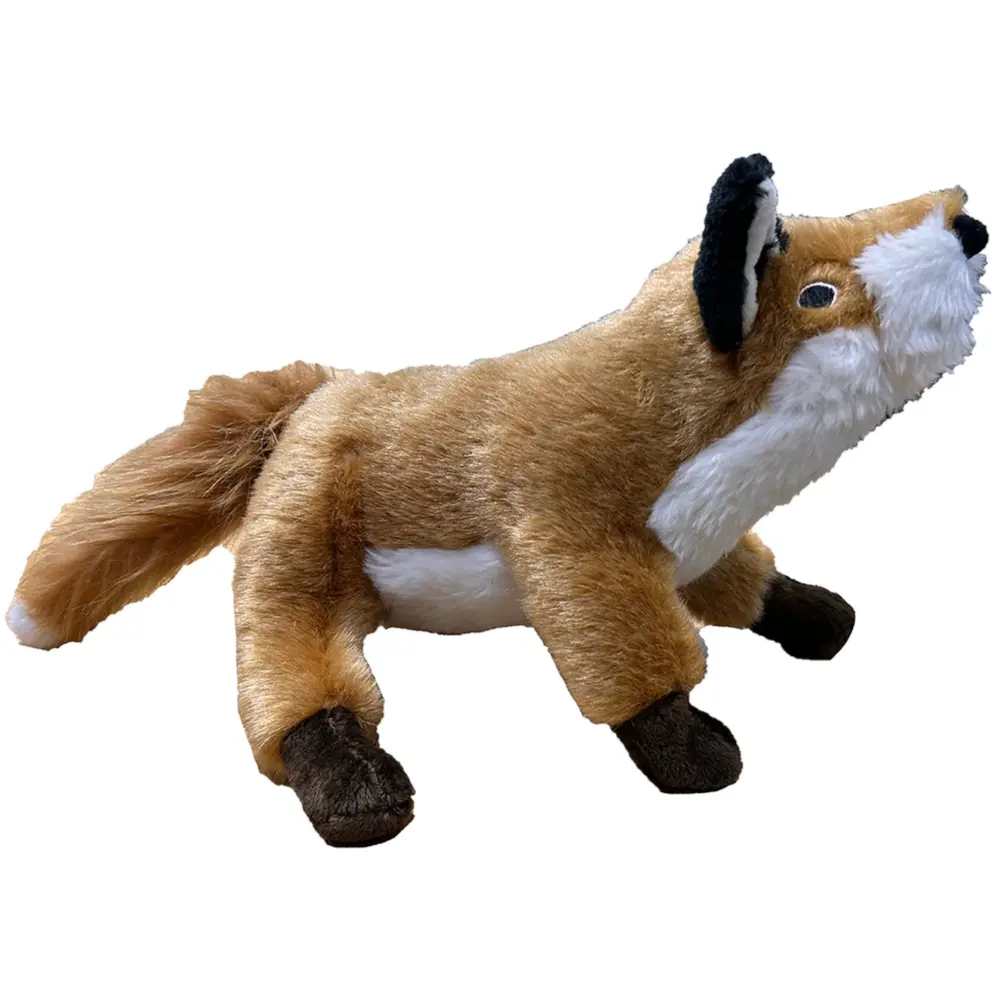
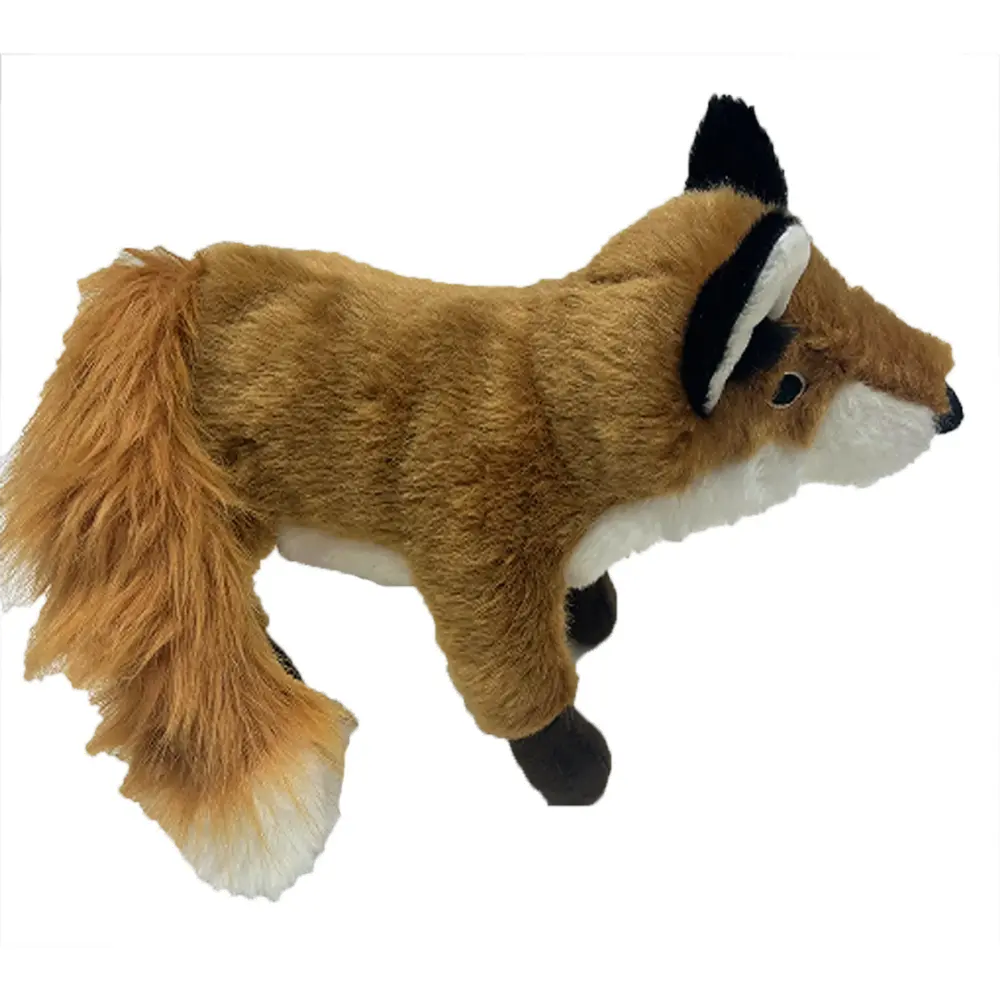
Realistic Plush Fox Dog Toy with Squeaker, View product
$30.95
Why it fits: A soft plush fox with a body made for carrying around the house and a long tail to grab when a greeting turns into a gentle tug. Best for gentle to moderate chewers.
-
Fire Hose Crocodile Dog Toy, View product
$30.95
Why it fits: For the dog whose delivery means tug or throw: about 26 inches of stuffing-free fire-hose material, long enough to keep your hand farther from teeth during tug.


Both squeak, which some households would rather not hear at 6 a.m.; our guide to why dogs love squeaky toys covers the noise and dogs who dig out the squeaker. Both are for supervised play: remove the fox if it’s damaged, retire the crocodile once it’s worn, and don’t leave either with your dog in a crate or an empty house. A toy your dog already brings you makes a natural first toy to teach a name to, and our toy rotation plan shows how to keep favorites fresh without a basket full of toys. More options are in our toys and play range.
Related guides
-
Guide
Why Do Dogs Like Squeaky Toys? And How to Keep Squeaker Play Safe
A squeak sounds like small prey and goes off the instant your dog bites, so every chomp pays off. Why some dogs squeak for hours or whine with a toy, what to do about a dog who digs out the squeaker, how to choose a squeaky toy and how to live with the noise.
-
Guide
How Much Playtime Does a Dog Need? By Age, Energy and Health
There's no fixed number of minutes. See how play needs change from puppy to senior and with energy and health, the signs of too little or too much play, and how to fit short games into a busy day.
-
Guide
Can Big and Small Dogs Live Together? Play Rules and Separate Spaces
Big and small dogs can share a home if you plan for the size gap. How to judge the match, set play rules and time-outs, give the small dog a place to escape, keep toys, meals and beds apart, walk both dogs and know when to call a trainer.