
Toys & Play Guide
How Much Playtime Does a Dog Need? By Age, Energy and Health
Short answer
There’s no set amount: citing a veterinary behaviorist, the AKC says some dogs benefit from a few minutes of daily play, while some games may run 30 minutes. Puppies usually play most; seniors need gentler games. Watch your dog: settling easily afterward means enough, pestering you may mean too little, and being frantic or sore means too much.
Why there’s no set number of minutes
The AKC’s guide to how much playtime dogs need, built on advice from veterinary behaviorist Dr. Isabelle Bazin, DVM, DACVB, gives no daily target, and breed only gets you part of the way: one Border Collie may want constant play while another is fairly low-key. Dr. Bazin’s advice is to tailor play to your own dog and adjust it based on how they respond.
VCA Animal Hospitals’ guide to play and exercise for dogs, written by veterinary behavior specialists, agrees that the right amount depends on age, development, behavior, health and build. Some dogs are still ready for more after a long run; others are content after a short walk around the block. Use the table as a starting point, then adjust with the signs further down.
| Dog | Play often looks like | Shape it as | Watch for |
|---|---|---|---|
| Puppy | Frequent, exploratory bursts | Brief games between naps, nothing high-impact | Nipping and frantic zoomies |
| High-energy adult | Fetch, tug, chasing a toy | Several short bursts with calm breaks | Can’t switch off afterward |
| Low-key adult | Short games, carrying, sniffing | A few minutes may be plenty | Wandering off: the game is over |
| Senior | Gentle tug, easy finds | Shorter, low-impact, on a grippy floor | Stiffness, slow to get up |
| Dog with a health condition | Gentle games your vet allows | Short, low-impact, as advised | Limping, labored breathing |
Play, exercise and enrichment: not the same thing
A good day usually includes all three, but none fully stands in for the others.
- Exercise moves the body: walks, runs and hikes. A walk also gives your dog time to sniff, but for a dog who loves toys it isn’t the same as a game with you.
- Play is a game with a partner, you or another dog: tug, fetch, hide-and-seek. The AKC says it burns physical and mental energy and strengthens your bond, and it can replace food as a training reward, with a throw of the ball for a sit.
- Enrichment is a job your dog does mostly alone, such as a food puzzle or lick mat. Dr. Bazin notes that puzzle feeders provide stimulation even though your dog is working for food rather than interacting with you.
So a dog who gets long walks but no games may still pester you in the evening, and a dog with a cupboard full of puzzles may still drop a toy at your feet and stare. That dog is asking for play.
Puppies, adults and seniors: how play changes with age
Puppies
Puppies play more than adult dogs; the AKC calls it their way of exploring the world and practicing adult behaviors. Keep it safe:
- Hold off on high-impact play such as jumping until your puppy’s growth plates have fused, at 12 months or older depending on the breed (AKC).
- VCA advises avoiding games that make a puppy jump down from heights, leap high, stop suddenly from a run or change direction rapidly. Roll toys along the floor rather than throwing them high, and keep tug to light resistance.
- Before your puppy plays with other dogs, make sure they match in size and play style.
- Play with toys, not hands. Dr. Bazin advises against rough play with hands or body wrestling, since a dog who grabs hands in a game struggles to understand why it isn’t allowed the rest of the time.
A puppy who turns wild and bitey in the evening often needs a nap more than another game. Our guide on how to calm an overtired puppy covers the signs and a nap schedule.
Adult dogs
Most dogs play less as they mature, though the AKC points out that some keep playing a lot their whole lives. For adults, energy level tells you more than age; see the next section.
Senior dogs
Dr. Bazin says osteoarthritis, a vision problem or any condition that makes moving harder calls for play chosen to suit the dog: more low-impact games, and a floor that isn’t too slippery. That might mean:
- Gentle tug with light resistance, which the AKC’s tug guidance recommends for senior dogs who may have physical issues.
- Easy find-it games, which work the nose more than the joints.
- Shorter sessions on a rug, with toys rolled rather than thrown.
- Swimming, if your veterinarian agrees; the AKC notes that a dog who can’t run might enjoy it.
High-energy and low-key dogs
Energy level moves the answer more than anything else, and it varies within breeds as well as between them.
High-energy dogs
Many young dogs from working and sporting breeds want more than one game a day, but more play doesn’t have to mean wilder play. The AKC says it isn’t necessarily good for a dog to be exhausted all the time, and for dogs who get excited quickly it recommends short bursts. For fetch, Dr. Bazin suggests asking for the ball and a sit for a treat between throws, so your dog comes down a little each time.
Tug works the same way. In the AKC’s guide to playing tug-of-war safely, trainer Dianna L. Santos suggests bouts of about 10 to 15 seconds, a trained drop cue, and two or three tugs per session before a short thinking exercise, a treat and putting the toy away. Canine fitness trainer Dr. Erica C. Boling adds: keep your dog’s spine in a neutral line and their feet on the ground, rather than yanking the toy up and down.
Low-key dogs
Some adults are happy with a few minutes of play and spend the rest of the day sniffing, watching the window or napping, and that’s fine. End the game when your dog wanders off rather than coaxing them on. Build matters too: VCA notes that short-muzzled dogs such as French Bulldogs have different physical abilities from long-legged breeds, so go by your dog’s breathing and keep games short on warm days.
A dog who has never played may just need to learn how; see our guide on getting a dog interested in toys. A dog who used to play and suddenly stops should see a veterinarian, since pain or illness can be the reason.
Signs your dog needs more play
Dr. Bazin’s test is your dog’s overall behavior. A dog who isn’t getting enough play often tries to start games of their own:
- Barking at you, or pawing and nudging for attention.
- Stealing a shoe or sock and dashing off when you get up. The aim is a game of chase, so offer a toy game instead of chasing.
- Chewing furniture or shoes, shredding cushions or tipping over the trash, which the AKC’s guide to recognizing boredom in dogs lists among the classic signs.
- Restlessness, or jumping on you and your guests.
These behaviors can also come from anxiety or health problems: Dr. Bazin contrasts a dog stress-barking at the window with one who barks and then looks at you to check that you noticed; only the second is asking for a game. If the signs fit, add a short game just before the behavior usually starts, keep it up for a week or two and see what changes.
Signs of too much: overtired, overexcited or sore
The AKC warns that too much play or exercise can overtire a dog so they’re not at their best. “Too much” can look three different ways.
Overexcited during the game
VCA lists jumping up, excessive barking, and nipping at your body or clothes as signs of overstimulation, any of which can mean the game isn’t right for your dog. Pause, ask for a sit, then restart more gently, or announce “all done” and switch to fetch or tricks for treats, as VCA suggests.
Tired or sore
Stop and let your dog rest if they seem out of breath or keep trying to sit or lie down mid-game. After exercise, VCA’s signs of overexertion include:
- Responding more slowly than usual to cues they know
- Irritability, or unusual excitability
- Difficulty lying down or getting back up
- A change in posture, such as a sloppy sit
If you see any of these, VCA advises holding off on exercise and having your veterinarian examine your dog. Limping or stiffness the next morning counts too.
Wound up and can’t settle
Some dogs, especially puppies and young high-energy dogs, get more frantic the longer a game runs. Dr. Bazin’s view is that any game your dog enjoys is fine, as long as they can calm down easily afterward. If yours can’t, shorten the game and end with something slow, such as a lick mat with a little soft food pressed into it.
Kinds of play to mix through the week
VCA recommends matching play to what your dog enjoys: some prefer people, some other dogs, some toys and some hide-and-seek. Rotating the game, not just the toy, keeps play interesting:
- Tug. Short bouts with the rules above. Let your dog win sometimes; the AKC’s tug guide says that builds rapport rather than dominance and gives your dog the chance to bring the toy back.
- Fetch. Keep throws low for puppies and on slippery floors, with sits between throws. Our indoor games for dogs guide covers hallway fetch and other bad-weather games.
- Find-it and hide-and-seek. Hiding a toy or yourself puts the nose to work, and hide-and-seek doubles as recall practice.
- Training games. A sit earns a throw, a recall earns a tug. VCA’s “Get It and Give” game, with two toys your dog likes equally, teaches picking up and letting go on cue.
- Play with other dogs. Good for social dogs who are well matched, though not a replacement for games with you: the AKC notes that dogs play a little differently with people than with other dogs, and both have benefits.
A simple rotation might be tug on weekday mornings, a find-it game while dinner cooks, longer fetch on the weekend and a training game whenever you have a spare few minutes.
Skip games where you chase your dog, which VCA says teach dogs to keep away instead of coming when called. Be careful with games where your dog chases you, too: VCA notes a dog can become highly aroused on catching up, a particular risk around young children. Leave out wrestling.
The picks below are limited to Nilosi’s own catalog and cover three jobs from this page: tug, gentle carrying and a quiet finish. No toy is indestructible, so supervise play, put toys away afterward and retire any that are worn or damaged. More options are in our dog toys and play range.
-
Fire Hose Crocodile Dog Toy, View product
$30.95
Why it fits: About 26 in long, stuffing-free fire-hose material for short, rule-based tug bouts and low fetch throws with a high-energy dog, with more toy between your hand and their mouth.
-
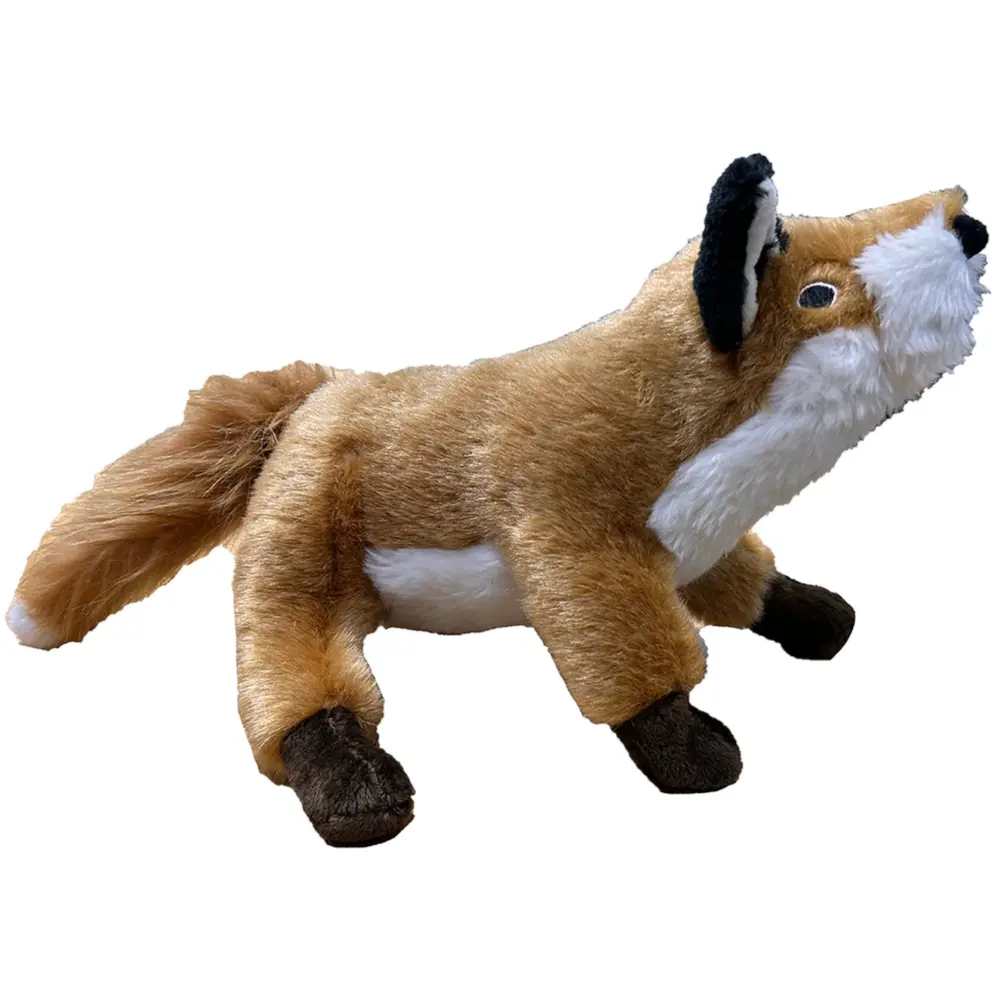
Realistic Plush Fox Dog Toy with Squeaker, View product
$30.95
Why it fits: A soft fox with a 6 in tail for light tug and a body made for carrying, a good fit for low-key adults and seniors. Best for gentle to moderate chewers, not shredders.
-
SodaPup
Jigsaw Enrichment Lick Mat for Dogs & Cats, Choose color
$25.95
Why it fits: A quiet finish after a game or a rest-day job for a tired dog: press soft food into the jigsaw grooves, or freeze it for a longer session. Suits dogs of all sizes.



Fitting play into a busy day
Several short sessions are easier to keep up than one long one. The AKC suggests building play into your routine, at mealtimes or before walks, or simply putting it on your calendar.
- Before the moments that go wrong. Dr. Bazin suggests adding play before times you want better choices from your dog, such as before dinner or before visitors are due.
- Around meals, with a gap. A game well before breakfast or dinner fits most routines, but skip boisterous play right after eating. If you have a large, deep-chested dog, ask your veterinarian how long to leave between active games and meals.
- Working from home. A home workday needs quiet jobs as well as play breaks; see how to keep a dog busy while working from home.
- Long days away. When the house empties for the school year, front-load play in the morning and plan a midday break; our back-to-school routine for dogs covers the switch.
Have a cat as well? Cats play in short, hunt-style bursts; see how long to play with a cat.
Health conditions and play: ask your veterinarian
VCA advises checking with your veterinarian before you introduce rigorous activity. That matters most if your dog is older, overweight, recovering from surgery or an injury, or has joint, heart or breathing problems. Your veterinary team, or a canine fitness trainer, can tell you which games fit, how long they should last and which movements to avoid. If your dog is on strict rest, ask exactly what is allowed.
Safety note
Call your veterinarian if your dog limps after play, struggles to breathe, wobbles or collapses, or suddenly loses interest in games they used to love, which can be a sign of pain or illness. On a warm day, fast breathing or heavy panting that doesn’t ease with rest, unusual gum color, weakness or confusion after play can point to heat stroke, an emergency: move your dog somewhere cool, wet them with cool (not cold) water and call your veterinarian or the nearest emergency clinic on the way.
Related guides
-
Guide
Why Do Dogs Like Squeaky Toys? And How to Keep Squeaker Play Safe
A squeak sounds like small prey and goes off the instant your dog bites, so every chomp pays off. Why some dogs squeak for hours or whine with a toy, what to do about a dog who digs out the squeaker, how to choose a squeaky toy and how to live with the noise.
-
Guide
Can Big and Small Dogs Live Together? Play Rules and Separate Spaces
Big and small dogs can share a home if you plan for the size gap. How to judge the match, set play rules and time-outs, give the small dog a place to escape, keep toys, meals and beds apart, walk both dogs and know when to call a trainer.
-
Guide
Toys for Dogs Who Destroy Toys: Choosing by Chewing Style
Shredder, tugger, carrier or steady chewer? Match toys to your dog's play style, see where fire hose and plush fit, play tug with rules and know when to retire a worn toy.
