My Dog Doesn’t Play With Toys: How to Spark Interest, Step by Step
To get a dog interested in toys, make the toy move like something worth chasing, reward any interest, and play together instead of leaving toys on the floor. Keep sessions to a minute or two, once or twice a day, and stop while your dog still wants more. Some dogs catch on within days, others take months, and a few will always prefer a sniff walk to a toy, which is fine.
Short answer: make the toy move, make it worth it, and play together
- Move it: drag the toy along the floor away from your dog in short stops and starts, never toward the face.
- Make it worth it: a look, a sniff or a step toward the toy earns praise or a small treat.
- Play together: a toy on the floor is furniture; a toy in your hand is a game.
- Know when to get help: if a dog who used to play suddenly stops, call your veterinarian.
Why some dogs don’t play with toys
Why doesn’t my dog like toys? It is rarely a dislike of play; usually something gets in the way, most often one of these:
- Never learned. A dog raised in a kennel or yard with no toys or playmates may not know what a toy is for.
- Still settling in. Play often shows up only once a dog feels at home.
- The wrong toy. Size, texture and sound matter. A hard ball may mean nothing to a dog who would happily carry something soft, and a loud squeak can startle a sensitive one.
- Always available. Toys that lie around all day become part of the scenery.
- Too much pressure. Pushing a toy at a dog or chasing it to get the toy back can make toys feel like trouble.
- Other interests. Some dogs care most about food, smells or people.
- Discomfort. Sore teeth, stiff joints, illness or age can make play less appealing.
Which play style might suit your dog: tugger, carrier or steady chewer
Watch what your dog already does with everyday things. The play styles from our guide to choosing toys by chewing style apply even to a dog who has never touched a toy.
- Tugger: grabs the leash, a towel corner or your sleeve and pulls. Start with a long toy and a slow, gentle tug.
- Carrier: walks off with a glove or carries a stick home from the park. Start with a soft toy that is easy to grip.
- Steady chewer: lies down and works at anything chewable with the back teeth, for long stretches. Ask your veterinarian which chews suit these dogs, and keep toys for short games with you.
Many dogs mix two styles, and a few would rather sniff than play at all.
How to get a dog interested in toys, step by step
Use this routine to teach a dog to play with toys from scratch. Pick a quiet room with a rug for good footing, and a time when your dog is awake and relaxed, such as shortly before a meal, when treats mean the most.
- Choose one toy and put the rest away. A toy that comes out only with you is more interesting than ten that are always around.
- Sit or kneel on the floor, side-on to your dog.
- Make the toy move like small prey: drag it away from your dog, stop, twitch it, then let it “hide” behind your knee. Movement away invites a chase; movement toward the face tends to make a dog back off.
- Reward any interest at once. A look, a step closer or a sniff earns a cheerful “yes” and a small treat. You are rewarding curiosity, not a perfect game.
- When your dog grabs the toy, give a few seconds of light tug at your dog’s head height, then let go so your dog wins.
- Trade rather than take: hold a treat by your dog’s nose, and when the toy drops, pick it up and start again.
- Stop after one to three minutes, while your dog still wants more, and put the toy away.
- Repeat once or twice a day. Many short, easy sessions beat one long one.
Try different textures and sounds
If a toy gets nothing after a week, change one thing at a time: plush instead of rubber, a long toy instead of a ball, a quiet toy instead of a squeaky one. Once you find a winner, our guide to how many toys a dog should have, with a simple rotation plan shows how to keep it fresh.
Start with food if food is what your dog loves
Food-loving dogs often learn to chase by chasing treats first. Roll a treat across the floor, say “get it” and repeat until your dog is waiting for the next one, then mix in a roll of the toy and reward that chase with a treat. Use small, soft treats or part of the daily food. If food is the only thing that interests your dog right now, a calm licking session is a fine first game; see what to put on a lick mat for spreads.
Rescue and adult dogs: going slower
A rescue dog who won’t play with toys is very common in the first weeks. A predictable routine, a quiet place to rest and sniffing walks come first, and play may follow weeks or months later.
- Keep it low and quiet: sit on the floor, use a soft voice and skip loud squeakers at first.
- Let your dog come to the toy. Leave it still beside you and reward any approach before adding movement.
- Count small wins. One pounce or one carry across the room is a good session, so end there.
If your dog seems frightened, hides for much of the day or has not settled after the first few weeks, talk to your veterinarian, who can check for health problems and point you to qualified help. Toys are not a fix for fear, and pushing play on a worried dog can backfire.
Adult and senior dogs can learn to play too. Keep games low on non-slip floors, roll a toy rather than throwing it and keep tug gentle. Our guide to gentle enrichment for senior dogs has more ideas paced for older bodies.
Toys that suit a beginner
A good first toy is easy to grab, soft to hold and long enough to drag with your hand well away from your dog’s mouth. It should be too big to fit entirely in the mouth. Save hard balls for later.
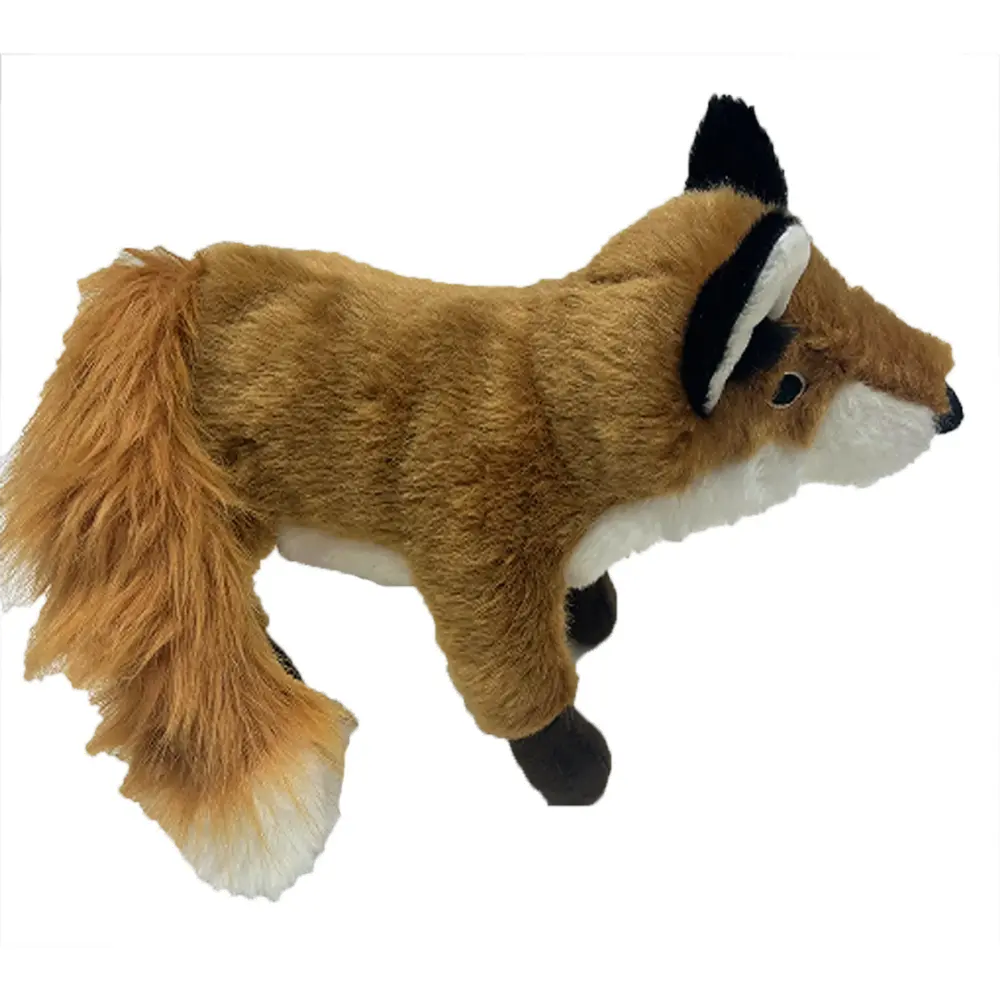
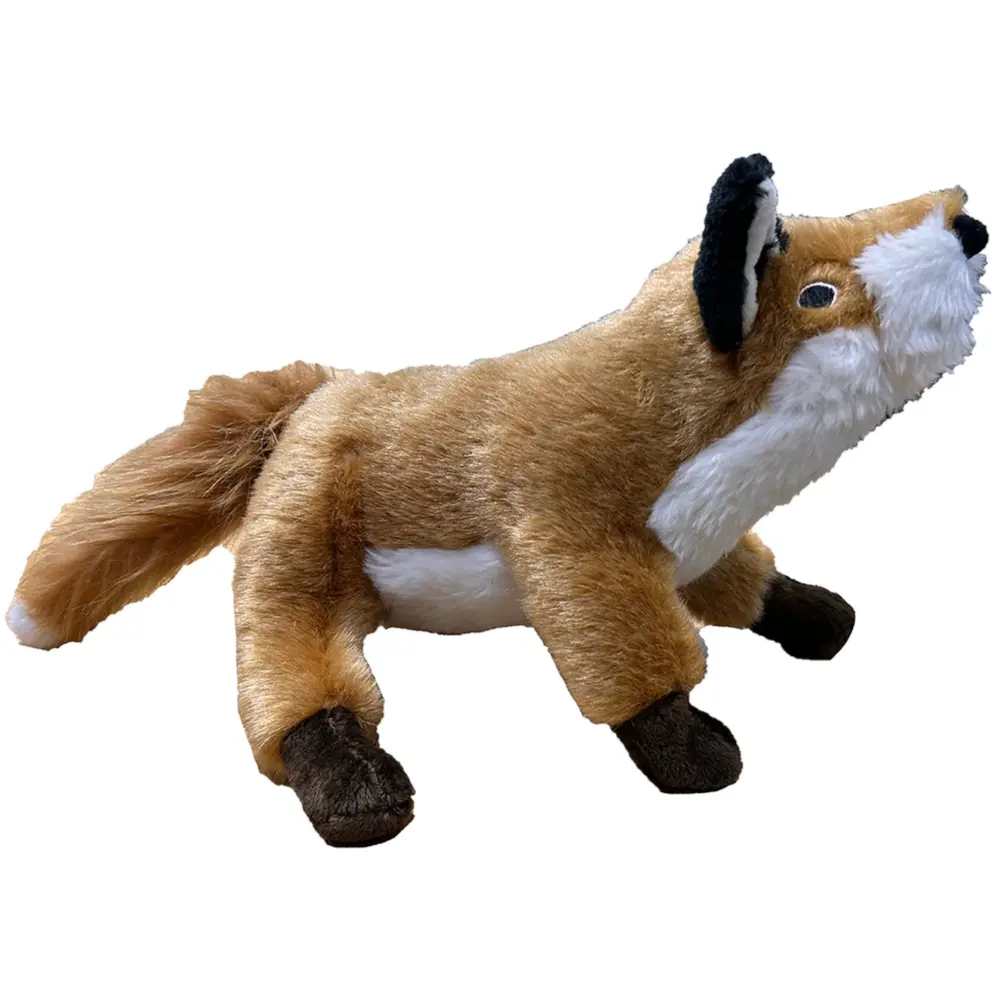
For carriers and gentle dogs, the Realistic Plush Fox Dog Toy with Squeaker is soft and lifelike, about 10 inches from head to rear with a 6-inch tail and a squeaker in the body. Hold the tail for a slow drag or a gentle tug while your dog takes the body. It is made for gentle to moderate chewers, so supervise play and remove it if it is damaged.
If your dog turns out to be a keen puller, or starts ripping soft toys once it relaxes, the Fire Hose Crocodile Tough Dog Toy is about 26 inches long, made from real fire-hose material and stuffing-free, with squeakers that keep squeaking after a puncture. The extra length keeps your hand farther from your dog’s teeth during tug. No toy is indestructible, so stay in the room while your dog plays.


Both toys squeak, so for a dog who startles at sounds, or if you are not ready to buy, start with a knotted old towel. Put it away after each session, throw it out once it frays and bring in a squeaky toy once your dog plays happily. More options are in our dog and cat toys range.
When to stop, and when to ask your veterinarian
End the session and try an easier version later if your dog walks away, turns its head, yawns, licks its lips, freezes or startles at a squeak. If your dog stiffens, growls or snaps over a toy, end the game without taking the toy by force, and ask your veterinarian for advice or a referral to a qualified trainer.
A sudden loss of interest in play is different from a dog who has never played. Call your veterinarian if a dog who used to play stops, or if you notice reluctance to chew, dropped food, limping, stiffness, low energy or a change in appetite. These can point to pain or illness that more play will not solve.
If toys never click: other ways to play
Some dogs simply prefer sniffing, walking or time with people. Play doesn’t need a toy: hide-and-seek, find-it games with treats, short trick sessions and slow sniff walks all count. For ideas that work in a small space, see indoor games for dogs on cold, dark or rainy days, or browse more toy and play guides.
Tug is the usual way in, and it carries a reputation it does not deserve. Is tug of war bad for dogs covers the rules that turn the game into training.
Toy interest FAQ
Is it normal for a dog not to play with toys?
Yes. Plenty of healthy dogs show little interest in toys, especially adult adoptees. Many learn with short, shared games, while others stay more interested in food, smells or people. A sudden change in a dog who used to play is the reason to call your veterinarian.
How do I get my dog to play with toys by himself?
Start with games you play together, because for many dogs the fun is you: a toy only moves when a person is involved. Once your dog plays readily with you, sit nearby and let your dog keep the toy for a minute before you rejoin. Keep squeaky and tug toys for supervised play, and leave your dog alone only with items it already uses calmly.
Can you teach an older dog to play with toys?
Yes, with the same short, easy sessions. Keep games low and gentle, and ask your veterinarian first if your dog has joint or dental problems.
Should I use treats to get my dog to play?
Yes, especially with food-loving dogs. Reward any interest in the toy, then use fewer treats as the game itself becomes the reward, and take them from the daily food so extras do not add up.
Related guides
-
Comparison
Stuffed vs Stuffing-Free Dog Toys: Which Lasts, Which Is Safer
Both are plush toys, and they fail in completely different ways. This comparison covers why dogs gut a stuffed toy, what stuffing-free versions gain and lose, how layer counts change durability, and which one suits the way your own dog plays.
-
Guide
Why Does My Dog Bring Me Toys? What It Means and How to Respond
A toy at the door is usually a greeting, an invitation to play or both. Learn to tell which, when to play, say hello or trade, and what to do when it turns into demand play or keep-away.
-
Guide
Why Do Dogs Like Squeaky Toys? And How to Keep Squeaker Play Safe
A squeak sounds like small prey and goes off the instant your dog bites, so every chomp pays off. Why some dogs squeak for hours or whine with a toy, what to do about a dog who digs out the squeaker, how to choose a squeaky toy and how to live with the noise.