Toys & Play Checklist
What to Bring to the Dog Park (and What to Leave at Home)
Short answer
Bring an ID tag on a flat collar, a standard leash, your own water and bowl, extra poop bags and a charged phone. Leave food, a full treat bag, favorite toys, prong or choke collars and small children at home. For the first visit, get your veterinarian’s go-ahead, scout the park alone and go when it’s quiet.
Dog park checklist at a glance
Here is what to bring to the dog park, what to sort out before the first visit and what to leave behind. The list assumes a fenced, public off-leash park; each group is explained below.
Before the first visit
- Vaccinations and flea, tick and heartworm prevention up to date, and your veterinarian’s go-ahead for park play
- A healthy dog, not in heat, and past the puppy-vaccine stage
- A recall that works with other dogs running around
- One scout visit without your dog, at the hour you plan to go
- The park’s posted rules and hours, read before you arrive
On your dog
- A snug flat collar with an ID tag showing a phone number you’ll answer
- A license or rabies tag, if your town or the park requires one
- Microchip registration with your current details
- A standard leash for the walk in and the entry pen
In your bag or pockets
- Water and a bowl, or a bottle with a fold-out bowl
- Poop bags, and a zippered pouch for full ones
- Your phone, charged, with your veterinarian and the nearest emergency clinic saved
- A few small treats in a zipped pocket, for calling your dog out
Waiting in the car
- An old towel
- Pet wipes, or a paw cleaner cup and a bottle of water
- A cover or hammock on the back seat
- Water for the drive home
Leave at home
- Food and snacks, and the full treat pouch
- Your dog’s favorite toys
- Prong, choke and slip collars
- A retractable leash
- Small children, strollers and bikes
- More dogs than you can watch at once
Is your dog ready, and is the park right?
A dog park is a yard full of strangers’ dogs, all off leash at once. Some dogs thrive there; plenty of friendly, well-behaved dogs don’t, and that is not a training failure. The AKC’s guide to whether to take your dog to a dog park describes the dogs who should wait, or find another outlet:
- Young puppies. Puppies under four months, or any puppy who hasn’t finished their vaccine series, should wait. Ask your veterinarian when yours can go; until then, our guide to socializing a puppy before vaccinations covers lower-risk ways to meet the world.
- Dogs who are unwell or in heat. Keep them home, for their own sake and everyone else’s.
- Dogs without a reliable recall. The AKC says cues such as come, down and stay should work amid distractions first. In the park, a recall is how you end trouble before it starts.
- Shy, reactive or possessive dogs. A nervous dog can be overwhelmed, a reactive dog doesn’t welcome strange dogs anywhere, and a dog who guards toys, food or their person will find plenty to guard.
Questions for your veterinarian
Before the first visit, ask whether your dog’s vaccines and parasite prevention suit park life. The AKC names bordetella (a common cause of kennel cough), leptospirosis and canine influenza, plus flea, tick and heartworm prevention; your veterinarian can tell you which make sense for your dog’s age, health and area.
Scout the park without your dog
VCA Animal Hospitals’ dog park etiquette advice suggests one visit on your own first. Go at the hour you’d like to use, stay ten minutes and look for:
- Fence and gates. Walk the perimeter: a fence tall enough for your dog, no gaps or second openings your dog could slip through, and a double gate: a small entry pen between two gates, so nobody slips out while dogs come and go.
- Separate areas. A small-dog section, if your dog is small or rattled by big ones.
- Shade, water and the ground. Is there shade, and is the water source working? Grass, wood chips, gravel, sand or mud tells you how messy the drive home will be.
- The crowd. How many dogs, how rough the play looks, and whether owners are watching their dogs or their phones.
- Cleanup. Bag dispensers and bins, and whether people use them.
- The rules sign. Hours, vaccine or license requirements, age limits for children and how many dogs one person may bring.
For the first real visit, the AKC suggests off-peak hours, and leaving if the park is too crowded. A handful of calm dogs is ideal; save the busy hours for later, if ever.
On your dog: a collar with ID, and a leash for the gate
Once the leash comes off, the tag is the fastest way for a stranger to reach you, so read it before you unclip: legible, with a number you’ll pick up. Add a license or rabies tag if your town or the park requires one, and make sure the microchip is registered to your current phone number and address.
A flat collar is the usual home for tags. If you need one, the Lupine reflective dog collar we carry has a strong D-ring for tags and size ranges covering necks from 6 to 31 in; choose the range that includes your dog’s neck measurement. Fit it snugly, two fingers underneath, because a loose collar is easier for a paw, or a wrestling partner’s jaw, to get caught in. Take off prong, choke and slip collars before you go in: they can tighten, or catch a playmate’s teeth, during rough play. Advice on harnesses is split: some trainers remove them for off-leash play, since straps give a playmate something to grab, while others leave a snug harness on as long as the dogs are closely watched. If yours stays on, make sure nothing hangs loose.
Bring a standard leash for the walk from the car and the entry pen. Leave the retractable one behind: in a crowded pen of excited dogs, a thin cord is hard to manage and easy to tangle around legs.
In your bag: water, a bowl and somewhere for full bags
Water. Dogs who run hard drink a lot, park fountains are sometimes shut off or broken, and the AKC points out that communal bowls let dogs share germs. Bring your own, and offer it during breaks away from the crowd at the fountain. More on that in are communal water bowls safe for dogs?
Bags and a pouch. Pick up straight away, every time; with a dozen dogs on the move, the spot is easy to lose. Carry more bags than you expect to need, and a pouch so a full bag isn’t swinging from your hand, or left on a bench, while you watch your dog.
Your phone. Charged and in your pocket, not your hand, with your veterinarian and the nearest emergency clinic saved in case of a bite, a torn nail or a cut pad.
A few treats, if the rules allow. VCA says a treat for your own dog is fine; brandishing lots of them is what causes conflict. Two or three small treats in a zipped pocket can pay for a recall. Hand them over quietly, away from other dogs, and never feed someone else’s dog without asking first.
-
Flipo
Fold-A-Bowl Dog Water Bottle with Fold-Out Bowl, Choose color
$28.95
Why it fits: Your own water instead of the shared bowl: a 26 oz bottle whose cover folds out into a bowl, with a wrist strap that leaves a hand free for the leash at the gate.
-
Yucky Puppy
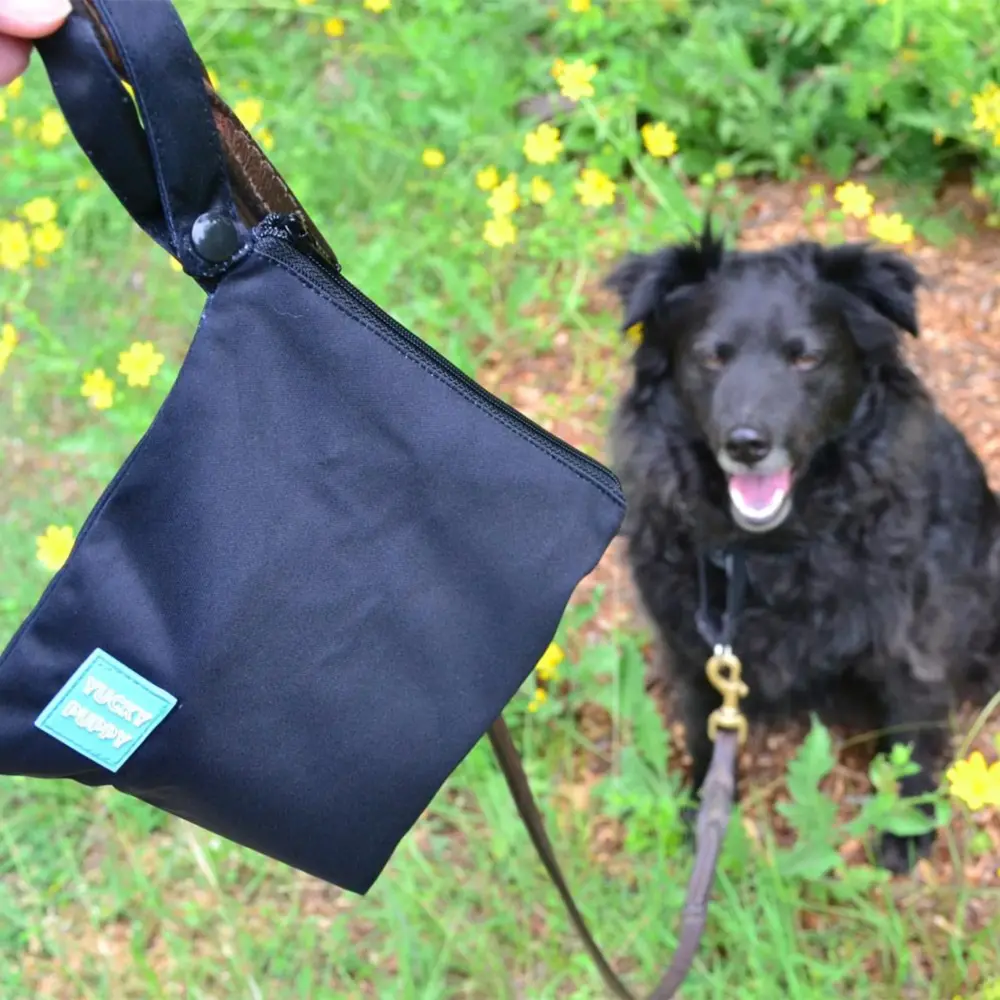
Waterproof Poop Bag Holder, Choose size
Price range: $23.95 through $24.95
Why it fits: A zippered, waterproof pouch that clips to your belt, bag or leash, so a full bag stays shut until the bin and your eyes stay on your dog. XL size, set of two.


Most of this doubles as your everyday kit; our list of dog walking essentials covers on-leash walks, including gear for after dark.
What to leave at home
Most dog park squabbles start over something worth having. VCA’s advice is to limit toys and treats and to leave some things behind entirely:
- Food, yours included, and the full treat pouch. A sandwich on a bench or a rustling bag of treats draws a crowd, and the dogs crowding you won’t all be polite with each other; a dog who guards food may snap.
- Favorite toys. A ball your dog adores is a ball your dog may guard, and toys on the ground soon belong to everyone. If you want a game of fetch, pick a quiet hour, bring a toy you won’t miss and put it away when another dog joins in.
- Small children. VCA advises leaving them at home. Dogs running at full speed can knock a child flat, and a squeal or a snack can excite a whole group. Some parks set a minimum age; check the sign.
- Strollers, bikes and extra dogs. Many parks’ rules keep wheels outside the fence, and VCA suggests bringing only one or two dogs at a time so you can supervise properly.
Dog park etiquette at the gate and in the park
The entry is usually the most crowded spot in a dog park. Resident dogs rush over to inspect each newcomer, and a dog who meets that welcome on a leash can feel trapped. Take it in this order:
- Watch from outside the fence for a minute. If the play looks rough or one dog is picking on others, come back another time.
- Step into the entry pen and latch the outer gate behind you. Only one gate should ever be open at a time.
- Unclip the leash inside the pen, before the inner gate opens. The AKC advises unclipping before your dog goes in, so they don’t face a crowd while tethered.
- Open the inner gate, walk through and keep moving away from the entrance, so the welcoming party spreads out instead of piling up.
- To leave, clip the leash on and step into the pen, then close the inner gate before you open the outer one.
Once you’re in, these habits keep the peace:
- Watch your dog, not your phone. Trouble builds in seconds, and you’re the only one responsible for your dog.
- Call your dog over now and then. A recall, a treat and straight back to play teaches that coming to you doesn’t always end the fun, which makes leaving easier.
- Don’t correct other people’s dogs. Tell the owner instead.
- Step in early. The AKC says to intervene if other dogs repeatedly roll your dog to the ground or chase it relentlessly, and the same goes if your dog is the one doing it.
Safety note
If a fight breaks out, don’t reach between the dogs or grab a collar: in the heat of the moment, even your own dog may bite you. The AKC’s guide to breaking up a dog fight suggests interrupting with a sudden loud noise or a spray of water, or pushing a barrier such as a board between the dogs, so your hands and face stay away from their mouths. Afterward, take your dog to a veterinarian to be checked, and exchange contact details with the other owner.
Knowing when to leave
Leave while your dog is still enjoying it. The AKC notes that even a 30-minute visit gives a dog plenty of time to run without getting overtired or overstimulated, and a short, happy first visit makes the second one easier. Head for the gate when you notice:
- Your dog checking out. Sticking to your legs, hiding under a bench or waiting by the gate. When a dog only wants to stay with you or by the gate, the AKC says to respect it and head home.
- Play turning one-sided. The same dog always on top or always chasing, or a dog trying to get away who isn’t being allowed to.
- Your dog boiling over. Ignoring a recall they usually answer, mounting, or play growing louder and rougher by the minute.
- Heat. Heavy panting, rapid breathing, heavy drooling and bright red gums are early signs of heatstroke in dogs, per the AKC. Move to shade, wet your dog with cool (not cold) water and call your veterinarian; pale or bluish gums or a collapse means go to one right away.
- A change in the crowd. A big group arriving, or a dog whose play worries you.
For the body language that separates healthy play from trouble, see how to set up a dog playdate. A single well-matched playmate is also a good alternative for dogs who find the park too much.
Back at the car: paws, coat and seats
Dog parks send dogs home with mud, wood chips, sand and wet fur, and sometimes a hitchhiker: burrs, grass seeds or a tick. Two minutes at the car deals with most of it:
- Offer water before anyone gets in.
- Run your hands over the coat, ears and between the toes for burrs, grass seeds and ticks, and look at the pads for cuts or torn nails.
- Wipe or rinse each paw, then a muddy belly and legs, and towel dry.
- Load your dog onto a covered seat and use your usual car restraint for the drive.
After a really muddy session, the full routine is in our guide to cleaning dog paws after a walk, and if you’re still deciding how to protect the back seat, we compare a dog hammock and a bench seat cover.
-
Bark Fifth Avenue
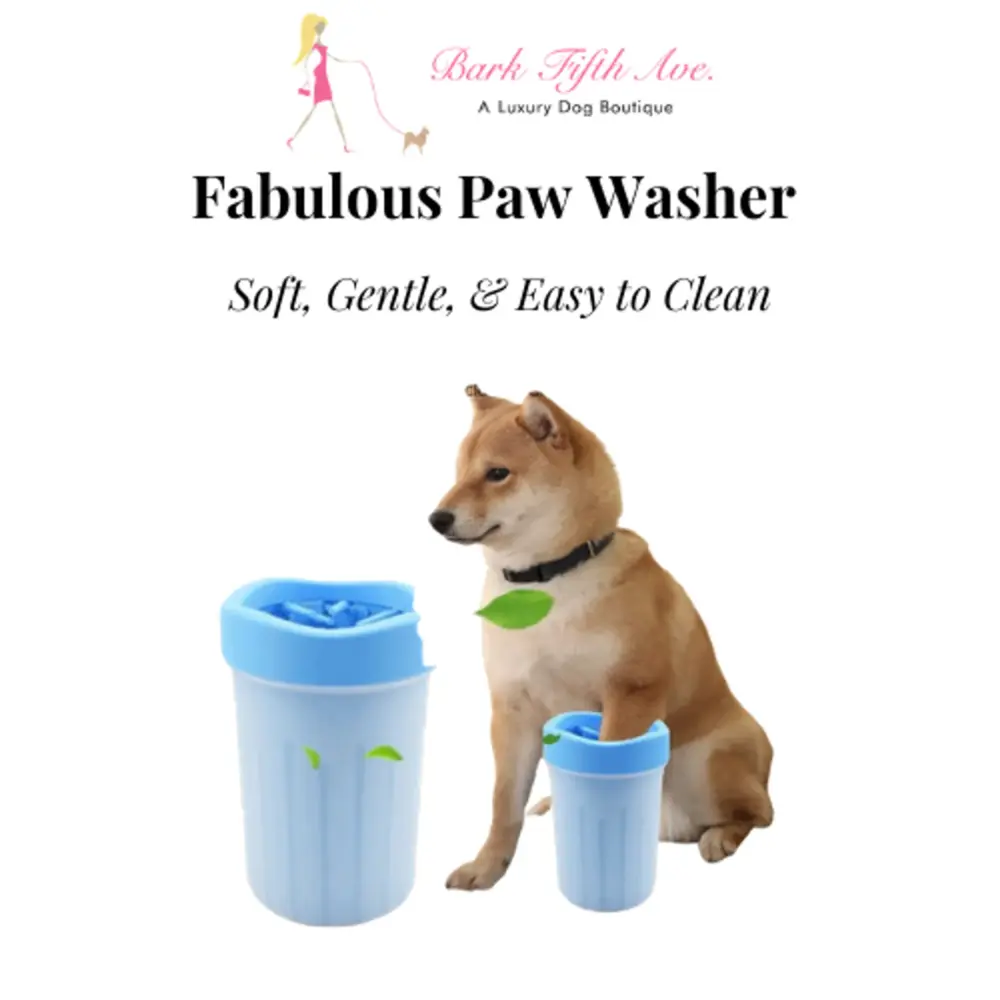
Fabulous Paws Dog Paw Cleaner Cup, Choose size & color
$31.95
Why it fits: Keep it in the car with a bottle of water: soft silicone bristles lift mud, sand and grit from between the pads, and the water stays in the cup instead of on the seat.
-
Mr. Peanut’s
Naturals Pet Wipes
$26.95
Why it fits: 150 large 6 x 10 in wipes for paws, legs and coat in the parking lot, larger and thicker than the usual pet wipe so one does the job without tearing.
Currently out of stock
-
GF PET
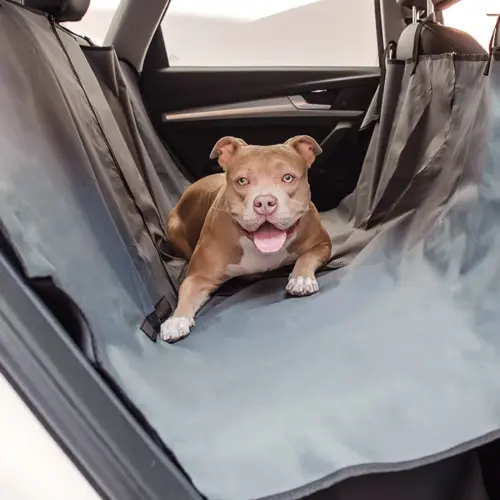
Waterproof Dog Car Hammock Seat Cover, View product
$60.95
Why it fits: A waterproof, machine-washable hammock over the back bench, so wet fur and wood chips stay off the upholstery. 58 x 57 in: measure your seat first. A cover, not a restraint.


For more wipes, pouches and paw-cleaning gear, browse our clean-up supplies. For the yard at home, see pooper scooper vs poop bags.
Tip
After the first few visits, watch your dog over the following days. A new cough, vomiting, diarrhea, a limp or a sore spot is worth a call to your veterinarian; mention that your dog has been to a dog park.
Related guides
-
Checklist
Winter Hiking With a Dog: Checklist for Cold, Ice and Short Days
A winter trail-day checklist: plan a shorter, sheltered route around daylight, keep your dog leashed and off frozen water, pack water that won't freeze and a coat for dogs who feel the cold, check paws for ice balls and salt, and know when to turn back.
-
Checklist
What to Tell Your Dog Walker: A Handover Checklist
Everything a new dog walker needs on one page: where the gear lives and how it goes on, how your dog walks, leash and route rules, medications and treats, emergency contacts, the door routine, weather rules and a first walk together.
-
Checklist
Taking Your Dog to the Beach: Checklist for Sand, Salt Water and Heat
A beach-day checklist for dog owners: the rules to check before you go, water so your dog doesn't drink the ocean, hot sand and heat, waves and rip currents, and a fresh-water rinse before a covered ride home.