Feeding & Enrichment Guide
Are Communal Water Bowls Safe for Dogs? Parks, Patios and Rest Stops
Short answer
It’s safer not to. A shared bowl at a dog park, café patio or rest stop can carry germs left by other dogs and rodents, including kennel cough, giardia and leptospirosis. Carry your own water and bowl, especially for puppies, seniors and dogs with weak immune systems; if there’s no other option, pick a clean, freshly filled bowl.
Why a shared bowl is a gamble
The trouble with a shared bowl is that you can’t see who drank before your dog: a puppy with diarrhea, a dog in the first days of a cough, or a rodent that found the bowl overnight. The AKC’s article on whether communal water bowls are safe for dogs recommends carrying a water bottle or collapsible bowl with fresh water, asking a restaurant or coffee shop for a cup of water, and checking any communal bowl before your dog drinks from it.
Here’s how the water your dog is likely to meet on an outing compares:
| Water source | The concern | What to do |
|---|---|---|
| Your own bowl | Only your dog’s germs | Rinse after outings, wash at home |
| Café tap water | Little: fresh and unshared | Ask for a cup, pour it into your bowl |
| Park fountain | A spout and basin many dogs lick | Fill your own bowl from the tap |
| Shared bowl | Saliva, feces and stale water | Skip it, or check it first |
| Puddle | Runoff, urine and chemicals | Steer your dog past it |
| Pond or lake | Parasites, bacteria and algae | Carry water, avoid scummy water |
What can be in a shared water bowl
According to the AKC, germs reach a communal bowl in the saliva of the dogs that drink from it, in feces carried in on paws and snouts, and in rodent urine and droppings, and stagnant water can hold bacteria and parasites of its own. Here is what the AKC and VCA say a shared bowl can pass along:
- Kennel cough. A contagious respiratory infection whose main sign is a harsh cough that can sound like a goose honking. The AKC’s kennel cough guide names water bowls, toys and bedding among the shared surfaces that spread it, alongside coughs, sneezes and direct contact.
- Canine influenza. VCA lists food and water bowls among the objects that spread dog flu, and says the virus can survive on surfaces for up to 48 hours, so a bowl that looks clean isn’t necessarily free of it.
- Giardia. An intestinal parasite that can cause diarrhea. The AKC says it spreads through fecal contamination and is often found in standing water such as puddles and bowls, and VCA’s giardia guide notes that its cysts can survive for several months in water and damp places.
- Intestinal worms. The AKC lists roundworms, hookworms and whipworms among the parasites a bowl contaminated with feces can harbor.
- Leptospirosis. A bacterial infection that can affect the liver and kidneys and can be fatal. It survives in water and mud contaminated with the urine of infected animals, rodents included, and the AKC notes it is often seen in late summer, in fall and after rain.
- Oral papillomas. A contagious virus that, the AKC notes, often shows up as warts around the mouth, on the lips, tongue or gums.
- Salmonella. Bacteria that, the AKC notes, can survive in water.
How much any of this matters depends on your dog’s age and health, their vaccines and parasite prevention, how fresh the water is and what’s going around locally. A healthy, vaccinated adult dog taking a quick drink from a just-filled bowl is in a very different position from a 10-week-old puppy at a crowded park.
Can people catch anything from the bowl?
A few of these germs, yes. People can catch leptospirosis through contact with an infected dog’s urine or with water or soil contaminated by infected urine, according to the AKC’s guide to leptospirosis, and salmonella infects people as well as dogs. With giardia, VCA says there is some debate over how easily it passes between dogs and people, and that it’s best to assume it could. Wash your hands after handling a shared bowl or picking up after your dog.
Dogs who should skip shared bowls
The AKC notes that puppies, senior dogs and dogs with weakened immune systems are more at risk from what a communal bowl can carry. For these dogs, bring water every time and ask your veterinarian where to draw the line:
- Puppies still getting their vaccines. Parvovirus most often affects unvaccinated puppies between 6 weeks and 6 months old, and the AKC’s guide to parvo in puppies says they can pick it up indirectly from contaminated food bowls, accessories and people. Your veterinarian can tell you when your puppy is ready for parks and patios.
- Senior dogs. The AKC notes that kennel cough, usually mild in healthy adults, can be more serious in older dogs.
- Dogs with a weakened immune system. Some illnesses and medicines affect immunity. If your dog is being treated for a long-term condition, ask whether shared bowls are worth avoiding altogether.
- Dogs who are unwell right now. This one protects everyone else. Keep a dog who is coughing, sneezing, vomiting or has diarrhea away from shared bowls and busy places; the AKC advises keeping a dog with kennel cough away from other dogs for at least two weeks after the coughing stops.
Safety note
Already drank from one? Don’t panic, but watch your dog over the next couple of weeks. Call your veterinarian if a cough, diarrhea, vomiting, unusual tiredness or a poor appetite appears, and say where your dog drank. If you suspect antifreeze, or your dog drank from or swam in scummy water, call right away instead of waiting for signs.
If you have to use one: what to check first
Sometimes there’s no alternative: the bottle is empty, the day is hot and your dog is panting. A dog who needs water should get it. The AKC suggests checking a shared bowl first for leaves, feces, pests or anything floating in or clouding the water; these checks go a little further:
- Nothing floating. No leaves, insects, droppings or clumps of hair.
- Clear, not cloudy. Skip murky water, or water with foam or a film on top.
- Clean sides. A slimy coating or green tinge means the bowl is being topped up, not washed.
- Freshly filled. Ask staff when it was last changed. If they don’t mind, tip it out and refill it; fresh water helps, though it won’t clean a slimy bowl.
- No crowd. Wait until other dogs have moved off, and skip it if a coughing or sneezing dog just drank.
- A quick drink. Let your dog drink, then move on, rather than letting them play in the water or settle beside the bowl.
If the bowl fails any of these, look for tap water instead: a restroom sink, a café counter or an outdoor spigot. A disposable cup or a clean takeout container makes a one-time bowl. The slime test is the same one you’d use at home; our guide to how often to wash dog bowls explains what that film is and how to scrub it off.
Puddles, ponds and standing water on walks
Shared bowls get the attention, but the water your dog finds on the ground deserves at least as much caution, because nobody ever changes it.
City puddles and parking lots
Puddles collect whatever runs off sidewalks, lawns and roads. Leptospirosis isn’t only a country-dog problem: the AKC notes that city dogs can be exposed in outdoor spaces contaminated with rodent urine, and that the risk rises with heavy rain and flooding, especially where rodents are common, and in the warm summer and fall months. Giardia, too, is often found in puddles.
Driveways, garages and parking lots add chemicals. Antifreeze tastes sweet and can leak onto driveways and garage floors, and VCA’s guide to ethylene glycol poisoning warns that a tiny amount can cause severe poisoning. If you think your dog has licked or drunk any, call your veterinarian, an emergency clinic or the ASPCA Animal Poison Control Center at (888) 426-4435 right away (a consultation fee may apply). Don’t wait for signs: VCA stresses that treatment has to start immediately.
Ponds, lakes and streams
Natural water can carry the same parasites and bacteria, plus toxic algae. The CDC describes harmful algal blooms as looking like foam, scum, mats or paint on the water, and advises keeping pets out of discolored, scummy or smelly water. If your dog goes in, rinse them off with tap water right away, before they lick their coat, and call your veterinarian if they seem at all unwell; the CDC warns that animals can become very sick within hours. For longer outings, our hiking with a dog checklist covers carrying enough water and what to try when a dog won’t drink on the trail.
Tip
The simplest way to keep a dog out of puddles is to offer water before they’re thirsty: at the halfway point of a walk, before and after play, and back at the car. A reliable “leave it” covers the rest.
Bringing your own water, and keeping it clean
Two setups cover most outings: a bottle with a bowl built in, or a collapsible bowl plus any bottle. Our dog water bottle vs collapsible bowl comparison weighs them for city walks, hikes, road trips and two dogs.
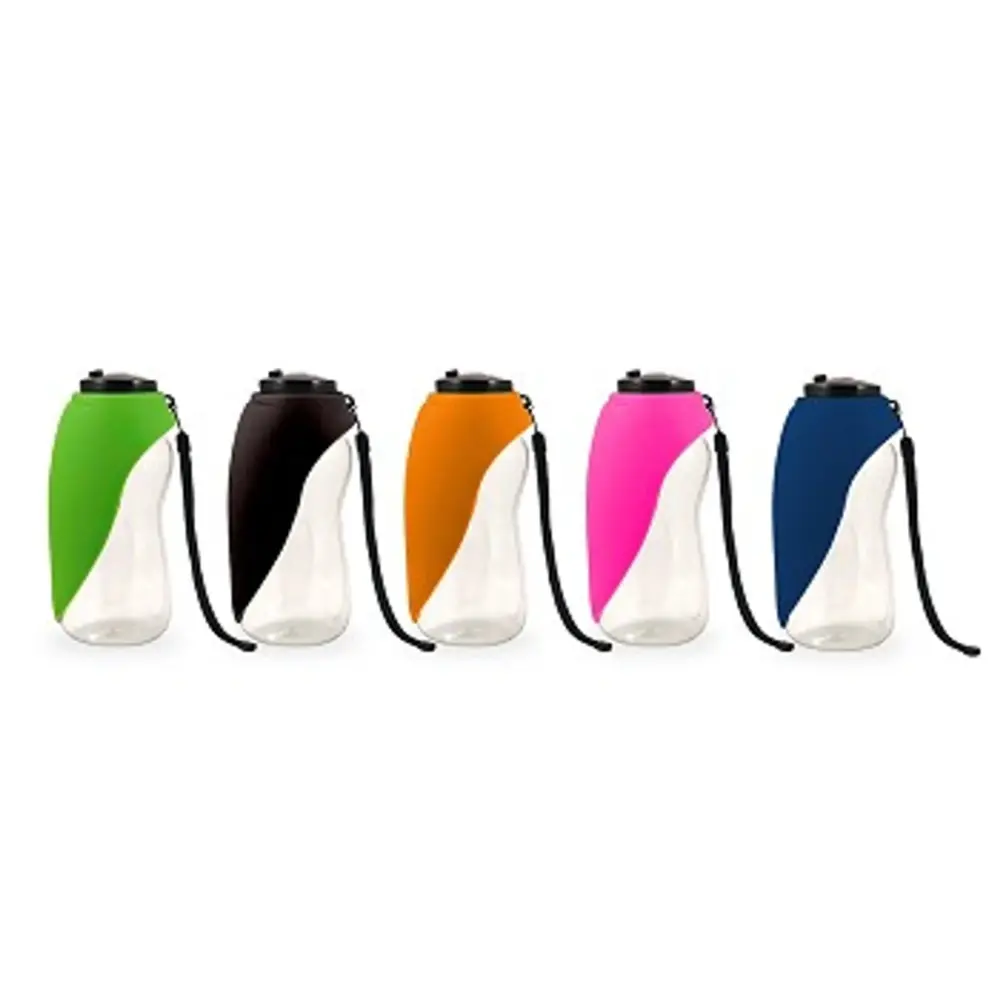
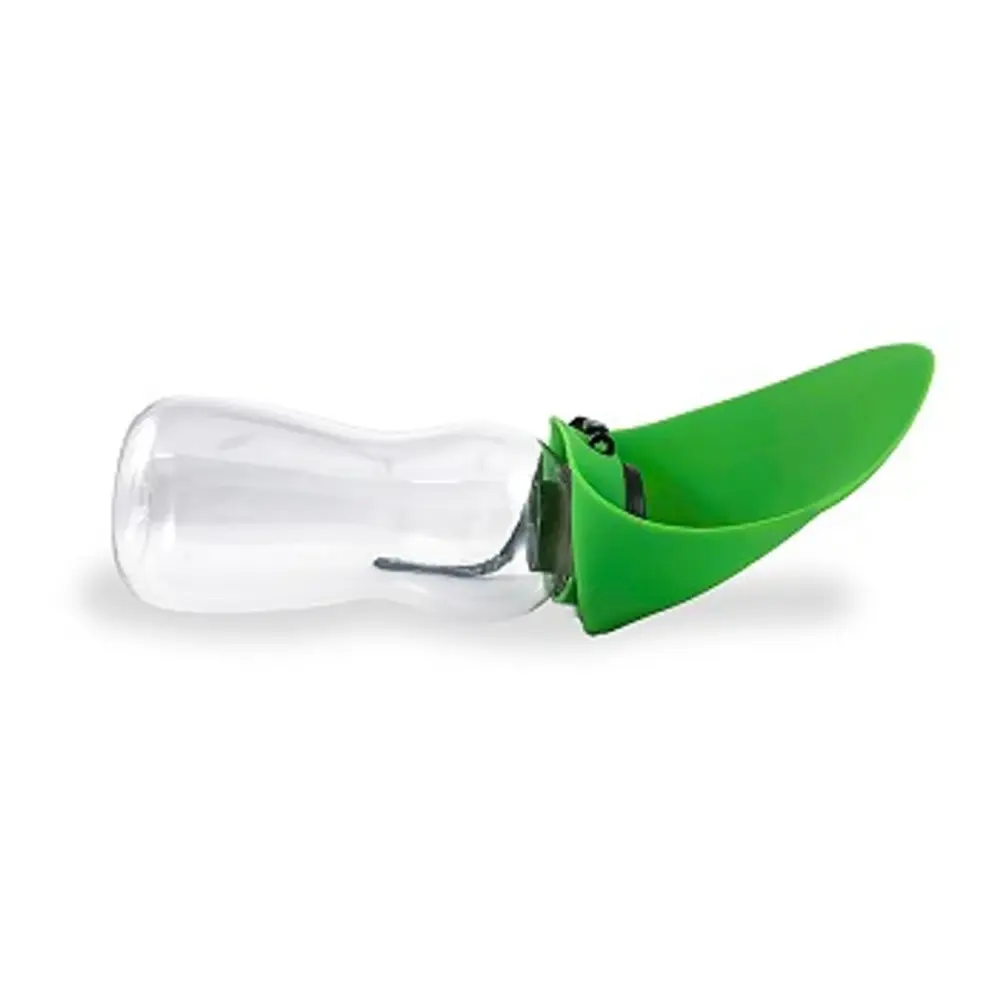
If you’d rather carry one thing, the Flipo Fold-A-Bowl is a 26-ounce bottle whose cover folds out into a bowl made of food-grade TPU. The push-button closure is meant to stop leaks in a bag, and the wrist strap frees your hand for the leash.
Keep your bowl your dog’s own
Your own bowl only helps while it stays your dog’s. At a park, other dogs will happily drink from it, and then it’s a communal bowl again; if one does, rinse it before your dog drinks. Pour a little at a time and tip out what’s left instead of letting it sit. Rinse the bowl with fresh water after each outing, then wash it at home with warm, soapy water, following the maker’s care instructions; the Fold-A-Bowl should be washed by hand.
Dog parks, café patios, shops and rest stops
Dog parks
Park bowls and fountains see the most dogs, and play packs dogs close together, which matters for infections like kennel cough that also spread through coughs and contact. If the park has a fountain or tap, fill your own bowl from it and give your dog a drink at a quiet edge of the park, not in the line at the fountain. Our list of what to bring to the dog park covers the rest of the bag.
Café patios and shops
Dog-friendly patios often leave a bowl by the door. Ask for a cup of tap water instead and pour it into your own bowl, or let your dog drink from the cup. Our guide to taking a dog to a restaurant patio covers what else to bring, table manners and when to leave. The same goes for the bowl outside a pet store or other shop, which sees a steady stream of dogs and is often topped up rather than emptied: offer your own water before you go in or once you’re back outside.
Rest stops and gas stations
Pet areas at highway rest stops are used by dog after dog, and the puddles in their parking lots can hold oil or antifreeze. Keep a gallon jug of water in the car and refill your dog’s bottle at each stop. Our road trip with a dog checklist covers the rest of the packing, and you’ll find more for the drive in our travel and car accessories.
Vaccine and parasite questions for your vet
Vaccines and parasite prevention don’t make a shared bowl safe, but they change how much is at stake. In the AKC’s dog park guidance, its chief veterinarian, Dr. Jerry Klein, recommends that dogs who visit dog parks be vaccinated for Bordetella, leptospirosis and canine influenza, and treated with flea, tick and heartworm preventives. Whether that fits your dog depends on where you live and what you do together, so take these questions to your next appointment:
- Which vaccines make sense for our routine: dog parks, daycare, boarding, patios or travel?
- Is my puppy far enough through the vaccine series for parks and patios?
- Does my dog’s preventive cover the intestinal parasites common here, and how often should we test a stool sample?
- Does my dog’s health or medication make shared bowls worth avoiding altogether?
- Which signs after a shared bowl, a puddle or a swim mean I should call you?
Vaccines narrow the risk rather than remove it. The AKC notes that vaccinated dogs can still catch kennel cough from other germs, though usually with milder signs, and VCA says the canine influenza vaccine may reduce how severe and how long the illness is but can’t completely prevent infection. Your own water and bowl take the shared bowl out of the picture altogether.
Related guides
-
How-to
How to Get a Dog to Drink More Water: Bowls, Meals and Walks
Simple ways to get more water into a dog who barely drinks: cleaner bowls in better spots, soaked kibble, wet food and frozen lick mats, water on walks, whether water should stay out at night (puppies are the exception) and the signs that mean a call to your veterinarian.
-
Comparison
Should You Feed a Dog Before or After a Walk? Meal and Exercise Timing
Walk first and feed once your dog has settled. Compare feeding before and after a walk, see how long to wait around sniff walks, runs, fetch and hikes, follow a simple daily schedule, handle water and puppy potty trips, and learn the bloat signs that mean an emergency vet visit.
-
Comparison
Best Material for Dog Bowls: Steel, Ceramic, Silicone or Plastic?
Stainless steel suits most dogs as the everyday bowl, but not every dog. Compare steel, ceramic, silicone and plastic on cleaning, chewing, sliding and noise, and see which suits chewers, bowl pushers, cats and trips.