Hiking With a Dog: A Day-Hike Checklist for Water, Waste, Trail Manners and Tired Legs
A hiking with a dog checklist comes down to six things: ID on the collar, a harness and a leash no longer than 6 feet, more water than you think your dog needs, a zippered pouch for carrying full poop bags out, your veterinarian’s number, and a plan for a dog who tires before the trail ends. Check the park’s dog rules first, because dogs aren’t allowed on every trail.
Hiking with a dog checklist at a glance
Run through this dog hiking gear list at the trailhead. It adds trail items to our everyday dog walking essentials.
What to bring hiking with a dog
- ID on the collar: a tag with the phone number you’ll carry on the trail
- A harness your dog has already worn, and a fixed-length leash of 6 feet or less
- Water and a bowl, plus a refill in your pack
- Extra poop bags and a zippered pouch for full ones
- Treats, plus a snack if the hike runs past mealtime
- Pet wipes or a towel, and a basic pet first-aid kit
- Your veterinarian’s number and the nearest emergency clinic saved in your phone
- A carrier your dog already knows, if you may need to carry them
- For you: the park’s rules and phone number, a trail map, your own water and a turnaround time
Before you go: park dog rules, trail length and your dog’s fitness
Many national parks allow pets only in developed areas and on a few trails; other parks set their own rules. The National Park Service’s advice on hiking with pets says to check with the park before you visit and keep your dog on a 6-foot leash.
Choose a trail by climb as well as distance: a good first hike lasts about as long as your dog’s longest regular walk, with shade and an easy way back. The AKC’s tips for hiking with your dog advise asking your veterinarian what your dog can handle, and caution that long, hard hikes can be too much for young and older dogs. Ask too if your dog has a flat face, which makes overheating more likely, or a heart, breathing or joint condition.
On hot days, start early and choose shade; exposed rock in full sun can burn paw pads. In winter, see how cold is too cold to walk a dog.
Harness, leash and ID for the trail
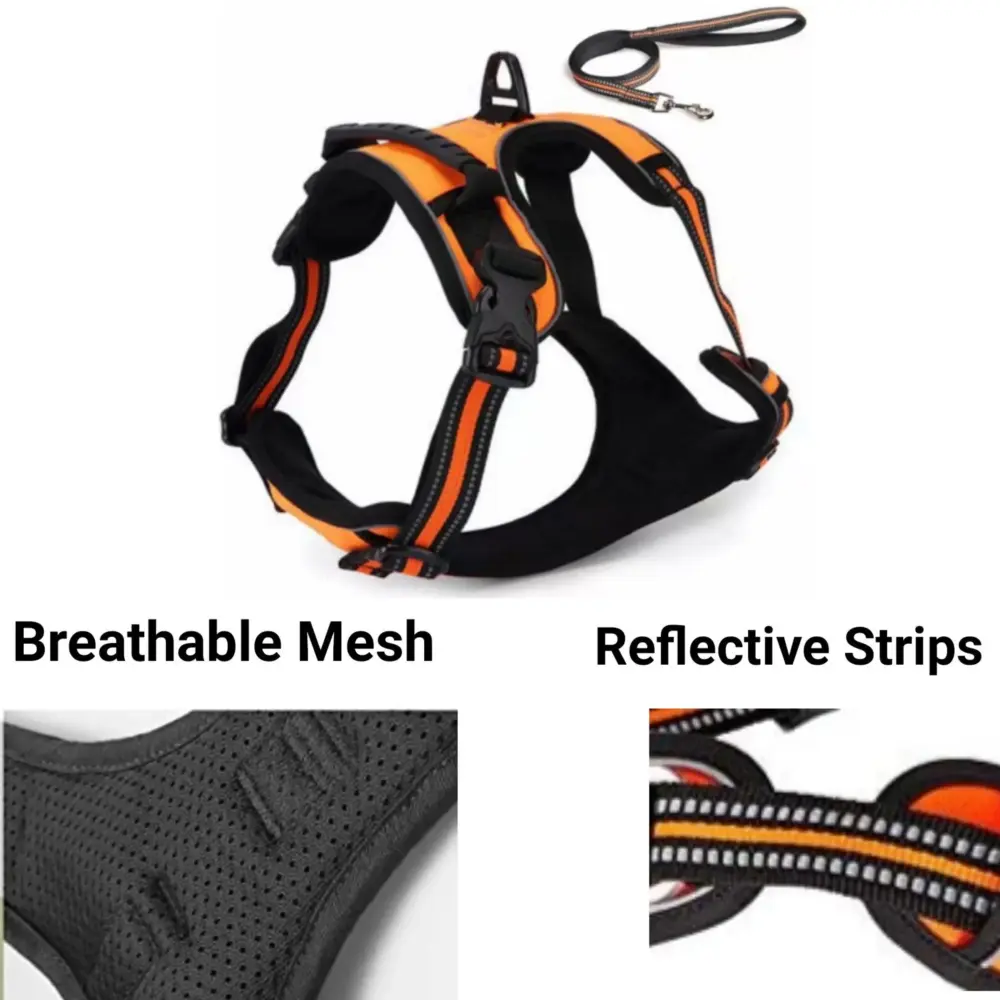
A harness keeps pressure off the throat when your dog lunges or scrambles; check behind the front legs for rubbing at each rest.
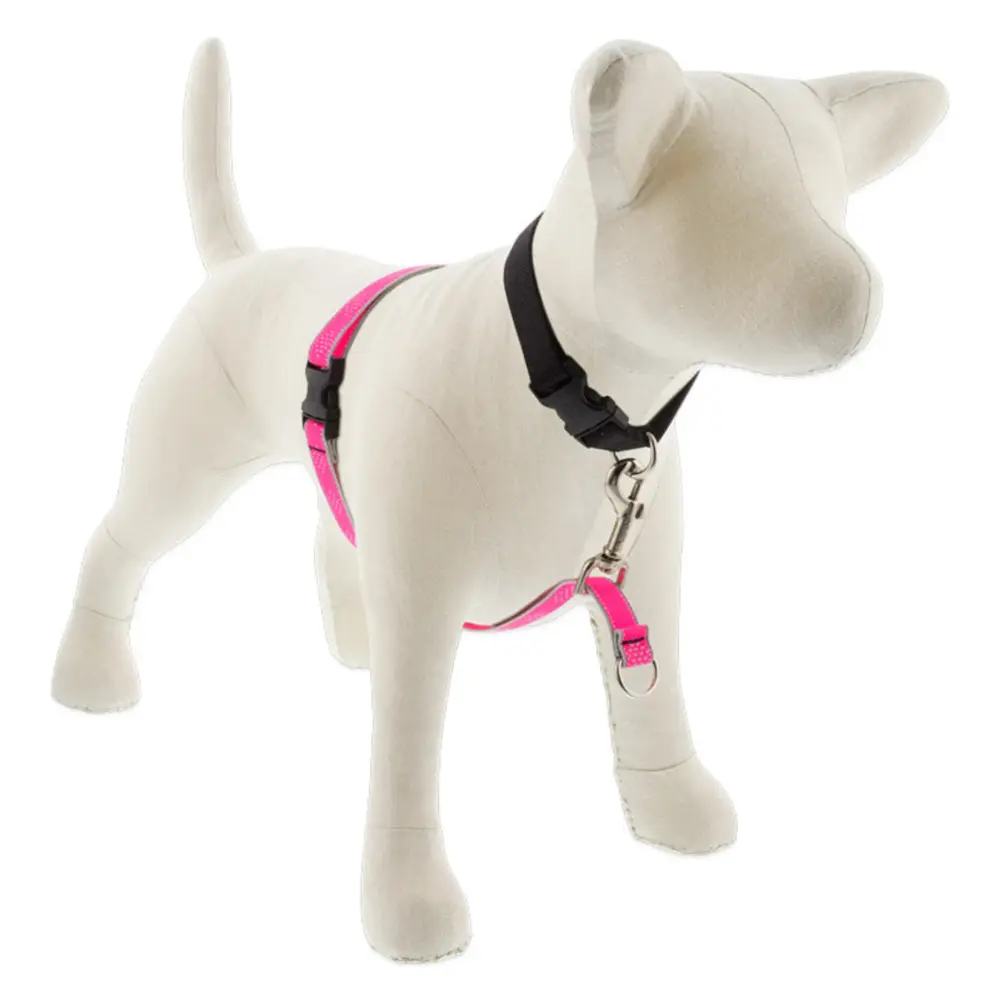
If your dog pulls, a front-clip harness makes pulling less effective on narrow and downhill stretches. The Lupine Pet Reflective No-Pull Dog Harness has a front attachment that redirects forward momentum back toward you, in girth ranges of 16–26 in and 26–38 in for medium and large dogs. A harness manages pulling but doesn’t teach loose-leash walking; our short-session plan to stop a dog pulling on the leash does that.
Use a fixed-length leash: a retractable one is hard to shorten when a bike rounds a bend, and past 6 feet it breaks a 6-foot rule. Keep the tag’s phone number and the microchip registration current.
Water on the trail: carrying it, offering it and a dog who won’t drink
Carry all your dog’s water rather than counting on streams and lakes; the AKC warns that unknown water can carry parasites and bacteria such as leptospirosis. Keep your dog out of scummy, discolored or foamy water, which can signal toxic algae, and call your veterinarian right away if your dog drinks or swims in it.
The Flipo Fold-A-Bowl holds 26 oz, and its cover folds out into a bowl. The push-button closure is designed not to leak in a bag, and a wrist strap lets you hold the bottle and the leash in one hand. Offer water at every rest, after climbs, at the turnaround and back at the car.
When your dog won’t drink water on a hike
On a new trail, excitement often beats thirst. Try this:
- Practice with the trail bowl at home and on short walks.
- Offer water once your dog has stopped and settled, not mid-sniff.
- Pour a little at a time and hold the bowl low and still.
- Try again at every rest; many dogs drink once they calm down.
If your dog still refuses water on a warm day and is slowing down, turn back; call your veterinarian if they seem weak or unwell.
Packing out poop bags when there’s no trash can
Trails rarely have bins, so carry your dog’s waste out; the National Park Service notes that pet waste can carry harmful bacteria into fresh water and pass diseases to wildlife. Don’t leave a bag by the trail to collect later; it is easy to forget. Here is how to pack out dog poop on a trail:
- Squeeze out the air and tie the bag near the top.
- Seal it in a waterproof pouch on the leash, a pack strap or your belt.
- Empty it into a trailhead bin or your bin at home, then wipe it clean.
The Yucky Puppy Waterproof Poop Bag Holder, XL is made of waterproof PUL fabric that wipes clean and helps contain odor, with a zippered top and a snap loop for a leash, bag or belt. At about 6.75 × 9.25 in, it suits a big dog, two dogs or a long day.
-
Flipo
Fold-A-Bowl Dog Water Bottle with Fold-Out Bowl
$28.95
-
Yucky Puppy
Waterproof Poop Bag Holder
Price range: $23.95 through $24.95
-
Lupine Pet
Reflective No-Pull Dog Harness
Price range: $41.95 through $45.95



Trail manners: passing hikers, bikes and horses
Not everyone wants to meet your dog, so keep the leash short:
- Hikers: step aside, keep yourself between your dog and the people passing, and reward a sit or wait. By convention, hikers going downhill yield to those coming up.
- Bikes: riders should yield to hikers but can come fast around a bend, so step aside.
- Horses: hikers yield to horses. Step off on the downhill side, keep your dog close and quiet, and talk to the rider in a normal voice so the horse knows you are a person.
- Other dogs and wildlife: ask before letting dogs greet, and don’t let your dog chase or approach animals.
If your dog lunges at passers-by, stick to quieter trails and work with a qualified trainer.
A plan for a tired dog: rests, turnarounds and when to carry
The way back is as long as the way out, and often warmer, so on an out-and-back trail turn around at no more than half the time your dog’s longest comfortable walk takes, sooner if the route climbs. Rest in shade and check paws for burrs, cuts and sore pads. Head back early when your dog:
- Lags behind instead of leading
- Lies down at every stop or keeps seeking shade
- Pants hard even after resting
- Changes gait or doesn’t want to go on
Call your veterinarian about limping, a cut or sore pad, or panting that doesn’t ease with rest.
When to carry your dog on a hike
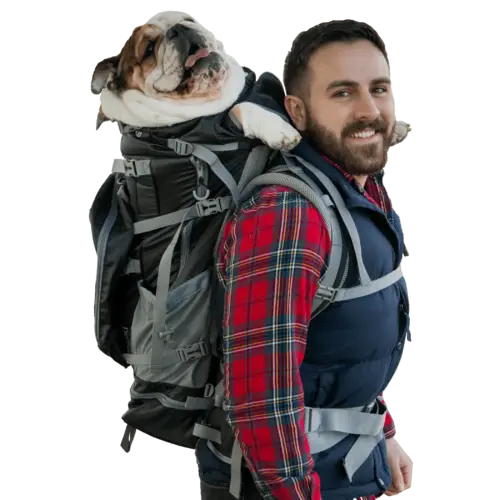
Carry your dog when they are hurt or worn out far from the car, or over a short stretch they can’t manage safely, such as a steep scramble. Introduce any carrier at home in short sessions first. A small dog may fit the GOOPAWS Cat & Small-Dog Carrier Backpack, a ventilated pack for pets up to 25 lb. If you can’t carry your dog, pick shorter trails with easy exits, and call the park number you saved if your dog is hurt.
Sizing a dog carrier backpack: collar to base of tail
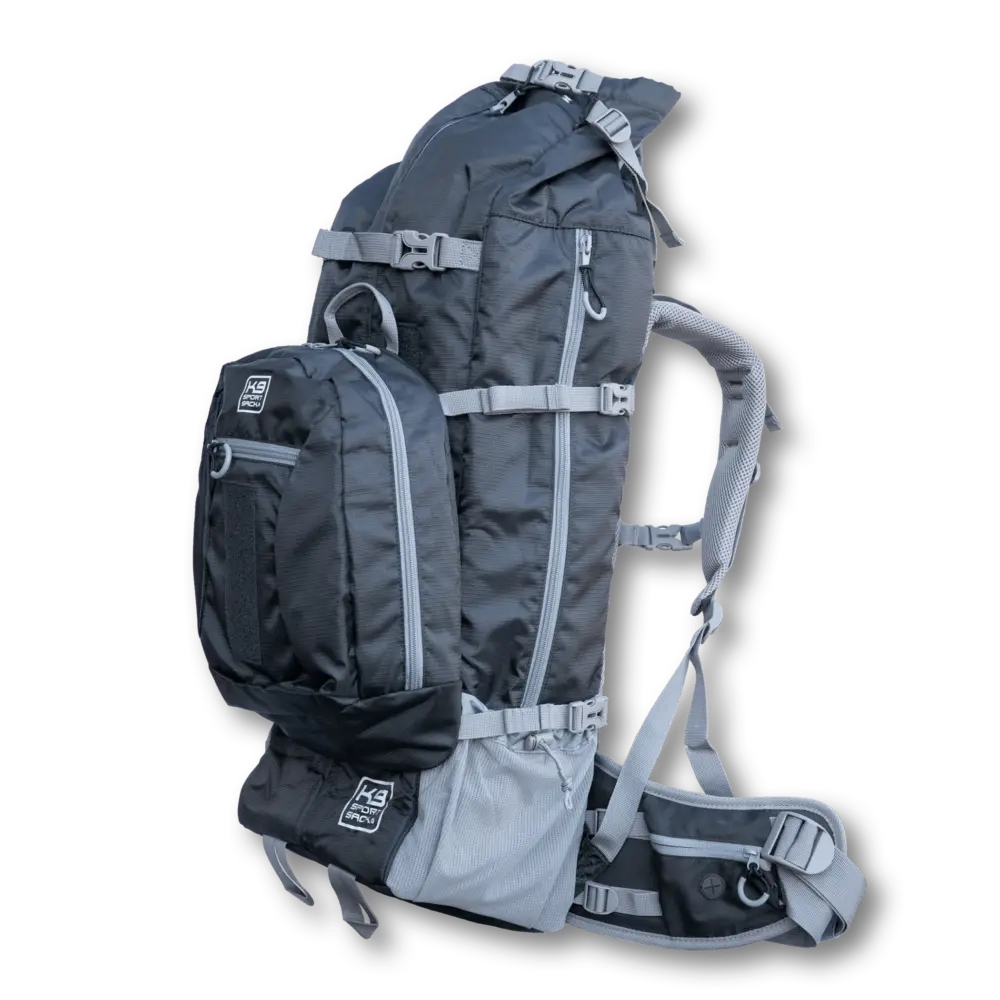
The K9 Sport Sack Kolossus Dog Carrier Backpack, designed for medium to large dogs, is sized by body length rather than weight. Stand your dog square and measure along the back from where the collar sits to the base of the tail:
- Large: 20–22 in (51–56 cm)
- XL: 23–25 in (58–64 cm)
- XXL: 26–29 in (66–74 cm)
The manufacturer lists an 80 lb (36 kg) maximum for the Kolossus range, but weight alone doesn’t determine fit, so follow its fitting instructions too. Between sizes? Contact us before you order. The pack adjusts to the person carrying it and converts to a gear backpack with up to 60 liters of space when your dog is walking. It is a carrier for supervised use, not a vehicle restraint.
-
K9 Sport Sack
Kolossus Dog Carrier Backpack
$264.95
Back at the car: paws, ticks and a clean ride home
Wipe muddy paws before your dog jumps in, using our routine for cleaning dog paws after a walk. Then run your fingers through the coat for ticks, especially around the ears and eyelids, under the collar and front legs, between the back legs and toes, and around the tail. Remove any attached tick promptly, or ask your veterinarian to show you how.
A seat cover or towel keeps mud off the seats but is not a crash restraint; our road trip with a dog checklist covers restraints for a longer drive. For a wet-dog smell, see how to get dog smell out of a car, or browse more walking and training guides.
Hiking with a dog FAQ
How far can my dog hike?
It depends on your dog’s age, fitness and build, the climb and the weather. Start near your dog’s longest regular walk and add distance gradually, more slowly if your dog is stiff the day after. Ask your veterinarian first about a puppy, a senior dog or a dog with a health condition.
Should my dog stay on a leash on the trail?
Yes, wherever the rules require it, as national parks do on trails open to pets. Even where off-leash is allowed, a leash keeps your dog away from wildlife, drop-offs and people who don’t want a greeting.
Are dogs allowed on every hiking trail?
No. Rules vary by park and sometimes by trail, so check the park’s website or call the ranger station, then read the trailhead signs.
How do I know my dog is too hot on a hike?
Watch for heavy panting that does not ease with rest, heavy drooling, unusually red gums, slowing down, stumbling or vomiting. Treat any of these as an emergency: stop in shade, offer water and call your veterinarian or the nearest emergency clinic right away.
Related guides
-
Checklist
What to Tell Your Dog Walker: A Handover Checklist
Everything a new dog walker needs on one page: where the gear lives and how it goes on, how your dog walks, leash and route rules, medications and treats, emergency contacts, the door routine, weather rules and a first walk together.
-
How-to
How to Walk Two Dogs at Once Without Tangles or Pulling
Two dogs, two leashes and no knots: train each dog alone first, give each one a usual side, walk at the slower dog’s pace, untangle crossed leashes safely and know what to do when one dog pulls or reacts.
-
Guide
How Long Should You Walk Your Dog? By Age, Size and Energy
Most healthy adult dogs do well with about 30 minutes of walking a day in total, split over two walks, and high-energy breeds need a lot more. See how age, energy, size and health change the answer, the five-minutes-per-month guide for puppies, signs a walk is too long or too short, and how to build up safely.