Home & Cleaning Comparison
Pooper Scooper vs Poop Bags: What Each One Is Actually For
Short answer
Bags are for walks: light, portable and legally required in most places. Scoopers are for your own yard, where bending over several times a day is the problem. A long-handled jaw scooper or a rake and pan set does a lawn in minutes without crouching once.
Different jobs, not rivals
These two products get compared as alternatives, and in practice almost every dog owner needs both. The question is not which to buy but which tool belongs to which job, because using the wrong one is what makes the task unpleasant enough to be skipped.
The split is simple: bags travel, scoopers stay at home.
Bags: the walking tool
On a walk there is no alternative. Bags are light, cost almost nothing, and picking up is both a legal requirement in most places and basic courtesy. The practical problems are the ones everyone knows: the bag that will not open, the one that tears, and the twenty minutes spent carrying a full one.
- Thicker bags tear less. The cheapest rolls are false economy.
- Opening is easier with dry hands, so keep a dry pocket for the roll.
- Scented bags mask very little and some dogs dislike them.
- Compostable bags need industrial composting; most still go to landfill.
- Carry more than one. The second one always gets used.
- A holder on the lead is the difference between remembering and not.
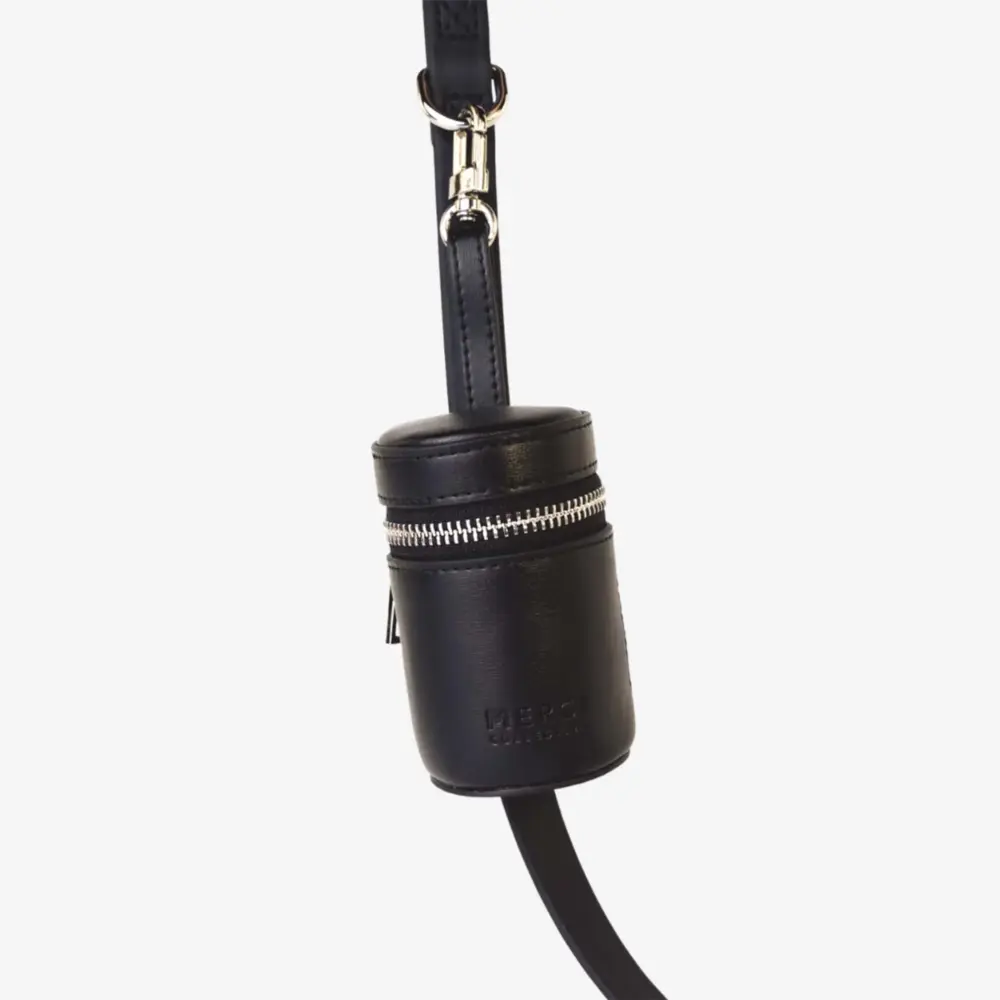
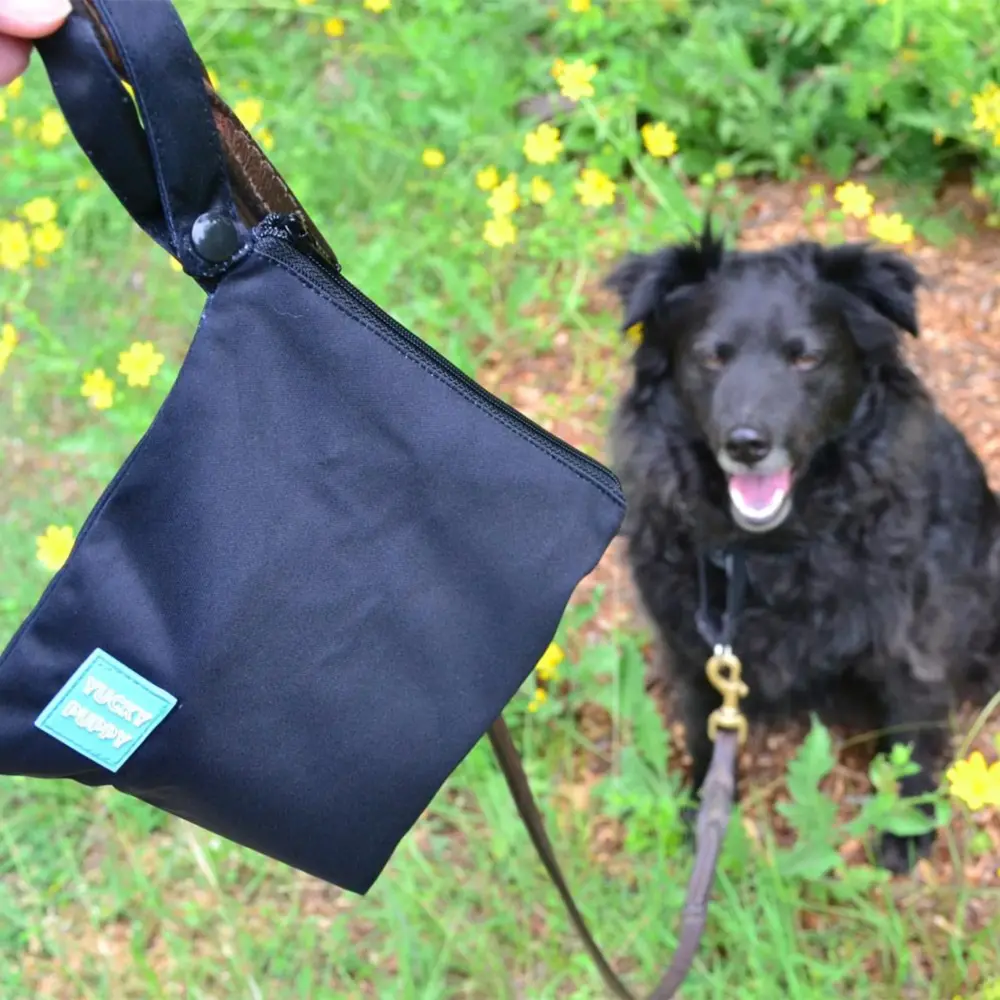
The carrying problem has a straightforward answer: a sealed pouch that clips to the lead takes the full bag out of your hand until you reach a bin.
Scoopers: the yard tool
A garden is a different problem. Bending down six times across a lawn, in the rain, holding a lead-free dog’s attention, is why gardens get left. A long-handled tool turns it into a two-minute standing job.
It also handles what bags cannot: waste that has been there a few days, waste in long grass, and waste in gravel or bark chips where a bag is useless.
Jaw scoopers and rake sets
| Jaw scooper | Rake and pan set | |
|---|---|---|
| Hands needed | One | Two |
| Grass | Good | Excellent |
| Hard surfaces | Excellent | Good, with the spade |
| Gravel and bark | Fair | Good |
| Pieces to store | One | Two or three |
| Best for | Quick daily rounds | Weekly clearing |
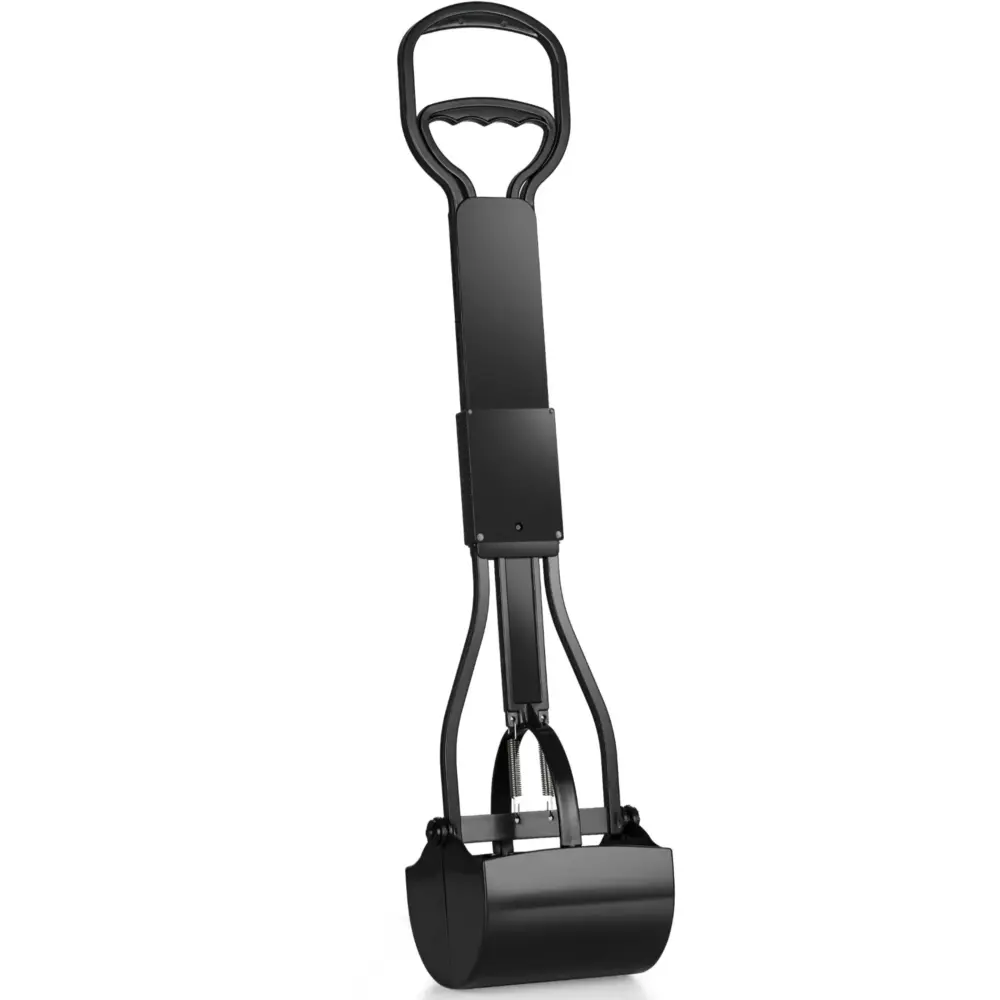
A jaw scooper closes onto the waste and holds it inside the bin, so nothing has to be balanced on a tray. A rake and pan set gives more reach into grass and handles larger clearances, at the cost of needing both hands and more storage.
Winter, wet grass and gravel
These are the conditions that decide whether a tool earns its place. Frozen waste comes up easily with a rake and badly with a bag. Wet grass makes bagging by hand unpleasant and makes a long handle worth every penny. Gravel and bark chips defeat bags entirely, and a rake with a pan is the only approach that works.
Snow is the exception: waste disappears under it and reappears all at once in the thaw, which is a rake and pan job rather than a daily one.
Carrying a full bag
The second half of the walking problem is rarely discussed and easily solved. A waterproof zipped pouch that clips to the lead holds a full bag out of sight until the next bin, which removes the main reason people are tempted not to pick up at all on a long walk.
If you live in a flat with no outside bin, disposal needs its own plan: disposing of dog waste in an apartment covers the options.
-
Mr. Peanut’s
Tall Pooper Scooper, View product
$38.95
Why it fits: A 32-inch jaw scooper with spring jaws, which does a daily round one-handed without bending.
-
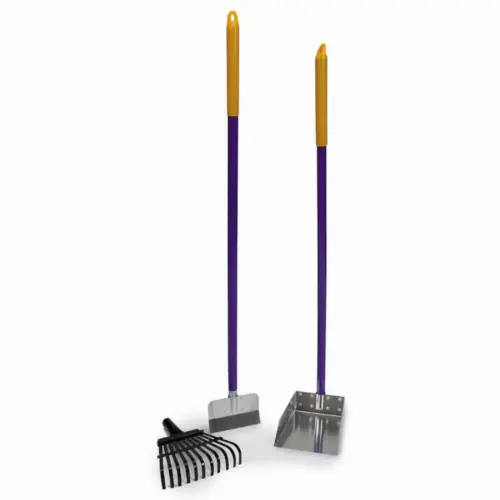
Three-Piece Dog Waste Removal Set, View product
$39.95
Why it fits: A rake, spade and long-handled pan, which handles grass, gravel and a weekly clearance.
-
Yucky Puppy
Waterproof Poop Bag Holder, Choose size
Price range: $23.95 through $24.95
Why it fits: A waterproof zipped pouch that clips to the lead, so a full bag is not carried in your hand.
-
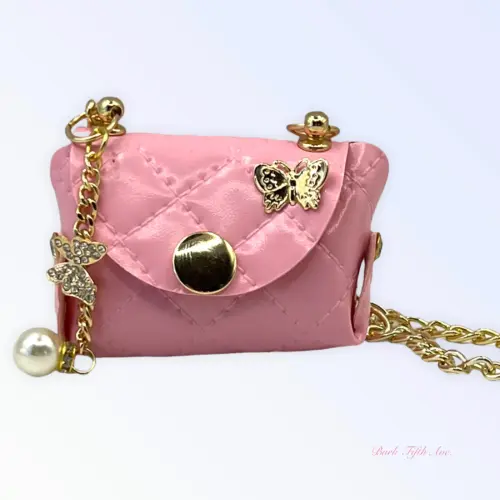
Quilted Butterfly Waste Bag Pouch, View product
$42.95
Why it fits: A quilted vegan-leather pouch that holds a roll of bags and does not look like what it is.
-
Mr. Peanut’s
Naturals Pet Wipes
$26.95
Why it fits: Large wipes for paws and legs at the door, which is the other half of yard clean-up.
Currently out of stock
-
Bark Fifth Avenue
Fabulous Paws Dog Paw Cleaner Cup, Choose size & color
$31.95
Why it fits: A paw cleaner cup for muddy feet after a wet walk across a yard.



Hygiene and disposal
- Dog waste does not belong in garden compost or green waste bins
- Rinse scooper heads after use and let them dry, outside
- Wash your hands afterwards even when you touched nothing directly
- Clear the yard at least weekly; parasites and flies both build up
- Pick up promptly where children play
- Check local rules, which differ on what bin waste may go in
Safety note
Some parasite eggs in dog faeces remain infectious in soil for a long time and can affect people, particularly children. That is the real reason to clear a yard regularly rather than only when it looks bad.
Storage and the practical details
The reason yard tools stop being used is almost always storage. A scooper kept in a locked shed at the bottom of the garden gets used twice. One hanging by the back door gets used daily, which is the whole point of owning it.
- Hang it by the door you actually use, outdoors and under cover
- Keep a lidded bin for waste close to where you clear
- Rinse the head after use and let it dry hanging rather than on the ground
- Keep a spare roll of bags in the car, the coat pocket and by the lead
- Check a jaw scooper’s spring occasionally; it is the part that fails
- Replace a cracked plastic bin rather than persevering with it
The same logic applies to bags on a walk. A roll in a drawer is not a system; a holder clipped to the lead is, because it travels with the equipment you cannot forget.
Which to buy first
If you have no garden, buy better bags and a holder for the lead, and stop there. If you have a lawn and a dog who uses it, a long-handled tool is one of the highest-value cheap purchases available, and it gets used daily for years.
If you are choosing one tool for a garden, a jaw scooper suits most households because it works one-handed and stores as a single piece. Choose a rake and pan set instead if your garden is large, if the ground is rough, or if you clear weekly rather than daily.
Choosing bags that actually work
| Feature | Why it matters |
|---|---|
| Thickness | Thin bags tear at the worst moment |
| Opening | A bag you cannot open is useless in the cold |
| Size | Large dogs need genuinely larger bags |
| Handles | Tie handles are easier with cold hands |
| Core type | Centre-pull rolls jam less in a holder |
| Colour | Opaque is more pleasant to carry |
Cheap bags are the most common false economy in this category. A roll that costs a little more but does not tear or stick shut pays for itself the first time it rains.
Yards, parasites and children
The strongest argument for clearing a garden regularly is not tidiness. Dog faeces can carry parasites whose eggs survive in soil for a long time, and the people most at risk are small children who play on the grass and put their hands in their mouths.
- Clear the yard at least weekly, and daily where children play
- Keep up with routine worming on the schedule your vet sets
- Wash hands after gardening as well as after clearing
- Do not compost dog waste or put it in green waste collections
- Cover sandpits when not in use, since cats use them as litter trays
- Clear up promptly after a dog with diarrhoea, which carries more risk
None of this needs to be alarming. It is routine hygiene, and a weekly pass with a long-handled tool covers almost all of it.
Common questions
Are compostable bags actually better?
Only if they reach industrial composting, which most do not. In landfill they behave much like ordinary plastic. They are not worse, and the benefit is smaller than the label suggests.
How often should I clear the garden?
Daily if you can, weekly as a minimum. Beyond that it becomes unpleasant, attracts flies and raises the parasite risk, particularly where children play.
Can I flush dog waste?
Rules vary by location and by water company, and bags should never be flushed. Check locally rather than assuming.
What about cat litter?
Different problem entirely. Used litter goes in general waste, never in compost or green waste, and clumping litter should not be flushed.
My dog eats it. What do I do?
Clear promptly so there is nothing to find, and raise it with your vet, since it occasionally has a medical component. Punishment does not help and usually makes a dog faster rather than less interested.
For the rest of the clean-up routine, see keeping a house clean with dogs and cleaning dog paws after a walk.
Related guides
-
Buying guide
Poop Bag Holders: What Actually Matters When You Buy One
Half of these hold a fresh roll and half carry a used bag, and buying the wrong one is why people end up with neither. This covers both types, why the seal is the whole product on a carry pouch, how to attach one without ruining the walk, and what survives daily use.
-
Checklist
What to Tell Your Dog Walker: A Handover Checklist
Everything a new dog walker needs on one page: where the gear lives and how it goes on, how your dog walks, leash and route rules, medications and treats, emergency contacts, the door routine, weather rules and a first walk together.
-
Checklist
What to Bring to the Dog Park (and What to Leave at Home)
A dog park checklist for the first visit and every one after: what goes on your dog and in your bag, what to leave at home, how to scout a park and use the double gate, the signs it's time to go, and a quick cleanup for paws and car seats before the drive home.