Home & Cleaning How-to
How to Dispose of Dog Poop in an Apartment With No Yard
Short answer
Bag it, knot it and carry it sealed in a leash pouch to a bin your building allows: the outdoor dumpster, trash room or a chute that takes pet waste. A bag that must wait indoors goes in a lidded pail, emptied daily. Never flush bags or wipes; flush unbagged poop only where your building and utility allow it.
What you need when there is no yard
Without a yard, every bag makes a trip: along the sidewalk, through the lobby, sometimes up in the elevator and back down again before it reaches a bin. A small kit by the door keeps that trip short and clean.
- Poop bags on the leash, a couple more than you expect to use
- A zippered, waterproof pouch for the full bag
- Hand sanitizer for the walk back, and soap at the sink
- Large pet wipes for a paw that stepped in it
- A small step-on pail with a tight lid and liners, for a bag that can’t go down right away
- Disposable gloves and a pet-mess cleaner for indoor accidents and pad leaks
Only the pouch and the wipes come from us. Our picks are limited to Nilosi’s own catalog, and any sturdy bags, pail and gloves will cover the rest. Both picks live in our clean-up supplies.
-
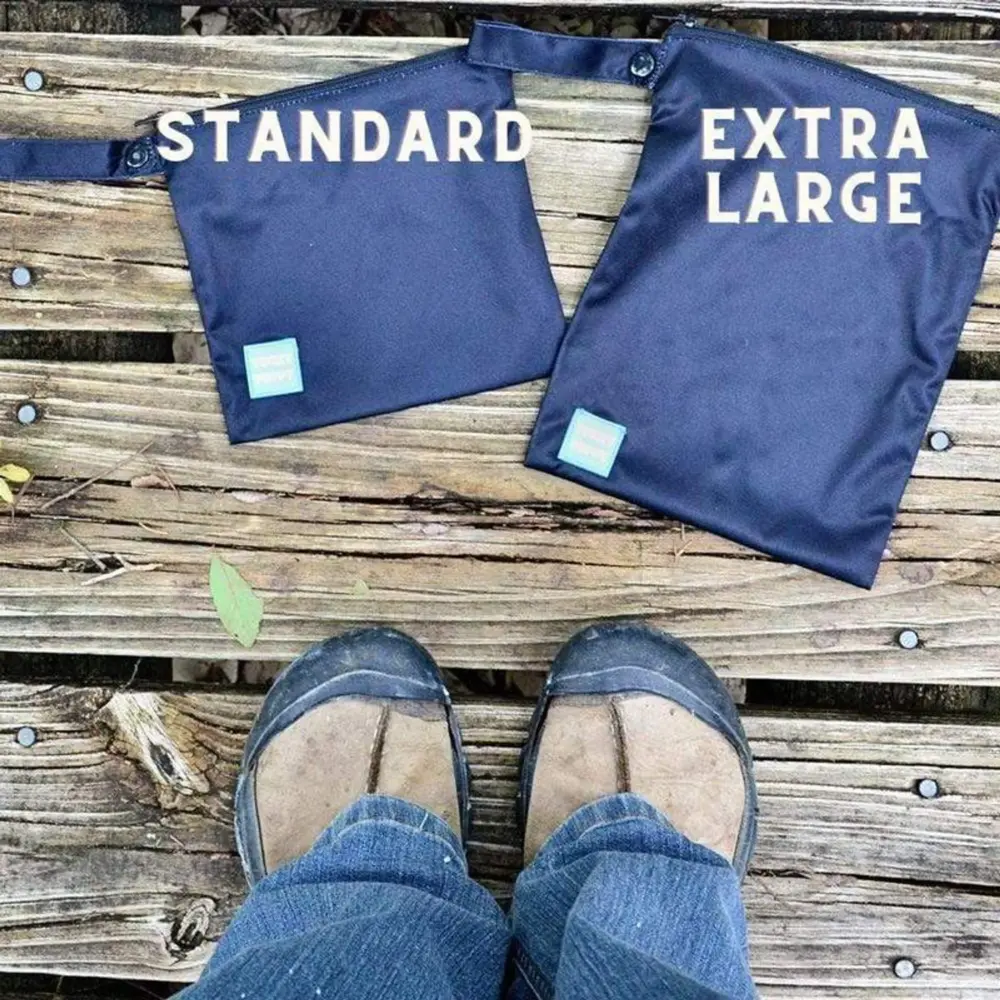
Yucky Puppy
Waterproof Poop Bag Holder, Choose size
Price range: $23.95 through $24.95
Why it fits: Keeps a tied bag zipped out of sight through the lobby and elevator; a machine-washable set of two, so one is ready while the other dries.
-
Mr. Peanut’s
Naturals Pet Wipes
$26.95
Why it fits: Cleans a paw that found the mess before your dog crosses the lobby; thick, large 6 x 10 in wipes, and used ones go in the trash.
Currently out of stock


Pick up every time, even by the entrance
The strip of grass or dirt by the front door is where many apartment dogs go first, and it’s the patch every neighbor, delivery driver and building worker walks past. It’s tempting to skip a pickup there in the dark, in the rain or on the last trip of the night. Don’t: one missed pile by the door is seen by half the building before lunch. Lawns, curb strips and other people’s bins on the rest of the route are covered in our guide to dog walking etiquette.
What stays behind doesn’t stay put, either. The EPA lists viruses, bacteria and nutrients from pet waste among the pollutants that runoff from urban and suburban areas carries into waterways, and a curbside strip is exactly where rain picks them up.
- Loose stool. Pick up what you can with a second bag over the first. If it’s on a shared walkway or the building’s steps, tell staff rather than leaving it. Call your veterinarian about diarrhea that doesn’t clear up, and right away if it comes with vomiting, blood or a dog who seems unwell; puppies can dehydrate quickly.
- Snow. Pick up in snow too. Whatever gets buried by the entrance in January reappears there at the thaw, all at once.
- Rain. Wet poop is harder to grab cleanly, so use a thicker bag or two. Our guide to walking a dog in the rain covers short wet-weather loops and drying off at the door.
- A pet relief area. If your building has one, use it, along with the waste station beside it.
From the curb to the bin, step by step
The routine is the same whether the bin is ten steps away or four floors up:
- Have a bag ready before the door. Tear one off in the elevator; many dogs go within a few steps of the entrance, especially on the first trip of the morning.
- Use the bag as a glove. Slip your hand inside, grab the poop through the plastic, then pull the bag inside out over it.
- Twist out the air and knot it. Tie a tight knot close to the top, so the bag stays small and sealed.
- Double-bag when it’s messy. Loose stool, a thin bag or a long way home all call for a second bag around the first.
- Zip it into the pouch. Carry the bag in a pouch on the leash, not dangling from a finger, so both hands stay free for the leash and the door.
- Use the first bin you’re allowed to. If the building’s outdoor bin, or a street can where local rules allow it, is on your way, drop the bag there before you go back in.
- Otherwise, go straight to the trash room or your pail. Never leave a bag in the hallway, the stairwell, outside your door or on the balcony to take down later.
- Wash your hands. Soap and running water as soon as you’re inside, even though the bag was between you and the poop.
Through the lobby and elevator
This is where a pouch earns its place. Zipped shut, it keeps the bag out of sight and away from other riders’ sleeves, and it leaves a hand free for the door. The extra-large Yucky Puppy holder suits a big dog, two dogs or a long route with a second stop. If the elevator is full, wait for the next one; our guide to apartment dog etiquette covers elevators, lobbies and hallways, and our list of dog walking essentials covers everything else that goes on the leash.
Trash rooms, chutes and outdoor bins
Buildings handle waste differently, so read the house rules or ask the manager once, when you move in, rather than guessing. The lease, a notice in the trash room or a quick question to the super usually settles it.
| Where | Can it go there? | Before you use it |
|---|---|---|
| Outdoor bin | Yes, bagged and tied | Close the lid behind you |
| Trash room | Usually, in the trash container | Read the posted rules |
| Trash chute | Only if your building allows it | Ask first; wrap it in your trash |
| Pet station | Yes, that’s its job | Tell staff when it’s full |
| Street can | Where local rules allow it | Don’t wedge it into a full can |
| Recycling | No, even bagged | It contaminates the load |
| Compost bin | Rarely; most programs say no | Check the accepted list first |
| Storm drain | Never | Runoff carries it to waterways |
Where a chute does take pet waste, put the tied poop bag inside your regular kitchen trash bag instead of sending it down on its own, and follow the building’s rules for pads and anything bulky. If a bag splits in the trash room or at the chute door, tell building staff: it’s a quick job now and an unpleasant one by morning.
Keeping an indoor bin from smelling
Sometimes a bag has to come upstairs: the 2 a.m. trip, a storm, a sick dog or a pad from the balcony. Give it its own small bin rather than the kitchen trash, where it would sit until that bag is full.
- A lid that seals. A small step-on pail with a tight lid, by the door or in the bathroom, holds the smell in and keeps curious pets out.
- A liner, and a knot on every bag. Line the pail and knot each bag before it goes in; a little baking soda under the liner helps with what escapes.
- Out every day. Take it down at least once a day, or whenever you head out anyway, and never leave it over a weekend away.
- Somewhere cool. Keep it away from radiators, heating vents and sunny windows; warmth makes the smell stronger.
- A weekly wash. Scrub the pail with hot, soapy water, then disinfect it as you would the toilet.
If the whole apartment smells of dog rather than the bin, the source is usually fabric, not trash; see how to get rid of dog smell in the house.
Can you flush dog poop? Check first
Sometimes, but only the poop itself, and only where it’s allowed. Local guidance differs: some sewer utilities accept unbagged dog poop flushed down the toilet, and others want it in the trash. Your building manager or local water utility can tell you which applies to you.
- Never flush the bag, including ones sold as flushable or compostable, unless your utility says that type is fine.
- Never flush wipes or pads. They don’t break apart the way toilet paper does.
- On a septic system, don’t flush it at all. The EPA’s guide to caring for a septic system says only human waste and toilet paper belong in the toilet, and lists wet wipes and cat litter among the things never to flush.
- Think about the pipes you share. In an apartment, your drain joins your neighbors’, so a clog can back up into more than one unit.
If flushing is allowed and you choose it, you still pick up with a bag, tip the poop into the toilet at home and bin the empty bag. For most people in apartments, the sealed bag in the bin is simpler and means less handling.
Potty pads and grass patches on a balcony
A pad or a patch of grass on the balcony is a backup for late nights, storms, a young puppy or an older dog who can’t wait for the elevator, not a replacement for walks. Check your lease before you set one up, since some buildings don’t allow it, and remember the balcony below: water from rinsing a patch shouldn’t drip onto it.
Pee pads
Pick up any poop with a bag first. Then fold the pad in on itself, wet side in, slip it into a bag, tie it and take it out the same day. With washable pads, put the solids in the trash, then wash the pad on its own as its label directs.
Real and artificial grass patches
Pick up from a patch right away, exactly as you would on the sidewalk. Replace a real-grass patch as its maker recommends, or sooner once it browns or smells, then bag the old one and put it out with the trash. Artificial turf needs regular rinsing and its drain tray emptied as the instructions direct. A tray under the whole setup keeps spills off the balcony floor.
Cleaning up after leaks and accidents
When an accident happens indoors, from a pad that leaked or a puppy who couldn’t wait, the CDC’s Healthy Pets page on dogs advises cleaning up dog poop, urine or vomit right away, wearing disposable gloves, disinfecting the spot well and washing your hands afterward. For floors and carpet in a rental, see how to protect an apartment from pet damage.
A pouch only carries sealed bags, but sooner or later one leaks. Wipe the inside as soon as it happens, and wash the pouch regularly as its care label directs; the Yucky Puppy holder’s waterproof PUL fabric wipes clean, and the pouch is machine washable.
Treat it like anything else that touches poop. The CDC’s advice on cleaning pet supplies is to disinfect pet items that touch poop or pee as often as you would your toilet, and, if you wash pet things in a laundry sink or tub, to take people’s items out first and disinfect the sink afterward.
Then your hands. The CDC advises washing with soap and running water after contact with dog poop, even if you used a bag. Sanitizer gets you through the lobby, but the sink comes before the fridge, your phone or the couch. If a child helps with pickup, they wash too; the CDC asks adults to supervise handwashing for children under 5.
Mistakes and troubleshooting
- A bag knotted to the leash handle. It swings against your legs, snags on doors and can tear. Zip it into the pouch instead.
- The wrong container. In a dim trash room, recycling and trash bins can look alike, and a poop bag spoils a whole recycling load.
- The pouch as storage. Empty it on every trip; a bag forgotten inside overnight is what makes a pouch smell.
The pouch smells even when empty
Wash it, let it dry completely and switch to the spare in the meantime. If the smell comes back within a few walks, bags are leaking inside it: tie tighter knots close to the top and double-bag soft stool.
There’s no bin anywhere on your route
Carry the bag home sealed in the pouch and take it straight to the trash room or your pail. If your building has a relief area but no bin, ask the manager whether a lidded can or a waste station could go beside it.
If you also have a yard or a shared relief area to keep clear, we compare a pooper scooper and poop bags for the jobs each one actually suits.
Related guides
-
Comparison
Pooper Scooper vs Poop Bags: What Each One Is Actually For
Bags are for walks and scoopers are for yards, and trying to use one for the other is why people give up on the job. This comparison covers jaw scoopers, rake sets, bag holders and the surfaces that defeat each.
-
How-to
Taking a Dog on Public Transit: Rules, Carriers and Practice Rides
How to get a small dog onto the bus or subway calmly: what to look for in your transit agency’s pet policy, choosing a carrier by your dog’s size and your own back, carrier training at home, short off-peak practice rides, stairs, crowds and heat, and how service animal rules differ.
-
How-to
Staying in a Hotel With Your Dog: A Calm Room and Quiet Hallways
How to keep a dog calm and quiet in a hotel room: the policy questions to ask before you book, a quiet corner, hallway noise and knocks, elevators and late-night potty breaks, and when you can leave your dog alone.