Car Travel How-to
Taking a Dog on Public Transit: Rules, Carriers and Practice Rides
Short answer
Start with your transit agency’s pet policy: rules differ by system, and many allow dogs only in a fully enclosed carrier. Choose one your dog can stand and turn around in and that you can carry comfortably, teach your dog to relax in it at home, then practice on short, off-peak rides.
Check your transit agency’s pet rules first
Each transit system writes its own pet policy, and the buses, subway, ferry and commuter trains in one city may be run by different agencies with different rules, so check every system a trip uses. The AKC Urban Canine Good Citizen test reflects this: its subway item is a small dog riding in a bag, with a note that large dogs aren’t always permitted. Search your agency’s site for “pets” or “animals,” or read its rider rules; if the wording is unclear, ask customer service in writing.
Before you buy a carrier, look for answers to these questions:
- Is a carrier required? Note whether it must be fully enclosed, fit on your lap or under a seat, or stay under a size or weight limit.
- Are leashed dogs ever allowed? Where they are, the policy may limit them to certain hours or lines, or ask for a muzzle or a fare.
- Does the rule cover stations? Some apply on platforms too, so plan to zip your dog in before the fare gate or before the bus pulls up.
- Who has the final say? Expect a driver or conductor to be able to turn away a pet that is noisy, messy or in the way.
We don’t list agencies’ rules here because they change, so recheck yours before a first ride on a new route. Intercity trains and buses are separate again, with their own carrier size and weight limits.
Tip
If your system allows leashed dogs only with a muzzle, choose a basket muzzle and introduce it in short, rewarding sessions weeks ahead. Cornell’s basket muzzle training guide notes that a properly fitted one still lets a dog pant, drink and take treats.
Choosing a carrier by your dog’s size and your back
A transit carrier has two jobs: your dog fits inside comfortably with every zipper closed, and you can carry the whole load from your door to your seat, up stairs, through a fare gate and standing if every seat is taken.
Your dog has to fit
Your dog should be able to stand, turn around and lie down without pressing against the sides, and weigh less than the carrier’s stated limit. That limit is a load rating, not a fit check: a long-bodied dog well under it can still be cramped. Our guide to what “airline-approved” means on a pet carrier shows how to measure both, and its trains section sets Amtrak’s carrier limits against our soft carrier’s published size. The same fit checks apply on a city bus or subway.
You have to carry it
Load the carrier and walk around your home and up a flight of stairs for as long as your walk to the stop plus a platform wait. If your shoulder or back complains at home, it will complain more in a crowd.
| Carrier | Best for | Watch for |
|---|---|---|
| Backpack | Stairs, transfers, standing rides | Heat on your back; bumping riders |
| Soft carrier | Seated rides, on your lap or floor | Tires one shoulder or arm |
| Hard carrier | Short rides, dogs who chew mesh | Heavy and bulky to carry |
| Open sling | Short carries off transit | May not count as enclosed |
Whatever the style, look for mesh on more than one side, a base that stays flat when you set it down, zippers that close without a gap and an inside strap that clips to a harness, never a collar. A sling or legs-out pack may not count as enclosed, so ask your agency before you rely on one.
Too big for any carrier you can manage? Don’t squeeze your dog into an oversized bag: it’s uncomfortable, hard to control on stairs, and staff can still refuse it. Look for lines or hours where leashed dogs ride, or use a car, taxi or rideshare whose driver has agreed to take a dog.
We stock two enclosed carriers for cats and small dogs. These picks are limited to Nilosi’s own catalog, so compare each with your agency’s rule and your dog’s measurements; more are in travel and car accessories.
-
GOOPAWS
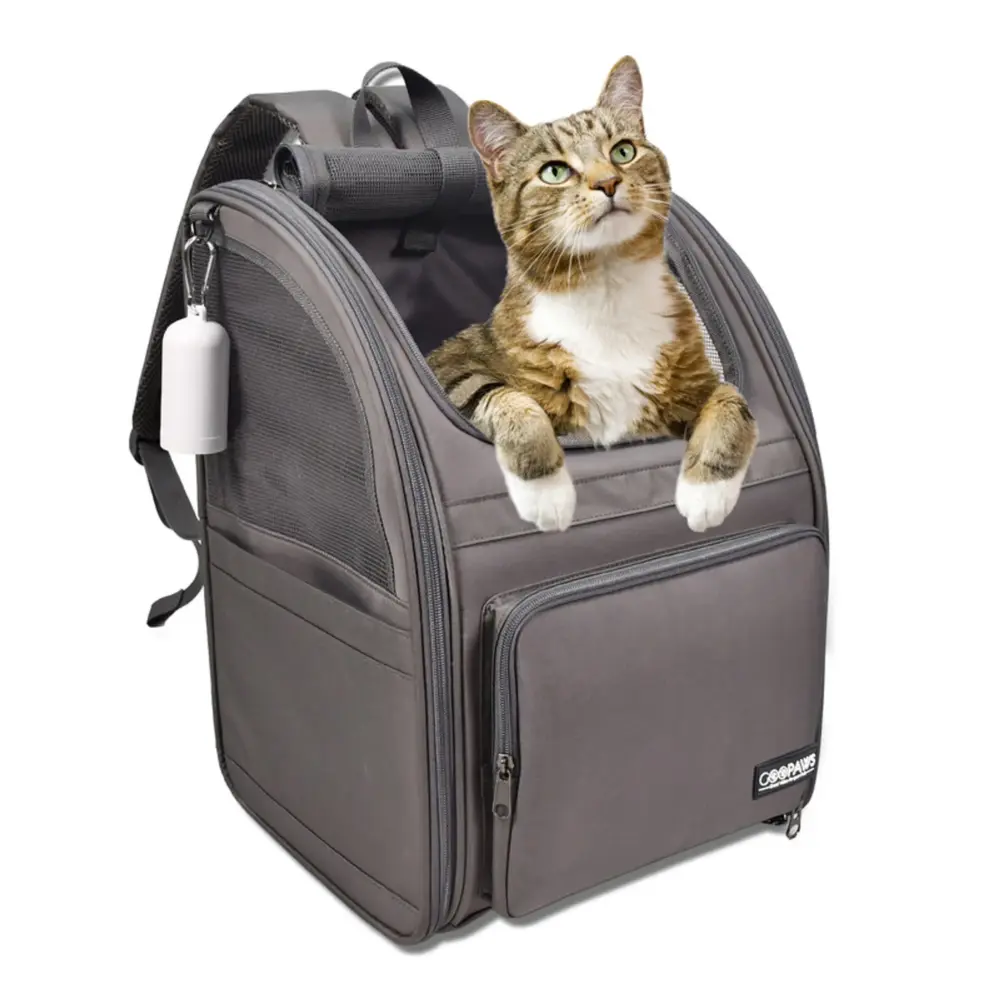
Cat and Small-Dog Carrier Backpack
$51.95
Why it fits: Keeps both hands free for railings and fare gates: a ventilated backpack with an inside safety strap, for cats and small dogs up to 25 lb.
Currently out of stock
-
Armarkat
Soft-Sided Pet Carrier, View product
$65.95
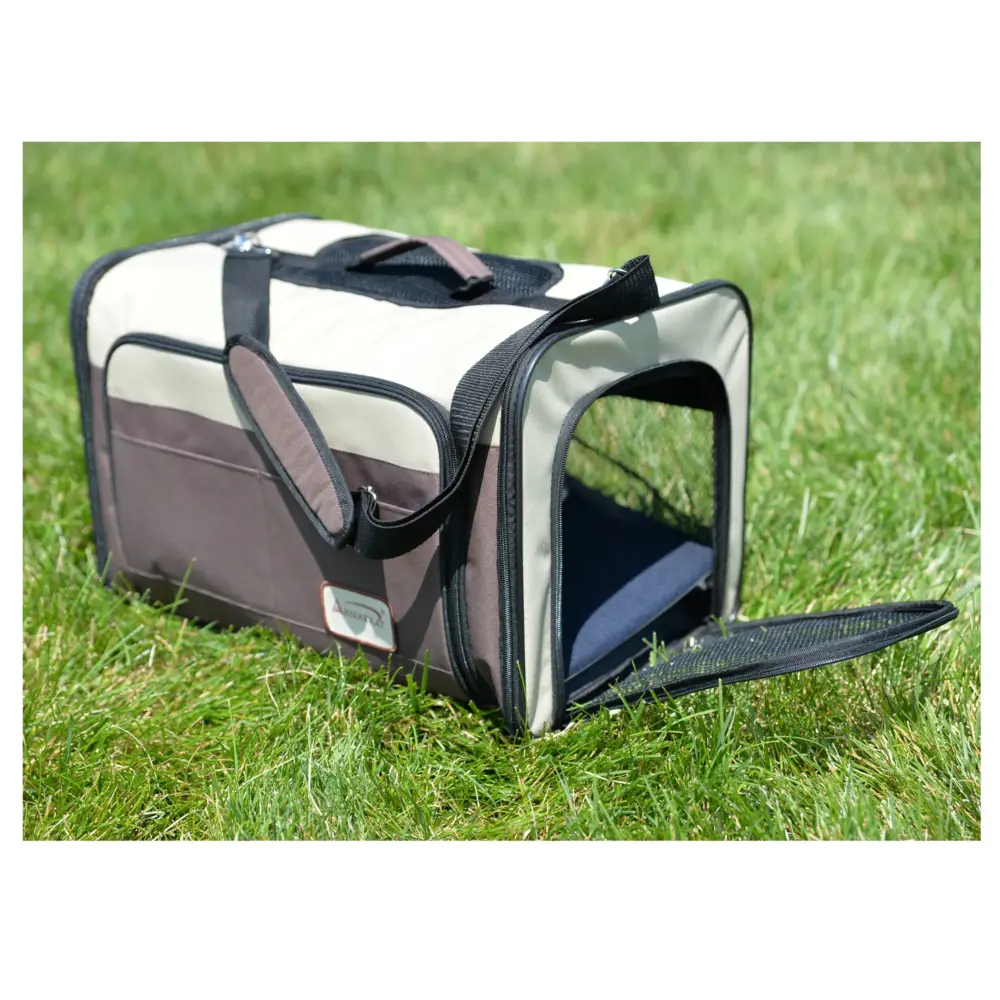
Why it fits: Sits on your lap or between your feet on a seated ride: a soft-sided carrier for cats and small dogs, with three zip openings and mesh panels.

On board, keep the Armarkat’s expandable canopy closed: it is meant for extra room while you’re parked or waiting, and opened out it takes up more floor space. Riding with a cat instead? The heat and stress checks in are cat backpacks safe apply on transit too.
Carrier training at home
Start a few weeks ahead. Our guide to getting a dog used to a backpack carrier covers the basics, from an open carrier with treats inside to a dog who rests zipped in, and works for a shoulder carrier too. Once your dog relaxes zipped in for longer than your trip, add these transit steps, moving on only when each has become boring.
- Stand and sway. Hold or wear the loaded carrier and stand still, shifting your weight and bending your knees a little, the way you will when a train sways or a bus brakes.
- Practice the set-downs. Rest the carrier on your lap on a chair, then on the floor between your feet: the two spots it will sit on board. Reward calm at each.
- Rehearse the leash. Clip the inside strap to the harness as your dog goes in, and clip the leash on before you open the carrier, so a bolt never gets a head start.
- Add the street. Carry your zipped-in dog to your stop or station entrance, wait while a bus or two go by, then walk home.
The AKC’s guide to stress signs lists whining, panting, lip licking, yawning and pinned-back ears among the signs a dog is uncomfortable. If you see them, end calmly and start the next session a step earlier.
Practice rides: off-peak, short and rewarded
Make the first ride a rehearsal with nowhere to be: a quiet time outside rush hour and school dismissal, on a route you could walk home from. For the walk to the station itself, see walking a dog in the city.
- Walk first. A sniffing walk and a potty stop on the way mean the ride starts with an empty bladder. Zip your dog in before the fare gate or bus stop.
- Board after the crowd. Let others on first, then find a spot out of the doorway: a seat with the carrier on your lap or at your feet, or a corner to stand in.
- Ride one or two stops. Praise quietly. If your agency allows it, pass a small treat through a top opening unzipped an inch or two, then zip it straight back; the inside strap stays clipped.
- Get off while it’s going well. At the next stop, find somewhere quiet, clip on the leash and let your dog out for a sniff and a reward.
- Add one thing at a time. More stops, then a transfer, a busier hour, a longer wait on the platform. If a step goes badly, return to the last one that went well.
Stairs, escalators, crowds and heat
Stairs, gaps and fare gates
Hold the handrail on every staircase. A backpack leaves both hands free; a shoulder carrier is steadier held against your body, where it can’t swing. Mind the gap at the platform edge, and lift the carrier clear of turnstile arms and closing doors.
Escalators and elevators
Never let your dog ride an escalator on its own feet, since nails, fur and a trailing leash can catch at the sides and where the steps flatten out. Ride with your dog zipped in and a hand on the rail, or take the stairs or elevator. Holding a small dog in your arms is covered in when to pick up a small dog, and how to hold one.
Crowds and other riders
Keep the carrier on your lap or against your body, out of the aisle and doorway, and off the seat beside you unless your agency allows it. On a bus, sit if you can and hold it firmly through braking and turns. Turn a mesh side toward you, and cover part of the far side with a light cloth if your dog settles better with less to see. Some riders are allergic to dogs or afraid of them, so keep the carrier closed and politely decline requests to pet.
Heat on platforms and trains
Underground stations and packed cars can be stuffy in summer, and a closed carrier against your body holds heat. Ride in the cooler part of the day, and take extra care with the pets the ASPCA’s hot weather tips single out: flat-faced breeds, older and overweight pets, and those with heart or lung disease. Offer water at the station, before and after the ride.
Safety note
Frantic panting, thick drool, bright-red gums, labored breathing, weakness or vomiting are among the signs of overheating the AKC lists. Get off at the next stop and move somewhere cooler. Clip the leash on, open the carrier away from the platform edge, wet the coat to the skin with cool, not cold, water and call your veterinarian right away, even if your dog seems to recover.
Service animals follow different rules
Under the Americans with Disabilities Act, transit agencies must let service animals ride with the people they assist, and pet rules such as carrier requirements don’t apply to them. The animal must stay under its handler’s control, and staff can refuse one that is out of control or seriously disruptive. Transit follows the Department of Transportation’s ADA rules, which define a service animal as one individually trained to work or perform tasks for a person with a disability, such as guiding a rider who is blind. If anything is unclear, ask your agency’s accessibility office.
- Emotional support and therapy dogs. A dog whose job is comfort or emotional support isn’t a service animal under the ADA, so expect your agency to treat it as a pet, carrier rule and all.
- Service dogs in training. The ADA doesn’t require transit agencies to accept dogs still in training, though some state or local laws extend access to them and some agencies allow them anyway.
- Vests and certificates. A vest, ID card or online registration doesn’t make a dog a service animal, and an agency can’t require one. Staff may ask only whether the animal is needed because of a disability and what task it is trained to perform.
Passing off a pet as a service animal to get around a carrier rule is unfair to people who rely on trained dogs, and many states have laws against it.
What to bring for the ride
Pack light; you’re carrying your dog too.
- A well-fitted harness, leash and ID tag. Check that your dog’s microchip record has your current phone number.
- An absorbent pad in the carrier for longer rides, plus a spare in a zip bag.
- Water and a way to serve it, offered at the station rather than on a moving train.
- Small treats or a safe chew to reward calm moments on board.
- Poop bags and somewhere to put a full one, since there may be no bin between the last patch of sidewalk and the train.
- Wipes or paper towels for muddy paws before your dog goes in, and for small accidents.
- A light cloth to drape over part of the carrier on a busy ride.
- A screenshot of your agency’s pet rule, in case a driver or staff member asks.
If you need any of these, here is what we carry, again limited to Nilosi’s catalog:
-
Mr. Peanut’s
PetTrek Padded Harness and Leash Set, Choose size & color
Price range: $24.95 through $26.95
Why it fits: One set for the walk to the station and the ride: a padded harness that spreads pressure across the chest, with a matching leash, XS to L.
-
Flipo
Fold-A-Bowl Dog Water Bottle with Fold-Out Bowl, Choose color
$28.95
Why it fits: Water at the station before and after the ride: a 26 oz bottle whose cover folds out into a bowl, with a push-button closure for your bag.
-
Yucky Puppy
Waterproof Poop Bag Holder, Choose size
Price range: $23.95 through $24.95
Why it fits: Somewhere for a full poop bag before you board: a waterproof zippered pouch that clips to the leash or your bag, not carried in your hand.
-
Mr. Peanut’s
Naturals Pet Wipes
$26.95
Why it fits: Muddy paws wiped before your dog gets in the carrier: large 6 x 10 in wipes for paws and coat, easy to pack a few in a zip bag.
Currently out of stock




Mistakes and troubleshooting
- Buying the carrier before reading the rule. Size limits, lap rules and “enclosed” wording decide what will work.
- Making the first ride a real errand, at rush hour, with a deadline.
- Opening the carrier on board to comfort a crying dog, which is how dogs slip out on a moving train.
Your dog whines or barks on board
Wait for a pause, then praise softly; scolding adds to the stress. If it doesn’t ease, get off at the next stop, and next time go back to a shorter ride or more carrier time at home. If your dog still panics after slow practice, talk to your veterinarian or a certified reward-based trainer.
Your dog drools or seems queasy
Yawning, lip licking, drooling and going very still can mean motion sickness as much as nerves, especially on a bus that stops and turns often. Our guide to getting a dog used to car rides covers the signs and when to call your veterinarian.
Staff or another rider objects
Stay polite, follow staff instructions and show the screenshot of the rule if it helps. If you’re asked to get off, get off and take it up with the agency afterward; an argument on a train is hard on a nervous dog.
Related guides
-
Checklist
Pet Emergency Kit Checklist: What Your Dog or Cat Needs to Evacuate
Everything your dog or cat needs to evacuate with you: records and ID, two weeks of food, water and medicine, a carrier or harness per pet, sanitation and first aid, plus where pets can stay and when to refresh the kit.
-
How-to
How to Fly With a Small Dog in the Cabin: From Booking to Landing
From booking the pet spot to the first relief stop on landing: whether your dog suits the cabin, carrier and settle practice at home, what to pack, airport relief areas and water, the TSA checkpoint on a harness and leash, and a dog who barks under the seat.
-
Checklist
Winter Hiking With a Dog: Checklist for Cold, Ice and Short Days
A winter trail-day checklist: plan a shorter, sheltered route around daylight, keep your dog leashed and off frozen water, pack water that won't freeze and a coat for dogs who feel the cold, check paws for ice balls and salt, and know when to turn back.