Are Cat Backpacks Safe? Backpack vs Carrier, and How to Use One Kindly
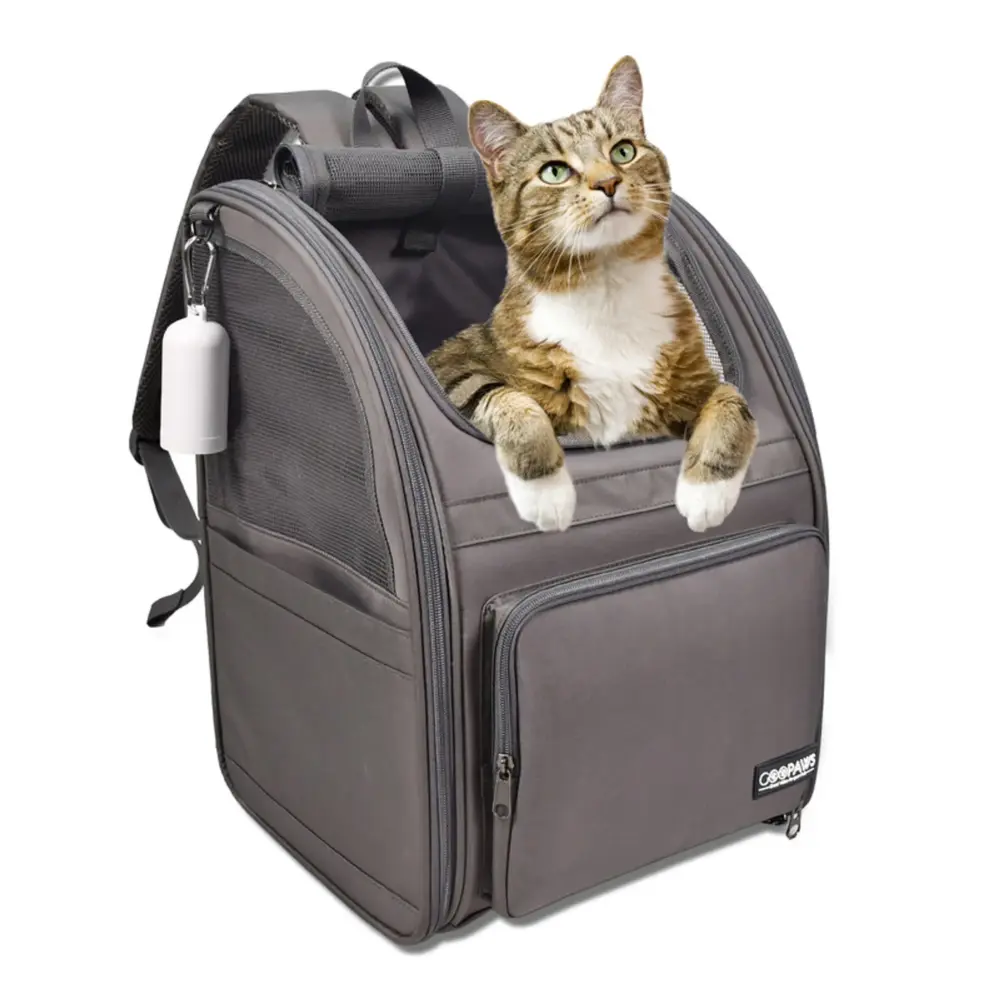
Are cat backpacks safe? They can be, for short outings, if your cat can stand, turn around and lie down inside, the bag stays cool and well ventilated, and you check on your cat often. A backpack is a carrier you wear, not somewhere to spend the afternoon. For long drives, vet visits and long waits, a carrier with more floor space is usually the kinder choice.
Short answer: four checks before every backpack trip
Check these before you zip up. If one fails, use a carrier, or leave your cat at home.
- Your cat fits. It can stand without crouching, turn around and lie down curled up without pressing against the sides.
- Your cat stays cool. Air moves through more than one side, and the bag stays out of direct sun.
- Your cat can see out, or hide. Curious cats settle with a view; shy cats need a side to turn away into, or a cloth over part of the window.
- The trip is short. Minutes rather than hours, on a route you can leave quickly.
Are cat backpacks safe, or cruel? The welfare concerns, taken seriously
They are not cruel in themselves, but the common criticisms are fair, and each is something you can check or avoid:
- Too little room. Many backpacks are tall and narrow, so a cat sits hunched and cannot curl up to rest.
- Heat. A closed bag against your back gets warm, and a clear window in direct sun traps heat. Cats rarely pant, so panting is a warning sign.
- Poor airflow. A few small holes in a solid shell move far less air than mesh on several sides.
- Nowhere to hide. Cats often cope with fear by hiding, so a wide window facing traffic and dogs can overwhelm a timid cat.
- Out of sight. On your back, the bag sways and you cannot see your cat’s face, so early stress is easy to miss.
Most of the debate centers on the bubble backpack for cats, with its clear dome window. The dome gives a confident cat a wide view, but it heats up in the sun and leaves a shy cat exposed. If you choose one, look for vents around it and carry a light cloth to drape over part of it.
Which cats suit a backpack, and which don’t
Good candidates are healthy, confident adult cats who already ride calmly in a carrier and wear a harness without fuss. Think twice about a very timid cat, one who panics in carriers or one recovering from illness or surgery. Heat is riskier for some cats: the ASPCA’s hot weather safety tips single out flat-faced breeds such as Persians, older and overweight pets, and those with heart or lung disease, so ask your veterinarian first.
What to check before you buy: size, airflow, openings and the inside strap
- Size. Measure your cat sitting up (floor to top of head) and curled up asleep (across the widest point), and compare both with the bag’s dimensions. Aim for snug, not cramped: room to turn and curl up, but not so much that your cat slides around.
- Airflow. Ventilation on at least two sides, so air moves through the bag, not just into it.
- Openings. A top opening lets you check on your cat without opening the whole bag; side openings add airflow and a view. Every zipper should close fully, with no gap a paw could push through.
- The inside strap. Clip it to a harness, never a collar, so a lunge pulls on the chest, not the neck. Adjust it so your cat can sit and turn but cannot climb out when you open the top. It is a backup, not a reason to open the bag outdoors.
The GOOPAWS carrier backpack we stock is listed at 12.5 × 10.5 × 16.5 inches for pets up to 25 lb. That weight is a load limit, not a fit check; a long-bodied cat well under it can still be cramped. Unsure? Ask us before you order, since change-of-mind returns carry return postage and a restocking fee under our returns policy.
Cat backpack vs carrier: which suits vet visits, car rides and walks
The cat backpack vs carrier choice comes down to where you are going and how long your cat will be inside.
Vet visits: a carrier usually wins
A carrier sits level on a seat or your lap in the waiting room, with a towel over part of it so your cat can hide. International Cat Care’s advice on taking your cat to the vet recommends one that opens at the top, so your cat can be lifted out gently rather than tipped out, and a raised spot off the floor while you wait. A backpack is fine for a short walk to a nearby clinic; for a new kitten’s first ride home, see our new kitten checklist.
Car rides: either works if it is secured
Neither is a crash restraint. Take the backpack off before you drive and set it on the floor behind a front seat, or belt it onto the back seat so it cannot tip or slide; never put it on the front seat, where an airbag can deploy. A carrier’s wide, flat base sits more steadily. Our guide to traveling with a cat in the car covers placement and stops.
Walks and outings: a backpack makes sense
This is what backpacks are for: your hands stay free, your cat watches the world from a safe perch, and stairs and curbs are easier. Your cat needs a harness for the inside strap anyway; start with how to harness train a cat.
Soft-sided or hard carrier?
Hard carriers are rigid, wipe clean and often have a removable top, so a nervous cat can stay in the bottom half during an exam, but they are bulky; International Cat Care prefers easy-to-clean plastic or plastic-coated carriers. Soft-sided carriers are lighter, usually have mesh for airflow and often fold flat, though a determined scratcher can damage mesh. Either works if your cat fits and sees it as a safe place.
Getting your cat used to it: the carrier steps, in brief
Leave the backpack open where your cat already rests, with familiar bedding and treats inside, then add one small step at a time: zipped for seconds, lifted, worn indoors, a minute on a quiet porch. Our guide on how to get a cat used to a carrier has the full plan, including the extra stages a backpack needs.
Using a backpack kindly: time limits, heat and stress signs
No single time limit suits every cat. Start with five minutes close to home and build up only while your cat stays relaxed. As a cautious rule of thumb, keep everyday outings well under an hour and use a roomier carrier for anything longer.
- Go on cool or mild days and stay in the shade; skip hot, sunny days.
- Never set the bag down in direct sun, even briefly, or leave your cat in it in a parked car.
- Walk smoothly, away from crowds and loose dogs; no jogging or cycling.
- Keep the bag zipped outdoors with the strap clipped to a harness, and look in every few minutes.
- Head home while your cat is still calm, not after the struggling starts.
Stress signs: end the outing
Flattened ears, wide pupils, a tense low crouch, constant yowling, growling or hissing, trembling, or frantic pawing at the openings all mean it is time to head home and go back a step in practice. If your cat seems unwell, won’t eat or stays withdrawn long after you get home, call your veterinarian.
Heat stress: act right away
Panting or open-mouth breathing, drooling, vomiting, weakness, stumbling or collapse can mean your cat is overheating. Get your cat into shade or air conditioning, open the bag as far as you safely can and call your veterinarian right away; heatstroke is an emergency.
The backpack and carrier we carry
We stock one of each, for different jobs, in our car and travel accessories.
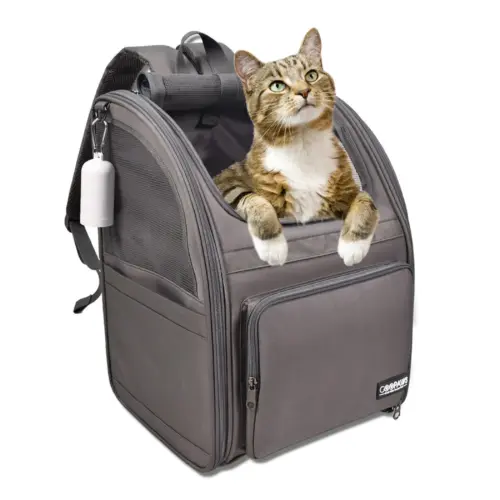
- GOOPAWS carrier backpack: for short outings on foot with a cat who already wears a harness calmly. Large top and side openings for ventilation and checking on your cat, a fleece-lined pad and an inside safety strap; in grey.
- Armarkat soft-sided carrier: for vet visits, car rides and cats who need room to stretch. Three zip openings reach your cat from the top or either side, mesh panels give airflow and a view out, and the canopy expands for extra room while parked or waiting. It has a lounge pad and an accessory pocket and folds flat for storage; beige and chocolate.
-
GOOPAWS
Cat and Small-Dog Carrier Backpack
$51.95
-
Armarkat
Soft-Sided Pet Carrier
$65.95

Lay a T-shirt that smells of home on either pad, the same trick our guide to choosing a cat bed your cat will actually use suggests. For the Armarkat’s dimensions or weight limit, ask us before you order; if you plan to fly, check your airline’s carrier rules first. More trip planning is in our car travel guides.
Cat backpack FAQ
Are bubble backpacks bad for cats?
Not automatically. They suit confident cats on cool, shaded outings; for a shy cat or a sunny day, choose a mesh-sided design or cover part of the dome and keep trips short.
How long can a cat stay in a backpack?
There is no fixed limit for every cat. Start with a few minutes, build up only while your cat stays relaxed and keep everyday outings well under an hour. For longer journeys, use a carrier with room to stretch out.
Do vets recommend cat backpacks?
Veterinary travel advice focuses on carriers more than backpacks. International Cat Care recommends an easy-to-clean carrier that opens at the top for clinic visits, so your cat can be lifted out gently. If your cat is older or has a health condition, ask your veterinarian before using a backpack.
Do cats like backpack carriers?
Some do; confident, curious cats often settle and watch the world go by. Others learn to tolerate one with patient practice, and some never relax, however well the bag fits; for them, use a carrier for necessary trips only.
Related guides
-
How-to
Taking a Dog on Public Transit: Rules, Carriers and Practice Rides
How to get a small dog onto the bus or subway calmly: what to look for in your transit agency’s pet policy, choosing a carrier by your dog’s size and your own back, carrier training at home, short off-peak practice rides, stairs, crowds and heat, and how service animal rules differ.
-
Checklist
Pet Emergency Kit Checklist: What Your Dog or Cat Needs to Evacuate
Everything your dog or cat needs to evacuate with you: records and ID, two weeks of food, water and medicine, a carrier or harness per pet, sanitation and first aid, plus where pets can stay and when to refresh the kit.
-
Comparison
Dog Booster Seat vs Carrier: Which Suits a Small Dog in the Car?
A booster lifts a calm small dog to window height; a carrier encloses a nervous or carsick one and goes with you into the vet or a hotel. Compare the two side by side, see which suits your dog, and learn where each one belongs in the back seat.