Car Travel Comparison
Dog Booster Seat vs Carrier: Which Suits a Small Dog in the Car?
Short answer
A booster seat suits a calm small dog who’s relaxed in a harness and wants to watch the road. A carrier suits a nervous or carsick rider, a puppy, or a dog you’ll carry into the vet. Tether the booster to a harness and wedge the carrier on the floor behind a front seat; neither is crash protection.
Booster seat vs carrier at a glance
The weight limits on small-dog gear are close, so size rarely settles this on its own. The real differences are what your dog can see, what holds the gear in place and whether it leaves the car with you. The figures below are for the three we stock; other models differ.
| Option | Suits | Size limit | Held in place by | After you park |
|---|---|---|---|---|
| Booster seat | Calm dogs who like to look out | Up to 24 lb; 16 x 13 in seat | Straps to seat and headrest; tether to harness | Stays in the car |
| Soft-sided carrier | Nervous riders, puppies, vet days | Up to 22 lb; 19 x 12 x 12 in (maker) | Wedged in a rear footwell | Into the clinic, hotel or train |
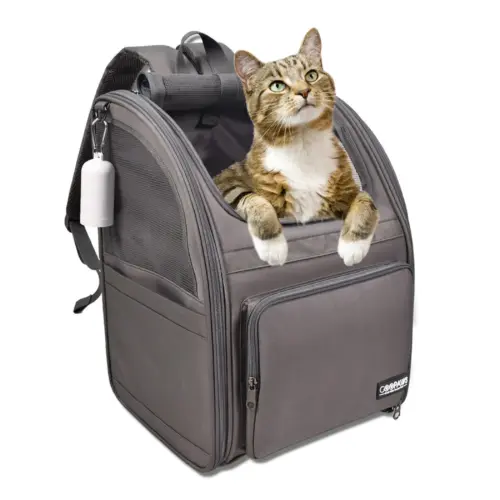
| Backpack carrier | Dogs who ride, then walk in with you | Up to 25 lb; 12.5 x 10.5 x 16.5 in | Taken off, wedged in a footwell | Worn hands-free |
How a booster seat works for a small dog
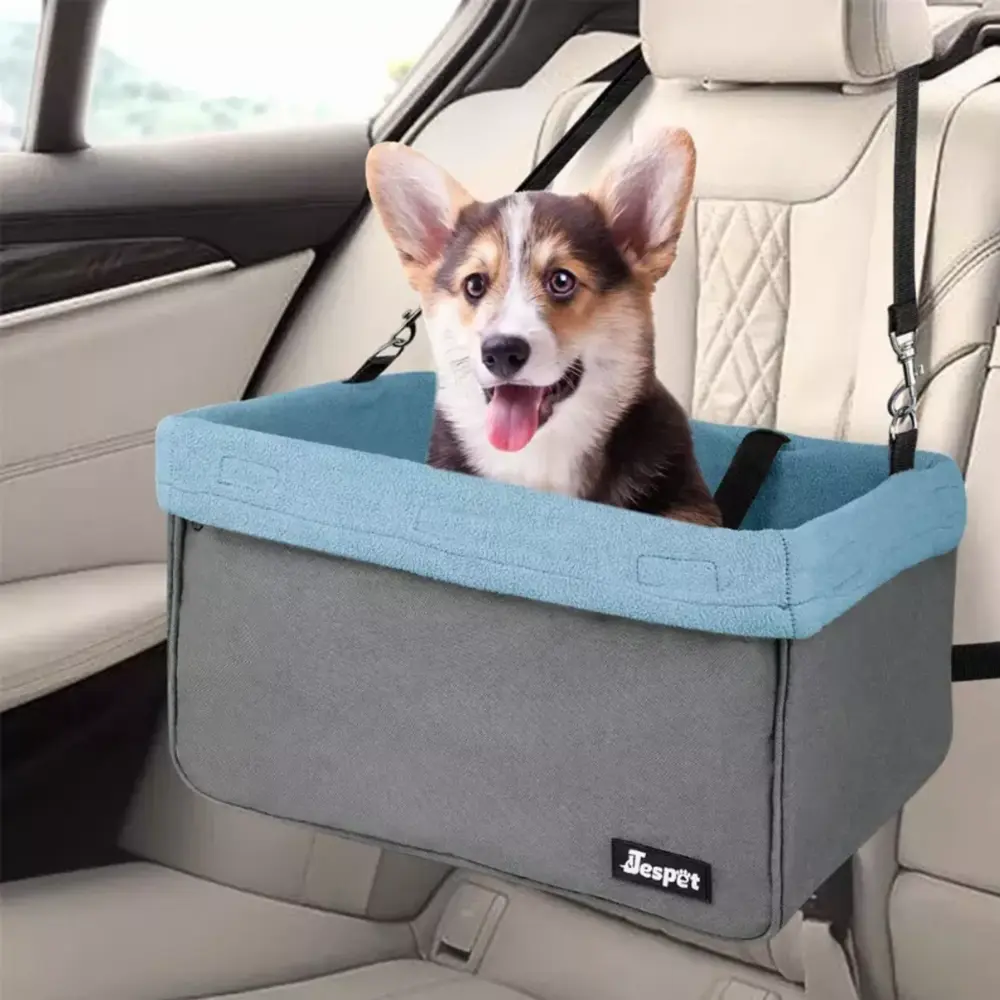
A booster is an open, padded seat that raises a small dog to window height. It doesn’t enclose your dog. The tether does the holding, clipped to the back of a harness, and the raised seat gives your dog one defined spot to sit up, turn and curl up in, instead of the run of the back seat.
Our GOOPAWS Dog Booster Car Seat holds pets up to 24 lb (11 kg) and measures 16 inches long, 13 deep and 9 high. Two adjustable straps go around the seat back and headrest, the built-in tether clips to a harness, and the cushion comes out for washing. Check the footprint as well as the scale: a dog who sleeps stretched out longer than 16 inches won’t fit the seat comfortably, even under 24 lb.
The view is the point of a booster. In its tips for comfortable car rides, the AKC suggests a forward-facing position for a dog in a booster or on a seat belt harness, since seeing where they’re going rather than where they’ve been can help an uneasy stomach. The catch: a booster needs a dog who’s relaxed in a harness, and it gives a dog who reacts to traffic a front-row seat.
How a carrier works in the car
A carrier is an enclosed bag your dog rides zipped inside. Your dog can’t climb out, reach a window or slide into the footwell, and an accident or a carsick moment stays in the carrier instead of on the upholstery. Set on the floor behind a front seat, it also rides below the windows, so your dog sees far less of the traffic going by. The ASPCA’s travel safety tips ask for a crate or carrier big enough for your pet to stand, sit, lie down and turn around in, secured so it won’t slide or shift in an abrupt stop.
The soft-sided carrier
The Armarkat soft-sided carrier has three zip openings, on the top and both sides, so you can lower a small dog in from above and reach in from either side at a stop. Mesh panels let air in and give a view out, and inside are a lounge pad and a pocket for a toy or treats. Armarkat’s own listing for the PC102R gives its size as 19 x 12 x 12 inches and its limit as 22 lb. The canopy expands for extra room while you’re parked or waiting; on the road, the compact shape is easier to wedge in place. Between trips it folds flat.
Weight isn’t the only fit test. Measure your dog standing, from the floor to the top of the head, and lying stretched out: a long-legged or long-backed dog can be under 22 lb and still too big for 12 inches of height or 19 of length.
The backpack carrier
The GOOPAWS Cat & Small-Dog Carrier Backpack takes pets up to 25 lb, measures 12.5 x 10.5 x 16.5 inches, and has large top and side openings for airflow, a fleece-lined pad and a safety strap inside; clip that strap to a harness rather than a collar. In the car it’s a carrier like any other: take it off, set it down and secure it. Its strength is what happens after you park, from the walk across the lot to the clinic door, with both hands free. If your dog has never been in one, work through how to get a dog used to a backpack carrier before the first drive.
Which one suits your dog?
The window-watcher
If your dog spends every ride standing on the seat, nose to the glass, a booster gives them that view from a cushioned, tethered spot. Keep the rear windows up and the window lock on: a booster puts a small dog’s head level with the glass, and the AKC’s car-ride tips advise keeping rear windows closed so no part of your dog can go out of one.
Watch what the view does, though. A dog who barks at every truck, spins or whines louder as traffic builds is being wound up by the window, and that dog may ride more quietly in a carrier on the floor. Our guide to stopping a dog barking in the car covers finding the trigger and managing the view.
The nervous or carsick rider
For a dog who pants, drools, paces or vomits in the car, a carrier is often the better place to start. The AKC’s guide to carsickness in dogs notes that some owners use a solid-sided crate to limit a dog’s field of vision. A mesh-sided carrier won’t block the view completely, but on the floor it cuts out most of the blur going past. Lay a towel over the pad so a bad trip means one wash, not a scrubbed carrier.
Two cautions. A carrier your dog first meets on the drive is one more new thing, so leave it open at home for a few days with treats and a familiar blanket inside. And some queasy dogs do better facing forward, so if the carrier isn’t helping, try the booster on a few short drives and see where your dog settles. For a dog who dreads the car itself, getting a dog used to car rides starts with the parked car, and drooling, vomiting or panting that keeps up is a question for your veterinarian.
Puppies
For most puppies, a carrier is the easier start. Many aren’t comfortable in a harness yet, and the booster’s tether depends on one. Carsickness is also most often seen in puppies, the AKC notes, because the parts of the inner ear used for balance are still developing. A carrier holds a wriggly puppy in one place, contains accidents, and gets your puppy from the car into the vet’s office on those early visits.
Think about adult size, too. A puppy expected to grow past the 22 to 25 lb limits here will outgrow all three, so treat the carrier as first-months gear and plan the long-term setup separately.
Dogs who travel beyond the car
A booster stays in the car. A carrier goes with you: into the clinic, through a hotel lobby, onto a bus or train that requires small pets to ride in a carrier, or through a crowd where you’d rather your dog weren’t underfoot. Flying is a separate check. The Armarkat’s product name says airline-approved, which describes a carrier made for under-seat travel, not a promise from your airline; what airline-approved means on a pet carrier shows how to compare its published size and weight limit with your airline’s own rules, which vary by airline and aircraft.
Calm dogs who lie down anyway
If your dog curls up on the seat within minutes and stays there, you may not need either one. A seat belt tether clipped to a harness keeps a calm dog in place at any size, and our comparison of a dog seat belt and a booster seat covers that setup, the tether length and how to strap a booster in.
Placing either one in the back seat
Use the back seat. Up front, a dog in a booster or a carrier is within reach of the passenger airbag; can a dog ride in the front seat explains what to check in your owner’s manual if your car has no back seat.
The booster: a seat with a headrest
The booster’s straps go around the seat back and headrest, so pick a rear seat that has one, pull both straps snug and clip the tether to the back of the harness, never the collar. Before you drive, check that your dog can sit, turn and lie down but can’t get their front paws over the rim; the seat belt and booster comparison above walks through the full setup.
A carrier: on the floor, never loose
Neither carrier we stock lists a seat-belt loop or anchor point, so where you put it does the work. The nonprofit Center for Pet Safety recommends the floor behind a front seat for small pets in carriers, saying it has seen carriers crushed by seat belt restraints:
- Zip your dog in before the car moves. With the backpack, clip its inside strap to the harness, then take the pack off. A carrier on a passenger’s lap is held, not secured.
- Set it on the floor behind a front seat. Measure the footwell before the trip, since not every car has room for a 19-inch carrier there. Slide the front seat back until it holds the carrier snugly without squashing it, and fill side gaps with a rolled towel.
- Only if it won’t fit, belt it on the back seat. Run the lap and shoulder belt around the front of the carrier and pull it just snug enough to stop it sliding, without crushing the soft sides.
- Push-test it. Shove the carrier from each side and from the front. If it slides, tips or rolls, reposition it or pack the gaps.
- Keep the mesh clear. Bags, coats and blankets piled against the panels cut the airflow, and a carrier on the seat in direct sun warms up quickly.
What neither one does: crash protection
A booster’s straps and tether, and a carrier’s fabric and zips, aren’t built or rated to protect a dog in a collision, and we don’t sell either one as crash protection. Their job is day to day: keeping your dog in one place and away from the driver, so your dog isn’t loose in the car when you brake hard. Humane World for Animals’ guide to traveling safely with a pet says restraints haven’t been reliably shown to protect dogs in a crash, and it calls a crate anchored to the vehicle the safest way for a dog to ride. A soft carrier, wedged or belted, isn’t the same thing.
If crash protection is your priority, look for a carrier or crate that has passed an independent crash-test certification program, such as the Center for Pet Safety’s, and check the listing on the program’s own site, not just the packaging. We don’t stock a certified carrier.
Safety note
Never leave your dog in a parked car, whether in a booster or zipped in a carrier. A parked car heats up fast, even with the windows open, and a closed carrier gets less air than an open seat.
Verdict: booster seat or carrier?
Choose the booster if your dog is under 24 lb, fits a 16 x 13 inch seat curled up, is relaxed in a harness and rides better watching the road. Choose a carrier if your dog is nervous, carsick or a puppy, or comes with you once the car is parked: the soft-sided carrier for vet visits and long waits, the backpack for walking in hands-free. And if your dog lies calmly on the seat anyway, a tether on its own may be all you need.
You don’t have to pick just one: a booster for everyday errands and a carrier for vet days and trips do different jobs. Whichever you buy, check its weight limit and measurements against your dog before you order.
These are the options we stock, so the picks below are limited to our own catalog:
-
GOOPAWS
Dog Booster Car Seat with Safety Tether, Choose color
$53.95
Why it fits: For a calm small dog up to 24 lb who wants to see out: it lifts them to window height, straps to the seat back and headrest, and has a tether that clips to a harness.
-
Armarkat
Soft-Sided Pet Carrier, View product
$65.95
Why it fits: For a nervous rider, a puppy or a vet-day dog up to 22 lb, per Armarkat: fully zipped, with top and side openings, mesh panels for air, and it folds flat between trips.
-
GOOPAWS
Cat and Small-Dog Carrier Backpack
$51.95
Why it fits: For a dog up to 25 lb who rides in the car, then walks into the clinic or station with you: a hands-free backpack with top and side openings and a safety strap inside.
Currently out of stock
-
Adjustable Dog Car Seat Belt Tether, View product
$23.95
Why it fits: For a small dog who lies calmly on the seat and needs neither: two adjustable tethers that clip to a harness and plug into most seat-belt buckles.


Related guides
-
Comparison
Driving vs Flying With a Dog or Cat: How to Decide for a Long Trip
Moving across the country or visiting family far away? Compare the car, the airplane cabin and the cargo hold on size limits, stress, heat and breed rules, paperwork and cost, then see which route suits your dog or cat.
-
Comparison
Cargo Liner vs Back Seat Cover: Where Should Your Dog Ride?
Where your dog rides decides which cover you need, and the two are not interchangeable. This comparison covers coverage, fitting, belt slits and cleaning, and is clear about what a cover does not do.
-
Buying guide
Gifts for Small Dogs: Beds, Coats, Car Seats and More That Fit
Gift ideas chosen by size, not breed: a rimmed cuddler bed, a coat in XXS to Medium, a booster seat for dogs up to 24 lb, a backpack carrier up to 25 lb, a padded XS or Small harness set and a 10-inch plush fox, plus the measurements to get before you order.