Car Travel How-to
How to Stop a Dog Barking in the Car (and Why It Starts)
Short answer
Dogs usually bark in the car from excitement, or from alarm or frustration at traffic, people and dogs outside. To stop it, limit the view with a rear outer seat and a short harness tether, then teach quiet in a parked car, rewarding every quiet pause. Panting, drooling or trembling point to worry, which needs a gentler plan.
Why dogs bark in the car
On the next few drives, have a passenger note when the barking starts and where your dog is looking. The trigger decides the fix.
- Excitement. It starts as you turn toward the park or trailhead and builds the closer you get, with a bouncy body, whining and high-pitched yips. The car has come to mean fun.
- Alarm. Deep, sharp barks at particular things, such as people on the sidewalk, other dogs, trucks or an attendant at the window, with a stiff body and a fixed stare. In a car it seems to work every time, because whatever your dog barks at drives on or walks away.
- Frustration. Yelps and whines at dogs or people your dog wants to reach but can’t, often while straining toward the glass. Common in sociable dogs who greet everyone on walks.
- Worry. Barking or whining through the whole drive, not just at things outside, with panting, drooling, lip licking or trembling. That points to fear or nausea, covered below.
Many dogs mix types, such as alarm at trucks on the highway and excitement near the beach. Practice with the two or three moments that set your dog off most.
Safety first: don’t train while you’re driving
Barking makes you want to turn around, reach back or raise your voice, and each of those takes your eyes or mind off the road. Set things up so the driver only drives:
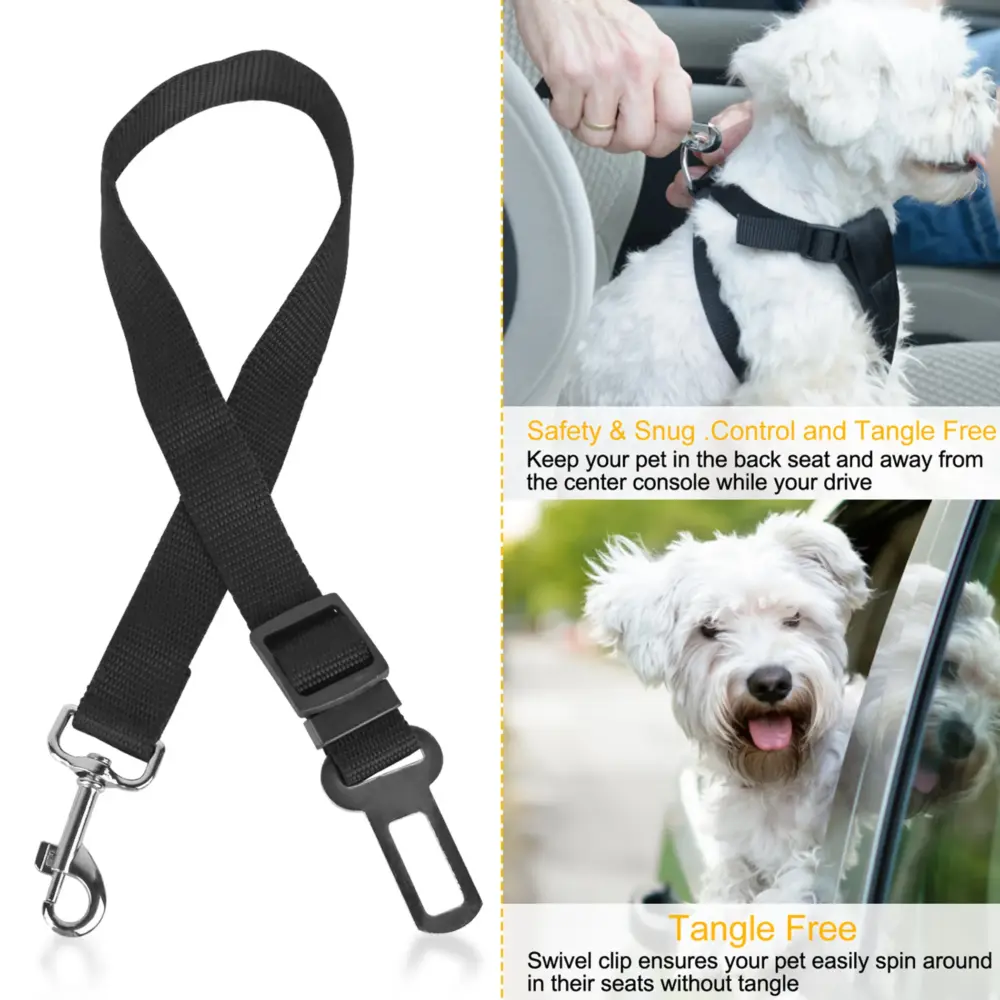
- Restrain your dog in the back before you set off, so barking can’t turn into climbing forward or onto your lap: a tether clipped to a well-fitted harness, or a crate secured so it can’t slide.
- No treats, cues or reaching back from the driver’s seat. Train in a parked car, and on moving practice runs bring a helper who sits in the back and does all of it.
- If the barking distracts you, pull over somewhere safe, such as a parking lot or side street, and keep the rest of the trip short.
- Stay in the car for every session. The ASPCA’s travel safety tips warn never to leave a pet alone in a parked car, which can quickly become dangerous in hot or cold weather.
Safety note
A tether is for control, not crash protection. It keeps a barking, lunging dog on the back seat and away from you, but we don’t sell it, a harness or a booster as crash protection. Our guide to choosing and setting up a dog seat belt or booster seat explains what each one does and how to fit it.
Managing what your dog can see
You can’t remove every passing truck, but you can cut how many your dog sees while you train. VCA’s guide to barking in dogs suggests limiting a barker’s exposure, for example by keeping them away from windows or covering the glass. In a car, that comes down to the seat, the tether and the windows.
Seat position
Use a rear outer seat. From the middle, a dog looks straight out the windshield and can push into the gap between the front seats for a better look. If most of the barking goes out one side, at people on the sidewalk or at oncoming traffic, try the other outer seat, still loading from the curb side.
Tether length
A dog lying down sees far less than one standing with paws on the door. Set the tether so your dog can sit, stand, turn and lie down, and no more: no paws on the armrest or window ledge, no crossing to the far window, no nose between the front seats. Clip it to the back of a harness, never a collar, because a dog who lunges at a passing dog hits the end of the strap hard.
The window
An open window adds smells and sounds to the view and lets a barker lean out toward the trigger. Keep windows up or open an inch or two, and turn on the window lock so a paw can’t lower them. Our guide to whether your dog should ride with their head out the window covers the injury risks.
Less to look at
- A crate. The ASPCA’s guide to barking suggests teaching a dog who mostly barks territorially in the car to ride in a crate, which restricts the view. Secure it so it can’t slide, and if you drape part of it, leave plenty open for airflow and skip the cover on warm days. We don’t sell crates; our comparison of a crate and a seat belt tether weighs the two setups.
- Rear window shades. A removable sunshade on a rear side window softens the view at your dog’s level. Keep your own view through the mirrors and over your shoulder clear.
- Small barkers. A booster seat lifts a small dog to window height, which gives a dog who barks at what it sees a front-row seat. A secured carrier may suit it better while you train; see our comparison of a dog booster seat and a carrier.
What you need for practice sessions
- A well-fitted harness with a ring on the back for the tether.
- Small, soft, high-value treats, plenty of them; a passing dog is stiff competition for kibble.
- A lick mat for longer parked sessions, so your dog has a calm job while traffic goes by.
- A helper for the moving steps: one person drives, the other trains.
- A practice spot: your driveway first, then the far side of a parking lot that people and dogs walk past, such as near a park entrance.
- Mild weather or the climate control running, and never the engine on in a closed garage.
From our own catalog, these three fit the setup and the parked sessions:
-
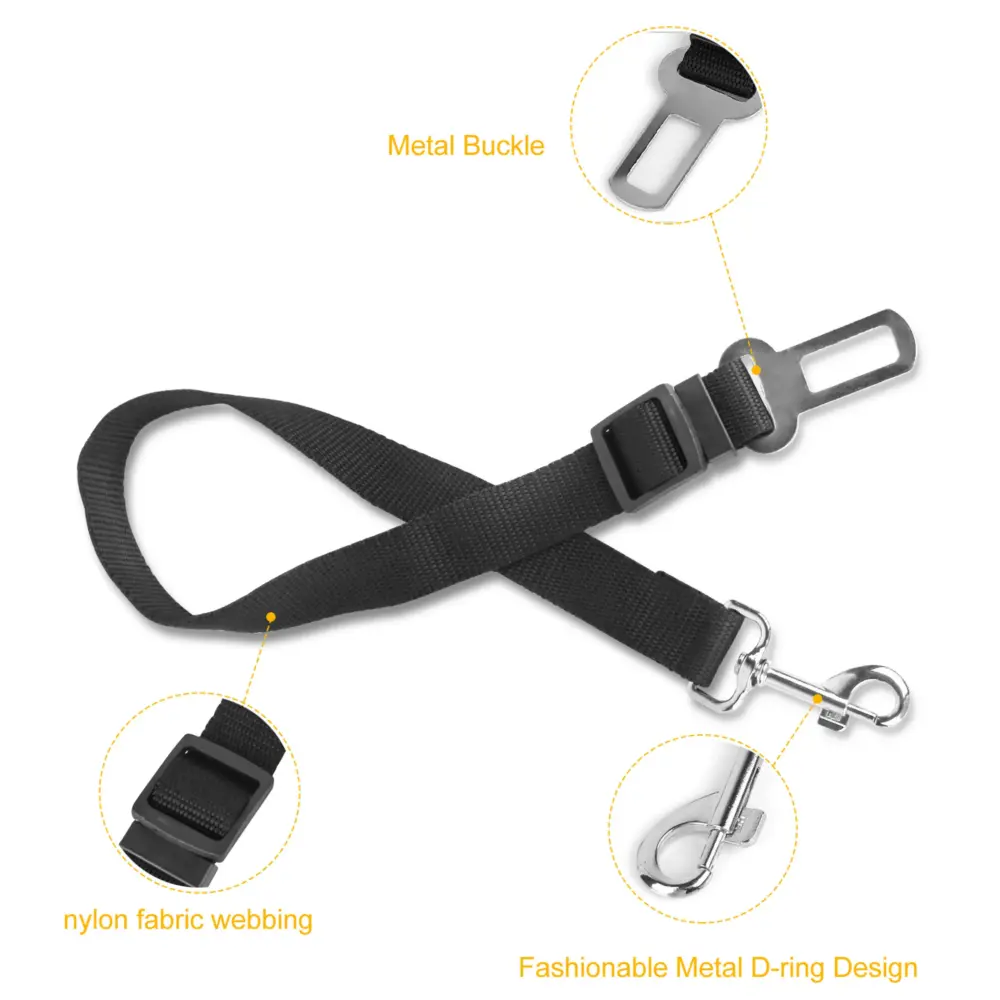
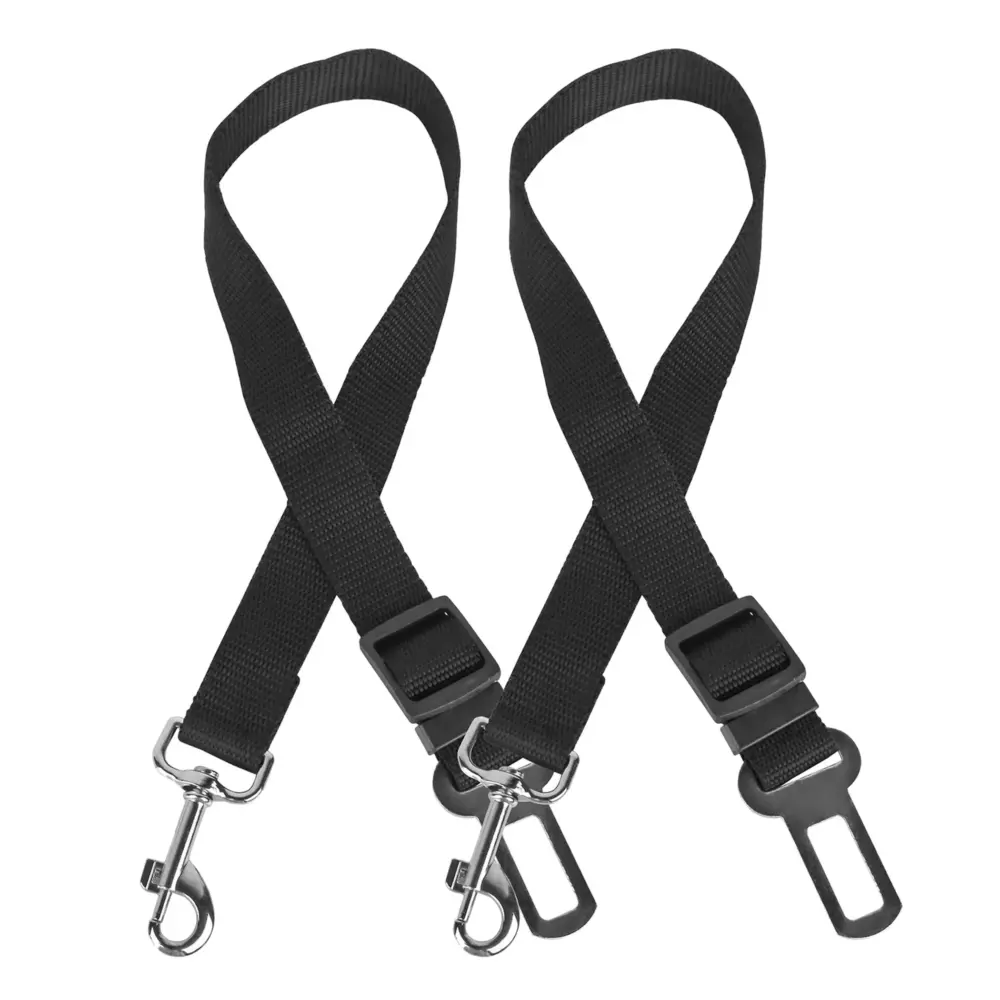
Adjustable Dog Car Seat Belt Tether, View product
$23.95
Why it fits: Shorten the strap until your dog can sit and lie down but cannot reach the window ledge, the far door or the gap between the front seats. Clips to a harness, two in a pack.
-
Mr. Peanut’s
PetTrek Padded Harness and Leash Set, Choose size & color
Price range: $24.95 through $26.95
Why it fits: A padded harness in XS to L to clip the tether to instead of a collar, so a lunge at a passing dog pulls on the chest. Measure first, and check the photos for a ring on the back.
-
SodaPup
Jigsaw Enrichment Lick Mat for Dogs & Cats, Choose color
$25.95
Why it fits: For parked practice: press soft food into the jigsaw grooves and let your dog lick while traffic goes by. If the licking stops, move farther from the road.



Teaching quiet in the parked car, step by step
The plan pairs the sight of a trigger with food, so passing dogs and trucks start to predict something good, and it rewards silence: VCA advises rewarding as soon as the barking stops, so your dog learns that quiet earns it. Keep sessions to five or ten minutes, once or twice a day, and stop while your dog is calm.
- Settle in the driveway. Harness on, tether clipped, you in the back with the treats. Reward sitting, then lying down, over a few short sessions until your dog lies down soon after getting in.
- Park where triggers pass at a distance, far enough that your dog notices people, dogs or cars without barking. Facing away from the walkway helps. If your dog barks at the first sight, move farther away.
- Make each trigger mean treats. As soon as something appears, feed small treats one after another; when it’s gone, stop. The trigger comes first, so it predicts the food. In time, your dog may glance at a passer-by and then turn to you.
- Reward the first pause. If your dog barks, say nothing, wait for a break, even a breath, and reward it at once. VCA warns never to reward barking with any attention, even occasionally, so no talking, patting or shushing mid-bark.
- Add a cue and stretch the quiet. Once pauses come quickly, say “quiet” once, calmly, as the barking stops, then reward. Over later sessions, wait for one second of quiet, then three, then five.
- Raise the difficulty one thing at a time: closer to the walkway, a busier hour, the engine running, your dog’s favorite window. Never two changes in one session.
- Add motion with a helper. Your helper sits beside your dog and does all the treating and cueing while you drive slow loops on quiet streets, building toward busier roads.
- Keep it going. Leave a treat pouch on the back seat for passengers, and have them reward calm glances at triggers on everyday drives.
Tip
Drive-throughs, toll booths and gas stations are a common flashpoint, because a stranger comes right up to the window. The AKC’s car-ride tips suggest having treats ready and praising your dog when a gas station attendant approaches. Let a passenger do it, or practice while parked at a quiet gas station.
Short drives that don’t always end somewhere exciting
Excitement barking feeds on anticipation. If most drives end at the dog park or the beach, the car becomes the start of the fun and the barking begins as soon as your dog recognizes the route.
- Take some dull drives. A few times a week, drive around the block or to a quiet lot, sit for a minute and go home. The AKC suggests praising and treating calm behavior in the car, such as lying down or not barking.
- Let quiet open the door. At a favorite place, park and wait. Open the door only after a few seconds of quiet, so silence is what gets your dog out; if the barking restarts, close it calmly and wait. Clip the leash on before you unclip the tether.
- Mix up the destinations. Drive to the park some days and walk from home on others, and sometimes drive somewhere quiet for an ordinary sniff around the block.
Barking from worry: when it’s anxiety rather than excitement
A worried dog barks or whines through the whole drive, not only at things outside, and shows other signs: panting on a cool day, drooling, yawning, lip licking, trembling, pacing or trying to get out. Rewarding quiet won’t address fear on its own, and the steps above can push a nervous dog too fast. Start instead with our guide to how to get a dog used to car rides, which begins with a parked car going nowhere and covers motion sickness.
Call your veterinarian if:
- barking or whining comes with drooling or vomiting on most rides;
- a dog who used to ride quietly suddenly starts barking or crying in the car, especially an older dog, since VCA notes that medical problems can contribute to vocalizing, particularly in older dogs;
- panic, such as scrambling, trembling or trying to escape, doesn’t ease when you make the steps smaller.
Your veterinarian can look for a medical cause and refer you to a veterinary behaviorist. If the barking at people or dogs comes with lunging or growling, bring in a certified trainer who uses reward-based methods.
Two dogs, one back seat: when one sets the other off
Barking spreads: one dog spots a jogger, the other joins in without seeing anything, and they wind each other up.
- Find the starter. Usually one dog sees the trigger and the other follows. Train each dog alone first, then give the starter the seat with the least view, or a secured crate; the follower may settle once the starter does.
- Keep them apart: one tether each, in separate buckles, short enough that they can’t reach each other or tangle. Our guide to traveling with two dogs in the car covers seating, tether lengths and loading order.
- Reward the quiet one on its own side of the seat while the other barks, ideally with a helper, and never hand treats to both while one is still going.
- A cat on board has a hard time beside a barking dog. Put the carrier where the dog can’t stare into it, and work on the barking during dog-only drives first.
Mistakes that keep the barking going
- Shouting or shushing. A raised “Quiet!” is mild punishment, and VCA notes that mild punishment merely rewards barking with attention.
- Revving up the departure. An excited “Who’s going to the park?” starts the barking before the engine does. Pick up the keys and go in a matter-of-fact way.
- Punishment and bark collars. VCA notes that punishment can increase anxiety and make many kinds of barking worse, and that most dogs learn to bark whenever the collar is off. The ASPCA doesn’t recommend anti-bark collars as a first choice, especially for barking driven by fear or anxiety.
Troubleshooting: when the barking comes back
- Quiet when parked, loud once you move. Motion is a big jump. Do more short helper sessions on slow, quiet streets.
- One trigger, such as dogs or motorcycles. Park within sight of a route that trigger uses, at a distance, before expecting calm on the move.
- Barking at red lights. A stopped car gives a dog time to stare. Have your helper reward calm glances during stops.
- Barking when you step out. That’s about being left, not the view. Take your dog with you or leave them home, and ask your veterinarian or a trainer for help if they also struggle when you leave the house.
Once the barking settles and the drives get longer, the rest of the back-seat setup is in our dog travel and car accessories.
Related guides
-
How-to
How to Make Vet Visits Less Stressful for Your Dog
For a dog who shakes, pulls for the door or won't get out of the car at the vet: happy visits, handling practice at home, what to tell the clinic, waiting in the car, a lick mat for the exam and when to ask about medication.
-
Checklist
Moving With a Dog: Weeks Before, Moving Day and Settling In
A checklist for moving to a new home with a dog, in the order you’ll need it: ID and records weeks ahead, a steady routine while you pack, a safe plan for moving day and the drive, house and yard checks on arrival, and the first weeks of walks and time alone.
-
How-to
Traveling With a Dog and a Cat in the Car: Seating, Stops and Hotels
How to set up one car for a dog and a cat: the carrier wedged in a footwell away from the dog, a tether short enough to keep a nose off the mesh, who goes in and out first, stops where only the dog gets out, and a hotel room that keeps the cat behind a closed door.