Car Travel How-to
Traveling With a Dog and a Cat in the Car: Seating, Stops and Hotels
Short answer
Wedge your cat’s zipped carrier into one rear footwell and tether your harnessed dog on the opposite rear seat, short enough to keep its nose off the carrier. Load the carrier first; unload it only after leashing your dog. At stops, only the dog gets out, and neither pet is left alone in the car.
Before the trip: practice drives with both pets
Each pet should already ride calmly alone; if your cat is new to the car, start with the carrier practice in our guide to traveling with a cat in the car. Then rehearse together, because a cat who rides quietly alone may not with a dog’s nose near the mesh, and a dog who settles on the seat may not with a cat crying a few feet away.
What you need for this setup:
- A carrier your cat can stand and turn around in, lined with an absorbent pad.
- A light towel to drape over one side, and one or two rolled towels to wedge it in place.
- A harness that fits your dog, with a ring on the back for the tether.
- A seat belt tether, plus a leash kept in the door pocket on your dog’s side.
- A cover for your dog’s half of the back seat, if you want one.
The rest of the packing list is in our road trip with a dog checklist and the cat guide above. Then rehearse:
- Set the layout with the carrier empty. Wedge it into its footwell, tether your dog on the other side and hold a treat just above the carrier. If your dog’s nose or paws reach it, shorten the tether, then retest with your dog lying down too.
- Sit in the parked car together for five minutes, engine off, while a passenger rewards your dog for lying down and ignoring the carrier.
- Drive around the block, then build to 10- and 20-minute drives over a few days, ending each one at home.
- Rehearse a stop: park, walk your dog for a few minutes while your cat stays zipped in, and load your dog again.
Go back a step if your dog stares, whines or paws toward the carrier, or your cat hisses, growls, pants or scrabbles at the mesh. If either pet drools, vomits or can’t settle even on short drives, ask your veterinarian about motion sickness and travel stress well before the trip.
Where each pet rides
The cat: on the floor, on the side away from the dog
International Cat Care names the footwell behind a front seat as one secure place for a carrier, and with a dog aboard it’s the better one: low, snug, out of the sun and below your dog’s eye line. Fill gaps with a rolled towel so the carrier can’t slide in a hard stop, and keep at least one mesh side open to the cabin for air. Drape a light towel over the side facing your dog, so neither animal spends the drive staring at the other.
Skip the front passenger seat and its airbag; the back seat right beside your dog, which puts the mesh at nose height; and the cargo area, where airflow is poor and you can’t see or reach your cat. And however well they nap side by side at home, never put the two of them in one crate or carrier.
The dog: tethered on the back seat, on the other side
Give your dog the curb-side rear seat, since the dog gets in and out at every stop, and put the carrier behind the driver. If the driver’s seat sits too far back for the carrier, use the footwell behind the passenger seat with that seat slid forward, and open your dog’s door on the traffic side only where it’s clear.
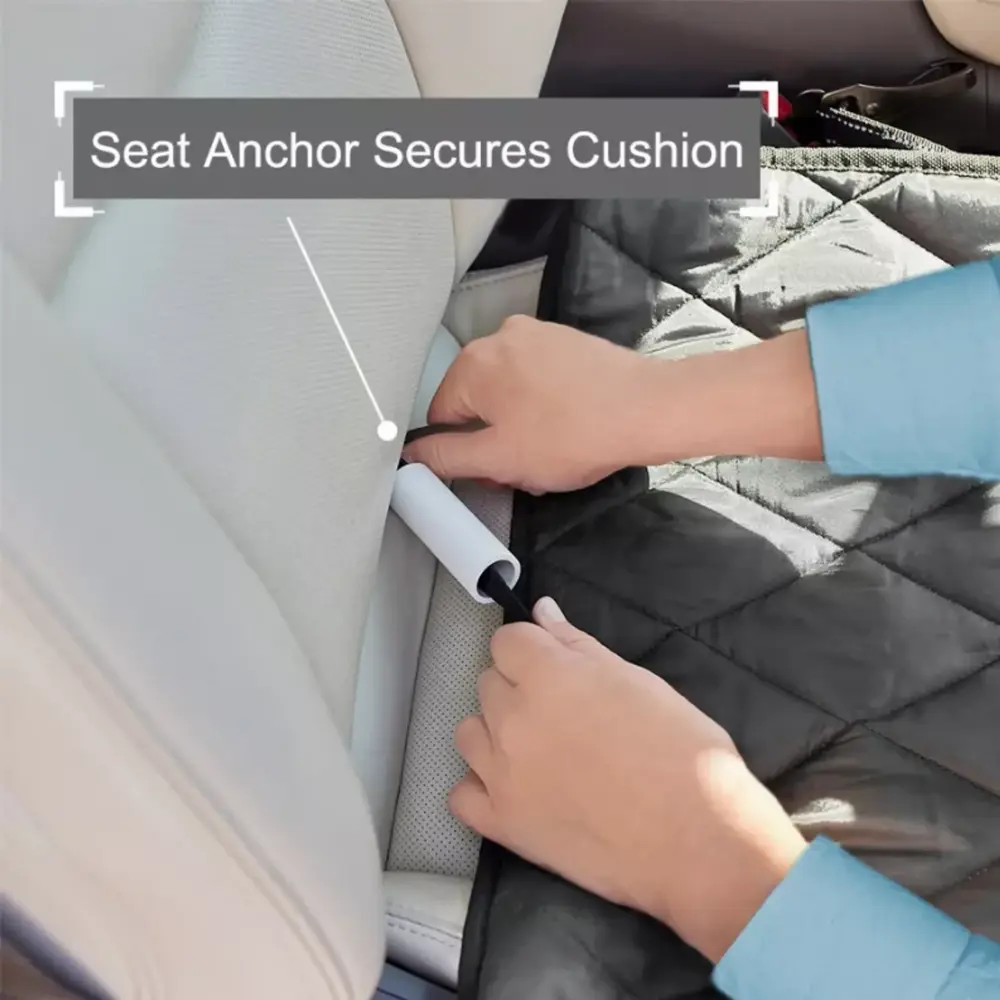
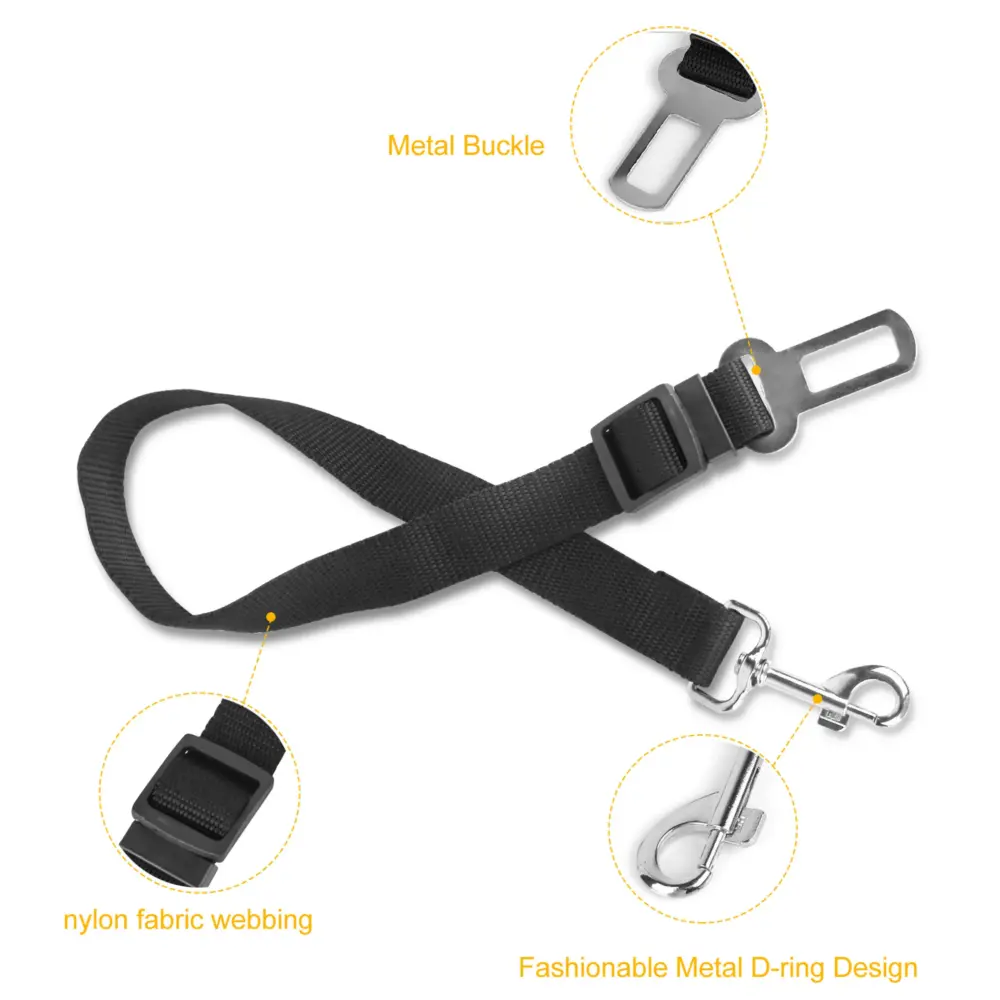
Clip the tether to the back ring of a well-fitted harness, never a collar, and plug it into the buckle on your dog’s side. Your dog should be able to sit, stand, turn and lie down, but not reach the carrier, the front seats or a window. A large dog stretched across the bench can end up with its head over the cat’s footwell, which is why the reach test includes lying down.
Seat covers, SUVs and extra pets
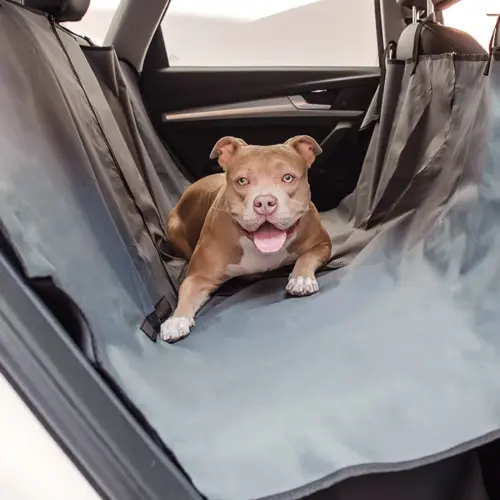
- A hammock cover. Don’t stretch a full hammock across the carrier’s footwell: it walls the carrier in, blocks the air and hides your cat. The GF PET Waterproof Dog Car Hammock has a detachable zipper that adapts it to one seat, so your dog’s side stays covered while the carrier’s side stays open to the cabin.
- An SUV or wagon. A dog riding in a crate secured in the cargo area is farther from the cat than any back-seat layout allows, and the carrier stays in a rear footwell. We don’t sell crates or cargo barriers.
- A small dog who rides in a carrier too. One carrier in each rear footwell, and neither pet can reach the other.
- A second dog. Two tethered dogs and a cat fill a back seat; see traveling with two dogs in the car for seating and tether spacing.
These four pieces from our catalog fit this layout:
-
Armarkat
Soft-Sided Pet Carrier, View product
$65.95
Why it fits: For the cat's footwell: three zip openings, so water goes in through a side door while the top stays shut, and mesh panels for air. Up to 22 lb and 19 x 12 x 12 in, per Armarkat; measure the footwell.
-
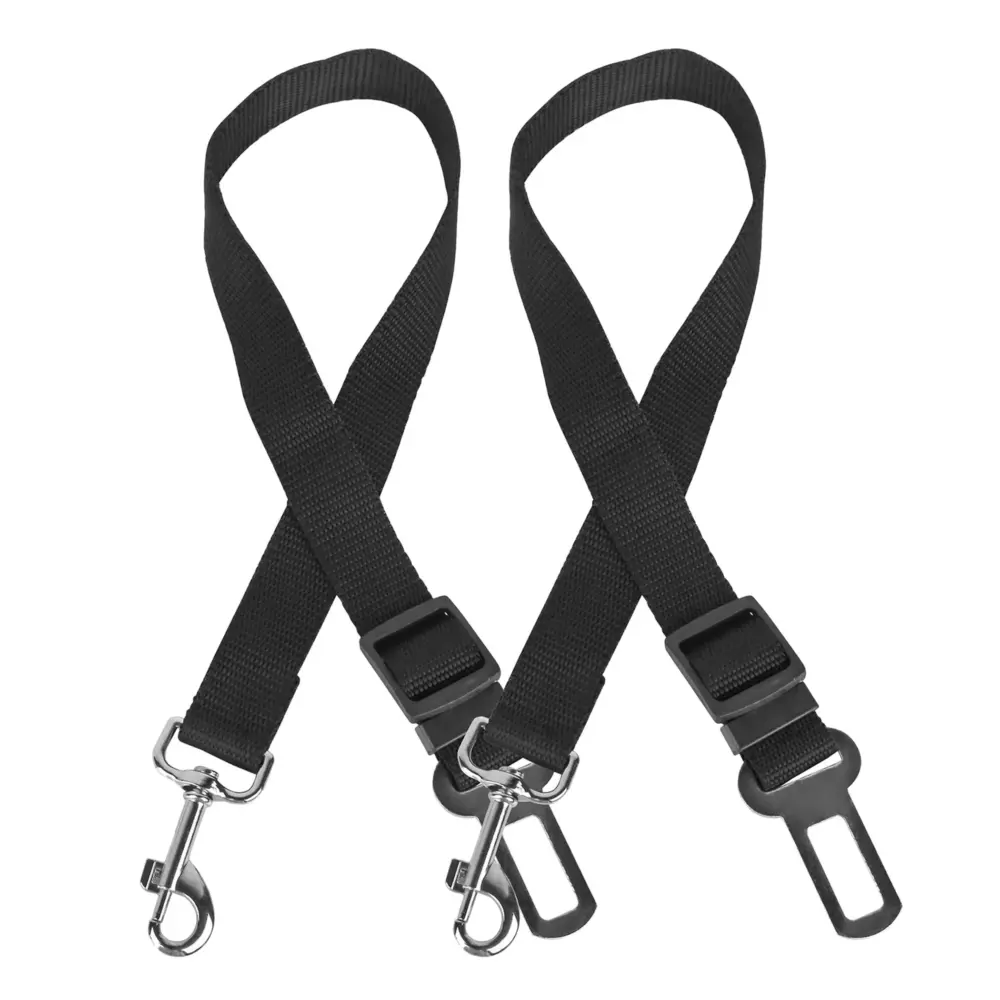
Adjustable Dog Car Seat Belt Tether, View product
$23.95
Why it fits: Plugs into the buckle on your dog's side and clips to the back of the harness; shorten it until your dog's nose stops short of the carrier. Fits most, not all, seat belts.
-
GF PET
Waterproof Dog Car Hammock Seat Cover, View product
$60.95
Why it fits: Waterproof and machine washable, with seat-belt openings that keep the tether's buckle free; its detachable zipper adapts it to one seat, leaving the carrier's side open. 58 x 57 in.
-
Mr. Peanut’s
PetTrek Padded Harness and Leash Set, Choose size & color
Price range: $24.95 through $26.95
Why it fits: The tether needs a harness, never a collar: a padded set with a matching leash for the door pocket and reflective trim for dark stops. XS to L; check the size chart and ring in the photos.



Loading and unloading order
The risky moment is a door opening while a pet is loose, so secure each pet before the next door opens.
Leaving home
- Harness your dog while the house is calm, so later you only clip on.
- Shut your dog in another room and get your cat into the carrier. Catching the cat is the unpredictable part, so do it before the bags and keys come out and your dog starts to circle.
- Load the carrier first, into a car you have already warmed or cooled: wedge it in, check every zipper, close the door.
- Bring your dog out on the leash: dog in, tether clipped, leash off, door closed. Check that the tether isn’t caught around a leg.
- Lock the rear windows, closed or open no more than a crack.
Arriving
Make the last stop your dog’s potty break, so arrival is quick. With two people, one walks the dog while the other takes the cat inside to a room with the door shut. On your own, clip the leash on before the tether comes off and carry the carrier on the side away from your dog; Armarkat lists a padded handle and a shoulder strap on its PC102R carrier, which frees a hand for the leash. The carrier opens only behind a closed door.
Stops: the dog walks, the cat stays zipped in
Your dog sets the schedule: a break every couple of hours, and more for an older dog (see traveling with a senior dog in the car). Your cat doesn’t need those stops the way your dog does: VCA’s advice on road trips with a cat is to line the carrier with an absorbent pad and plan to keep her in it for the whole drive, with a harness and leash on if she must come out.
- Park in the shade at the quiet end of the lot, then check every carrier zipper before any door opens.
- Open only your dog’s door, and only partway. Leash on, then tether off, and shut that door the moment your dog is out, so the cat’s side of the car stays sealed.
- Someone stays with the cat. With a helper, take turns; in hot weather the person waiting keeps the air conditioning running. On your own, carry the carrier along for the dog’s walk, keeping to the quiet edge of the pet area, and use drive-throughs and pay at the pump.
- Water for both: your dog outside, your cat from a small dish through a side opening, with the doors shut.
- A litter break only with the dog outside. For a harness-trained cat, offer a tray while your dog is out with someone else, with every door and window shut and the leash on your cat. Never open the carrier with your dog in the car.
- Reload your dog the way you left home, then look down at the footwell: tethers get adjusted and dogs settle differently, so check the nose still stops short of the carrier.
Safety note
Never leave either pet alone in the parked car, even for a quick restroom stop. The ASPCA warns that a parked car can quickly become dangerously hot or cold, even with the windows open, and a cat zipped into a carrier can’t move out of the sun.
Temperature, noise and keeping both settled
Your dog can shift around and pant to cool off; your cat is zipped into a few square feet. Set the temperature for whoever is most at risk: usually the cat in the carrier, a heavy-coated dog, or any flat-faced dog or cat, since they cope less well with heat.
The footwell keeps the carrier out of the sun, but check the air down there. In many cars, heater ducts under the front seats blow into the rear footwells, while the dashboard vents may not reach the floor at all. After 20 minutes, hold a hand by the mesh and adjust if it feels very different from the seat above.
Pull over somewhere safe and cool the car if your dog pants heavily and won’t settle, or if your cat breathes with her mouth open at all. A cat who is still panting once the car has cooled, or who seems weak, needs a call to a veterinarian.
Noise runs both ways: a barking dog is hard on a cat who can’t get away, and a crying cat can wind a dog up. Walk your dog well before you leave, keep music low and corners gentle, and have a passenger reward quiet. If your dog barks at trucks, or at the cat, see our guide to stopping a dog barking in the car.
Overnight stays: one room, two species
A hotel room has one door, and your dog will use it several times a day, so your cat lives behind a second one.
- Book for both. Name both animals and confirm with the hotel itself: a pet-friendly policy can mean dogs only, one pet per room, or a fee for each pet.
- Make the bathroom the cat’s room before the carrier opens: litter tray, water, food, bedding and the open carrier, with any window closed and gaps such as under the vanity checked. Many dogs raid cat food and litter, so both stay behind that door.
- Shut the bathroom door before the room door opens, every time, and hang the do-not-disturb sign so nobody walks in unannounced.
- At night, a cat who lives easily with your dog can come out once the room door is locked, but block the gaps under the bed or you may be searching for her at checkout.
- Don’t leave both pets alone in the room unless the hotel allows it, and then only with the cat shut in the bathroom.
- In the morning, zip your cat in before any bags go out, and load the car in the same order as at home.
Spending nights in an RV instead? RV travel with a cat covers litter on board and the slide-outs, screen doors and windows a cat can slip through.
If they don’t get along at home
A car puts your pets closer together than your home ever does, and a cat who copes by retreating upstairs has nowhere to go. If your dog chases, fixates on or lunges at your cat, or your cat hides whenever the dog comes in:
- Widen the gap: opposite corners with the carrier covered on the dog’s side, or your dog crated in an SUV’s cargo area.
- Take two cars if two drivers are going anyway.
- Ask whether the cat needs to come. Cats are usually strongly bonded to their home territory, and for a short trip a sitter visiting at home is often easier on a cat than a car and a hotel room.
- Get help before the trip: ask your veterinarian about your cat’s travel stress, and work with a qualified trainer or behaviorist on a dog who targets the cat.
Mistakes and troubleshooting on the road
The mistakes that undo this setup: belting the carrier onto the seat beside your dog, clipping the tether to a collar or to a harness that connects to one, opening the cat’s car door at a stop just to check on her, and feeding your cat where your dog can reach the bowl. When something goes wrong mid-trip:
- Your dog stares or whines at the carrier. Shorten the tether, cover more of the carrier’s dog-facing side and reward your dog for looking away or lying down; add parked-car practice at home.
- Your cat cries the whole way. Check the air at the carrier, keep the car quiet and don’t unzip it while moving. If it happens every trip, ask your veterinarian about options.
- The carrier shifts under braking. Re-wedge it with the towel pushed tight against the seat base, or try the other footwell; it shouldn’t move when you push it.
- Your cat has soiled the pad. Swap it through a side opening at the next stop, doors shut and ideally with your dog out with a helper.
What none of this does: crash protection
Safety note
A carrier wedged in a footwell, a tether and a seat cover keep your pets contained, apart and away from the driver. None of them, including the ones we sell, is crash protection, so drive for the passengers you have: gentle braking, extra following distance, and no reaching back to the carrier while the car is moving.
The carrier, tether and hammock above are in our travel and car accessories; the harness set is in walking and training.
Related guides
-
Guide
How to Travel With a Dog in a Pickup Truck: In the Cab, Not the Bed
Your dog rides in the cab, never the open bed. See where a dog sits in a crew, extended or regular cab, how to tether and cover truck seats, how to get in and out of a tall cab, and why a parked truck is no place to wait.
-
Checklist
Moving With a Dog: Weeks Before, Moving Day and Settling In
A checklist for moving to a new home with a dog, in the order you’ll need it: ID and records weeks ahead, a steady routine while you pack, a safe plan for moving day and the drive, house and yard checks on arrival, and the first weeks of walks and time alone.
-
Comparison
Driving vs Flying With a Dog or Cat: How to Decide for a Long Trip
Moving across the country or visiting family far away? Compare the car, the airplane cabin and the cargo hold on size limits, stress, heat and breed rules, paperwork and cost, then see which route suits your dog or cat.