Car Travel Guide
How to Travel With a Dog in a Pickup Truck: In the Cab, Not the Bed
Short answer
Your dog rides in the cab, never in the open bed. In a crew cab, use an outer rear seat; in a regular cab, the passenger seat, after checking your owner’s manual on the airbag. Clip a short seat belt tether to a harness, shut the rear slider, and never leave your dog in a parked truck.
Why the open bed is no place for a dog
Humane World for Animals says it plainly in its guidance on traveling safely with a pet: never transport a pet in the back of an open pickup truck. The reasons come down to what a bed can’t do.
- Nothing holds your dog in. A hard stop, a swerve or a pothole can throw a dog against the sides or over the tailgate, and a dog who spots another dog at a red light can simply jump.
- Tying doesn’t fix it. A short tie still leaves a dog sliding around the bed, and a longer one lets a dog go over the side and be dragged or left hanging by the leash.
- Wind and debris. At road speed, grit, insects and gravel thrown up by other vehicles hit your dog’s face and eyes.
- Heat and cold. A metal bed floor or plastic liner heats up in full sun, and paw pads can burn on hot surfaces; in winter, the bed offers no shelter from the wind.
- You can’t see your dog. From the driver’s seat, you won’t notice a dog in trouble, or one who has gone over the side, until you stop.
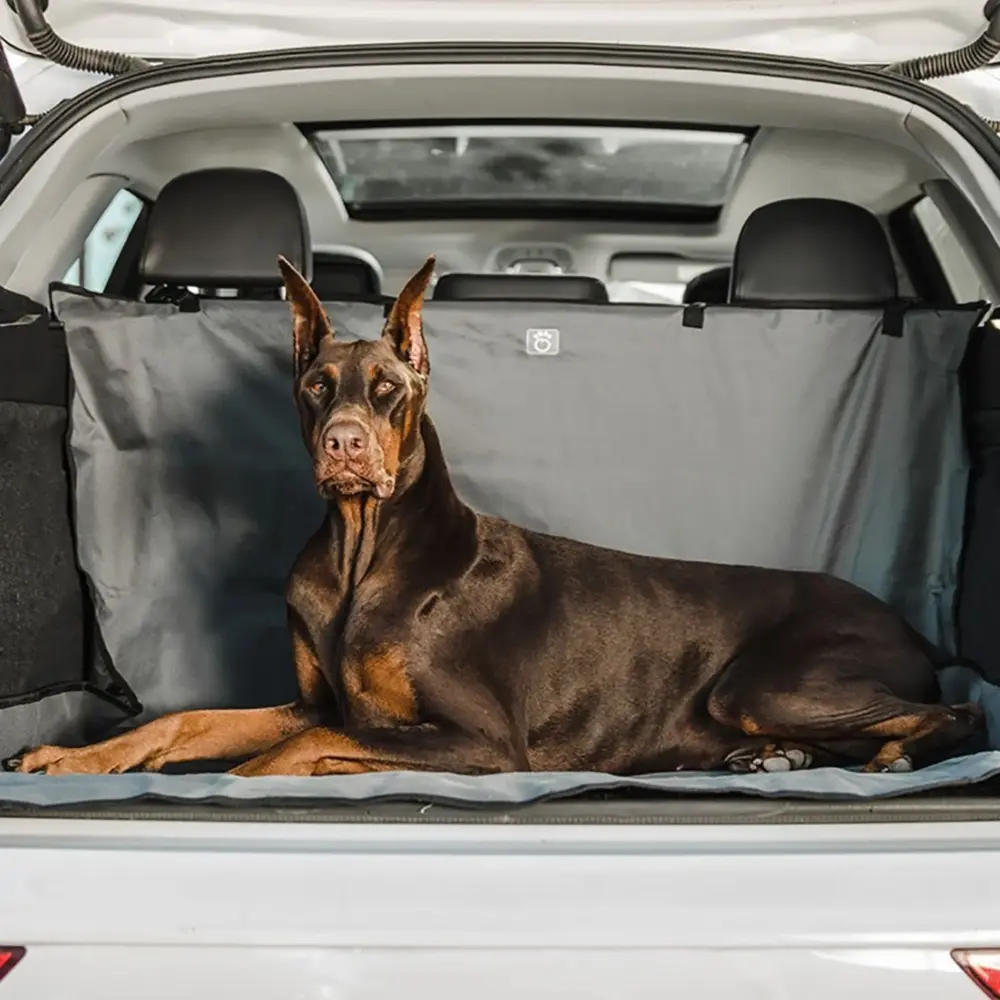
A truck bed isn’t the same as an SUV’s cargo area, which is inside the vehicle and can work with a strapped-down crate or a fitted barrier, as our guide to riding in an SUV’s back seat or cargo area explains. A crate in the bed is still out in the weather and the debris, and a cap or topper doesn’t turn the bed into passenger space: you still can’t see your dog, control the air back there or reach them. If there’s no room for your dog in the cab on a given trip, take another vehicle or leave your dog at home.
Where your dog rides in a crew, extended or regular cab
The cab style decides most of the setup: which seat your dog uses, what the tether plugs into and which cover fits.
| Cab | Where your dog rides | Seat cover | Getting in |
|---|---|---|---|
| Crew cab | Outer seat on the rear bench | Hammock, measured first | Full rear doors |
| Extended cab | Rear seat, if it has a cushion and a buckle | Measure the rear seat first | Rear doors may need the front door open |
| Regular cab | Passenger seat, after the airbag check | Front seat cover | Passenger door only |
Crew cab: the rear bench
Four full doors and a full rear bench make a crew cab the easiest truck to set up, and it matches the ASPCA’s travel safety advice: the back seat, in a harness attached to a secured seat belt. Use an outer seat rather than the middle: it keeps your dog farther from the center console, the usual route into the front, and its buckle anchors the tether. Many crew cabs let the rear cushions fold up for a flat load floor. Fold them back down when your dog rides, so your dog is on a seat with a buckle rather than loose on the floor.
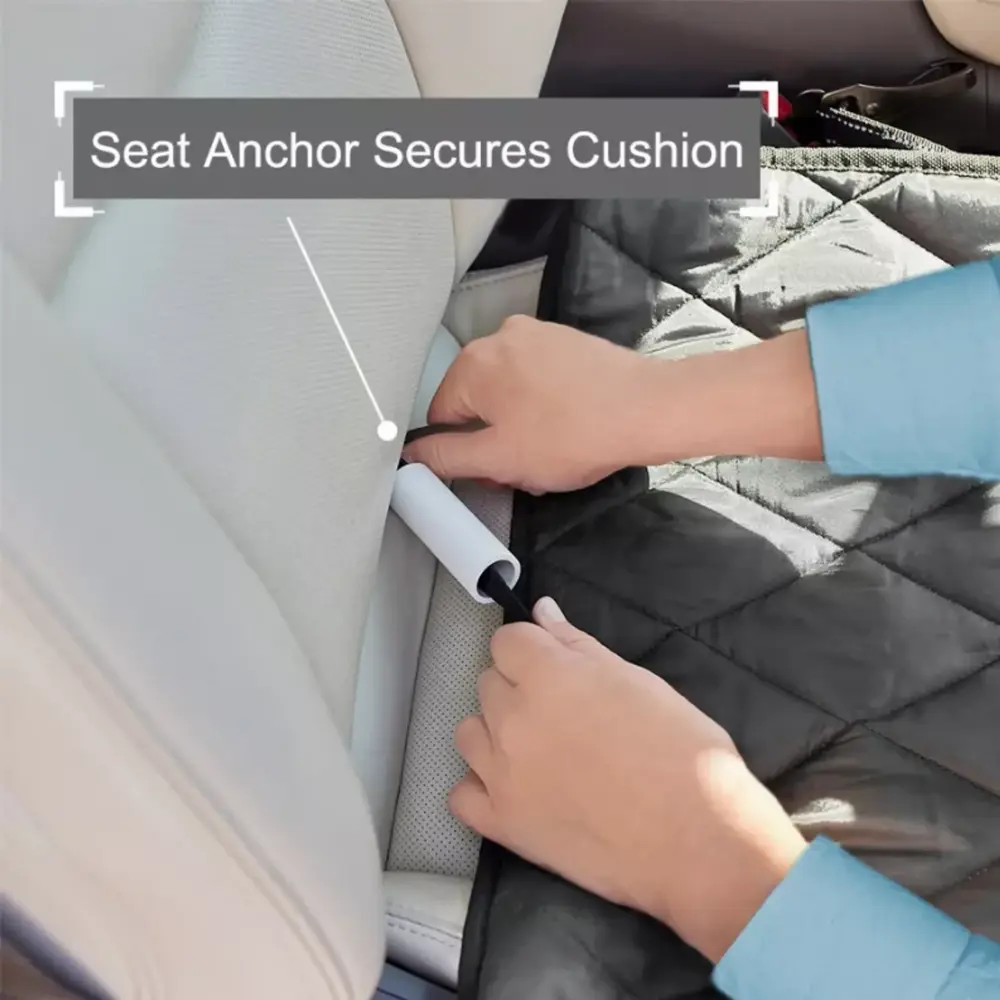
Two dogs get one outer seat and one tether each. A small dog up to 24 lb who settles better with a view can ride in the GOOPAWS booster seat, strapped to an outer rear seat’s backrest and headrest, with its built-in tether clipped to a harness.
Extended cab: check the rear seat first
Extended cabs go by different names from maker to maker, and their second row ranges from a short bench to small fold-down seats. On some trucks, the rear half doors open only once the front door is open. Before you put your dog in the back, check three things: a cushion your dog can lie on, a buckle within reach for the tether, and enough room to turn around without standing on the console. If all three check out, put your dog in the back. If the second row is little more than a shelf, set the truck up as a regular cab.
Regular cab: the passenger seat, set up with care
With one row of seats, the passenger seat is the only place your dog can ride. Before your dog rides there, check what your owner’s manual says about the passenger airbag and about covers on that seat; our guide to whether a dog can ride in the front seat walks through that check and where to set the seat.
On a bench seat, use the outer passenger position and its buckle, not the middle seat beside you, which puts your dog within reach of your arm, the wheel and the gear selector. Set the tether shorter than you would in a back seat, because the dash and the footwell are right in front of your dog.
Tethering your dog in a truck
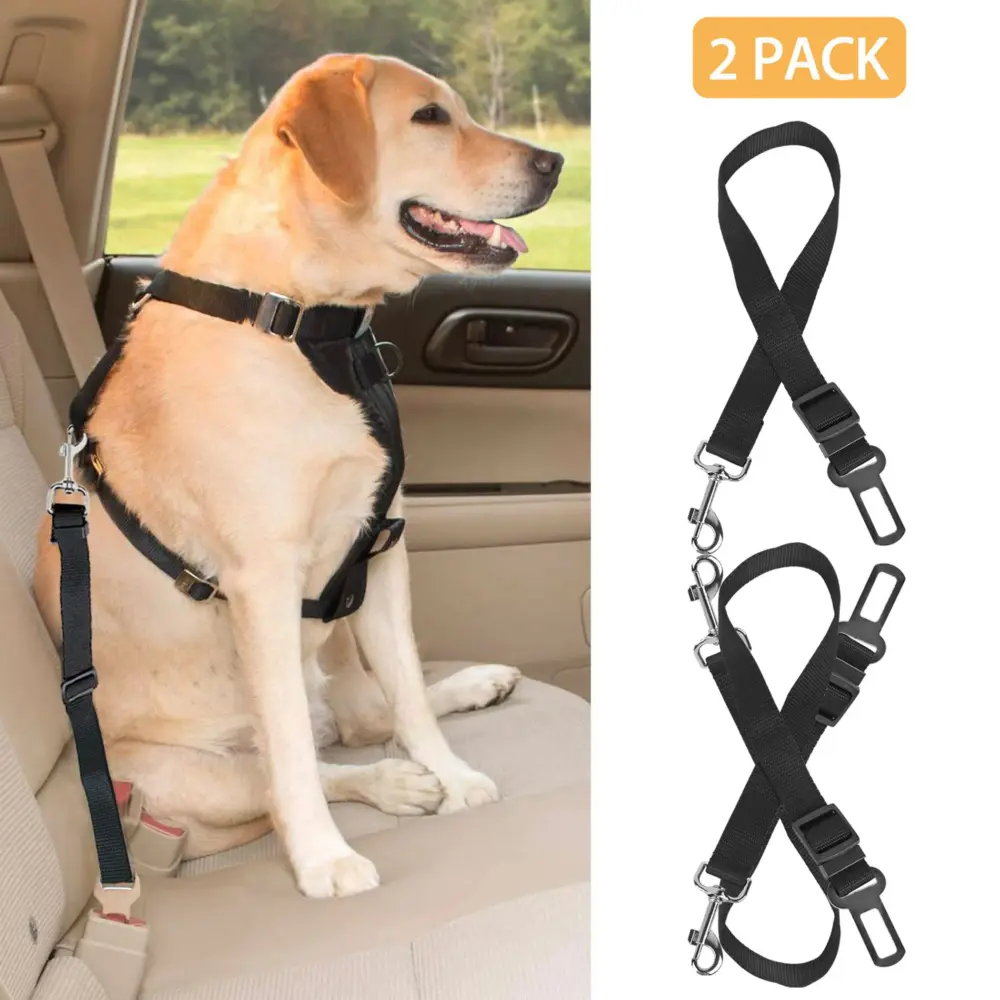
A tether keeps your dog on one seat in a truck just as it does in a car, but a cab adds a few things to check before the first drive.
- The buckle. The tab on our tether fits most vehicle seat belts, not all. Push it into the buckle you plan to use, tug, then press the release to make sure it lets go normally. If you drive more than one truck, test each one.
- The reach. In a crew cab, shorten the strap until your dog’s nose can’t get past the front seat backs or onto the console. In a regular cab, your dog should be able to sit and lie down on the cushion but not reach you, the dash, the shifter or the footwell.
- The rear window. Many pickups have a sliding rear window just behind the headrests. Keep it shut while your dog rides: open, it’s a way into the bed and a place to push a head out into the wind. Use the window lock for the side windows if your truck has one.
- The harness. Clip the tether to a ring on the back of a well-fitted harness, never to a collar. Skip any harness that attaches to your dog’s collar, as some no-pull designs do: tethered, the pull would still reach the neck.
- Loose cargo. Tools, coolers and gear on the seat beside your dog can slide into them when you brake. Stow them on the floor away from your dog, or in a secured box in the bed.
For the step-by-step fit and reach checks, see our guide to choosing and setting up a dog seat belt or booster seat.
Tip
Run the whole routine once in the driveway before a real trip: load, buckle, clip, check the reach, then unclip and unload. Five minutes parked shows you whether the tether is the right length and the buckle releases, without a dog leaning on you at 50 mph.
Measuring truck seats for a hammock or seat cover
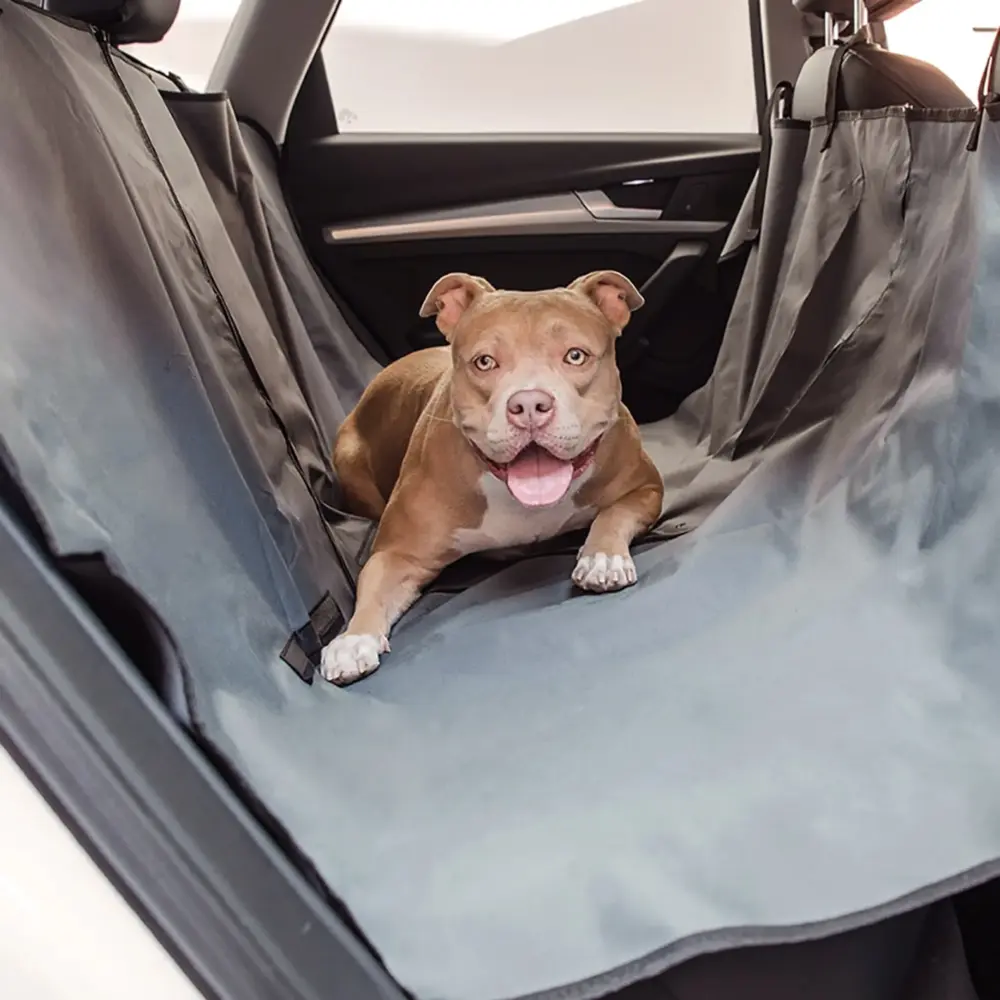
Truck seats see mud, sawdust and wet boots before a dog ever climbs in. A cover keeps hair, mud and claws off the upholstery, though it doesn’t hold your dog in place, and which one fits depends on the cab.
A hammock for a crew cab’s rear bench
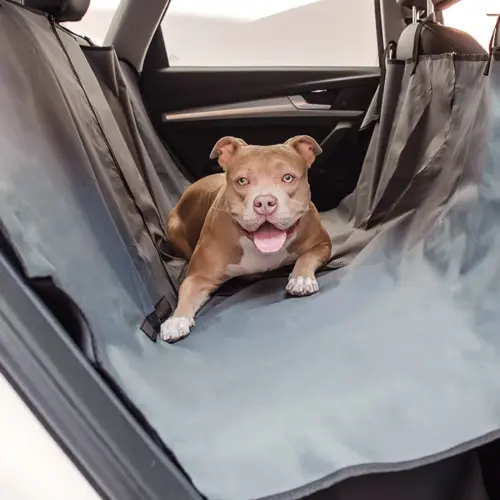
The GF PET hammock clips around the front and rear headrests and covers the rear bench, its backrests and the backs of the front seats, with seat-belt openings so the tether buckle stays reachable. It measures 58 × 57 inches (147 × 145 cm). Crew cab benches vary in width, so measure across the cushion from door to door: if your bench is wider than 58 in, expect a bare strip at each door. Check that the front and rear seats both have headrests for the straps, and if a passenger shares the back, the detachable zipper sets the cover up for one seat. The full measuring method is in our guide to choosing a dog hammock or seat cover. Unclip the hammock before you fold the rear cushions up for cargo.
A front seat cover for a regular cab
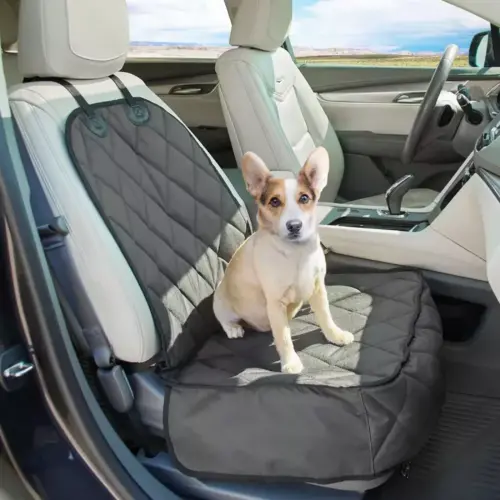
The GOOPAWS front cover is sold to fit most front seats in cars, trucks and SUVs, and measures 40 × 20.5 inches (102 × 52 cm). Measure your passenger seat from the top of the backrest down to the crease and out to the front of the cushion, then across the cushion, and compare the two numbers with the cover’s. On a bench seat, it covers the passenger position, not the whole bench, and a seat wider than 20.5 in will show at the edges. A non-slip backing and adjustable straps help keep it in place when your dog shifts, and it’s machine washable.
From our own catalog, here’s what fits each cab:
-
Adjustable Dog Car Seat Belt Tether, View product
$23.95
Why it fits: Adjustable length, so you can set it short for a regular cab’s passenger seat or a crew cab’s rear bench. Clips to a harness; the tab fits most, not all, seat belts, so test it in your truck.
-
GF PET
Waterproof Dog Car Hammock Seat Cover, View product
$60.95
Why it fits: For a crew cab’s rear bench: it clips to the front and rear headrests and keeps the buckles reachable for a tether. Measure your bench against 58 × 57 in before you order.
-
GOOPAWS
Waterproof Front Seat Cover for Dogs, Choose color
$43.95
Why it fits: For a regular cab’s passenger seat: sold to fit most front seats in trucks, with a non-slip backing and adjustable straps. Compare your seat with 40 × 20.5 in.
-
Mr. Peanut’s
PetTrek Padded Harness and Leash Set, Choose size & color
Price range: $24.95 through $26.95
Why it fits: A padded harness and matching leash in XS to L, so the leash clips on before the tether comes off at a job site. Measure the chest, and check the photos for a ring on the back.


Getting in and out of a high cab
Pickups sit higher than most cars, so the jump in and, above all, the jump down need a plan.
- Lift small dogs, puppies and older dogs in and out rather than asking for the jump, with one arm under the chest and the other under the rear.
- For a big dog who struggles with the height, look at a ramp or step made for vehicles. We don’t sell them, so check the maker’s weight rating and that it fits your truck.
- Running boards and side steps are narrow and can be slippery when wet or icy, so don’t treat them as a staircase for your dog unless the footing is secure.
- Load from the passenger side. In a regular cab, finish tethering before you walk around to the driver’s door. In a crew cab, use the rear door on the curb side every time, so the front seat never becomes the way in.
- Leash on before the tether comes off. Then ask for a wait before the release word; our guide to stopping a dog jumping out of the car teaches that wait step by step.
If your dog starts hesitating at the door or seems stiff after a ride, mention it to your veterinarian, because reluctance to jump can be a sign of discomfort.
Hot and cold cabs: never leave your dog parked
Trucks get left at job sites, trailheads and hardware stores, and “just a minute” is how dogs end up waiting in them, in the cab or tied in the bed. Humane World notes that on an 85-degree day, even with the windows slightly open, the inside of a car can reach 102 degrees in 10 minutes. In winter, the ASPCA warns that a car can act like a refrigerator, holding in the cold. Take your dog with you, or leave them at home.
While you drive, a cab has its own hot and cold spots:
- Check the airflow where your dog sits. If your crew cab has no rear vents, aim the front vents toward the back seat. In a regular cab, the passenger seat can sit in direct sun through the windshield and side window.
- Cool or warm the cab first, before your dog gets in, and bring water on longer drives; the Flipo Fold-A-Bowl holds 26 ounces, and its cover folds out into a bowl at a stop.
- Towel off a wet dog in cold weather before the ride, so they aren’t sitting damp in a drafty cab.
For summer trips in more detail, see our guide to keeping a dog cool in the car.
Safety note
The AKC’s guide to heatstroke in dogs lists heavy panting, excessive drooling, bright red gums and trouble keeping balance among the early signs. If you see them, move your dog somewhere cool or air-conditioned, offer water if they’re alert, and call your veterinarian right away.
What a tether and a seat cover do, and what they don’t
A tether keeps your dog on one seat, off the console and away from you, so you can drive without a paw on your arm. A seat cover keeps mud, hair and claws off the upholstery. Neither one is crash protection, and we don’t sell either one as such. Humane World makes the same point: restraints help stop roaming and distraction but haven’t been reliably shown to protect dogs in a crash.
If crash protection is your priority, the same guidance names a crate anchored to the vehicle with a seat belt or other secure means as the safest way for a dog to travel. In a crew cab, that means a crate that fits the rear seat or floor and is secured there, which we don’t sell. For the rest of the cab, browse our travel and car accessories.
Related guides
-
Checklist
Traveling With a Senior Dog in the Car: A Checklist for Easier Rides
A car-trip checklist for an older dog: what to ask your veterinarian before a long drive, how to help a stiff dog in and out without a jump, a padded, secured spot in the back seat, hot and cold cars, more frequent stops, and the medications and records to keep in the cabin.
-
Comparison
Cargo Liner vs Back Seat Cover: Where Should Your Dog Ride?
Where your dog rides decides which cover you need, and the two are not interchangeable. This comparison covers coverage, fitting, belt slits and cleaning, and is clear about what a cover does not do.
-
How-to
Traveling With Two Dogs in the Car: Seats, Tethers, Loading and Stops
How to set up one back seat for two dogs: a seat each with a gap between, tethers short enough that the dogs can't reach each other or tangle, a booster for a small dog beside a big one, which dog loads first, rest stops on two leashes and what to do if they squabble.