Dog Seat Belt vs Booster Seat: Choosing, Setting Up and Keeping Your Dog in the Back
For most dogs, a seat belt tether clipped to a harness is all you need: it keeps your dog in one spot on the back seat and works at any size. A booster seat earns its place with small dogs, up to 24 lb for the one we sell, that settle better raised up with a view, and it still relies on a built-in tether to hold them. In the dog seat belt vs booster seat choice, your dog’s size and temperament decide, and neither one is crash protection.
Which one your dog needs: a tether restrains, a booster positions
- Over 24 lb: a tether clipped to a well-fitted harness; that is above our booster’s limit.
- Small and calm: if your dog lies down soon after the car moves, a tether alone does the job.
- Small and keen to see out, or restless on a flat seat: a booster, with its built-in tether clipped to a harness.
- Toy-size, or a puppy new to harnesses: a carrier or crate secured in the back is another option.
- Two dogs: one tether each, in separate buckles.
- Climbs into the front: a shorter tether first, then the back-seat fixes below.
What a seat belt tether does
A seat belt tether is an adjustable strap with a buckle tab at one end and a clip at the other. The tab pushes into the car’s seat-belt buckle and the clip attaches to the back of a harness, giving your dog a fixed radius: room to sit, stand, turn and lie down, but not to wander across the seat, drop into the footwell or climb onto your lap. What it won’t do is lift a small dog to window height.
Our Adjustable Dog Car Seat Belt Tether, 2 Pack has an adjustable length, a strong metal carabiner, a buckle tab that fits most vehicle seat belts and nylon webbing that wipes clean. Two come in the pack, for two dogs or two cars.
What a booster seat does
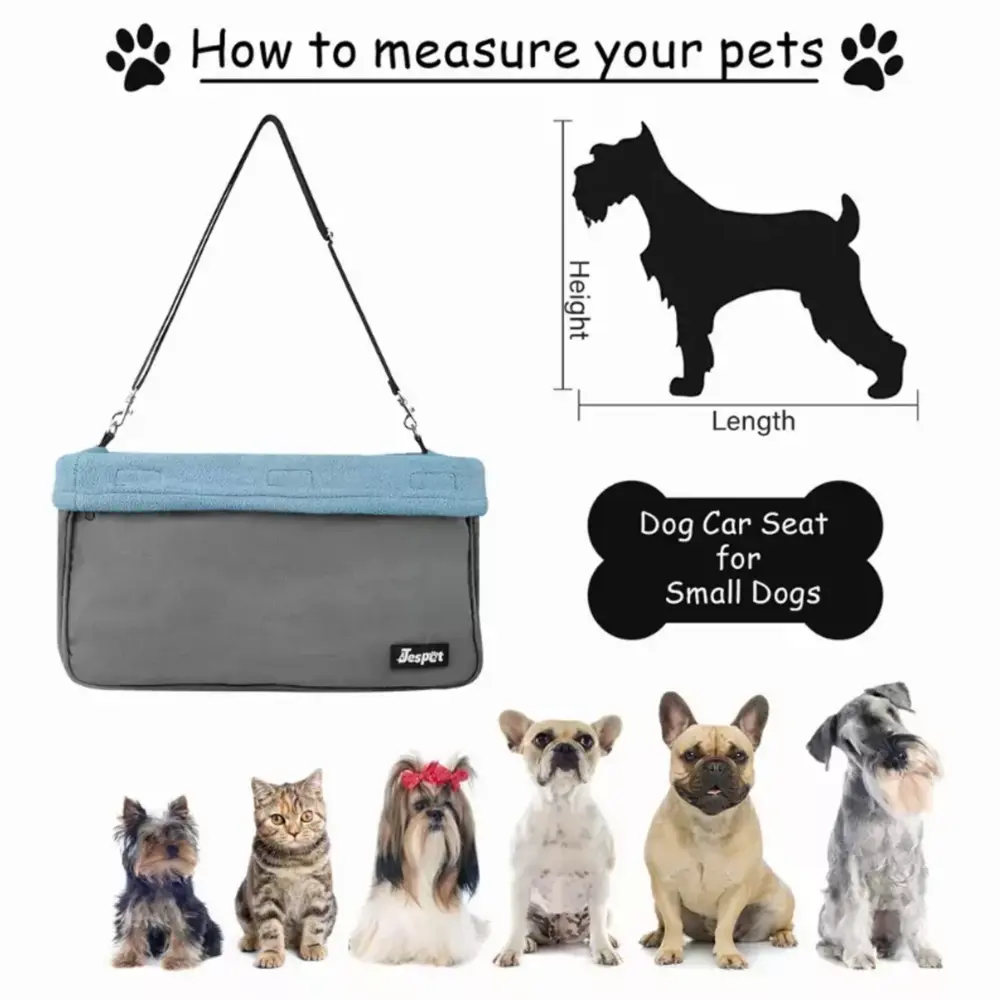
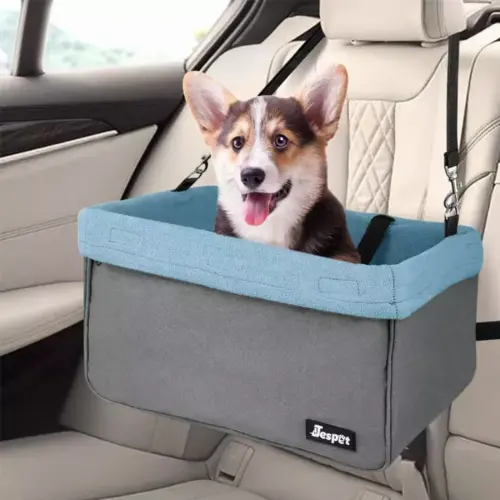
A booster is a raised, padded seat that straps onto your car seat and lifts a small dog to window height. Its job is position: one cushioned spot of its own, with a view. The tether inside does the restraining.
The GOOPAWS Dog Booster Car Seat with Safety Tether holds pets up to 24 lb (11 kg) and measures 16 inches long, 13 inches deep and 9 inches high. Two adjustable straps fasten it to the seat back and headrest, the built-in tether clips to a harness, a front zippered pocket holds treats and a spare leash, and the cushion is removable and washable.
Do small dogs need a car seat? Not strictly: a harness and tether keeps a small dog in place too. A booster adds comfort and a view, which helps some small dogs settle.
Dog seat belt vs booster seat: checks for your dog and your car
- Booster footprint. The 16 by 13 inches is the whole seat, so look at your dog curled up asleep: a dog that needs more room than that will be cramped even under 24 lb.
- A rear headrest. The booster’s straps go around the seat back and headrest, so the seat needs one.
- Your buckles. The tab fits most vehicle seat belts, not all; check that it clicks in, holds when you tug and releases normally.
- Switching cars. A tether moves in seconds, and a 2-pack lets you leave one in each car. A booster takes a few minutes to strap in.
- Cleanup. The booster’s cushion is washable and the tether wipes clean, but neither protects the upholstery; see how to choose between a dog hammock and a seat cover.
-
Adjustable Dog Car Seat Belt Tether
$23.95
-
GOOPAWS
Dog Booster Car Seat with Safety Tether
$53.95

What neither one does: a straight word on crash protection
We don’t present the tether or the booster as crash protection, and you shouldn’t buy either one on that basis. What they give you is everyday control: a dog that stays put, away from the driver. Humane World for Animals draws the same line in its car travel advice: restraints stop roaming and distraction but haven’t been reliably shown to protect dogs in a crash, and it names a crate anchored to the vehicle as the safest way to travel.
If crash performance is your priority, look for a car harness, crate or carrier with independent crash-test certification, such as from the nonprofit Center for Pet Safety. An everyday walking harness isn’t built for crash forces.
Whatever you choose:
- Clip to a harness, never a collar, so a sudden stop pulls across the chest instead of the neck.
- Keep windows mostly closed, and use the window lock so paws can’t open them.
- Never leave your dog alone in a parked car: on a 72°F day, Humane World notes, the inside can reach 116°F within an hour.
How to use a dog seat belt: harness clip, length and a fit check
- Fit the harness. Two fingers should slide flat under each strap; see how to measure a dog for a harness. The Mr. Peanut’s PetTrek Padded Reflective Dog Harness & Leash Set is a padded option in XS to Large; its listing doesn’t name the leash attachment point, so check the photos for a ring on the back.
- Buckle the tab into a rear outer seat’s buckle until it clicks, then tug to check it holds. Load your dog from the curb side.
- Clip to the back of the harness. Use the ring between the shoulder blades, not a chest ring and never the collar. If your harness connects to the collar, as some no-pull designs do, use another one in the car. Unsure which ring is which? See how front-clip and back-clip harnesses differ.
- Set the length. With your dog on the seat, shorten the strap until they can sit, stand, turn and lie down, and no more.
- Do a reach check. Call your dog toward the front. If their nose gets past the front seat backs, their paws reach the footwell or their head fits out the window, shorten it again.
- Recheck at stops for a strap around a leg or a harness that has shifted.
Setting up a booster seat in the back
Choose a rear outer seat with a headrest, then:
- Set the booster on the seat cushion, back against the backrest.
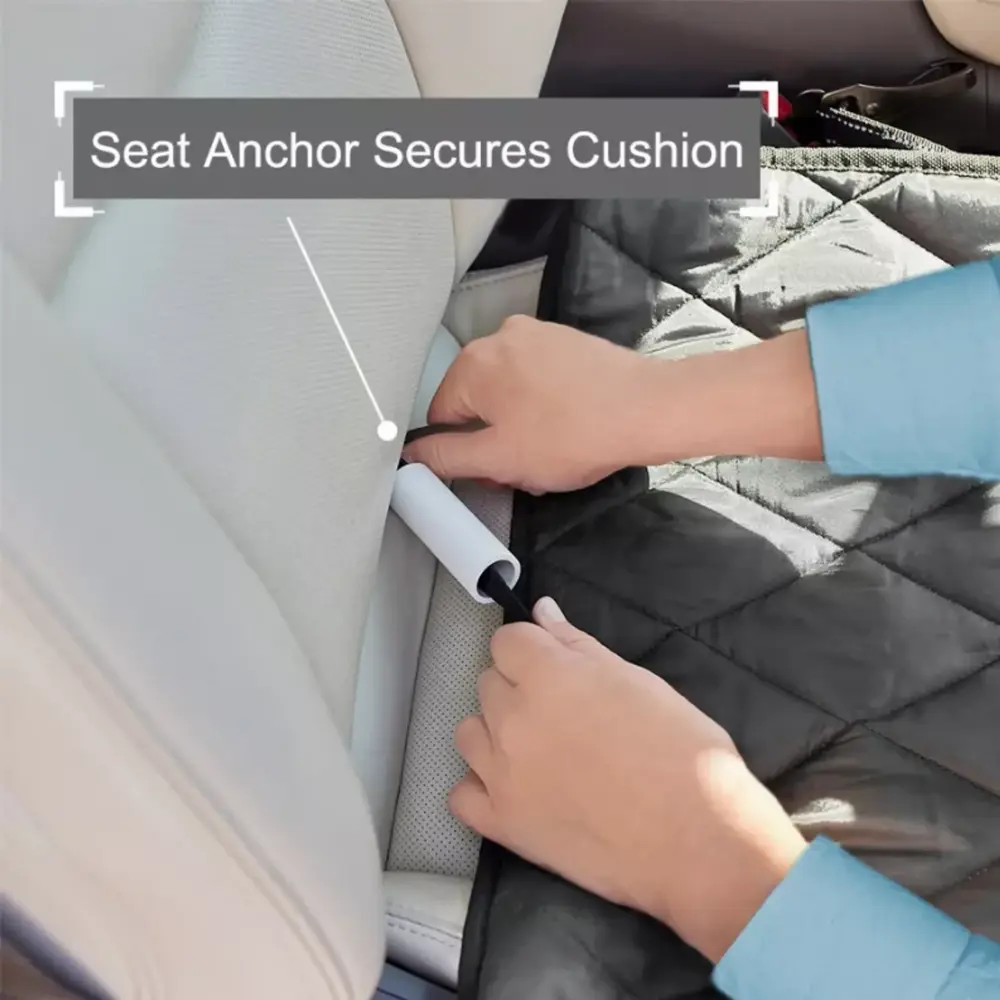
- Fasten both straps around the seat back and the headrest and pull them snug. Push the booster from each side; it should barely move.
- Lift your dog in rather than asking for a jump, and clip the built-in tether to the back of the harness, never the collar.
- Shorten the tether so your dog can sit, turn and lie down but can’t get their front paws over the rim. A tether long enough to climb out on can leave a small dog dangling over the side.
Keeping your dog in the back: tether length, the gap between the seats and a settle cue
Where should a dog sit in the car? In the back seat, tethered to a rear buckle, with room to lie down and away from the driver. The AKC’s advice on dog seat belts favors the back seat too, away from front airbags. With no back seat, read your owner’s manual on the passenger airbag first.
Shorten the tether: reach, not comfort, sets the length
A dog that keeps ending up in the front has the slack to get there. Set the length by what your dog can reach, not by how much room feels generous, and use an outer seat, which sits farther from the gap between the front seats than the middle one.
Close the gap between the front seats
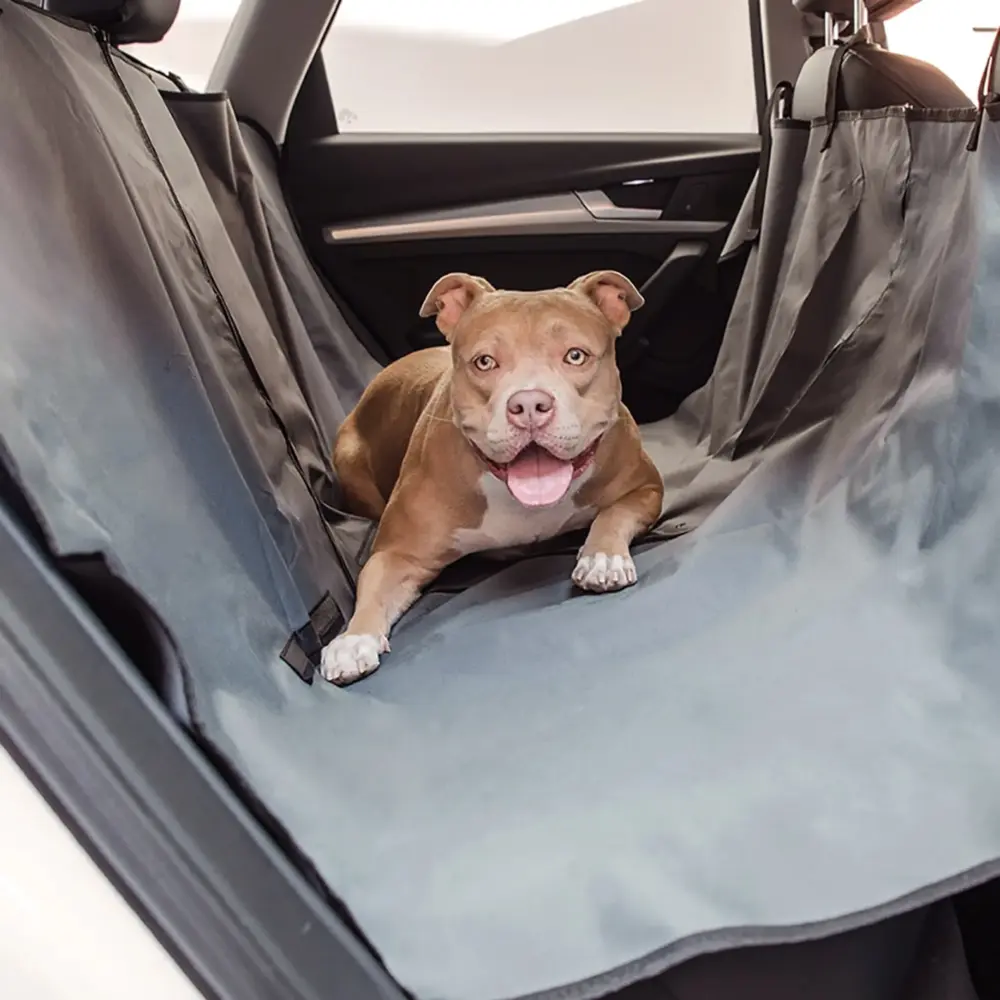
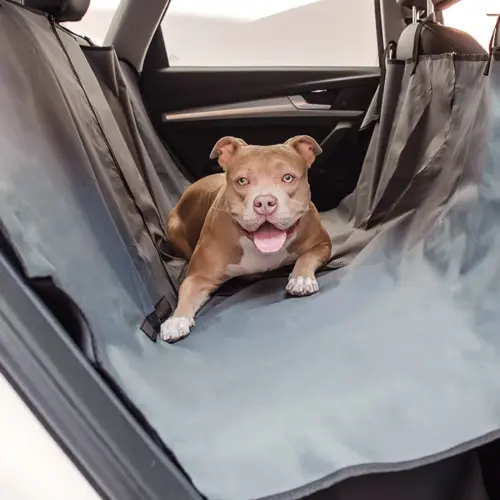
The GF PET Waterproof Dog Car Hammock Seat Cover clips around the headrests and covers the rear bench, the rear backrests and the backs of the front seats, so fabric blocks the space a dog squeezes through, and its seat-belt openings leave the buckles free for a tether. It is a seat cover, not a restraint: a determined dog can push past fabric, so use it with a tether, not instead of one.
Back doors only
Load and unload through a rear door every time, so the front seat never becomes the way in. Getting out, clip the leash on before you unclip the tether; getting in, clip the tether before the leash comes off.
A settle cue, practiced on short drives
Choose a word such as “settle” and reward your dog for lying down on the seat, first in the parked car, then on five- to ten-minute drives. Only a passenger should hand out treats while the car moves. If your dog is nervous, learn how to get a dog used to car rides first, and ask your veterinarian about drooling, vomiting or panting that doesn’t ease.
-
GF PET
Waterproof Dog Car Hammock Seat Cover
$60.95
-
Mr. Peanut’s
PetTrek Padded Harness and Leash Set
Price range: $24.95 through $26.95

For longer drives, pack with our road trip with a dog checklist, or browse our dog travel and car accessories and more car travel guides.
Seat belt and booster FAQ
How long should a dog seat belt tether be?
Long enough for your dog to sit, stand, turn around and lie down, and no longer. If they can reach the front seats, the footwell or an open window, shorten it.
Are dog seat belts safe?
For everyday driving, a tether clipped to the back of a well-fitted harness is a clear step up from a loose dog: it keeps your dog off the driver and out of the footwell. Crash protection is a separate question that only independent crash-test certification answers.
How do I stop my dog climbing into the front seat?
Shorten the tether until your dog can’t reach the front, close the gap with a hammock-style cover, load only through the back doors and reward a settle cue on short drives. The tether does the stopping.
Are dog booster seats worth it?
For a small dog that wants to see out or settles better in a spot of its own, often yes. For a calm dog happy to lie on the seat, or any dog over the weight limit, a harness and tether does the job. Buy a booster for comfort and position, not crash protection.
Related guides
-
Guide
How to Travel With a Dog in a Pickup Truck: In the Cab, Not the Bed
Your dog rides in the cab, never the open bed. See where a dog sits in a crew, extended or regular cab, how to tether and cover truck seats, how to get in and out of a tall cab, and why a parked truck is no place to wait.
-
Checklist
Traveling With a Senior Dog in the Car: A Checklist for Easier Rides
A car-trip checklist for an older dog: what to ask your veterinarian before a long drive, how to help a stiff dog in and out without a jump, a padded, secured spot in the back seat, hot and cold cars, more frequent stops, and the medications and records to keep in the cabin.
-
Comparison
Cargo Liner vs Back Seat Cover: Where Should Your Dog Ride?
Where your dog rides decides which cover you need, and the two are not interchangeable. This comparison covers coverage, fitting, belt slits and cleaning, and is clear about what a cover does not do.