Car Travel Comparison
Cargo Liner vs Back Seat Cover: Where Should Your Dog Ride?
Short answer
A cargo liner protects the boot floor and sides for dogs who travel behind a guard or in a crate. A bench cover protects the back seat and backrests and has belt slits so you can still use a seatbelt restraint. Neither is a safety device; the restraint is separate.
Two covers, two jobs
The choice follows from where your dog travels rather than the other way round. In an estate or SUV with a boot guard, a cargo liner is the right product. On the back seat of a saloon or hatchback, a bench cover is.
Buying the wrong one is common because both are sold as dog car covers. A bench cover thrown into a boot leaves the sides unprotected and slides around; a cargo liner on a back seat does not have belt slits and blocks the seatbelts.
What a cargo liner covers
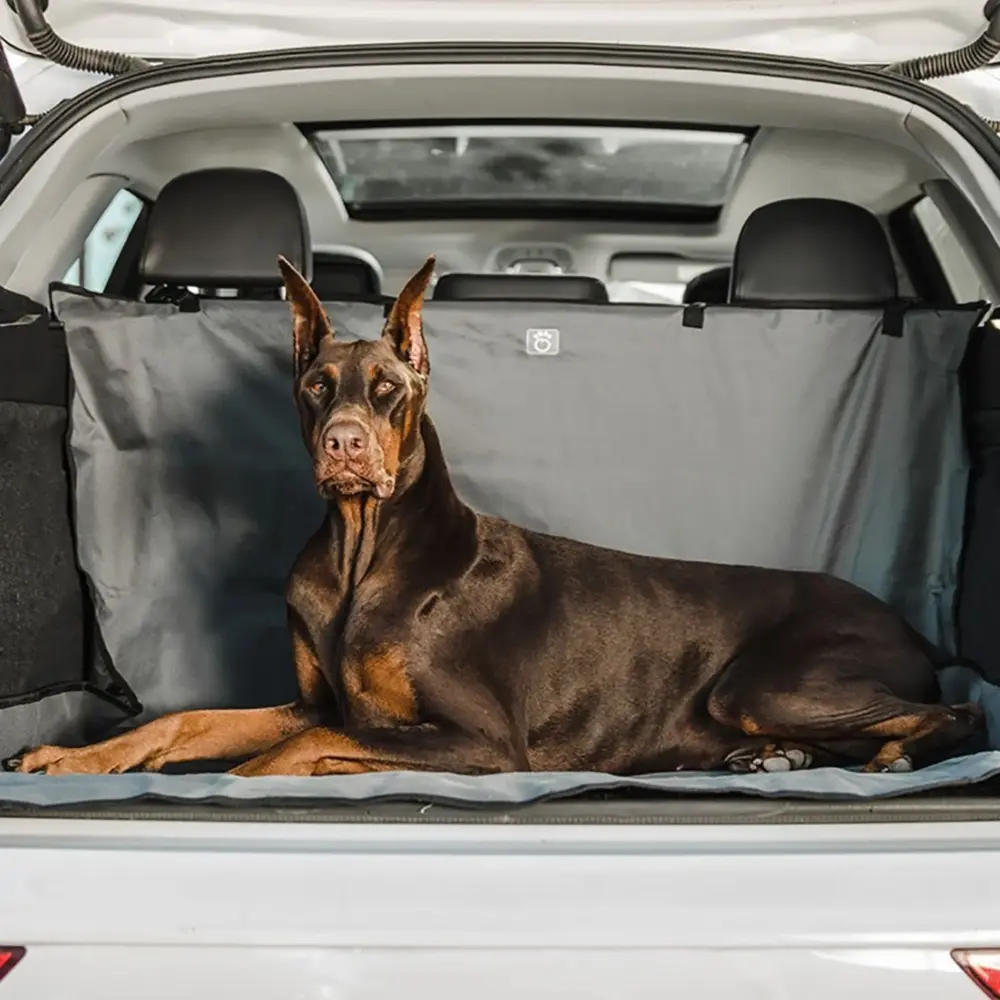
A cargo liner is a large rectangular cover for the boot floor, usually with enough material to come up the sides and over the lip of the boot where dogs scrabble on the way in and out.
- The floor, which takes mud, water and hair
- The side walls, where a wet dog shakes
- The boot lip, which is where most scratches happen
- Often the back of the rear seats, which is otherwise exposed
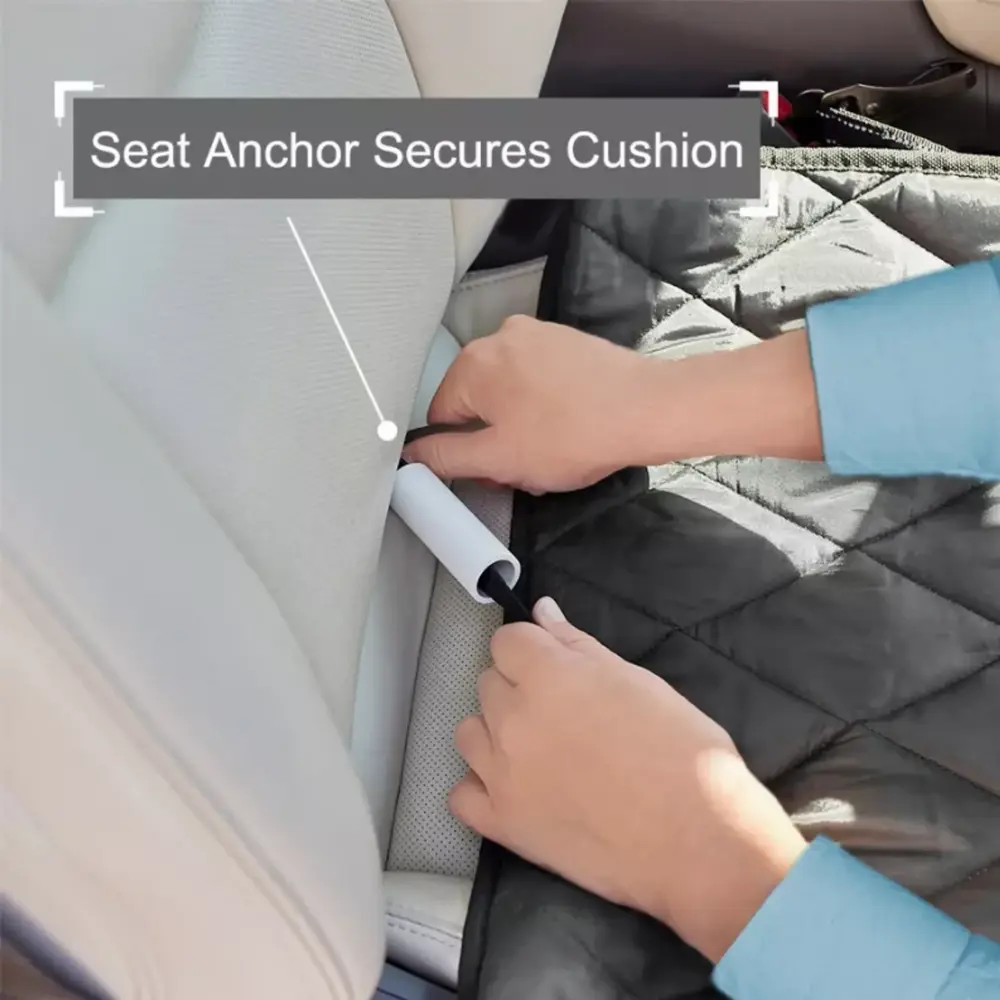
- Secured with velcro strips and headrest straps in most designs
What a bench cover covers
A bench cover protects the seat base and the backrests, which matters because a standing dog puts their front paws on the backrest. The better ones clip to the headrests at both ends and tuck into the seat join so they do not slide.
The feature that matters most is belt slits. Without them you have to choose between the cover and a seatbelt restraint, and the restraint should win every time.
Side by side
| Cargo liner | Bench cover | |
|---|---|---|
| Protects | Boot floor, sides, lip | Seat base and backrests |
| Suits | Estates and SUVs | Saloons and hatchbacks |
| Belt slits | Not applicable | Essential |
| Fitting | Velcro and straps | Clips and headrest straps |
| Works with a crate | Yes | Rarely |
| Passenger use | Boot stays unusable | Seat still usable |
Belt slits and restraints
A seat cover without belt slits forces the dog to travel unrestrained, which is the worst of the available options. Slits let a tether pass from a harness to the buckle while the cover stays in place, and they also let human passengers belt up normally.
Safety note
A cover protects upholstery, not your dog. In a collision or hard braking, an unrestrained dog becomes a projectile. Use a securely anchored travel crate or a harness restraint; see crate versus seat belt in the car.
Fitting and staying put
The usual failure is a cover that migrates. A dog turning around on a loose cover bunches it into the footwell within a few miles, after which it protects nothing.
- Clean and dry the surface before fitting; velcro does not stick to hair.
- Attach the headrest straps first and tension them evenly.
- Press velcro strips down firmly and leave them a few hours before use.
- Tuck the edge into the join between the seat base and backrest.
- Cut or open the belt slits only where you actually need them.
- Check the fit after the first journey and re-tension.
Cleaning
Both types are usually machine washable, which is the entire point. Shake the cover out first, because loose hair otherwise ends up in the machine, and wash on a cool gentle cycle without fabric softener, which degrades waterproof coatings.
Air dry rather than tumble drying. Heat damages the waterproof backing, and once that goes the cover is just a large cloth. For the smell that outlasts washing, getting the dog smell out of a car covers the rest of the interior.
-
GF PET
Cargo Cover, View product
$62.95
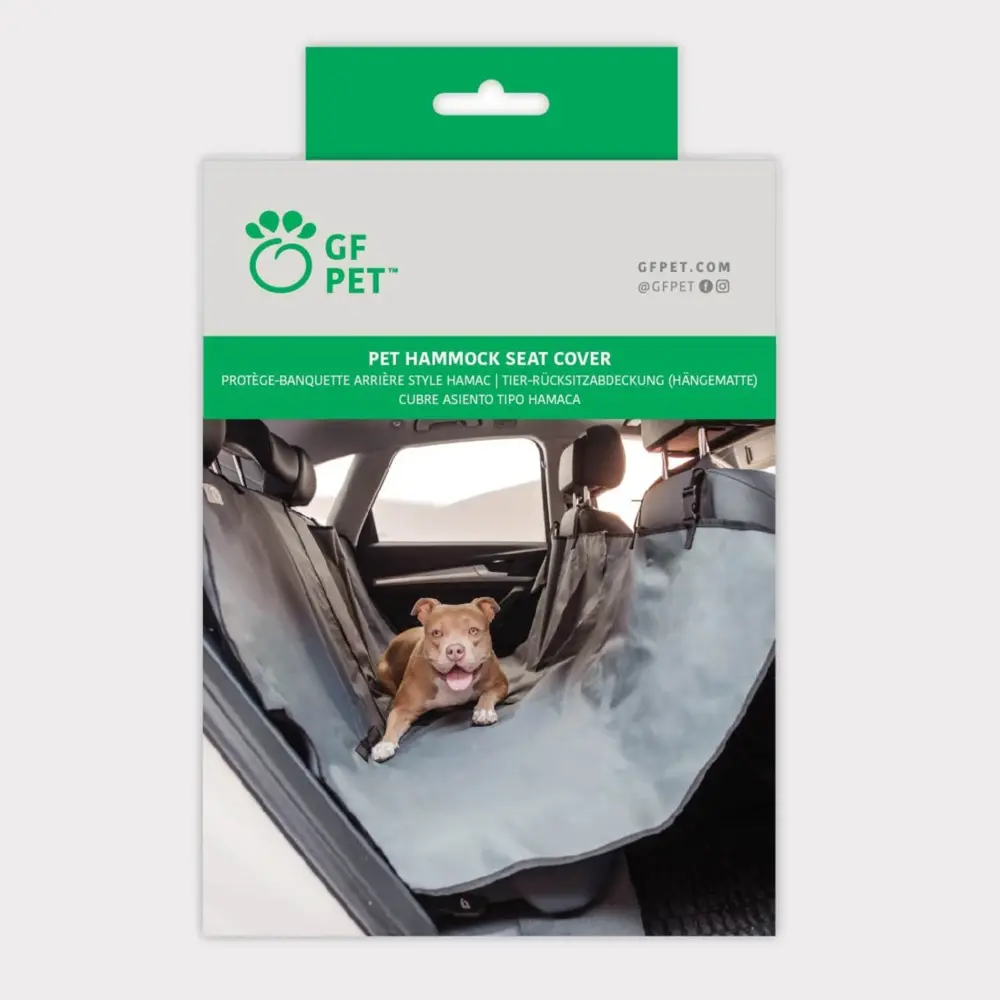
Why it fits: A waterproof cargo cover with velcro strips and headrest straps, in a one-size 50 by 59 inch fit.
-
GF PET
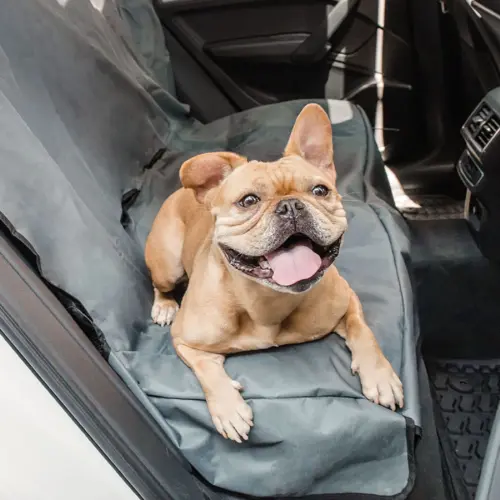
Bench Seat Cover, View product
$62.95
Why it fits: A full back-seat cover with belt slits, covering the backrests as well as the seat base.
-
GF PET
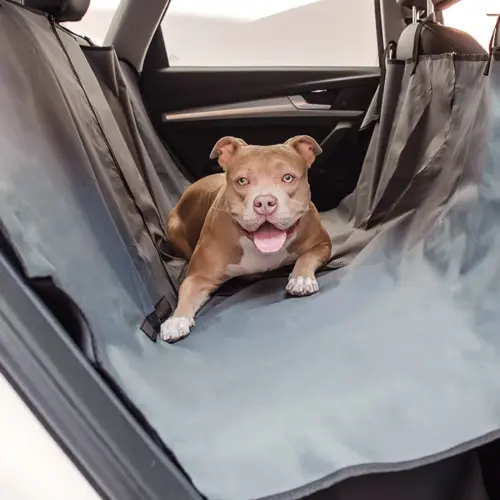
Waterproof Dog Car Hammock Seat Cover, View product
$60.95
Why it fits: A hammock-style cover that blocks the footwell, for dogs who slide forward when braking.
-
GOOPAWS
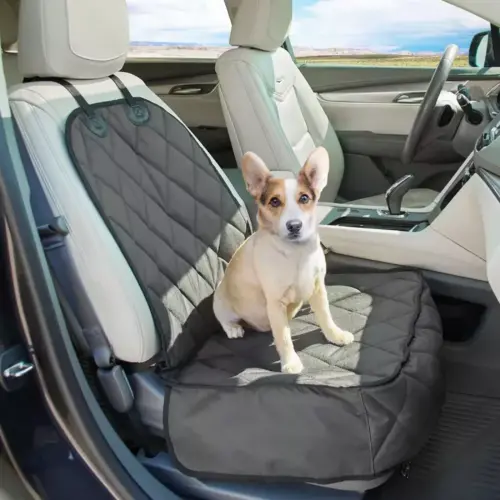
Waterproof Front Seat Cover for Dogs, Choose color
$43.95
Why it fits: A front seat cover for the single-dog car where the dog travels beside you with a restraint.
-
Adjustable Dog Car Seat Belt Tether, View product
$23.95
Why it fits: Adjustable seatbelt tethers, which are the actual safety part of this setup, used with a harness.
-
GOOPAWS
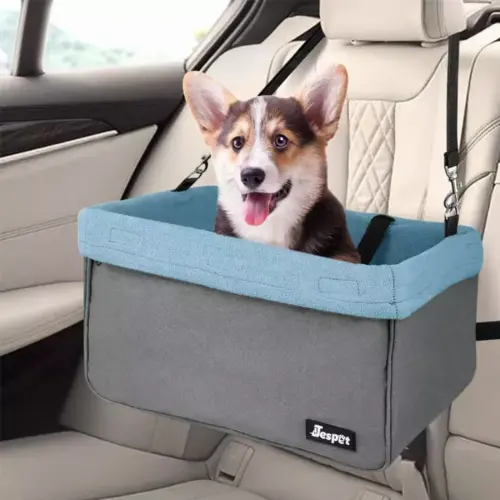
Dog Booster Car Seat with Safety Tether, Choose color
$53.95
Why it fits: A booster seat with a tether for small dogs, which raises them to window height safely.

Material and what it means in practice
Most covers are polyester with a waterproof backing, and the differences that matter are weight, backing and the non-slip layer underneath. A heavier fabric resists claws better; a proper waterproof backing stops liquid reaching the upholstery rather than slowing it down; a rubberised underside stops the whole thing sliding.
| Feature | Why it matters |
|---|---|
| Waterproof backing | Stops liquid reaching upholstery |
| Non-slip underside | Keeps the cover in position |
| Heavy face fabric | Resists claws and wear |
| Quilted construction | More comfortable, slower to dry |
| Machine washable | The reason to own one at all |
Quilting is a genuine trade-off rather than an upgrade. It is more comfortable for the dog and takes noticeably longer to dry, which matters if the cover is used after every wet walk.
Hammocks, a third option
A hammock cover slings from the front headrests to the rear ones, closing off the footwell and creating a flat surface. It stops dogs sliding into the footwell under braking and protects the backs of the front seats, at the cost of making the rear seats unusable for people.
For a household with one dog and no rear passengers, it is often the best of the three. Hammock versus seat cover covers the trade-off.
What neither one does
- Restrain the dog. That is the harness, tether or crate.
- Stop motion sickness. See getting a dog used to car rides.
- Prevent scratches to door cards or windows. Those need separate protectors.
- Stop hair entirely. It reduces it considerably and does not eliminate it.
- Make the boot a safe place in a crash. Only a travel crate properly anchored to the vehicle comes close.
Fitting around car features
Modern cars complicate both products. Seat-mounted side airbags, ISOFIX points, folding seat mechanisms and under-floor storage all interact with a cover, and a cover fitted badly over any of them is worse than no cover.
- Check the handbook for seat-mounted side airbag locations
- Do not cover any seam marked as an airbag deployment line
- Keep ISOFIX anchor points accessible if you use child seats
- Check the cover does not block a folding seat release
- Make sure boot floor storage can still be opened
- Check nothing interferes with the seatbelt buckles themselves
Protecting the rest of the interior
Covers deal with the horizontal surfaces, and dogs mark the vertical ones. Door cards get scratched by claws, windows get nose prints and slobber, and the back of the front seats takes a beating from a dog who stands up.
- Door protectors, which clip over the card and come off for washing
- A hammock cover, which protects the back of the front seats as a side effect
- A boot guard or dog guard, which keeps the dog out of the cabin entirely
- Window film or a vent guard, for dogs who try to put their head out
- A mat at the boot lip, where most of the scratching happens
- Regular vacuuming, since hair works into trim and becomes permanent
Safety note
Never let a dog travel with their head out of a moving car window. Eye injuries from debris are common and a dog can be thrown out in a collision or a sudden stop. Why dogs should not hang out of car windows covers it.
Common questions
Should my dog travel in the boot or on the back seat?
It depends on the car, the dog and the restraint available. Back seat or cargo area compares the two positions properly.
Will a cover protect leather seats?
From hair and mud, yes. From claws, only partly, since a determined dog can push through a thin cover. Protecting leather car seats from dogs covers the options.
Can I just use a blanket or an old towel?
It is better than nothing and it slides. Seat cover versus blanket or towel compares them honestly.
Do covers interfere with side airbags?
Seat-mounted side airbags are a real consideration for covers that wrap around seat backs. Check your vehicle handbook and avoid covering any marked airbag seam.
How often should I wash it?
Shake it out after muddy walks and wash every few weeks, or sooner if it smells. Letting a wet cover sit in a closed car is what causes most of the odour.
For restraints rather than covers, see crate versus seat belt. For carrying rather than driving, how to choose a dog carrier backpack.
Related guides
-
Comparison
Back Seat or Cargo Area: Where Should Your Dog Ride in an SUV?
The back seat is the simpler setup for a dog in an SUV; the cargo area needs a strapped-down crate or a fitted barrier first. Compare the two spots, plus third rows, folded seats and captain's chairs, heat at the back, getting in and out, and measuring for a hammock.
-
How-to
How to Clean a Dog Car Seat Cover Without Ruining the Coating
Hammocks, bench covers and cargo liners all fail the same way: a hot wash destroys the coating that made them waterproof. This covers the hair removal that has to come first, what the care label is really telling you, and how to restore water repellency when it stops beading.
-
Guide
How to Travel With a Dog in a Pickup Truck: In the Cab, Not the Bed
Your dog rides in the cab, never the open bed. See where a dog sits in a crew, extended or regular cab, how to tether and cover truck seats, how to get in and out of a tall cab, and why a parked truck is no place to wait.