Car Travel How-to
How to Protect Leather Car Seats From Your Dog
Short answer
Claws, grit and wet coats mark leather, so keep them off the seat: leave a waterproof cover fitted on every seat your dog uses, keep nails short and smooth, and clean paws before your dog climbs in. Clip a seat-belt tether to the harness so your dog can’t roam, and use a car-leather cleaner after muddy rides.
What marks leather: claws, grit, drool and wet coats
Hair is rarely the problem, because leather wipes clean far more easily than cloth. The damage comes at a few predictable moments: the jump in, the turns and stops, the circling before lying down and the wet ride home.
- Claws. The back feet dig in as your dog jumps up, and all four brace on turns and stops. Most car leather has a colored protective finish, so light marks often sit in that top layer; a nail that catches and drags can cut through it.
- Grit. Sand and dried mud work like fine sandpaper, and they do the most harm trapped under a cover that shifts, where every move rubs them into the seat.
- Drool and wet coats. Water and saliva dry into marks, and on perforated seats they can run through the holes into the foam.
- Digging. Many dogs scratch and turn before they settle, usually in the same spot each ride.
The spots that wear first are the front edge of the cushion and the side bolster by the door, where your dog climbs in, and the backs of the front seats, where a standing dog leans forward to see out.
What you need
- A waterproof cover for each seat your dog uses: a back-seat hammock, plus a front cover if your dog ever rides up front.
- A nail grinder, or clippers and a way to smooth the cut edges.
- A car-door kit: large pet wipes, two towels, a paw cleaner cup for muddy days and a bag for wet towels.
- A harness with a sturdy back ring and a seat-belt tether.
- For cleaning: a vacuum with a soft brush attachment, microfiber cloths and a cleaner made for automotive leather.
These picks are limited to what we stock, one for each job on that list; more are in our travel and car accessories.
-
GF PET
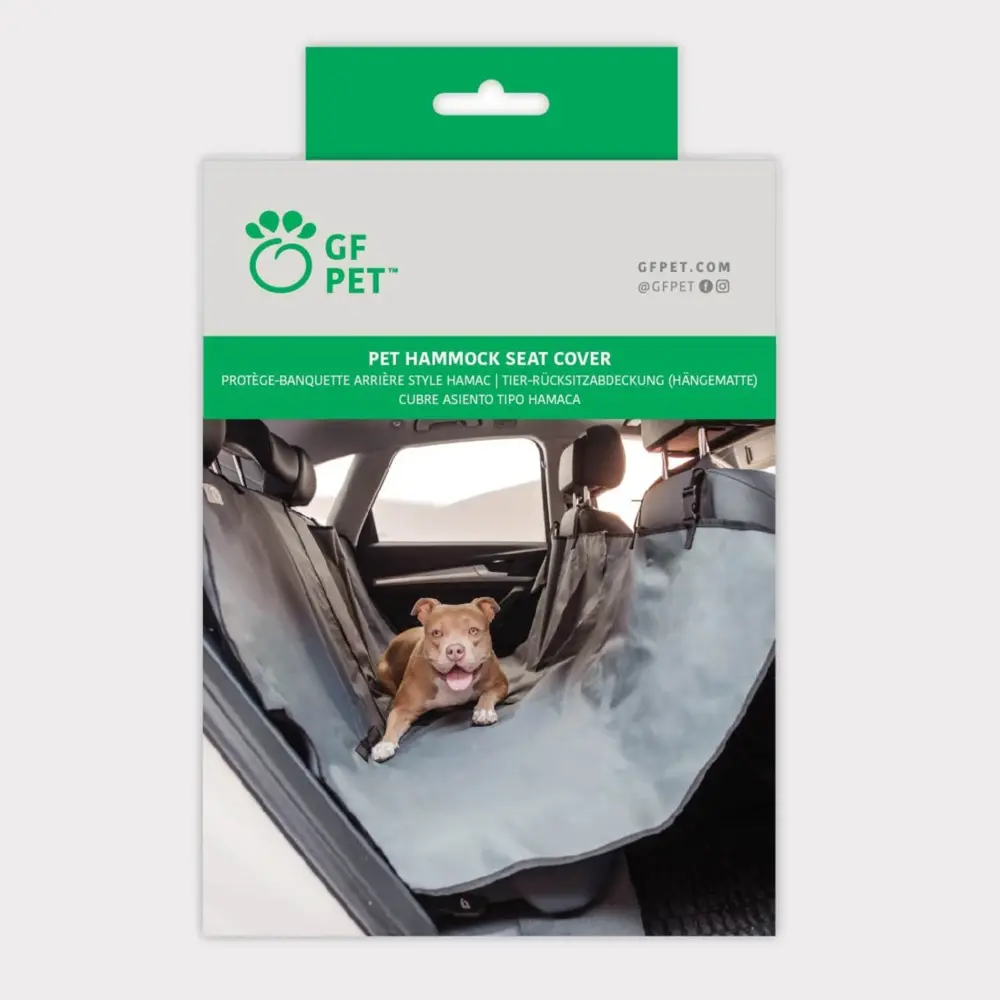
Waterproof Dog Car Hammock Seat Cover, View product
$60.95
Why it fits: Covers the rear bench, its backrests and the backs of the front seats in waterproof polyester, the leather a back-seat dog scrapes most, with headrest straps and clip-on fasteners.
-
GOOPAWS
Waterproof Front Seat Cover for Dogs, Choose color
$43.95
Why it fits: For a dog who has to ride up front: the cover we stock that is listed as scratch-resistant, with 600D oxford over a waterproof layer and a non-slip backing that keeps it from sliding.
-
Quiet Rechargeable Pet Nail Grinder, View product
$50.95
Why it fits: Takes nails down a little at a time and leaves a smooth, rounded edge instead of the sharp corner clippers can leave, the part of a nail that scores leather.
-
Mr. Peanut’s
Naturals Pet Wipes
$26.95
Why it fits: Large 6 × 10 in wipes for a quick pass over each paw and between the toes at the car door, so dust and grit stay outside. For your dog, not for the seats.
Currently out of stock
-
Bark Fifth Avenue
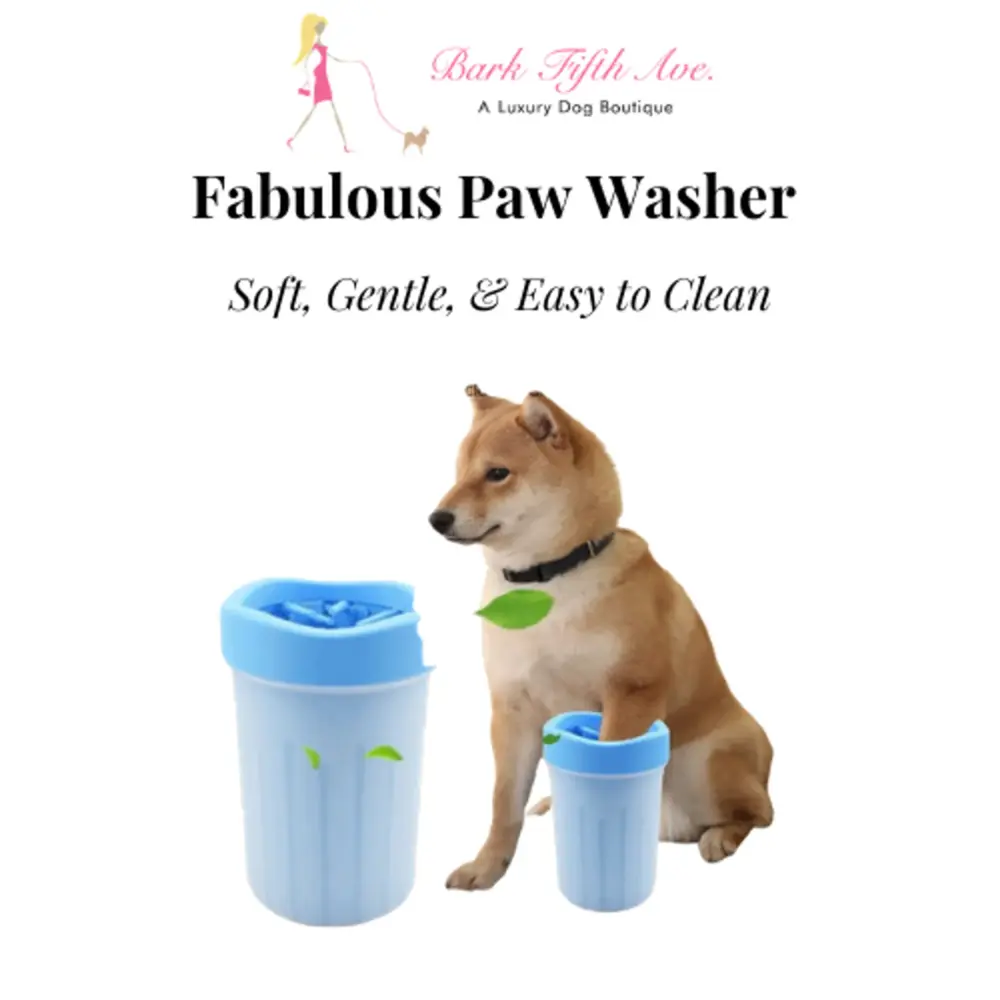
Fabulous Paws Dog Paw Cleaner Cup, Choose size & color
$31.95
Why it fits: Add a little water and twist each paw in the cup: soft silicone bristles lift mud and sand from between the pads before your dog climbs in. Pat each paw dry afterward.
-
Adjustable Dog Car Seat Belt Tether, View product
$23.95
Why it fits: Clips to the back of a harness and plugs into the seat-belt buckle, so your dog can sit or lie down without roaming across the seat. Two in the pack.
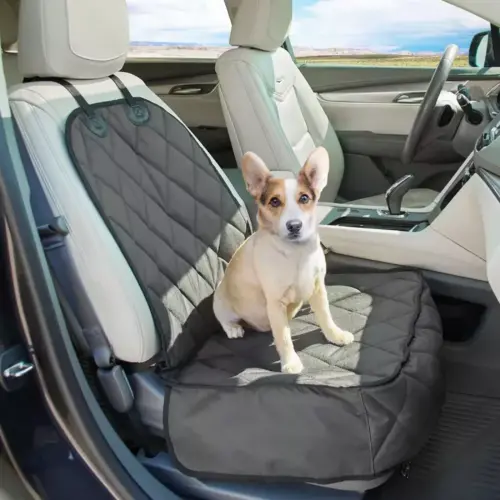




Covering leather seats, back and front
A cover is the only thing that keeps claws and grit off the leather altogether, so leave it fitted rather than saving it for muddy days. A five-minute errand is plenty of time for a dog to dig at a bare seat.
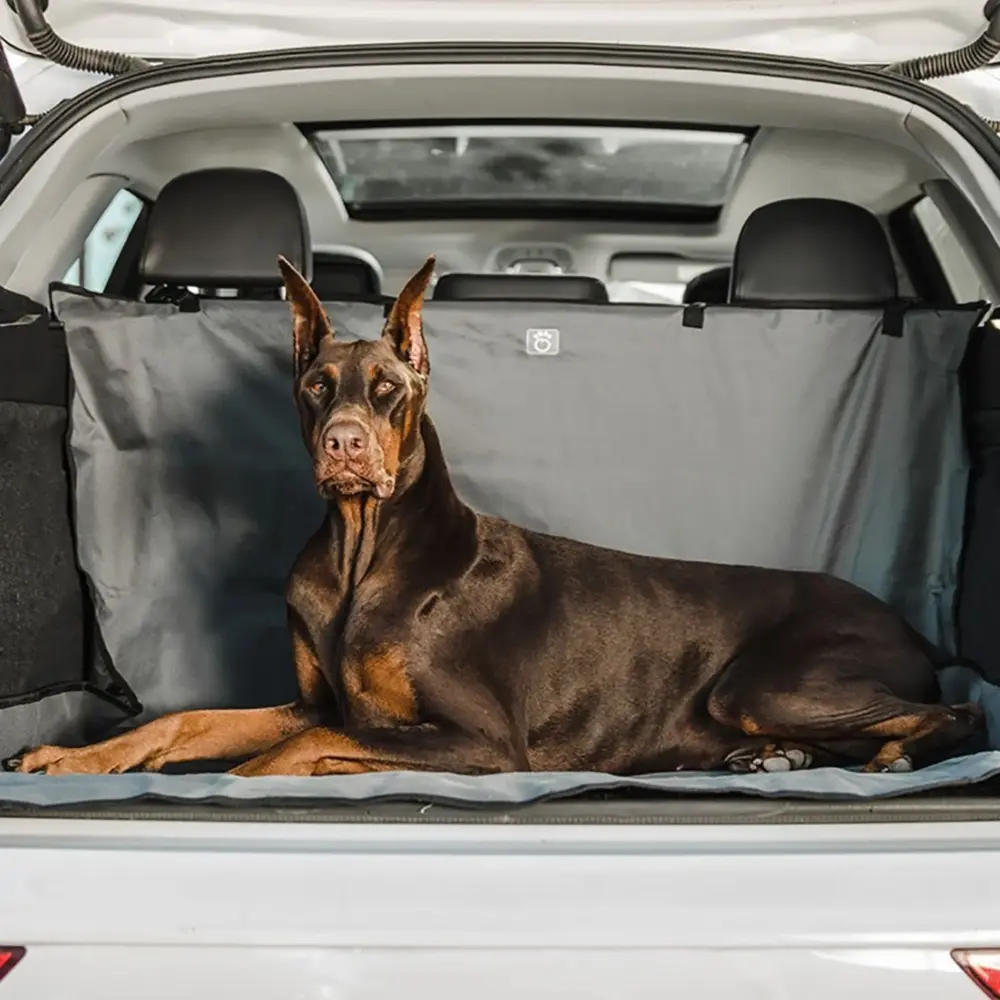
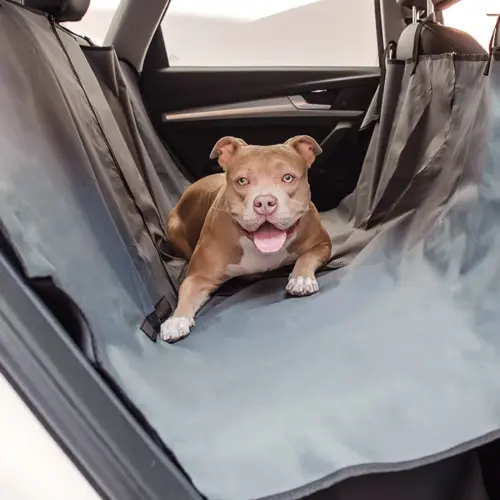
In the back, a hammock-style cover protects more leather than a bench cover. The GF PET hammock clips around the headrests and covers the rear bench, its backrests and the backs of the front seats, where a standing dog leans and scrapes. It is still fabric, though: a determined dog can push past it toward the console, and keeping your dog back is the tether’s job, not the cover’s.
Up front, the GOOPAWS front seat cover fits most front seats at 40 × 20.5 inches, and of our two covers it is the one listed as scratch-resistant and non-slip.
Safety note
Before you cover a front seat, read the airbag section of your owner’s manual: many seats have a side airbag in the seat back, and many manuals warn that a cover can interfere with it or with the passenger occupant sensor. Whenever there is a back seat, it is the better place for your dog; see whether a dog can ride in the front seat.
Using an old towel or blanket for now? It slides even more easily on leather than on cloth, and water goes straight through. Our comparison of a dog seat cover vs a blanket or towel covers when a towel is still enough, and dog hammock vs seat cover helps you choose a cover style and measure your back seat.
Keeping a cover from shifting on smooth leather
Cloth upholstery grips fabric; leather lets it slide. A cover that creeps also drags whatever grit is under it across the seat, so keeping it still matters more on leather than anywhere else.
- Fit it on a clean, dry seat. Vacuum the leather, the crease and any perforations, then wipe off the dust, so there is no grit to grind in and no film of hair for the cover to slide on. A non-slip backing, like the GOOPAWS front cover’s, needs that clean surface to grip.
- Make the crease tuck deep. Push a fold of the cover well into the gap between backrest and cushion, working between the buckles. On a slick seat, this tuck does much of the holding; the GF PET listing doesn’t mention seat anchors, so the tuck and the straps are what keep it still.
- Tension the straps evenly, around the headrest posts rather than over the headrests, so the bottom rests flat on the cushion. Our guide to installing a dog car hammock has the full order and the sag checks.
- Check the tuck after each ride for the first week. Leather lets it work loose sooner than cloth does, so push it back in and take up any slack.
Skip improvised grip under the cover, such as shelf liner or a rubber mat: neither is made for car upholstery, and a hot, closed car is a hard test for anything pressed against a leather finish for weeks. Instead, lift the cover every couple of weeks and vacuum underneath, because hair and grit work their way under even a well-fitted cover.
Shorter nails, fewer scratches
Long nails meet the seat first when a dog stands or braces, and a sharp edge catches where a blunt one slides. VCA Animal Hospitals’ guide to trimming a dog’s nails gives two signs that nails are due: they touch the ground when your dog stands, or you hear them clicking on hard floors. It suggests most dogs need a trim about once a month.
The edge matters as much as the length. Clippers cut straight across and can leave a sharp corner; a grinder takes the nail down gradually and leaves it smooth and rounded. If you clip, smooth each nail with a grinder or a file before the next car ride. Check the dewclaws on the inner side of the legs too: they don’t touch the ground, so they don’t wear down, and they can hook leather when a dog paws at the seat.
For technique, including dark nails and a dog who is wary of the noise, see how to use a dog nail grinder.
Paws and coat at the car door
Keep the door kit in the car and take a minute at the open door, before grit and mud reach the seat:
- Let your dog shake off first, a few steps from the car, so the spray lands outside.
- Knock off loose dirt and check between the toes, where sand and small stones lodge.
- Clean each paw to suit the mess: a wipe for dust, the paw cleaner cup with a little water for mud, then dry between the pads.
- Towel a wet coat, starting with the legs, belly and chest, so your dog isn’t pressing water into the cover and onto the leather.
- After the beach, get the sand out of the coat too, or it keeps falling onto the seat all the way home.
Pet wipes are made for your dog, not the upholstery, so keep them off the leather. Our routine for cleaning dog paws after a walk covers mud, road salt and drying between the pads in more detail.
A tether so your dog isn’t scrambling on turns
A loose dog tends to stand up at every turn and stop and brace with all four feet, claws in. A dog lying down has far less reason to dig in, and a tether that stops the roaming makes lying down the easy choice.
- Clip it to the back ring of a well-fitted harness, never to a collar.
- Plug the tab into the buckle on your dog’s side, brought up through the hammock’s seat-belt opening. It fits most vehicle seat belts, not all, so test it in your car.
- Set the length so your dog can sit, stand and lie down but can’t reach the front seats, step off the edge of the seat or reach a window.
- Drive smoothly. Gentle starts, stops and turns give your dog fewer reasons to brace.
For a small dog, a booster seat puts the claws on a padded cushion instead of the seat. The GOOPAWS Dog Booster Car Seat holds dogs up to 24 lb, straps to the seat back and headrest, and has a safety tether for a harness and a removable, washable cushion.
Safety note
A cover protects the leather and a tether or booster keeps your dog in one place, but none of them is sold as crash protection or replaces careful driving. If your dog pants, paces or digs for the whole ride, the scratching may be stress rather than footing, so talk to your veterinarian.
Cleaning and conditioning leather after dog rides
Do this after any wet or muddy ride and whenever you lift the cover. Check your owner’s manual first: car makers often name the products to use, and to avoid, on their leather.
- Take the cover out. Fold it in on itself so the hair and grit stay inside, and shake it out away from the car.
- Vacuum before you wipe. Run a soft brush attachment along the seams, the crease and any perforations, so a cloth doesn’t drag grit across the leather.
- Wipe with a damp microfiber cloth. Damp, not wet; fresh drool and paw prints usually come off with water alone.
- Use a leather cleaner for what’s left. Pick one made for automotive leather, test it on a hidden spot, and spray it onto the cloth or a soft brush rather than the seat. Work one small section at a time.
- Dry the seat with a clean cloth, and leave the doors open until it is dry right through.
- Condition only if your car’s maker recommends it. Apply a thin coat and buff off the excess; a heavy layer stays tacky and holds hair and dust.
- Refit a clean cover on dry leather. Wash the cover as its care label directs; the GF PET hammock goes in cold on a delicate cycle and is laid flat to dry.
Keep household all-purpose cleaners, bleach, ammonia, solvents and melamine cleaning sponges off car leather. They can strip or dull the finish, which shows more than the dog marks did.
Perforated, ventilated and light-colored leather
Perforated seats
The holes give a claw an edge to catch, and a snag can tear the leather between them, which is hard to repair invisibly. They also let water, drool and fine grit through to the foam, so keep the cover on for every ride and never spray or pour anything straight onto the seat.
Heated and ventilated seats
Ventilated seats have fans beneath the perforations, which makes keeping liquid out even more important. A waterproof cover blocks that airflow anyway, and a heated seat warms up under a tethered dog who can’t move away from it. Leave both off on your dog’s seat, and check what your owner’s manual says about covers on heated or ventilated seats.
Light-colored and softer leathers
Cream, tan and light gray leather show every grit line and drool mark, and can pick up dye from dark fabric, the way they do from new jeans. Wipe them down more often and never leave a damp cover sitting on them. Some premium interiors use softer leather with a thinner protective finish, which marks more easily; your owner’s manual or dealer can tell you which you have.
Troubleshooting new marks and scratches
- A fresh mark on the seat. Clean it first. What looks like a scratch is sometimes grit and dried drool sitting in a light scuff.
- Scratches through the color, gouges or a torn perforation. Take these to a leather repair specialist or an auto upholsterer; matching car leather is skilled work, and a touch-up that doesn’t match draws the eye.
- Marks keep appearing on the door-side bolster. That is where your dog climbs in. Load from the same door each time, shift the cover toward that side, and lift a small dog in rather than letting them leap.
- Your dog digs before lying down. Lay a folded towel on top of the cover for them to arrange, so the claws work the towel rather than the cover over the leather, and keep those nails smooth.
- Marks under the cover itself. Usually grit or damp trapped underneath, or dye from a dark cover on pale leather. Vacuum under it regularly, never refit it wet, and check a light seat for color transfer after the first warm days.
- Scratches on the backs of the front seats. Your dog is standing to look forward. Check that the hammock’s front wall covers the seat backs, and shorten the tether so your dog can’t reach them.
Related guides
-
Guide
Dog Hammock vs Seat Cover: How to Choose for Your Car and Your Dog
Hammock or front seat cover? Compare what each one covers, measure your back seat against a 58 × 57 in hammock, and see why either one still needs a harness and tether.
-
Guide
How to Clean Dog Paws After a Walk: Dust, Mud and Road Salt
A quick door routine to clean dog paws after a walk, whether your dog brings home dust, mud or winter road salt, plus how to keep the car clean on the drive home.
-
Comparison
Cargo Liner vs Back Seat Cover: Where Should Your Dog Ride?
Where your dog rides decides which cover you need, and the two are not interchangeable. This comparison covers coverage, fitting, belt slits and cleaning, and is clear about what a cover does not do.