Car Travel Guide
Can a Dog Ride in the Front Seat? What to Do Without a Back Seat
Short answer
Only when there’s no back seat. Front airbags deploy with great force and are designed for adults, not dogs, so the back seat is the safer place whenever your vehicle has one. Without one, read the passenger airbag section of your owner’s manual first, slide the seat all the way back and clip a short tether to your dog’s harness.
Why the back seat is the default
The AKC’s advice on dog seat belts says it’s best for a dog to ride in the back seat rather than the front, so the airbags can’t harm them. The ASPCA’s travel safety tips also put pets in the back, in a harness attached to a secured seat belt, and Humane World for Animals warns in its car travel guidance that an airbag deploying while a pet is in the passenger seat might injure them, even inside a crate. Three things make the front the harder seat for a dog:
- The airbag. The passenger airbag is housed in the dashboard directly ahead of the seat and opens in an instant toward whoever sits there. A dog who stands with front paws on the dash, or leans forward to see out, puts their head and chest right where it inflates.
- You. Up front, your dog can reach your arm, your face and your lap. A nudge for attention or a scramble toward you at a red light takes your eyes off the road, which is why the AKC counts a dog jumping up front among the distractions worth eliminating.
- The controls. The gear selector, the window switches and the pedals on your side are a step or two from the passenger seat. From an outer rear seat on a short tether, none of them are within reach.
A calm dog who has always ridden up front doesn’t change any of this: the airbag is in the same place either way. If your vehicle has a back seat, even a small one, use it, set up the way our guide to choosing and setting up a dog seat belt or booster seat explains. The rest of this page is for vehicles where the front passenger seat really is the only seat.
What to check in your owner’s manual
Vehicles handle the passenger airbag differently, so the manual, not a general rule, tells you what applies to yours. Look in the index under airbags, the supplemental restraint system (SRS) or occupant classification, and note four things:
- An airbag switch. Some vehicles with no usable back seat, including some regular-cab pickups and two-seaters, have a switch, usually worked with the ignition key, that turns the passenger airbag off. The manual says whether yours has one and what the maker intends it for, usually a child seat. Follow that, and if the switch is ever turned off, turn it back on before an adult rides there.
- An occupant sensor and status light. Many newer vehicles have a sensor in the passenger seat that switches the front airbag on or off depending on who is sitting there, with a light that shows which. It is designed around people and child seats, not dogs, so don’t assume it will switch the airbag off for your dog; the manual explains what the light means.
- Side airbags in the seat. Many front seats have a side airbag in the outer edge of the seat back, marked with a label on the seat. Keep cover straps and tether webbing clear of it.
- What it says about seat covers. Many manuals warn that a cover on the passenger seat can interfere with the occupant sensor or a seat-mounted side airbag. If yours says not to cover that seat, leave it bare.
Tip
Lost the manual? Many automakers post owner’s manuals on their websites by model and year, and a dealer’s service department can answer questions about your vehicle’s airbags.
When your vehicle has no back seat
Most front-seat questions come from three kinds of vehicle, and each changes the setup a little.
Regular-cab pickups
The passenger seat is your dog’s only seat, and the open bed is never an option: Humane World says never to transport a pet in the back of an open pickup truck. On a bench seat, use the outer passenger position and its buckle rather than the middle seat beside you. Our guide to traveling with a dog in a pickup truck covers extended cabs, the rear sliding window and getting in and out of a high cab.
Two-seat cars
Sports cars and two-seat city cars leave only the passenger seat too. Before the first trip, settle your dog on that seat with the car parked. If they can’t lie down on the cushion without spilling into the footwell or onto the console, the car is too small for them, and another vehicle is the better plan for that trip. In a convertible, keep the top up while your dog rides, so there’s nothing open to jump out over.
Coupes and small back seats
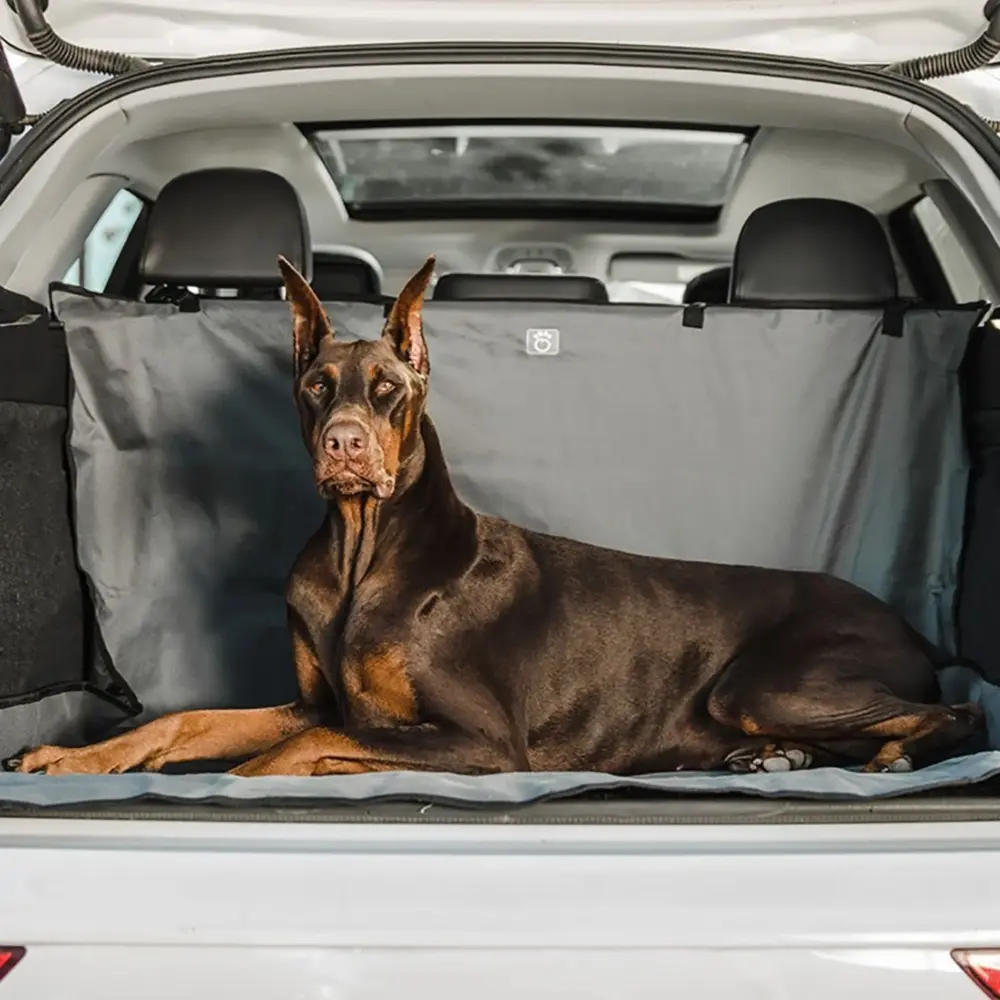
A cramped back seat still beats the front for most dogs, as long as it has a cushion your dog can lie on, a buckle for the tether and room to turn around. Fold-down jump seats and parcel shelves don’t count; if that’s all the second row offers, set up the passenger seat instead. In a hatchback or wagon, a crate secured in the cargo area also keeps your dog out of the front, and Humane World names an anchored crate as the safest way for a dog to travel (we don’t sell crates).
How to set up the front seat for a dog
If the passenger seat is the only seat, set it up once in the driveway, then run through it before every drive. You’ll need a well-fitted harness, a seat belt tether and, if your manual allows one, a front seat cover.
- Read the airbag section first. Follow anything your manual says about the passenger seat, its airbag switch or status light, and seat covers.
- Slide the seat all the way back. That leaves as much space as the seat allows between your dog and the dashboard, where the passenger airbag is housed. Leave it there whenever your dog rides.
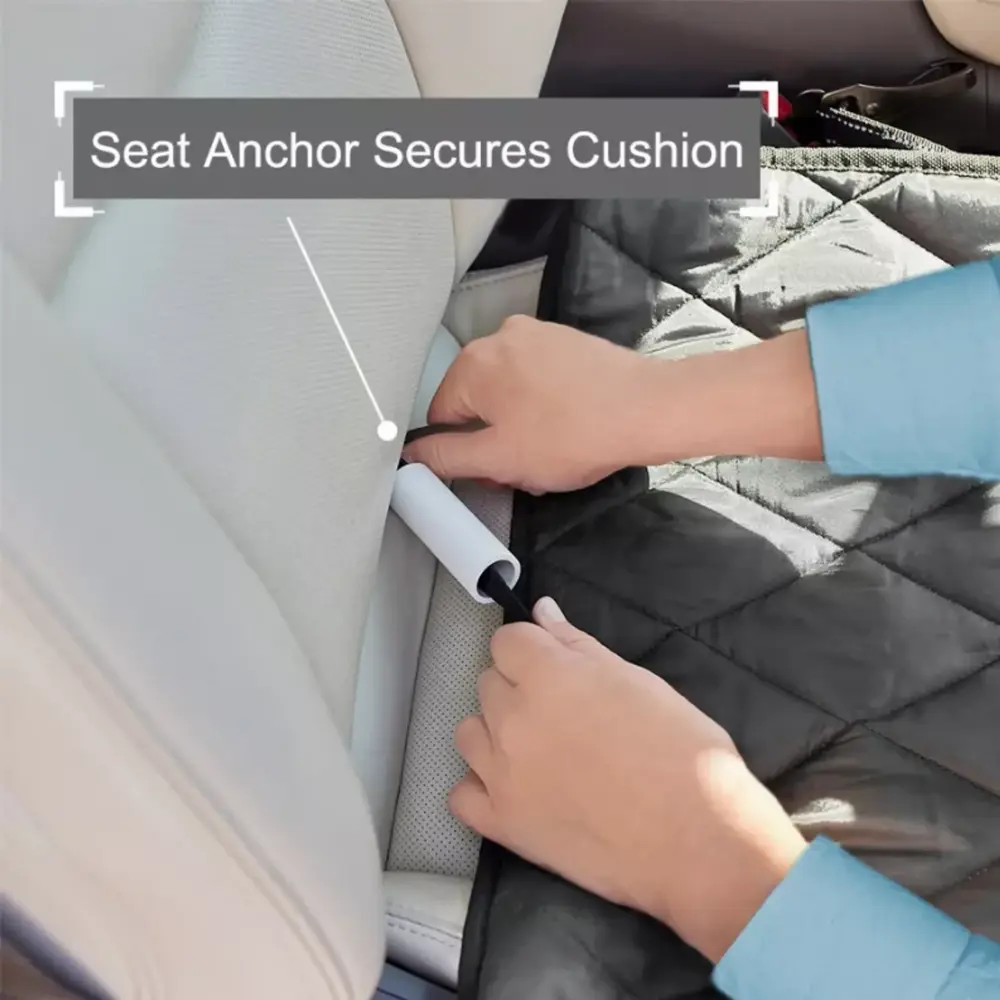
- Fit the cover, if your manual allows one. Tighten the straps, tuck the cover into the crease and keep it clear of any side-airbag label and the seat-belt buckle.
- Clip to the harness. Attach the tether to the ring on the back of a well-fitted harness, never to a collar, so a sudden stop pulls across the chest rather than the neck.
- Buckle into the passenger seat. Push the tab into that seat’s own buckle until it clicks, tug to check it holds, then press the release to be sure it lets go normally; tabs fit most seat belts, not all.
- Set the reach short. Your dog should be able to sit, turn and lie down on the cushion, but not reach the dashboard, you, the gear selector or the footwell.
- Lock the windows. Use the driver’s window lock and keep any opening too narrow for a head; our guide on letting a dog ride with their head out the window explains why.
- Test it parked, then on a short drive. Load, buckle, clip and check the reach with the engine off, then drive around the block before a longer trip.
Safety note
A tether keeps your dog on the seat and away from you and the dashboard; a cover keeps hair, mud and claws off the upholstery. Neither one is crash protection, and neither one changes what the airbag does. Humane World says restraints are useful for keeping a dog from roaming and distracting the driver but haven’t been reliably shown to protect dogs in a crash, so that is the job to buy one for.
Covering the front seat
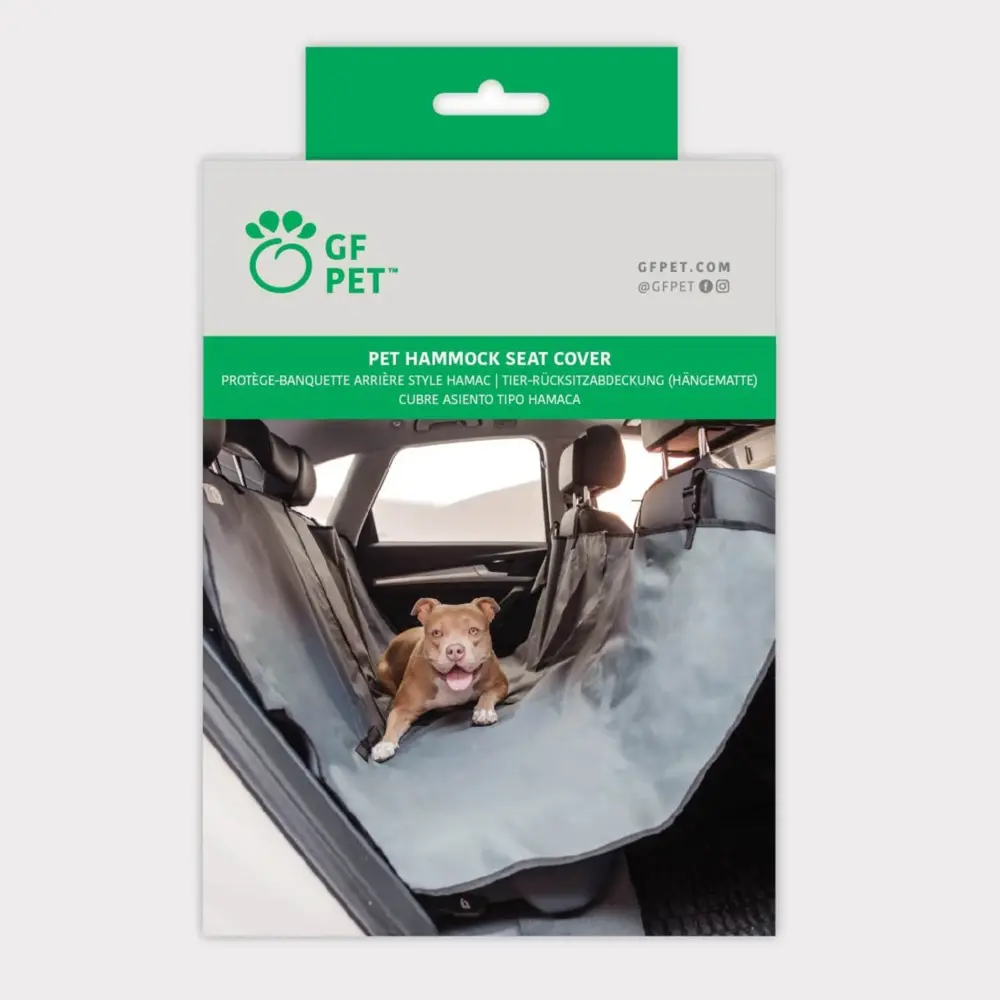
Up front, a towel tends to slide forward off a bucket seat and bunch at the sides, and staying in place is the main thing a fitted cover adds; our comparison of a dog seat cover and a blanket or towel goes through when each one is enough.
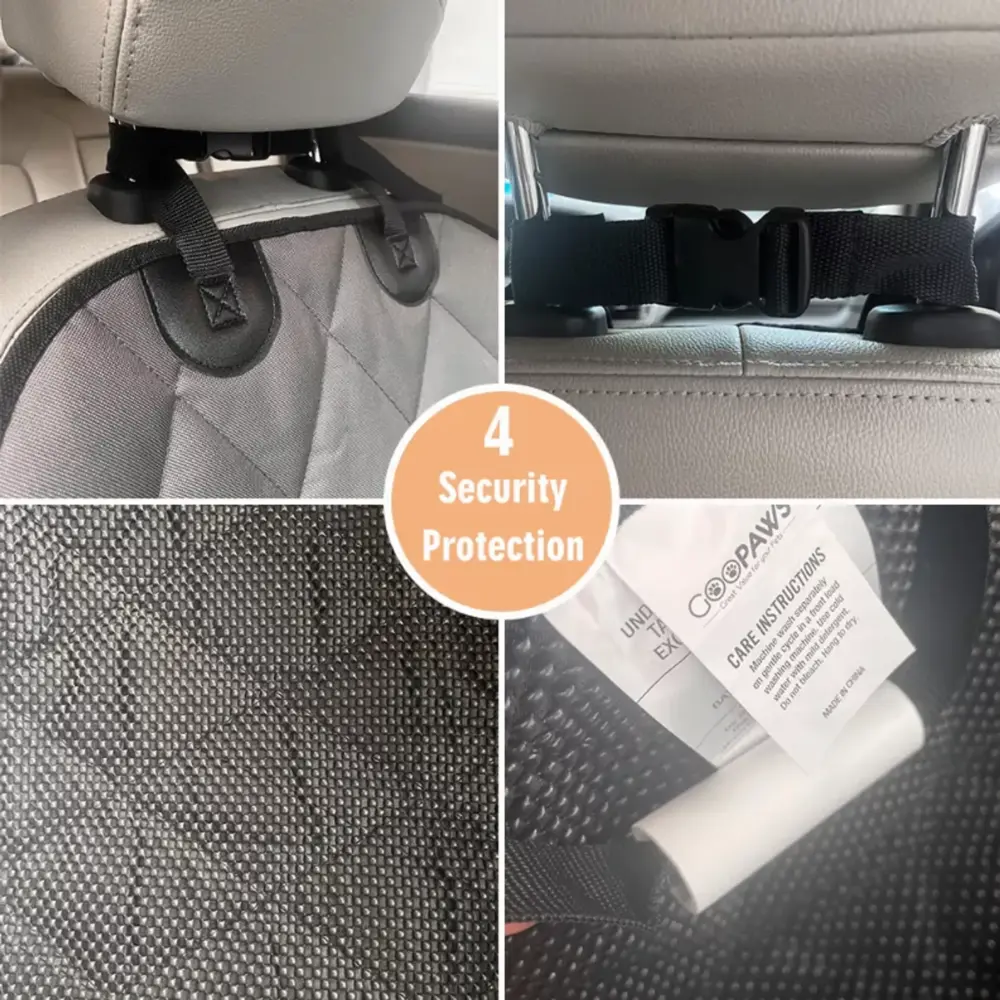
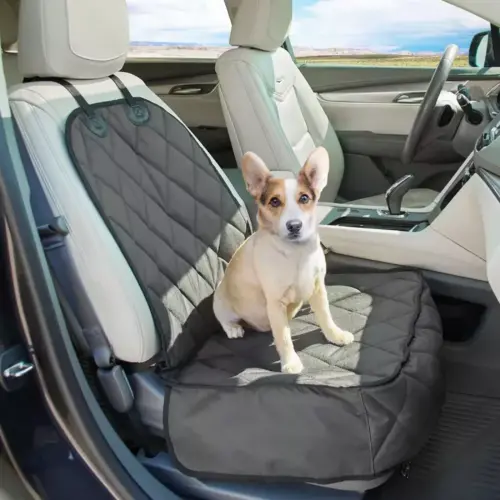
The GOOPAWS Waterproof Front Seat Cover measures 40 × 20.5 inches (102 × 52 cm), with a waterproof layer under scratch-resistant 600D oxford fabric, a non-slip backing, adjustable straps and a machine-washable build. Measure your seat from the top of the backrest down to the crease and on to the front of the cushion, then across, and compare both numbers with the cover’s.
Our picks are limited to what Nilosi stocks. For a dog who rides in the passenger seat, these two cover the setup:
-
Adjustable Dog Car Seat Belt Tether, View product
$23.95
Why it fits: Adjustable length you can set short for the passenger seat, so your dog can lie down but not reach the dash. Clips to a harness only.
-
GOOPAWS
Waterproof Front Seat Cover for Dogs, Choose color
$43.95
Why it fits: Made for the front passenger seat at 40 × 20.5 in, with a non-slip backing that holds it in place. Check your manual on covers first.

If your dog won’t settle up front
- Standing with paws on the dash: the tether is too long. Shorten it until your dog can only sit or lie on the cushion.
- Leaning on you or the console: check that the tether is in the passenger seat’s own buckle, not a middle one, then shorten it.
- Pawing at the window: lock the windows from the driver’s door and take up the slack that lets your dog reach the door panel.
- Restless, panting or drooling: build up with short, easy drives, as our guide to getting a dog used to car rides explains, and talk to your veterinarian if signs of stress or car sickness keep coming back.
Don’t reach across or hand out treats while you drive. If your dog needs you, pull over somewhere safe first.
Small dogs and booster seats up front
A booster seat lifts a small dog to window height and gives them a cushioned spot of their own, with a built-in tether. It doesn’t change the airbag question: your dog still sits facing the dashboard, just higher up. That’s why a booster belongs in the back whenever there is one.
If the passenger seat is the only seat, the setup above still applies, with a few extra checks for the GOOPAWS Dog Booster Car Seat:
- The weight limit. It holds pets up to 24 lb (11 kg). Over that, skip the booster and tether your dog on the seat itself.
- The headrest. Its two straps fasten around the seat back and the headrest, so the seat needs one. Keep the straps clear of any side-airbag label.
- The manual. Check what it says about placing objects or child seats on the passenger seat, and follow it.
- The tether. Clip the booster’s built-in tether to a harness, never a collar, and set it short enough that your dog can’t climb over the rim toward the dash.
For a tiny or anxious dog, a carrier is the other option, and the same rule holds: Humane World’s airbag warning covers a pet in a crate on the passenger seat too. Our comparison of a dog booster seat and a carrier covers which suits which dog and where each one rides.
Laps, footwells and other places a dog shouldn’t ride
Wherever your dog rides, they should be on a seat and held by a tether, or inside a carrier or crate that can’t slide. These spots fail that test:
- The driver’s lap. Your dog sits between you and the steering wheel, where the driver’s airbag is, blocks your arms and your view, and can put a paw on the wheel or slip down toward the pedals.
- A passenger’s lap. Up front, it puts your dog directly in front of the passenger airbag, and in any seat, no one can reliably hold onto a dog through a hard stop or a swerve.
- The passenger footwell. Nothing holds your dog there, the dashboard is inches away (some vehicles have a knee airbag low on it), and a loose dog can wander across to the pedals.
- The console or armrest. It puts your dog beside the gear selector and your elbow, with nothing between them and the windshield.
- The dashboard or rear shelf. Some small dogs climb up for a view; a tether set to the seat’s reach keeps them off.
- The open bed of a pickup. Never, for the reasons covered in our pickup guide.
We don’t cover traffic laws here; check the rules where you drive. For the rest of the travel kit, browse our travel and car accessories.
Related guides
-
Guide
How to Travel With a Dog in a Pickup Truck: In the Cab, Not the Bed
Your dog rides in the cab, never the open bed. See where a dog sits in a crew, extended or regular cab, how to tether and cover truck seats, how to get in and out of a tall cab, and why a parked truck is no place to wait.
-
Comparison
Cargo Liner vs Back Seat Cover: Where Should Your Dog Ride?
Where your dog rides decides which cover you need, and the two are not interchangeable. This comparison covers coverage, fitting, belt slits and cleaning, and is clear about what a cover does not do.
-
How-to
How to Protect Leather Car Seats From Your Dog
Claws, grit and wet coats are what mark leather seats. Fit a waterproof cover that stays put, keep nails short and smooth, clean paws at the car door, tether your dog so they lie down on turns, and wipe the leather the right way after muddy rides.