Car Travel Guide
Should Your Dog Ride With Their Head Out the Car Window?
Short answer
Yes, it’s risky, and the AKC and ASPCA advise against it: flying debris can hit your dog’s eyes, and a dog leaning out can fall or jump. For the smells, crack a window an inch or two, tether your dog so their head stays inside, use the window lock and save the sniffing for stops.
Why dogs love the open window
It’s mostly the smells. Dogs take in much of their world through their noses, and a moving car pulls a constant, changing stream of scent past the window: cut grass, a barbecue, a farm, the dog that walked that sidewalk an hour ago. The breeze and the moving view add to it, and a dog who has had their head out once often asks for it on every ride after.
Not every dog pushing toward the glass is having fun, though. Panting on a cool day, drooling, yawning or lip licking can mean a dog who is too warm or feeling queasy and looking for air. Check how warm it is in the back first. If those signs show up on most rides, our guide to getting a dog used to car rides covers motion sickness and when to call your veterinarian.
What can go wrong with the window down
The AKC’s car safety advice is blunt: never let your dog ride with their head out the window. It names two risks, a dog jumping out of the car and eyes injured by flying debris. The ASPCA’s travel safety tips say the same, and put your dog in the back seat, in a harness attached to a secured seat belt.
Eyes, ears and nose in the airstream
At road speed, anything in the air hits hard: grit and gravel thrown up by the car ahead, insects, dust and seeds, with your dog’s eyes, ears and nose all out in it. Humane World for Animals, in its guide to traveling safely with a pet, adds that cold air forced into the lungs can make a dog sick.
Eyes are the injury to watch for. Trauma is the most common cause of corneal ulcers in dogs, according to VCA Animal Hospitals, and an ulcer is very painful. After a ride with the window down, call your veterinarian if your dog squints, keeps an eye shut, has discharge in the corner of an eye or rubs their face with a paw or along the seat, and don’t try to pick anything out of the eye yourself. Head shaking or scratching at an ear after the ride is worth a call too. Dog goggles cover the eyes and nothing else: they don’t stop a fall, a jump or a closing window.
Falling or jumping out
A dog with their head and shoulders out of the window has moved their weight outside the car. A sharp turn, a hard stop or a squirrel on the curb can be enough to tip them out or send them after it. In the same AKC article, the trainer describes watching a Labrador jump through the back window of a moving car and get partially dragged by his leash.
That is why a tether doesn’t solve this by itself. A strap long enough for your dog to get out of the window is long enough to leave them hanging outside the car by their harness, so the length has to stop them reaching the gap at all; the check is below. Slow speeds don’t make it safe either, since parking lots and the last block before the dog park are full of things an excited dog wants to reach. Our guide to stopping a dog jumping out of the car covers the open door, the other way out.
Power windows and paws
Rear window switches usually sit on the armrest, right where a dog stands to look out, and a paw on the switch can lower a window you meant to keep cracked. Closing is the other risk: raise a window from the driver’s seat while a head or paw is in the gap and it can be trapped, and not every power window stops when something is in the way. Your owner’s manual says which of yours do, and a glance back before you close one costs nothing.
The fix is the window lock, usually a button on the driver’s door that disables the rear switches. Turn it on and leave it on whenever your dog rides. In many cars the child-safety lock on the rear doors is a separate setting: it stops the doors opening from inside but may leave the window switches working, so check both.
How far to open the window, and when to keep it closed
The AKC’s advice is windows completely up or only cracked open. In practice, that means a gap of an inch or two on any window your dog could reach, and never wide enough for their muzzle to fit through, which for a small dog may be less. Test it with the car parked: if your dog can push their nose into the gap, close it a little more. The gap is your backup; the tether, set up in the next section, is what keeps the head inside.
Air and smells without the reach
- Open the windows your dog can’t reach. With your dog tethered in the back, the front windows bring in plenty of air, and so does a sunroof over the front seats.
- Switch the vents to outside air. On recirculate, the car keeps reusing the air inside; the outside-air setting draws fresh air, and some of its smells, in through the vents.
- Crack the far window, not the near one. If you open a rear window, make it the one across the seat from your dog, and check that the tether keeps them on their own side.
Keep the windows up when
- you’re on the highway or any fast road, where whatever is in the air hits hardest;
- you’re on gravel or dirt roads, in construction zones or behind trucks, where stones and dust are flying;
- you pull into a drive-through, a toll booth or a gas station, where an excited dog may lunge at the person at the window (the AKC says to keep the rear windows completely closed at the drive-through);
- you’re close to a favorite destination and your dog knows it;
- your small dog rides in a booster at window height;
- your dog has ever tried to climb or jump out, or barks and lunges at things outside (see how to stop a dog barking in the car);
- it’s cold or wet outside.
Setting tether length so your dog can’t reach the gap
The tether is what actually keeps your dog’s head inside, with the cracked window as backup. Fitting the harness and choosing the seat are covered in our comparison of dog seat belts and booster seats; this is the window check to add on top. Run it with the window open the way you plan to drive, and again whenever you switch cars or seats:
- Start from the usual setup. Clip the tether to the back of a harness, never a collar, so a lurch toward the window pulls across the chest, not the neck, and buckle it into a rear outer seat. That seat’s buckle usually sits on its inner side, already a little away from the door.
- Open the window to your driving gap, with the car parked somewhere safe.
- Stand outside that window and call your dog. If their nose reaches the gap, or their front paws reach the armrest and its switches, shorten the strap and call again.
- Check the far side. Walk around and call from the other window. A dog who can cross the seat can reach that window too.
- Make sure your dog can still lie down. They should be able to sit, stand, turn and lie down. If the only length that keeps them off the glass is too short for that, keep that window closed and open the front ones instead.
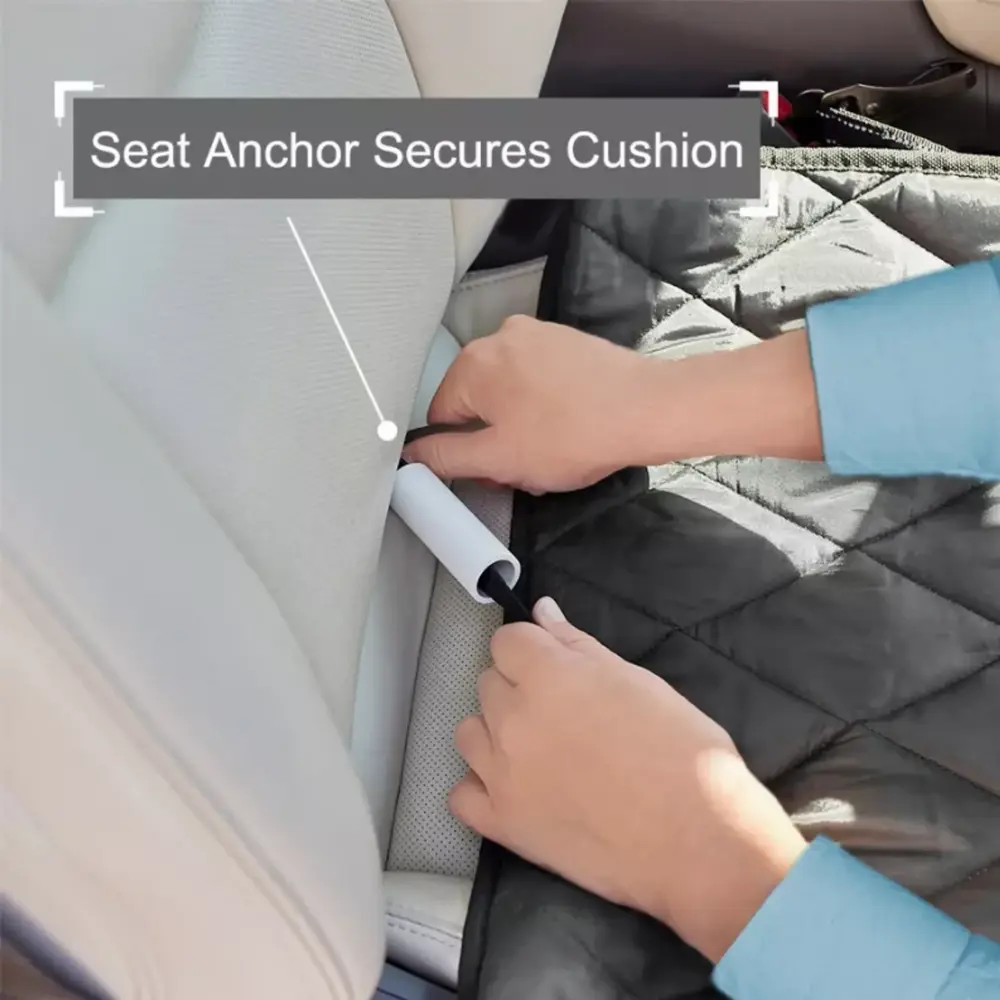
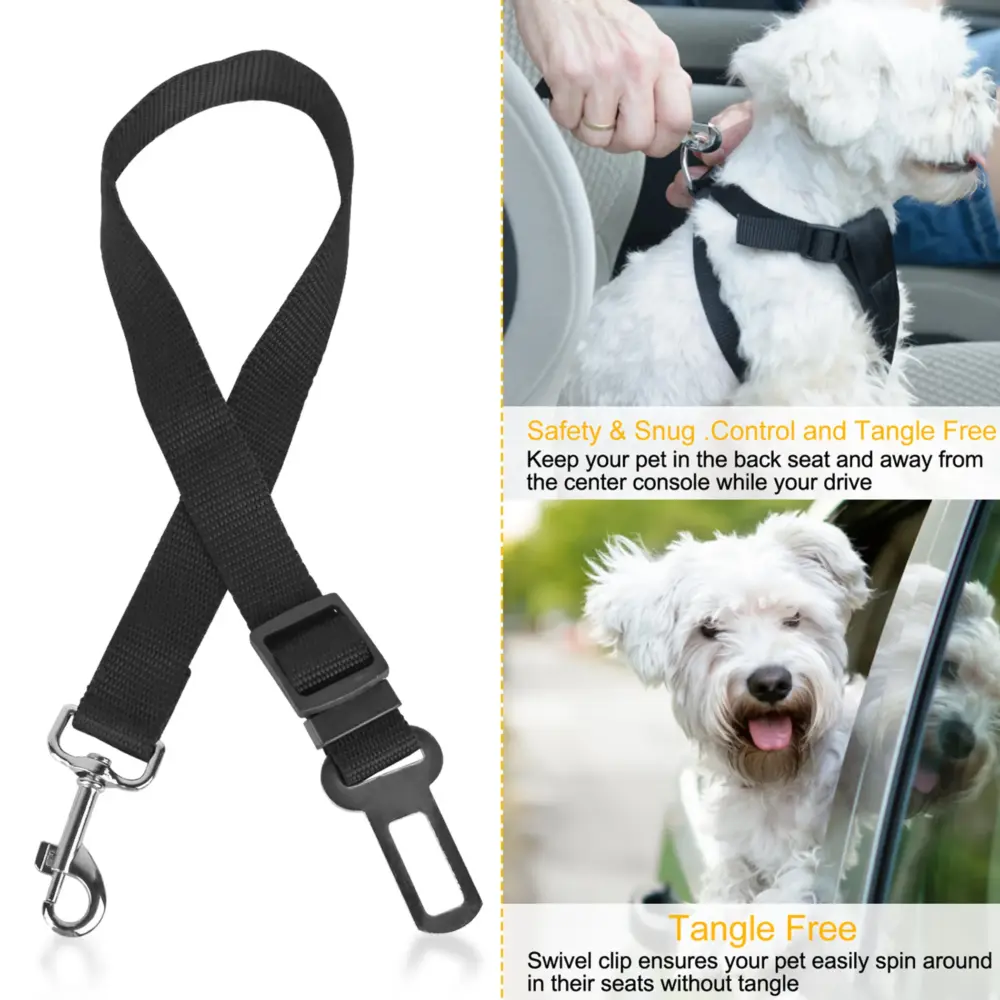
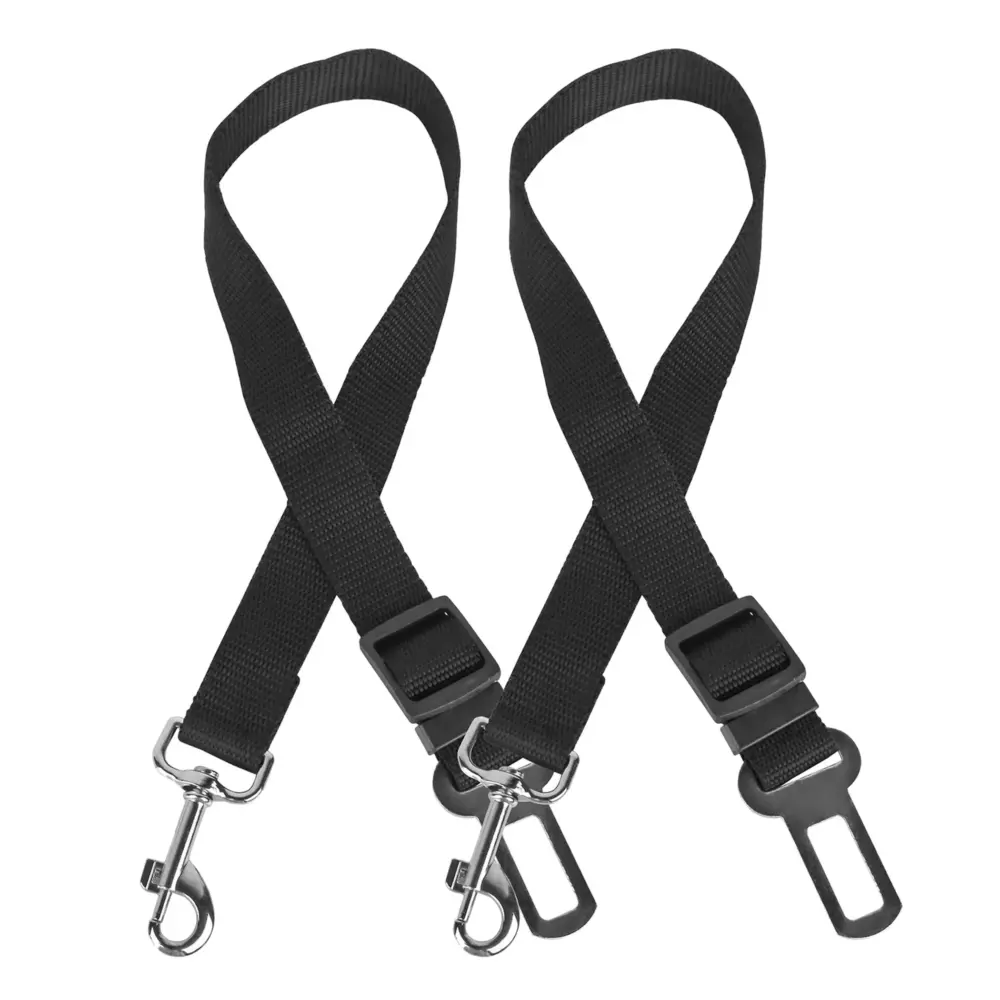
Our Adjustable Dog Car Seat Belt Tether has the adjustable nylon strap this check depends on, a metal carabiner for the harness and a buckle tab that fits most vehicle seat belts, though not every one, so check that it clicks into yours, holds when you tug and releases normally. There are two in the pack, so a second dog or a second car has one too.
Safety note
A tether set this way keeps your dog’s head in the car and your dog off the driver. It isn’t crash protection, and neither is our booster seat or harness: we don’t sell any of them on that basis.
Small dogs: a window view without an open window
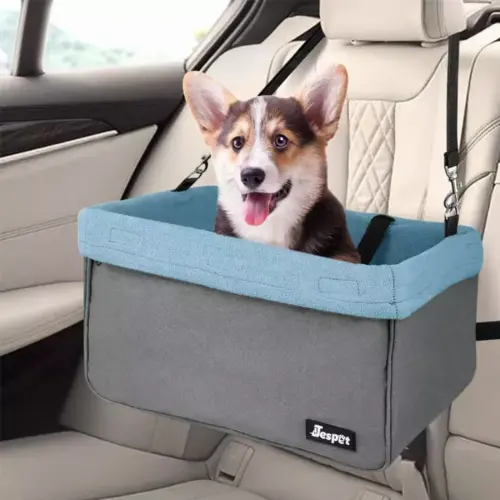
Many small dogs can’t see out from the seat, so they climb onto the armrest and stretch toward the glass, which puts them right beside the switch and the gap. A booster seat gives them the view without the climb. The GOOPAWS Dog Booster Car Seat holds pets up to 24 lb (11 kg), straps to the seat back and headrest and lifts your dog to window height, with a built-in tether that clips to a harness.
Because a booster puts your dog’s head level with the window, the window on that side stays up and the lock stays on. Set the built-in tether so your dog can sit and turn but can’t get their front paws over the rim or onto the armrest. Check the 16 by 13 inch seat against your dog curled up, not just the weight limit. Over 24 lb, a tether on the seat is the setup, and most medium and large dogs can see out sitting up anyway.
Giving a window-lover a sniff break instead
If your dog rides for the smells, give them a proper go at a stop, where their nose can work without wind, debris or traffic. A slow sniff lets your dog actually investigate a scent instead of catching it for a second as it rushes past, which is what a window-lover was after in the first place.
- Get out safely. Park away from traffic, open the door partway and clip the leash on before you unclip the tether.
- Let your dog set the pace. On a loose leash at the edge of the pet area, let them work a patch of grass for as long as they like rather than marching a brisk lap.
- Play find it. Toss a few treats into clean grass and let your dog search them out by nose.
- Do the same on arrival. A few minutes sniffing around the parking area before the park, beach or trail lets your dog take in the new smells at their own speed.
On longer drives, our road trip with a dog checklist covers how often to stop and what to keep within reach for each break.
Hot days: a cracked window won’t keep a parked car cool
A window open for your dog’s nose doesn’t make a parked car safe. On an 85-degree day, Humane World for Animals notes, the inside of a car can reach 102 degrees in 10 minutes even with the windows slightly open, and the ASPCA warns that a parked car can turn into a furnace very quickly, windows open or not.
Safety note
Never leave your dog alone in a parked car, cracked window or not, even for a quick errand.
On hot drives, run the air conditioning rather than relying on an open window, and check that cool air actually reaches your dog in the back. Our guide to keeping a dog cool in the car covers pre-cooling, shade for the rear windows and the signs of overheating.
What we stock for a window-lover
These picks are limited to our own catalog: the three pieces we carry that fit the setup on this page.
-
Adjustable Dog Car Seat Belt Tether, View product
$23.95
Why it fits: Set the strap so your dog can sit and lie down but cannot reach an open window or cross to the far one. Clips to a harness, fits most seat-belt buckles, two in a pack.
-
GOOPAWS
Dog Booster Car Seat with Safety Tether, Choose color
$53.95
Why it fits: For a small dog up to 24 lb who climbs the armrest to see out: it lifts them to window height to watch through closed glass, with a built-in tether that clips to a harness.
-
Mr. Peanut’s
PetTrek Padded Harness and Leash Set, Choose size & color
Price range: $24.95 through $26.95
Why it fits: A padded harness in XS to L, so a lurch toward the window pulls on the chest, not the neck. Measure the chest first; the listing does not say where the leash ring sits, so check the photos.


For the rest of the back-seat setup, browse our dog car and travel accessories.
Related guides
-
Guide
How to Travel With a Dog in a Pickup Truck: In the Cab, Not the Bed
Your dog rides in the cab, never the open bed. See where a dog sits in a crew, extended or regular cab, how to tether and cover truck seats, how to get in and out of a tall cab, and why a parked truck is no place to wait.
-
How-to
How to Make Vet Visits Less Stressful for Your Dog
For a dog who shakes, pulls for the door or won't get out of the car at the vet: happy visits, handling practice at home, what to tell the clinic, waiting in the car, a lick mat for the exam and when to ask about medication.
-
How-to
How to Stop a Dog Jumping Out of the Car When the Door Opens
A dog who launches out of the car the moment a door opens has usually learned that the open door means go. Here's how to make the leap impossible today with a tether and a leash-first routine, teach a car-door wait step by step, and handle hatchbacks, small dogs in boosters and a dog who gets loose.