Car Travel How-to
How to Make Vet Visits Less Stressful for Your Dog
Short answer
Make short happy visits to the clinic and practice handling paws, ears and mouth at home. On vet day, wait in the car instead of the lobby, bring a lick mat if food is allowed, and toss treats rather than pull if your dog won’t get out. If your dog still shakes, ask your veterinarian about medication.
What you need for a calmer vet visit
Most of the work happens between appointments; the kit for the day is short:
- A well-fitted harness and a standard leash, not a retractable one.
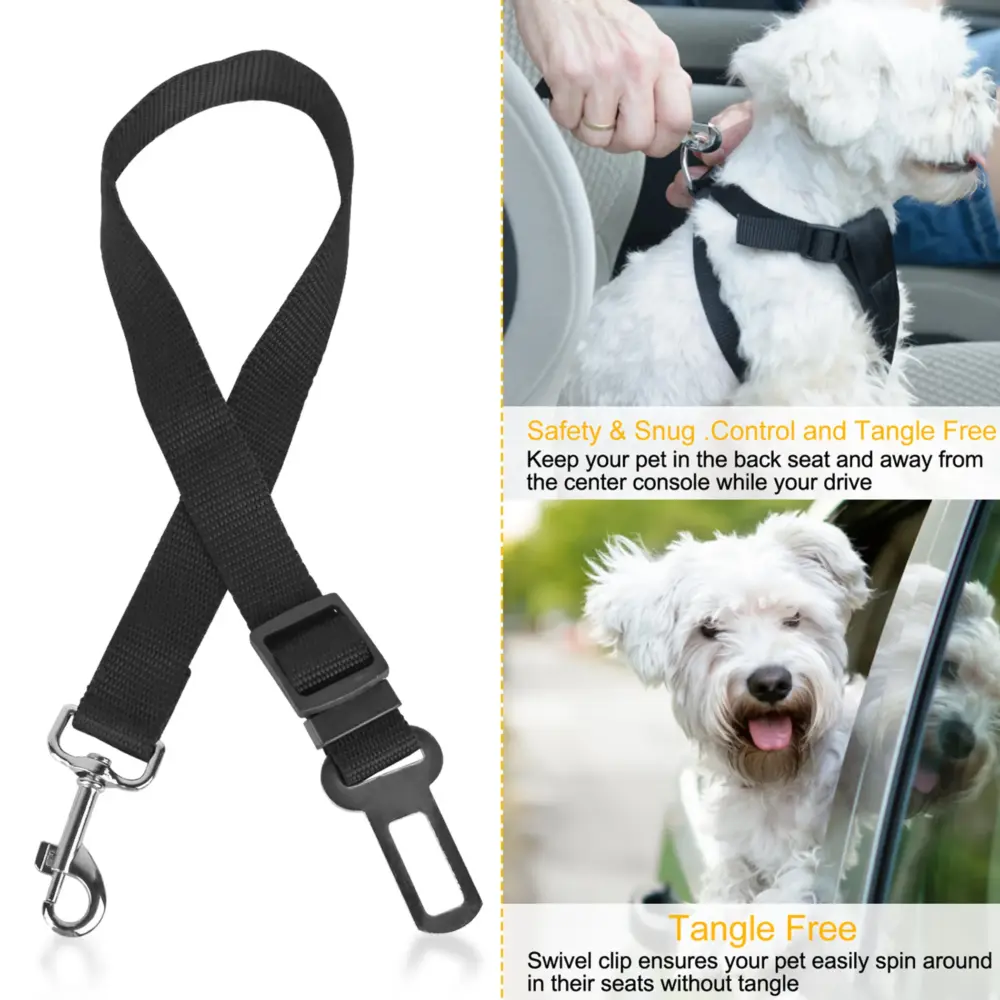
- A seat belt tether that clips to the harness, or a booster or crate for a small dog, so your dog rides in its usual spot.
- Small, soft treats your dog loves, and a lick mat with a soft spread, if the clinic says food is fine today.
- A towel or your dog’s own mat, plus poop bags and paper towels in case nerves lead to an accident.
- The clinic’s phone number, so you can check in from the parking lot.
- A note of your questions, your dog’s food and medications, and what frightened your dog last time.
Happy visits: going to the clinic when nothing happens
If your dog only sees the clinic for vaccines and nail trims, the parking lot alone starts to predict them. Cornell’s Riney Canine Health Center guide to less stressful vet visits suggests visits with no appointment at all, starting with treats in the car or the parking lot and moving inside only as your dog becomes comfortable. Call first to ask whether the clinic welcomes drop-ins, and when it is quietest.
- Parking lot only. Pull in, hand out a few treats in the car or on a short sniff around the edge of the lot, then drive home. If your dog won’t eat there, park a block away and start from that spot.
- Up to the door. Walk to the entrance, give a treat and walk back to the car. If someone at the front desk has a moment, ask whether they could step outside and toss your dog a treat.
- A minute inside. Step into the lobby when it’s empty, let the front desk offer a treat if they’re willing, and leave before your dog gets uneasy.
- The scale. Ask whether your dog can step on the scale for a treat, so being weighed becomes just another trick.
- An empty exam room. If the staff agree, let your dog sniff around a free room and find a few treats on the floor.
Move up a step only after a visit where your dog stayed loose and relaxed and ate happily. Cornell notes that a dog who refuses treats is often too stressed, so take that as a signal to go back a step next time. A few minutes per visit is plenty.
Tip
With a puppy, happy visits can start from the first appointments. Until your veterinarian says vaccinations are complete, ask where it is safe to set your puppy down outside the clinic.
Handling practice at home
A routine exam means someone your dog barely knows looking in the ears and mouth, lifting each paw, pressing on the belly and holding your dog still. Practice each touch at home, paired with a treat, as Cornell and the AKC’s guide to stress-free vet visits both recommend, in sessions of two or three minutes when your dog is relaxed.
- Touch, then treat. Touch your dog’s shoulder for a second and give a treat. Repeat a few times and stop. A helper holding a loaded lick mat frees both your hands.
- Work around the body. Over several sessions, add one touch at a time: look inside an ear, lift a lip to see the side teeth, hold a paw and touch between the toes, run your hands down each leg and under the belly, and lift the tail briefly.
- Let your dog say no. Cornell advises never forcing touch and always letting your dog walk away if uncomfortable. If your dog moves away, make the next touch smaller.
- Add a gentle hold. Rest one arm under the chest and the other around the shoulders for two seconds, the way a veterinary technician might steady your dog, then treat and release.
- Practice standing still. Reward a few seconds of standing. A small dog who will be examined on a table can practice standing on a raised, non-slip surface at home, as the AKC suggests, starting with something low and keeping your hands close by.
- Run a pretend exam. String a few touches together, then ask a friend your dog likes to do them.
If one spot is a problem, slow down there rather than pushing through. Paws are the usual sticking point: our plan for a dog who doesn’t like having their paws touched breaks it into smaller steps, and if nail trims are what goes wrong at the clinic, how to use a dog nail grinder covers introducing one at home. A dog who flinches or growls when one area is touched may be sore there, so mention it to your veterinarian.
What to tell the clinic before you arrive
Say it when you book, not at the front desk. Describe what frightens your dog and how it shows, whether trembling, hiding behind your legs, pulling for the exit or growling. If your dog has ever snapped at the vet, say so: the team can plan around it, and it keeps everyone safer. Then ask:
- When is it quietest? The AKC suggests booking at less busy times.
- Can you check in by phone and wait in the car until a room is free?
- Can the exam happen on the floor? Cornell notes that some teams examine dogs on the floor, where they feel less stressed, instead of on a table.
- Is food allowed? Ask about treats, a lick mat and breakfast, and mention any allergy or special diet. Some blood tests and any sedation come with food instructions.
- Is the team trained in low-stress handling? Cornell suggests looking for veterinarians trained through programs such as Fear Free or Low Stress Handling.
Ask the team to note what helps in your dog’s file, so each appointment starts from what worked last time.
The drive there: a settled spot and a short walk first
If your dog dreads the car itself, treat that as its own project and work through our steps for getting a dog used to car rides first. For the vet trip itself:
- Walk first. A short walk at home lets your dog pee, poop and stretch, so an accident in the car or lobby is less likely.
- Use the usual spot. A seat belt tether clipped to a well-fitted harness, never a collar, or a booster seat for a dog up to 24 lb, keeps your dog where it always rides. Our guide to choosing a dog seat belt or booster seat covers fit and tether length.
- Leave early. Running late means hurrying a nervous dog through the door. Warm or cool the car first and drive gently.
- Leash on before the door opens. At the clinic, clip the leash on before you unclip the tether, so a dog who wants to back away or bolt is attached to you the whole time.
Safety note
A tether or booster keeps your dog in one place and out of your lap, but neither is a crash restraint. If you wait in the car, stay with your dog: cars heat up fast, even on a mild day.
-
Adjustable Dog Car Seat Belt Tether, View product
$23.95
Why it fits: Clips to the harness and plugs into most seat-belt buckles, so your dog stays in its usual spot until the leash is on. Two in the pack, for two dogs or two cars. Not a crash restraint.
-
Mr. Peanut’s
PetTrek Padded Harness and Leash Set, Choose size & color
Price range: $24.95 through $26.95
Why it fits: A padded harness and matching leash in XS to L, for the tether in the car and the walk in from the lot. Measure the chest behind the front legs against the size chart well before vet day.


Waiting in the car or in the lobby
Cornell suggests waiting somewhere quieter, such as outside or in the car, if that is less stressful for your dog. For a dog who shakes, barks or pulls for the exit in the lobby, that is often the simplest fix: call the front desk from the lot, then wait in the car with your dog or walk a quiet loop until you’re called. If you need to wait inside:
- Sit away from the door and the front desk, with your dog between you and the wall.
- Keep the leash short but loose, and skip greetings with other dogs: many of them are sick, sore or scared too.
- Hand out small treats while your dog looks around calmly. Keep a small dog on your lap or in its carrier, off the floor.
- If your dog starts barking, lunging or straining for the exit, go back outside and ask the staff to call you.
In the exam room: a lick mat and your dog’s pace
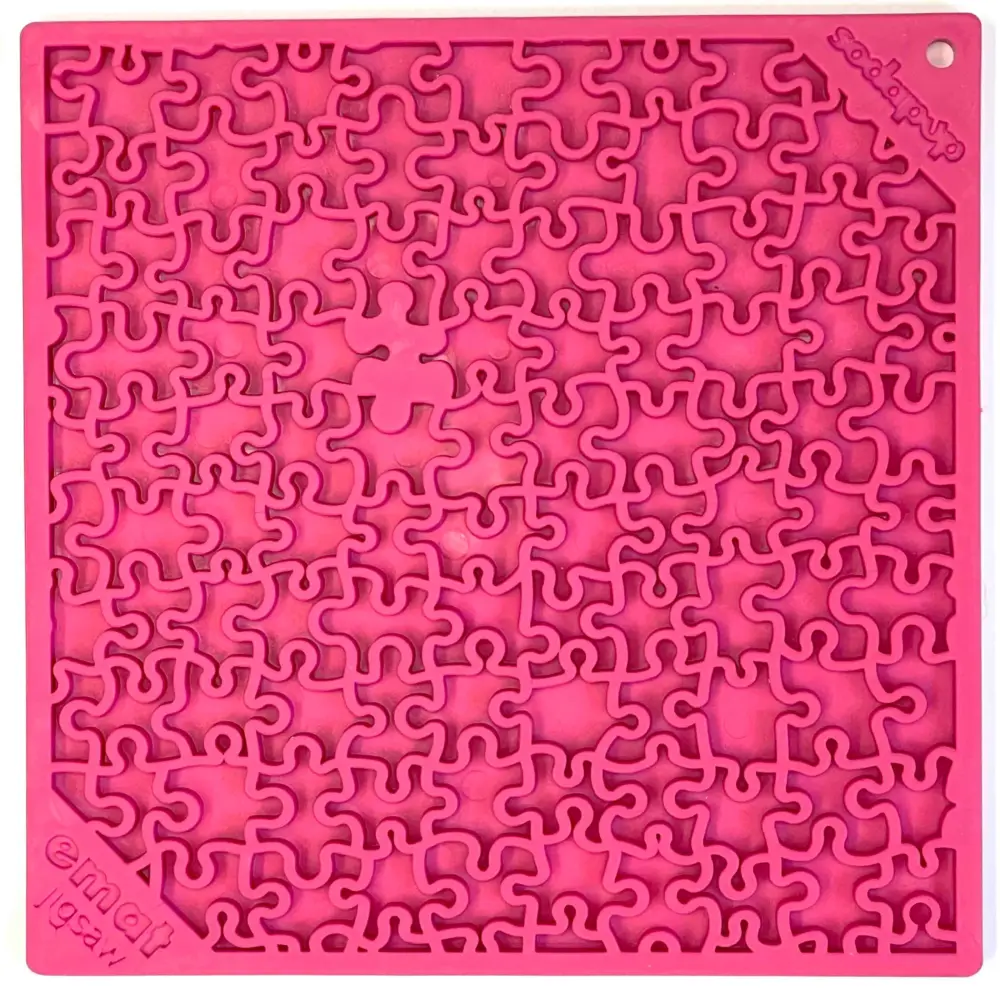
Let your dog sniff the room on a loose leash before anyone reaches for them. Cornell suggests bringing a frozen treat dispenser or a textured mat filled with a spreadable snack for extra distraction. Press a thin layer of wet food, plain canned pumpkin or xylitol-free peanut butter into a lick mat at home, freeze it if you have time, and hold it for your dog while the vet looks in the ears, checks the paws or gives a vaccine, taking it away if they want to listen to the heart and lungs. Check first that food is allowed today; for spreads and freezing, see what to put on a lick mat.
Our SodaPup jigsaw lick mat holds soft food in its grooves, can be frozen the night before, suits dogs of all sizes and is dishwasher safe.
Watch your dog, not just the vet. Signs from the AKC’s guide to telling whether your dog is stressed include whale eye, ears pinned back, a tucked tail, lip licking, yawning, panting, freezing and pacing, and a dog who suddenly won’t eat is saying the same thing. Ask for a short pause, and tell the vet which touches your dog has practiced at home.
Speak up for your dog. If fear keeps building during a routine exam, it is reasonable to ask whether the vet would rather stop and rebook with a plan, and Cornell encourages owners to ask about alternatives such as sedation when a necessary procedure can’t be done because a dog is too stressed.
When fear is more than practice can fix
Practice helps many dogs, but not every dog. Talk to your veterinarian if your dog trembles or drools as soon as you turn toward the clinic despite happy visits, growls or snaps during handling, needs several people to hold them for an exam, or stays shaky and off food for hours afterward.
Your vet may discuss anti-anxiety medication given at home a few hours before a visit, which Cornell says can make visits easier for a fearful dog and for the team examining them. Ask exactly when to give it, and whether to try a first dose at home on a quiet day. Another option is muzzle training: Cornell’s basket muzzle training guide explains that a basket muzzle still lets a dog pant, drink and take treats, and that a dog trained to wear one can be handled with less restraint. Nilosi doesn’t sell muzzles, so ask your veterinary team to help you choose a size and check the fit. For severe fear, ask about a referral to a veterinary behaviorist.
Safety note
Give only what your veterinarian prescribes for this dog, at the dose and time they set. Human medicines and another pet’s leftover prescriptions can be dangerous to dogs. Ask your vet before trying over-the-counter calming chews, sprays or supplements, and tell them everything your dog already takes.
Mistakes that make the next visit harder
- Driving only to the clinic. When most rides end at the vet, the car itself becomes the warning sign. The AKC suggests car trips to other places too.
- Dragging or lifting a dog who has frozen. Wait, scatter treats or ask the team for help; force tends to make the next visit harder.
- Scolding a growl. A growl is a warning. Telling your dog off doesn’t remove the fear, and it can teach your dog to skip the warning.
- Putting off checkups to spare your dog. A skipped exam trades one tense morning for problems found later. Keep to the schedule your vet recommends, and let the practice visits on this page make each one easier.
Troubleshooting: when vet day still goes badly
- Your dog won’t get out of the car. Don’t pull. With the leash on, open the door and wait, toss a few treats on the ground, or head away from the clinic first, toward some grass to sniff. If your dog still won’t budge, call the front desk and ask whether someone can meet you outside.
- Your dog shakes from the moment you park. Go back to happy visits that stop in the parking lot, and ask your vet about medication for the next real appointment.
- Your dog pulls toward the exit or backs away from the door. Check the harness fit first, two fingers under each strap, since a dog backing hard can slip out of loose gear.
- Your dog won’t take treats at the clinic. The stress is too high for this step. Try a softer, tastier food, move somewhere quieter, and start farther back on the next happy visit.
- Your dog drools or vomits on the way. Motion sickness, fear or both can cause it. Mention it to your veterinarian, and work on the car separately, with rides that end somewhere fun.
Have a nervous cat as well? Our guide to making vet visits less stressful for cats plans the visit around the carrier instead. Tethers, boosters and seat covers for the drive are in our travel and car accessories.
Related guides
-
How-to
How to Stop a Dog Barking in the Car (and Why It Starts)
Most car barking is excitement, frustration, alarm or worry. Learn which one you have, cut what your dog can see with seat position and tether length, teach quiet in a parked car step by step, and settle two dogs who set each other off.
-
How-to
How to Stop a Dog Jumping Out of the Car When the Door Opens
A dog who launches out of the car the moment a door opens has usually learned that the open door means go. Here's how to make the leap impossible today with a tether and a leash-first routine, teach a car-door wait step by step, and handle hatchbacks, small dogs in boosters and a dog who gets loose.
-
Guide
How to Travel With a Dog in a Pickup Truck: In the Cab, Not the Bed
Your dog rides in the cab, never the open bed. See where a dog sits in a crew, extended or regular cab, how to tether and cover truck seats, how to get in and out of a tall cab, and why a parked truck is no place to wait.