Cat Care How-to
How to Make Vet Visits Less Stressful for Your Cat, Start to Finish
Short answer
Book a quiet appointment and tell the clinic your cat is nervous. Bring your cat in a covered, top-opening carrier lined with familiar bedding, wait in the car or away from dogs, and ask whether your cat can stay in or beside the carrier for the exam. If your cat still panics, ask your veterinarian about pre-visit medication.
What you need for vet day
Pack the night before, so the morning looks ordinary to your cat:
- A carrier that opens from the top, one per cat.
- A towel or blanket your cat has slept on, with an absorbent pad underneath.
- A spare towel and a plastic bag, in case of an accident.
- A light towel to drape over the carrier.
- Favorite treats, if the clinic says food is fine.
- Your questions for the vet and a list of your cat’s food and medications.
- Any pre-visit medication your veterinarian prescribed, with the timing written down.
- The clinic’s number, so you can check in from the parking lot.
Before the day: book a quiet appointment
Some of the most useful steps happen when you book. Say plainly that your cat is frightened at the vet and how it shows, whether hiding, freezing, hissing or swatting, and ask the team to note it in your cat’s file. Then ask:
- Which times are quietest? VCA Animal Hospitals suggests booking during quieter clinic hours.
- Can you check in by phone and wait in the car until an exam room is ready?
- Is there a cat-only waiting area, or a room your cat can go straight into?
- Should you hold food? Unless your veterinarian says otherwise, VCA suggests not feeding your cat for several hours beforehand, to lower the chance of vomiting or soiling on the way. Ask first for a kitten, or a cat with diabetes or another health condition.
- Should you talk about medication first? If your cat was very frightened last time, raise it now rather than in the exam room.
Choosing a clinic? Ask whether it is a Cat Friendly Practice, a designation the Feline Veterinary Medical Association (formerly the American Association of Feline Practitioners) gives clinics that meet its standards for feline care and handling. Its program page links to a directory of designated practices.
A little handling practice at home
In the weeks before a routine visit, practice the touches an exam involves: a look inside an ear, a lip lifted for a second, a paw held and released, each followed by a treat. Keep it to a minute or two and stop before your cat pulls away. The same paw work helps with trimming the nails of a cat who won’t let you.
The carrier: top access and familiar bedding
A carrier that opens from the top does two jobs: at home you lower your cat in instead of pushing, and at the clinic your vet can reach in from above instead of tipping your cat out. VCA’s advice on reducing the stress of vet visits for cats lists soft-sided carriers among the durable options but singles out a hard plastic carrier with a removable top as the best choice. Your cat should be able to stand, turn and lie down, but International Cat Care warns against a carrier so big that your cat slides around in it.
Line it in layers: an absorbent pad, then a towel or blanket that smells of home. Frightened cats sometimes urinate, pass stool or vomit on the way, so VCA suggests packing spare bedding and a plastic bag. It also advises one carrier per cat, even for a pair who sleep curled together at home.
If the carrier only comes out on vet day, your cat has learned what it means. At the very least, set it up as a bed several days ahead, so it smells of your cat rather than the closet. Some owners also use a synthetic feline pheromone spray, which VCA suggests spritzing lightly on a blanket 15 to 30 minutes before travel; spray the bedding, never your cat. It may help some cats, as an extra rather than a replacement for the rest.
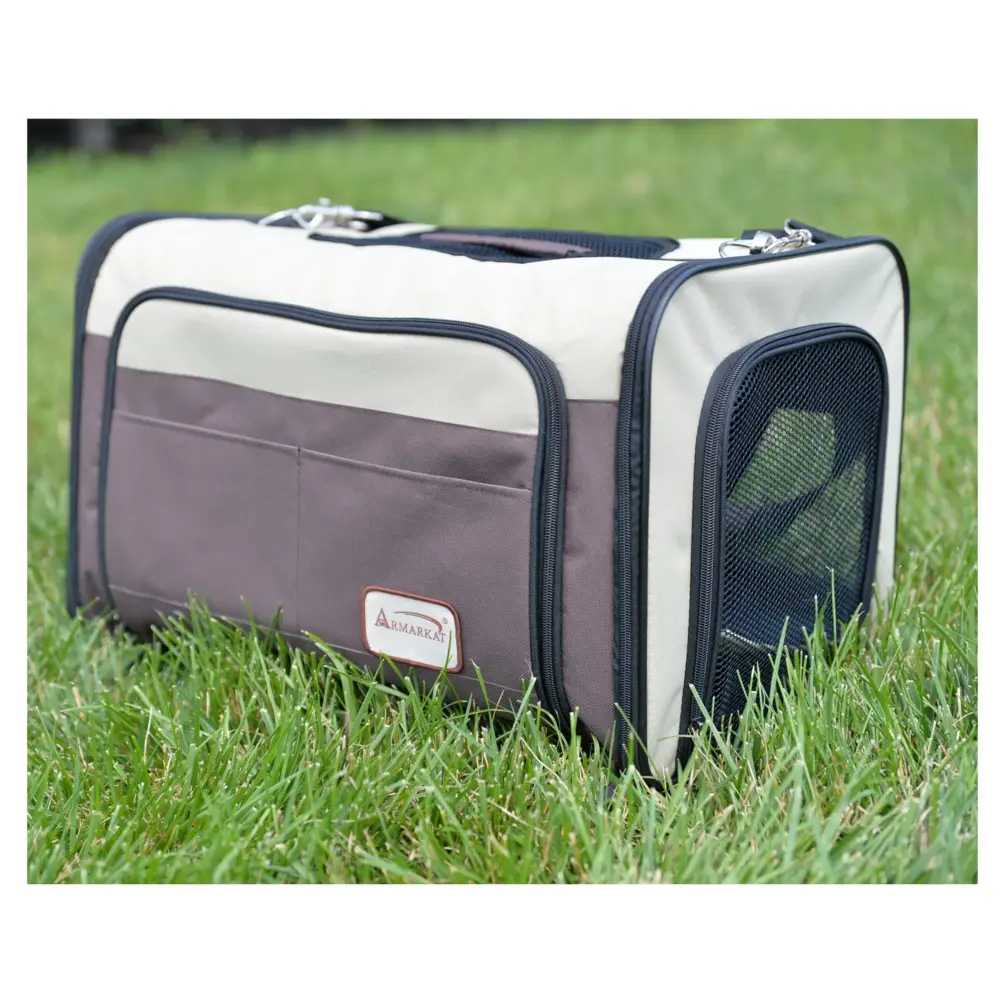
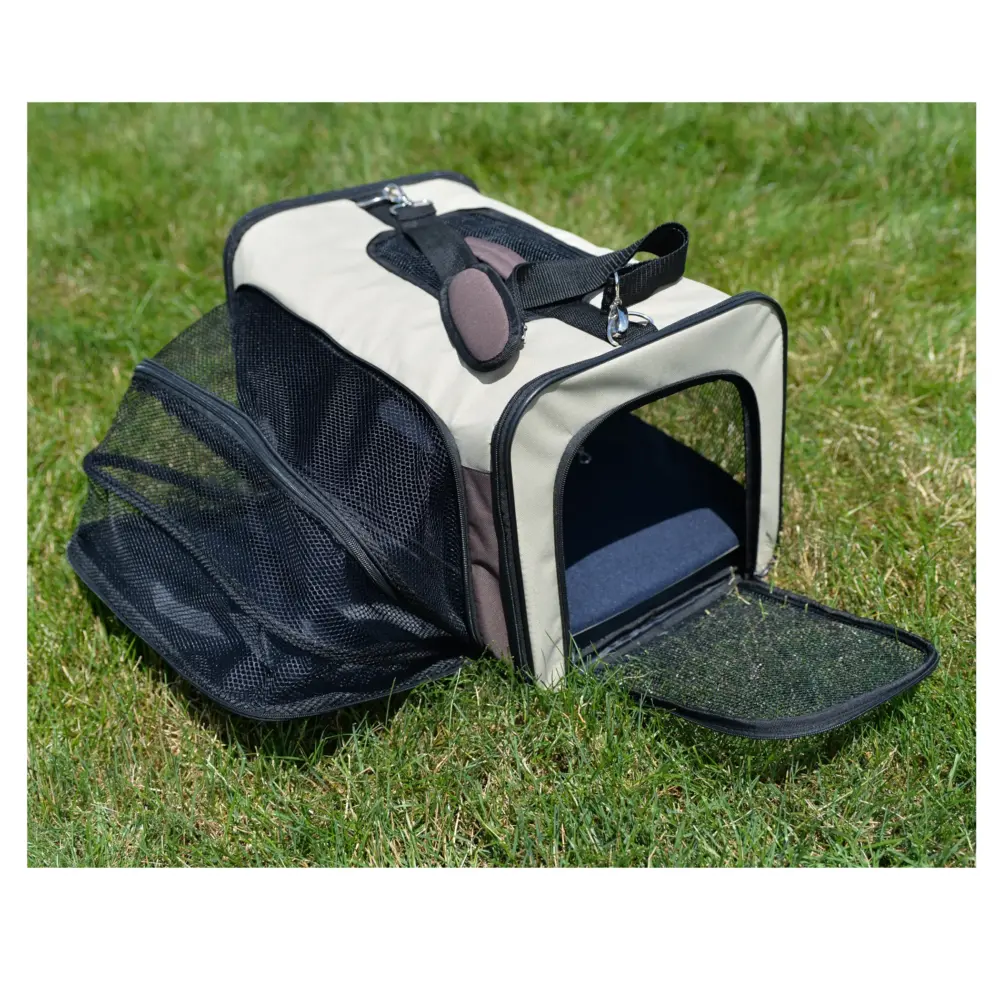
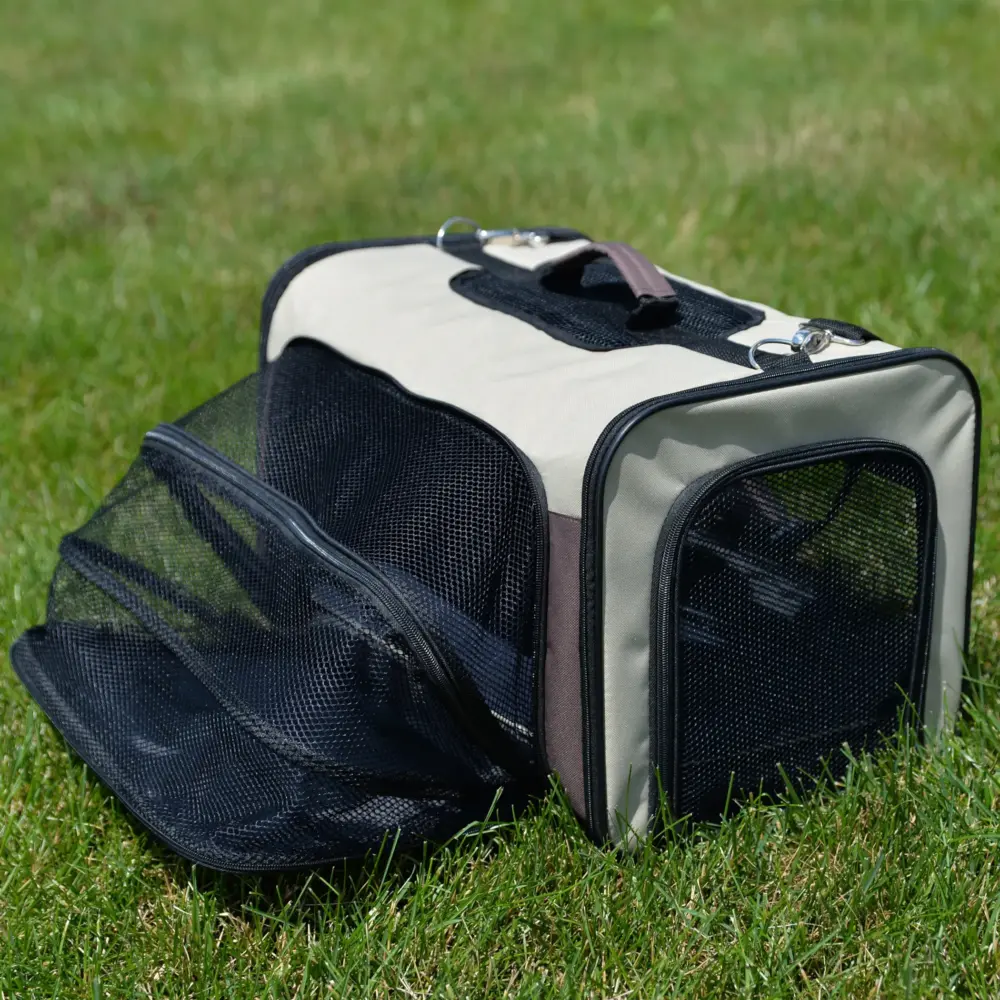
The Armarkat soft-sided carrier we stock has three zip openings, on the top and both sides, mesh panels for airflow and a lounge pad inside. It doesn’t come apart like a two-piece hard carrier, but with the top unzipped you can lower your cat in at home and your vet can reach in while your cat stays on its own bedding; a side opening lets you pass a treat. Armarkat’s own listing gives its size as 19 x 12 x 12 inches and its limit as 22 lb; check your cat’s length and height too, since a long-bodied cat can be under the limit and still be cramped.
The drive: secured, covered and smooth
A cat who sees shoes, keys and the carrier in a row has a few minutes’ warning to vanish under a bed. The loading routine that avoids the chase, closing your cat in a small room before the trip shows, then lowering it in through the top, is set out in our guide to getting a cat used to a carrier. Once your cat is zipped in:
- Cover the carrier before you open the front door. Drape a light towel over the top and part of the sides, leave some mesh open for air, and cover less on a hot day.
- Carry it level against your body with an arm underneath, not swinging from the handle.
- Warm or cool the car first, then secure the carrier on the floor behind a front seat or belted onto the back seat, never on the front passenger seat, with no vent blowing straight into it.
- Drive gently, with slow corners, early braking and the radio low. Talk to your cat in a calm, ordinary voice: VCA counts staying calm yourself among the most effective ways to ease your cat’s anxiety.
- Keep the carrier zipped from your front door until the exam-room door is shut behind you.
Our guide to traveling with a cat in the car covers carrier placement and longer trips in more detail.
Safety note
A carrier keeps your cat contained, but it is not a crash restraint, so placement and careful driving still matter. Never leave your cat alone in a parked car, even for a quick stop on the way home: cars heat up fast, even on a mild day.
The waiting room: in the car or away from dogs
For many cats the waiting room is the worst part: barking, strange smells and dogs who want to sniff the carrier, with nowhere to hide. International Cat Care suggests waiting in the car if your cat is very stressed, so if the clinic agreed, check in by phone and stay in the car with your cat, at a comfortable temperature, until a room is ready. If you have to wait inside:
- Use the cat-only area if there is one, or sit well away from dogs, and ask whether an empty exam room is free.
- Keep the carrier covered and up on a chair, a bench or your lap, as International Cat Care’s guide to taking your cat to the vet recommends, not on the floor at dog height.
- Turn the opening toward you or a wall, so your cat isn’t face to face with other animals.
- Keep the carrier zipped, and if a dog keeps nosing at it, move seats or ask the front desk for help.
Have a dog who dreads the vet too? That calls for a different plan; see how to make vet visits less stressful for dogs.
In the exam room: in or beside the carrier
Once the door is shut, set the carrier where your vet prefers and open it. Some cats walk out after a few minutes of sniffing, others would rather stay put, and either is fine. Don’t tip the carrier, shake your cat out or reach in and pull: those are the moments a frightened cat remembers next time.
Ask whether parts of the exam can happen with your cat still in the carrier or on its own towel. VCA notes that a cat can stay in the bottom half of a carrier with a removable top for part of the exam; with a soft carrier, unzip the top so your vet can work from above. VCA adds that some anxious cats settle better loosely wrapped in a towel, so they can’t see everyone around them.
Offer treats, but don’t worry if your cat ignores them; frightened cats often won’t eat. If your cat is too scared to examine safely at a routine visit, it is reasonable to ask whether the vet would rather stop and rebook with a plan, such as pre-visit medication. Before you leave, ask the team to add what helped to your cat’s file, so the next visit starts there.
Medication before visits: a question for your veterinarian
For some cats, a good carrier and a quiet appointment are not enough. If your cat hisses or swats at the team, has to be held firmly for a basic exam, or hides for hours afterward, ask your veterinarian whether medication before the visit would help. It is a prescription you give at home before you leave, and your vet chooses the drug and the dose. VCA’s overview of medication to reduce the stress of vet visits for cats explains the common options. Ask exactly when to give it and whether to try a first dose at home on a quiet day, and tell your vet if your cat is hard to pill: a struggle over a tablet just before you leave works against the whole plan.
Safety note
Give your cat only what your veterinarian prescribes for this cat. Many human medicines are dangerous to cats. VCA notes that most over-the-counter products have not been researched for purity or effectiveness and advises asking your veterinarian before giving any, including those sold as natural or food-based. Its medication overview adds that sedatives should only be given to healthy cats, so if your cat seems unwell on the day, call the clinic before giving a dose.
Back home: quiet time and other cats
Take the carrier into a quiet room with water, a litter box and somewhere to hide, open it and let your cat come out when ready. Leave the carrier open there, so the trip ends with it as a safe spot. After sedation or a procedure, follow the clinic’s discharge instructions on food, water and other pets.
Hiding or sleeping for a few hours afterward is common. Call your veterinarian if your cat still isn’t eating by the following day, seems to be in pain, or shows any sign the clinic asked you to watch for, and call right away if your cat strains in the litter box and passes little or no urine.
When your other cat hisses at the one who went to the vet
A cat back from the clinic smells of it, which can mask the scent its housemates know it by, so the cat who stayed home may hiss or swat at a companion of years. International Cat Care advises keeping them apart for a few hours or a day or two, then reintroducing them gradually:
- Settle the returning cat in its own room, with food, water and a litter box.
- Wash the carrier bedding to remove the clinic smell, and give the returning cat bedding from a spot the cats share, so it picks up the household scent again.
- Let them meet again while you watch, with treats for both, and separate them calmly at the first stare or hiss. Don’t scold the hissing cat; it is reacting to an unfamiliar smell.
- If they are still hissing after a few days, slow down and work through the stages in our guide to introducing a new cat to your cat. If they fight, or one cat is hurt, call your veterinarian.
If the carrier got soiled, clean it before it goes back out as a bed; our guide to cleaning a cat carrier after an accident covers getting the urine smell out rather than covering it up.
Mistakes that make the next vet visit harder
- Running late. Rushing a frightened cat into the carrier and through a busy lobby undoes the rest of the plan, so leave time to load calmly and wait in the car.
- Opening the carrier before the exam-room door is shut. A frightened cat can bolt across a waiting room or a parking lot faster than you can grab it.
- Scolding a hiss or a swat, at the clinic or at home. It is fear talking, and telling your cat off only adds to it.
- Putting off checkups to spare your cat the stress. Cats are good at hiding illness, so ask your vet how often yours should be seen, and use these steps to make each visit easier.
Troubleshooting: when vet day still goes badly
- Your cat disappears when you reach for the carrier. Close your cat in earlier, before any sign of the trip, and keep the carrier out as a bed between visits. If you can’t reach your cat in time for a routine visit, call to rebook rather than dragging your cat out from under a bed.
- Your cat yowls the whole drive. Cover a little more of the carrier, keep the car quiet and leave it zipped; short practice drives that end at home help over time.
- Your cat vomits, drools or soils the carrier on the way. Pack extra pads, ask the clinic about holding food, and mention it to your veterinarian, since motion sickness and fear can look alike.
- Your cat hisses, swats or bites at the vet. This is usually fear, and vet teams see it often. Ask about pre-visit medication, check that it is noted in the file, and ask whether a house-call veterinarian could handle routine care.
The carrier above is in our travel and car accessories; for more on everyday life with a cat, browse our cat care guides.
Related guides
-
How-to
How to Introduce a New Cat to Your Cat: A Step-by-Step Plan
A staged plan for adding a cat to a home that already has one, from a transition room and scent swaps to sightings and short supervised meetings, with how long each stage takes, the body language to watch and what to do if it goes wrong.
-
How-to
How to Clean a Cat Carrier After an Accident and Get the Smell Out
A cat that pees, vomits or soils the carrier needs a cleanup that removes the smell, not just the stain. Taking the carrier apart, enzyme cleaner for urine, washing soft-sided, backpack and hard carriers by the label, drying it fully, and lining it for the next trip.
-
How-to
How to Help a Cat Adjust to a New Home After Moving
A settling plan that starts at the new front door: what goes in the base room, how arrival day and hiding should go, why the old bed and litter stay, when to open more rooms, how to secure doors and screens, how long settling takes and when to call your veterinarian.