Cat Care How-to
How to Help a Cat Adjust to a New Home After Moving
Short answer
Set up one quiet base room with your cat’s litter box, food, water, bed, scratcher and a hiding spot, and keep your cat there until it eats, uses the box and explores calmly, often for several days. Keep its old bedding, litter and mealtimes, then open the home a room at a time, with doors and screens secured.

To a cat, a move swaps a territory it knows by smell for one it has never met, so shrink the new home to one room that smells familiar and let your cat widen it at its own pace. This plan starts at the new front door; for the drive, see traveling with a cat in the car, and for a dog in the same move, moving with a dog.
What you need in the base room
Choose a room with a door that closes and little reason for anyone to walk through it. International Cat Care’s advice on moving house suggests a bedroom. Have the movers unload that room’s furniture first, then set it up before your cat goes in:
- The old litter box, scooped but not scrubbed, with the litter your cat already uses.
- Food and water bowls, well away from the litter box, with the usual food.
- The bed and blankets from the old home, unwashed.
- The carrier, left open, with its pad or a towel inside.
- One more hiding place, such as a box on its side or a covered bed.
- A scratcher near the bed; VCA suggests keeping one close to where a cat sleeps.
- Somewhere high, like a cleared shelf or a cat tree, to watch the room from.
- A wand toy and treats for short play sessions.
- A sign for the door: “Cat inside, please keep closed.”
- Optional: a synthetic feline pheromone diffuser, which International Cat Care suggests plugging in several hours before your cat arrives.
Use what your cat already owns wherever you can, because its own things carry its smell. If something is worn out or missing, these four from our catalog suit a base room; buy a few weeks ahead if you can and leave the new item out at the old home first. More are in our cat essentials.
-
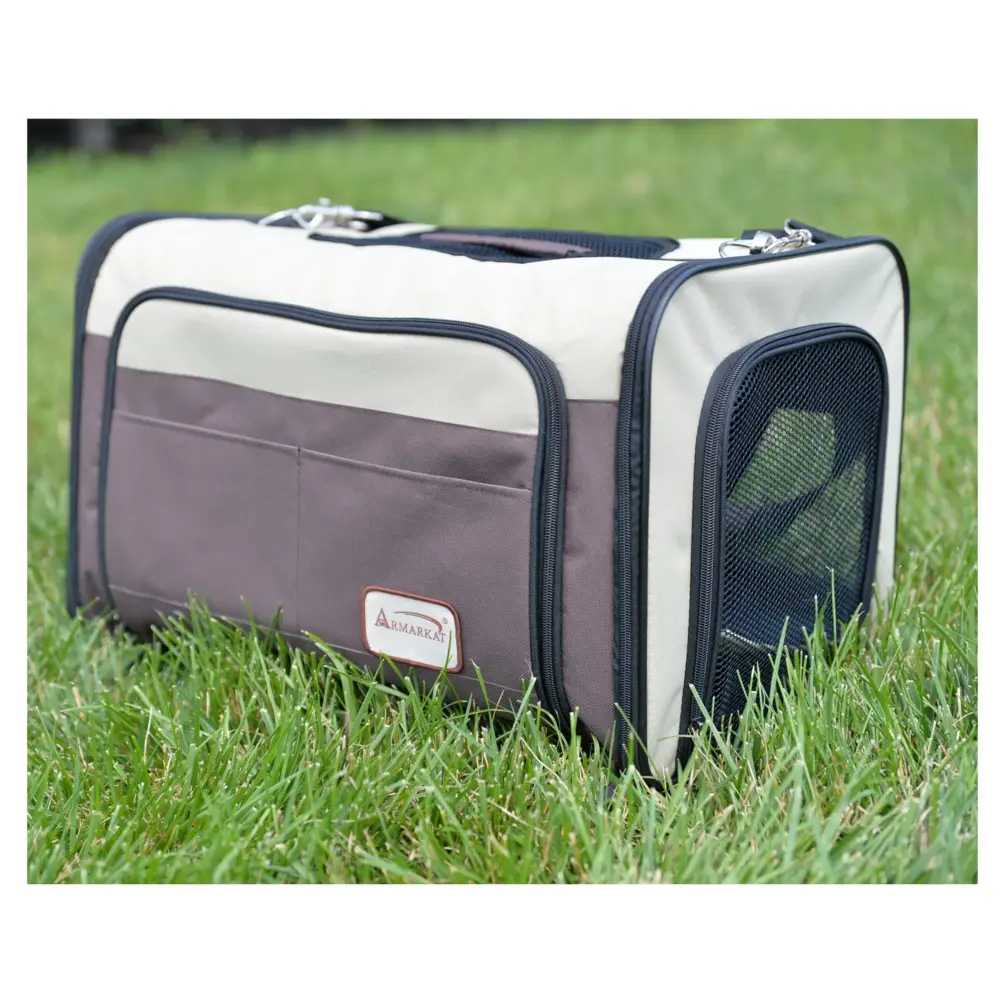
Armarkat
Soft-Sided Pet Carrier, View product
$65.95
Why it fits: A carrier for moving day that then doubles as a den in the base room, with three zip openings to leave open and a soft lounge pad inside.
-
GOOPAWS
4-in-1 Self-Warming Cat Cave Bed, Choose color
$40.95
Why it fits: A covered hiding spot for the base room, usable as a cave, mat or sack, with a design that traps your cat’s own body heat. 21 x 17 x 3 in.
-
Cat Scratcher Guy
Wooden Cat Scratcher with Reversible Insert, View product
$32.95
Why it fits: A flat scratcher to set out on day one, so the new carpet is not the first thing your cat scratches. Handmade in the USA, catnip included.
-
Double-Layer Honeycomb Cat Litter Trapping Mat, View product
$53.95
Why it fits: A mat for the litter box exit in the base room, keeping litter off new floors. Waterproof base, and it opens like an envelope to empty.




Check the base room before your cat comes out
A new home has hazards you haven’t found yet. Before you open the carrier, walk the room at cat height:
- Windows shut and latched, or fitted with intact screens. The ASPCA’s guide to moving with your pet says every window should have a secure screen.
- Gaps a frightened cat could squeeze into: behind appliances, under built-in cabinets, around pipes and inside recliners or sofa beds. Block them, or pick another room.
- Leftovers from the last occupants, such as pest bait, traps, screws or cleaning products under the sink.
- Cords and small items, including blind cords and anything spilling from half-unpacked boxes.
- Plants. Check any you brought, or that came with the house, against the ASPCA’s list of plants toxic to cats.
Safety note
Remove any bait stations or loose pellets with gloves before your cat goes in. If you think your cat has eaten some, don’t wait for symptoms: phone your veterinarian, or the ASPCA Animal Poison Control Center at (888) 426-4435, which may charge a consultation fee.
Arrival day: open the carrier and let your cat hide
By bedtime on day one, the aim is a cat in a closed room that smells of home, having left the carrier on its own terms. A cat that already naps in its carrier often treats it as a den in the new room; our guide to getting a cat used to a carrier builds that habit.
- Carry the carrier straight to the base room and close the door before you unzip anything. If the movers are still working, put the sign up first.
- Set it on the floor, open it and step back. Don’t tip your cat out or reach in. Some cats walk out in minutes; others wait hours.
- Stay a while if your cat seems calm with you there. International Cat Care suggests a family member sit in the room as the cat explores. Read quietly and let it come to you.
- Offer a small meal once it settles, near the hiding place. International Cat Care suggests small, frequent meals while your cat adjusts.
- Leave the carrier open as a hideout. It is the most familiar hiding place in the room.
- Check in quietly. Knock or speak before you open the door, step in and close it, then look for your cat.
Tip
Hiding under the bed or in a box on the first day is normal, so leave your cat there; pulling a frightened cat out usually makes it warier. If the base room is your bedroom, your cat gets your company overnight without leaving its safe room.
Keep the old bed, scratcher and litter for now
Almost nothing in a new house smells right to your cat. The things it has slept on, scratched and used for months are the exception, so moving week is the wrong time for a fresh start:
- Bedding. Skip the pre-move wash. Once your cat settles, wash one blanket at a time so something familiar is always left.
- The scratcher. Bring the old one, however shabby. VCA’s guide to scratching behavior in cats explains that cats mark territory by scratching, with claw marks and scent from their foot pads, so a familiar post gives your cat somewhere to mark that isn’t the new carpet.
- Litter and box. Same litter, same box, same depth. Any switch can wait until your cat has settled, and should be gradual.
- Food. Same food, same bowls. A diet change on top of a move makes an upset stomach harder to explain.
- Furniture. International Cat Care notes that permanently indoor cats may take a little longer to adapt and that familiar furniture always helps, so put a favorite chair where your cat will find it early.
Opening up the rest of the home, room by room
There is no set number of days. VCA’s advice on moving to a new home with cats suggests several days in the one room, especially in a large home, while International Cat Care says a cat can explore once the move is finished, one room at a time if it shows signs of stress. Let your cat set the pace: it is ready for more space when it eats, uses the box, grooms and comes out to investigate when you sit with it.
- Wait until the movers have gone and the outside doors stay shut. While installers or helpers come and go, the base room stays closed.
- Check each new room first for open windows, loose screens, gaps and anything left behind.
- Open the base room door and let your cat walk out. Don’t carry it across the house; exploring outward from its own room keeps the way back familiar.
- Start with one or two rooms and close the rest. Add more over the following days, with the busy kitchen and entryway last.
- Keep the base room set up as a retreat for the first few weeks, with litter, water and a hiding place.
- Move the litter box in small steps. The ASPCA suggests about a foot a day. For a far-off spot, set up a second box there and remove the first once your cat uses the new one.
Moving more than one cat? Cats that got along before can share a base room if it holds what International Cat Care recommends for multi-cat homes: one litter box, bowl set, bed and hiding place per cat, plus one extra. If they start hissing or swatting, separate them and follow our guide to introducing a new cat to your cat to bring them back together.
Keep meals, play and bedtime on the usual schedule
Routine is the part of the old home you can bring along, and International Cat Care recommends keeping the routines from your previous house for continuity:
- Meals at the usual times, even while the kitchen is in boxes. If a new commute changes your hours, shift mealtimes gradually.
- Daily play with a wand toy, ending with a catch and then food. International Cat Care suggests predatory play at least once a day.
- The same bedtime. A cat that slept on your bed will look for you at night; a cat with its own bed needs it within reach.
Secure doors, windows and screens for the first weeks
A cat that slips out of a new home is in streets it doesn’t know, and International Cat Care notes that a cat whose new home is close to the old one may find familiar routes back there. The first weeks also bring extra open doors, from deliveries to installers.
- Doors. Find the cat before anyone opens an outside door, and shut it in the base room when a delivery or installer is due. Our guide to stopping a cat from running out the door has a full routine.
- Windows and screens. Test each screen before you open the window behind it; a cat can push through a loose one. Keep balcony doors and unscreened upper-floor windows closed.
- Hidden spaces. Keep garage, attic, basement and crawl space doors shut, and check the washer and dryer before you close them.
- ID. Update the microchip registry with your new address and phone number. If your cat wears a collar, use a breakaway one with a tag showing your cell number.
- Outdoor cats. International Cat Care advises keeping them in for at least two to three weeks. For the first outing, it suggests a quiet, dry day when you’re home, just before a meal, going out into the yard together.
- A nearby old home. Warn the new occupants that your cat may turn up, and ask them to call you if it does.
If your cat does get out, start searching close to the new home straight away; our checklist for what to do if your dog or cat is lost covers the first hour.
Mistakes that slow a cat’s settling in
- The run of the house on day one. Too much new space at once often sends a cat to the hardest hiding place it can find.
- Replacing everything at once. A new bed, new litter and a new box location in the same week leave nothing familiar.
- A housewarming in the first week. If guests can’t wait, shut your cat in the base room with the sign on the door.
- Scolding an accident. Clean it with an enzyme cleaner, move the box closer and look for the cause.
Signs your cat is settling, and when to call your vet
Good signs include normal eating and drinking, regular trips to the box, grooming, sleeping in the open and asking to play. You may also see your cat rub its cheeks on furniture corners and door frames: cats mark territory with scent glands on their face, so the house is starting to smell like theirs. Full settling takes longer: VCA notes it may take weeks or months before a cat treats the new home as its main source of food and shelter.
If settling stalls
- Still hiding after several days. Keep its space small, sit with it at quiet times and toss treats near the hiding spot. Hiding alone is common after a move; hiding plus not eating or skipping the box is a reason to call your vet.
- Not eating. Put the usual food near the hiding place and leave the room. VCA’s guide to signs of illness in cats advises prompt veterinary care if a cat has not eaten properly for 24 hours.
- Peeing outside the box. Move the box closer, check it holds the old litter and call your vet. The Cornell Feline Health Center notes that changes in routine, such as a move to a new home, may raise the risk of urinary tract signs.
- Scratching new carpet or door frames. Set a scratcher right in front of the spot, as VCA suggests for furniture, with a little catnip on it.
- Crying at night or at the door. Play and a small meal before bed can help. Don’t open the door in answer; a cat that used to go out may keep asking for a while.
Safety note
A cat that strains in the litter box and passes little or no urine, especially a male, needs a veterinarian immediately: International Cat Care treats a blocked urethra as an emergency. Call your vet the same day about vomiting, diarrhea or a cat that stays hidden and won’t eat.
Related guides
-
How-to
How to Introduce a New Cat to Your Cat: A Step-by-Step Plan
A staged plan for adding a cat to a home that already has one, from a transition room and scent swaps to sightings and short supervised meetings, with how long each stage takes, the body language to watch and what to do if it goes wrong.
-
Guide
Should You Get a Second Cat? How to Tell if Yours Would Welcome One
A second cat can be good company or a daily source of stress. Learn what lonely behavior often means, what makes a cat likelier to accept a newcomer, which pairings tend to work, what one more cat takes in space, money and time, and what to try first.
-
How-to
Where to Put a Litter Box in a Small Apartment or Studio
The bathroom usually wins, with the door wedged open. See the next-best spots in a studio or one-bedroom, the places to skip (kitchen, bedside, laundry closet), how to make a screen or cabinet work for your cat, a studio layout, and how to move the box without accidents.