Cat Care How-to
How to Stop a Cat From Running Out the Door
Short answer
Make the doorway boring and give your cat somewhere better to be. Before anyone opens the door, find the cat and toss a treat onto a perch or scratcher a few strides away, and greet it there. Play before you leave and when you return, and shut your cat in a quiet room on party or moving days.
Why indoor cats dash for the door
Watch when your cat goes for the gap and you will usually spot one of these:
- Curiosity and the hunt. Outside are smells, sounds and movement your cat never meets indoors: birds, insects, blowing leaves, other cats.
- The door pays off. If the entry is where your cat gets greeted or fed when you come home, it learns to wait there, and every escape, even a quick sniff of the hallway, makes the gap worth trying again.
- Not enough to do. A cat with little to chase, climb or scratch spends that energy on the one exit that moves. Our indoor cat enrichment ideas cover the everyday side.
- Hormones. An unspayed or unneutered cat has a strong urge to roam and find a mate. Spaying or neutering usually reduces it, so talk to your veterinarian if your cat is still intact.
- Fear. A doorbell or a crowd of guests can send a nervous cat through the nearest opening. That cat needs a hiding place in a back room more than a training plan.
- Old habits. A cat that used to go outside may keep asking for months. Whether to offer outdoor access at all is a separate decision; see indoor vs outdoor cats.
The stakes are real: International Cat Care points out that an indoor cat that slips out is likely to be at greater risk than a cat used to going outside, because it has little experience of the world beyond the door.
A door routine for everyone in the house
Training takes weeks; a routine protects your cat starting tonight. What you need:
- Small, tasty treats, counted toward the day’s food.
- A landing spot a few strides back from the door and in sight of it: a cat tree, a cleared shelf, a chair or a scratcher.
- An inner door you can close, if your home has one, such as a hallway, mudroom or garage door.
- A note on the inside of the door for guests and sitters.
- Find the cat before you touch the handle. Make “Where’s the cat?” a household habit, and in a multi-cat home, count every cat.
- Close the inner door first, if you have one. Two closed doors between your cat and the street beat any amount of training.
- Send your cat the other way. Just before you open the door, toss a treat across the room or onto the landing spot, then open while your cat is eating. Humane World for Animals suggests the same trick: teach your cat to run away from an open door by throwing a treat to the other side of the room.
- Open a crack and look down. Fill the gap with your leg or a bag held low, step through sideways and close the door before you turn around. If your cat is already in the gap, ease it back gently and start again; never close the door on it.
- Come home the same way, and greet away from the door. Open slowly, check the floor, step in and close the door, then do your hellos and petting at the landing spot.
- Keep the doorway dull. No meals, games or treats near the entry, and no letting your cat sit on the doorstep “just for a minute.”
- Get everyone on board. Children, roommates, dog walkers and sitters all follow the same steps; one person who greets at the door keeps the habit alive.
Somewhere better to be: a rewarded spot away from the entry
The treat toss gets you out the door today; a landing spot teaches your cat to hang back on its own. Pick a place your cat already likes, in sight of the door but a few strides away; a cat tree or cleared shelf lets it watch the door from above. Teach it in short sessions when you aren’t actually leaving:
- Make the spot pay. Several times a day, put a treat on it, or reward your cat whenever it hops up by itself, until it starts checking the spot on its own.
- Add a cue. Tap the spot or say a short word, such as “up,” as your cat arrives, then reward.
- Bring in the door slowly. With your cat on the spot, touch the handle and reward. Then open the door an inch and close it; reward. Build up to opening it wide, then to stepping out and straight back in. Practice on an inner door, or with a helper waiting outside, until your cat stays put reliably, so a slip doesn’t end in the street.
- If your cat jumps down and heads for the gap, close the door calmly and go back a step. End each session on a success.
- Use it for real. Once your cat stays put while the door opens, send it there every time you leave and greet it there every time you come home.
For a cat that prefers the floor, a flat scratcher can mark the landing spot; the Feline Veterinary Medical Association suggests placing scratchers near doors anyway, and some cats like a quick scratch when you come in. The Cat Scratcher Guy Wooden Cat Scratcher lies flat at about 19.5 × 5.5 × 2 inches, with felt pads underneath and a bag of catnip to sprinkle on the reversible cardboard insert; if catnip does nothing for your cat, a treat on the insert works too.
Play before you leave and when you come home
A cat that has just hunted, eaten and settled down to groom cares far less about the front door. Many cats are liveliest around dawn and dusk, often just when people head out and come home, so build play around those moments:
- Before you leave: a short wand-toy game that ends with a catch, then breakfast or a few treats away from the entry. Pick up your keys while your cat eats. Our guide to how long to play with a cat covers session length and how to wind a game down.
- When you get home: greet at the landing spot, then play within a few minutes, before pent-up energy goes into watching the door for its next chance.
- On busy days: when the door keeps opening, such as while you unload groceries, have one person run a game in a back room while someone else handles the door.
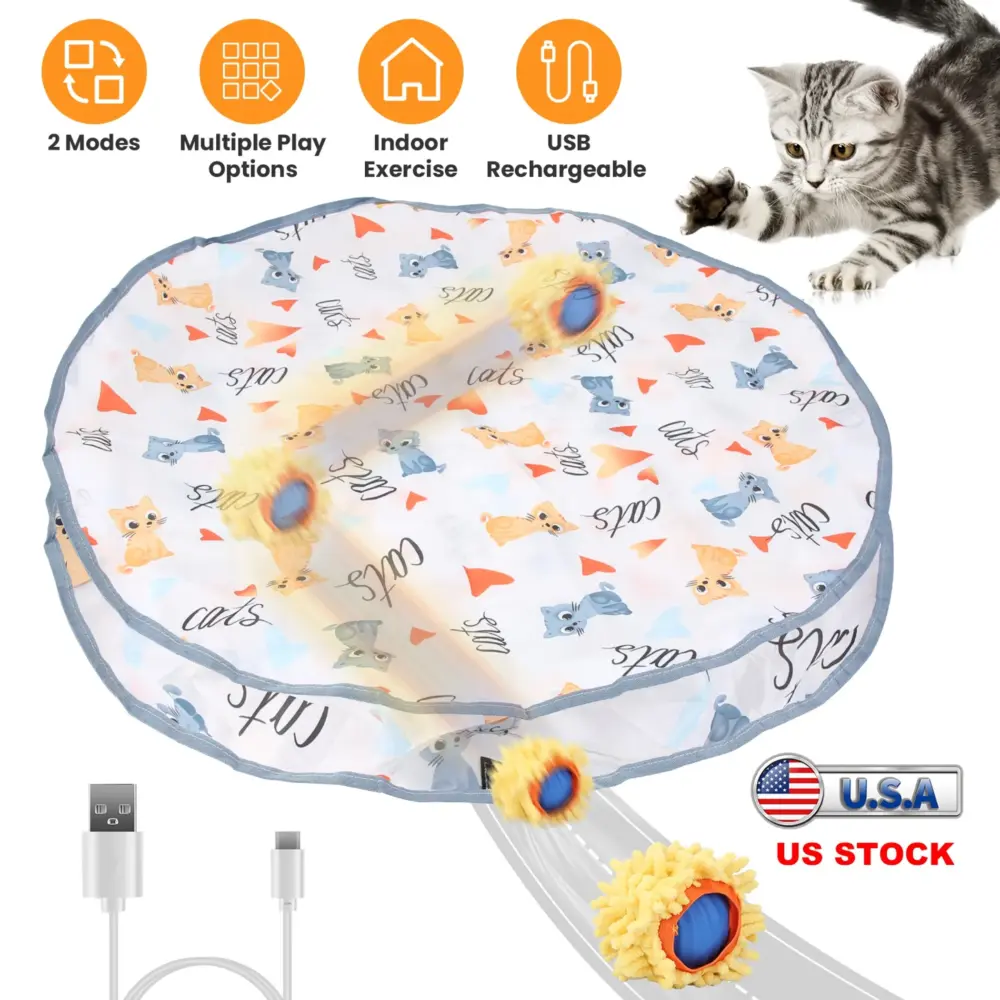
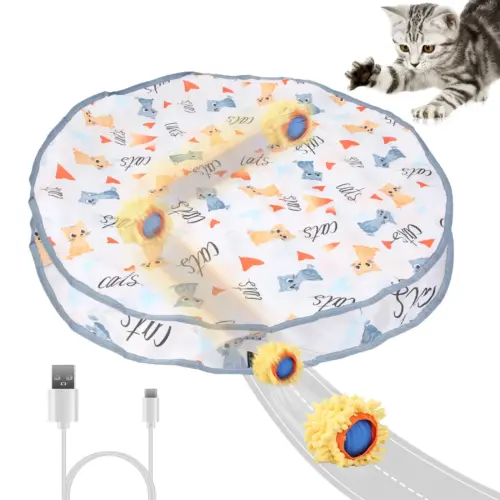
The Motion-Activated Rolling Cat Toy Ball suits those busy minutes. It wakes when touched, then dashes, turns and pauses like prey. It has two play modes, runs about an hour per USB charge and works best on hard floors and short-pile rugs. Use it only while someone is home to keep an eye on it.
-
Cat Scratcher Guy
Wooden Cat Scratcher with Reversible Insert, View product
$32.95
Why it fits: A flat floor scratcher to mark the landing spot a few strides from the door; catnip is included to help introduce it, and the cardboard insert flips when it wears.
-
Motion-Activated Rolling Cat Toy Ball, View product
$42.95
Why it fits: Prey to chase in a back room while the door is busy: it wakes when touched, then darts, turns and pauses, and works best on hard floors and short-pile rugs.

Deliveries, guests and moving day: extra barriers
When the door opens again and again, or a stranger is holding it, take the door out of the picture.
Deliveries
A knock or doorbell is exactly when a curious cat heads for the entry and a nervous one panics. Ask for packages to be left at the door, and shut your cat in another room before you open up to bring one in.
Guests, parties and repair visits
For a party, trick-or-treaters or a contractor who will be in and out, set your cat up in a quiet room with its litter box, water, a bed or box to hide in and a scratcher. Close the door, hang a sign on it (“Cat inside, please keep closed”) and tell guests and children which doors stay shut. Let a nervous cat stay hidden until everyone has gone.
Moving day
Moving combines propped-open doors, strangers and a stressed cat. International Cat Care advises keeping your cat in one room, often a bedroom, before the movers arrive, with a notice on the door so everyone keeps it shut. Travel in a closed carrier, give your cat one closed room at the new home while the boxes come in, and start the door routine on day one.
Backstops: screens and ID
- Keep screen doors latched and window screens secure; a determined cat can push through a loose one.
- Make sure your cat is microchipped and the registry has your current phone number: it is the ID that can’t fall off.
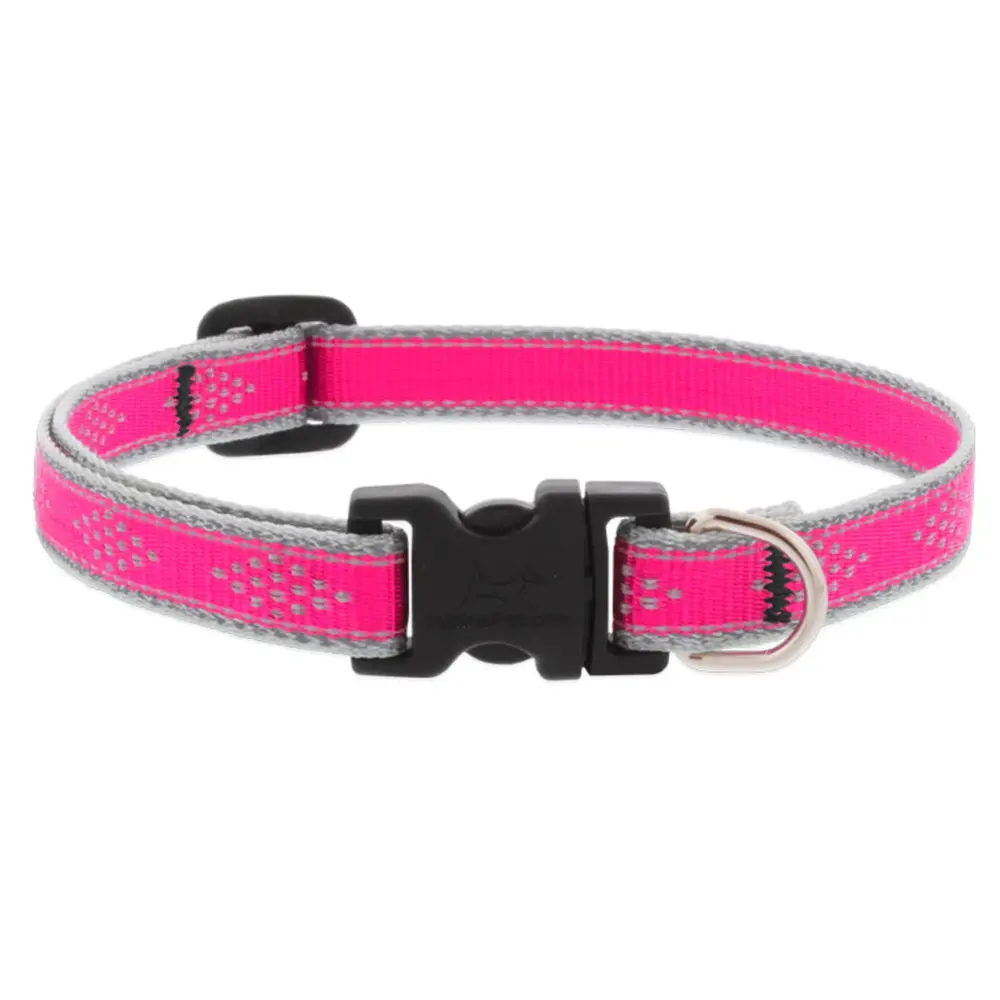
- If your cat wears a collar with an ID tag, choose one with a snap-open safety buckle. Our comparison of cat collars vs harnesses covers fit and safety.
Safer outdoor time: supervised harness outings
For a confident cat that clearly longs for the outdoors, supervised time outside, in a secure catio or on a harness and leash, can take some of the mystery out of the door. It won’t necessarily cut down the dashing, though, and some cats ask to go out more once they know what is out there. Keep the outdoors on your terms:
- Harness up in a back room and carry your cat out in your arms or a carrier, so the door never becomes something it walks through on its own.
- Go when you decide, not when your cat yowls at the door, or you teach it that yowling works.
- Use a different exit if you can, such as a back door to a quiet yard, so the front door stays boring.
- Keep outings short and supervised, on a lightweight leash, not a retractable one. Our plan for harness training a cat goes from first sniff to first steps outside.
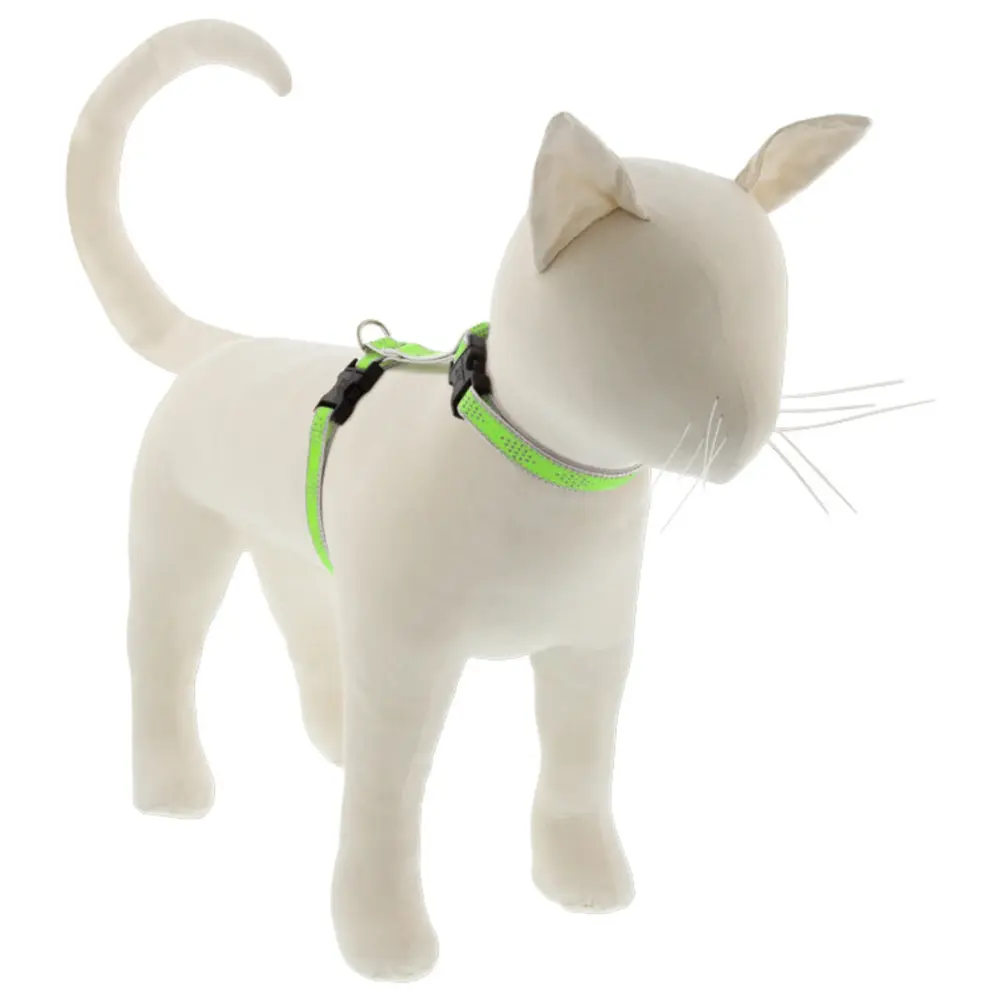
The Lupine Pet Reflective H-Style Cat Harness is made in the USA and designed for cats: two adjustable loops joined along the back, quick-release buckles and a reflective weave. It comes in 9–14 in and 12–20 in girth ranges, so measure around the chest just behind the front legs before you order.
Safety note
A harness is for outings with you holding the leash. Never leave a harnessed cat unattended or tied up outside, never clip a leash to a collar, and don’t count on a harness as a backup at the door: a frightened cat can wriggle out of one.
Mistakes that keep a cat door dashing
- Punishing the dash. Yelling, squirt bottles and shaken cans make a cat more fearful, and a frightened cat near an open door is the last thing you want. The Feline Veterinary Medical Association warns that discipline increases fear and stress and makes new habits harder to learn. Reward the alternative instead.
- Chasing a cat that slips into the hallway or yard. It runs farther, or decides the chase is a game worth repeating.
- Opening the door with your hands full. You can’t see the floor or block the gap. Put the bags down and find the cat first.
Troubleshooting: when your cat still heads for the gap
- It ignores the treat toss. Use something better, such as a favorite treat or a lick of wet food, and toss it before you reach for the handle, not as the door opens.
- It’s at the door before you are. Cats learn the signs: keys, shoes, a coat. Pick them up and put them down a few times a day without going anywhere, and send your cat to its spot before you get ready.
- It waits behind the door when you come home. Open an inch and toss a treat well back into the room so your cat turns away from the opening, then step in.
- It yowls at the door to go out. Don’t open up in response. Reward quiet moments and add a play session at that time of day.
- The behavior is new. A cat that suddenly becomes restless, vocal or desperate to get out may be stressed by a change, such as a new pet or a strange cat in the yard, or may be unwell. Ask your veterinarian to check it over.
If your cat gets out: the first hour
Don’t chase. An indoor cat that slips out usually bolts a short way and hides in silence, and International Cat Care notes that cats are often found close to home. Move slowly, crouch, speak softly and shake a bag of its favorite treats. Check under porches, decks, parked cars and shrubs nearby, search again after dark, when it is quiet enough for you to hear each other, and put your cat’s bedding outside the door so a familiar smell can help lead it home. A frightened cat may not answer at all, and it can take several days to feel safe enough to come out of hiding.
Report your cat missing to the microchip registry, local shelters and nearby vets the same day; our guide to what to do if your dog or cat is lost has the full search plan, including a night search step by step. Once your cat is home, work out exactly how it got out, fix that first and restart the door routine from step one.
Related guides
-
How-to
Working From Home With a Cat: Fewer Paws on the Keyboard
A home-office plan for cat owners: a warm bed beside the desk instead of on it, cables and coffee out of reach, play before calls, midday puzzle and lick-mat jobs, a kind fix for keyboard walkers and a gentle switch back to office days.
-
Checklist
When to Replace Dog and Cat Gear: A Monthly Wear Check
A five-minute monthly check for everything your dog or cat uses: the wear signs that mean a collar, harness, leash, toy, bowl, lick mat or scratcher insert should go, the fit checks growing and changing pets need, and what only needs a wash.
-
How-to
How to Stop Your Cat From Waking You Up at Night
Cats wake you before dawn because it is hunting time, the gap since dinner is long and waking you has paid off before. Here is a three-step plan: a bedtime hunt and meal, breakfast that doesn’t depend on you, and a firm no-response rule, plus a night setup, troubleshooting and signs to see your vet.