Cat Care Comparison
Indoor vs Outdoor Cats: Risks, Benefits and the Middle Ground
Short answer
Neither is automatically kinder. Indoor-only life spares a cat most traffic, fight and disease risks, but without daily chances to climb, scratch and hunt it can leave her stressed and overweight. Outdoor access adds exercise and choice at a real safety cost, so for many cats the best balance is an enriched indoor life plus supervised outdoor time.
Indoor, outdoor and supervised time at a glance
Most households are really choosing from four setups, not two. Supervised means time outside with you holding the leash, or in a secure enclosure; daytime access means your cat goes out on her own but comes in from dusk to dawn.
| Option | Traffic and injury | Disease and parasites | Mind and weight | Wildlife |
|---|---|---|---|---|
| Indoor only | Lowest, but escapes are risky | Lowest exposure | Stress and weight gain if under-enriched | No hunting |
| Supervised | Low, with a secure fit or enclosure | Some; ask about parasite control | Outdoor interest on your terms | Little chance to hunt |
| Daytime access | Traffic, dogs and fights by day | Higher; keep vaccines current | Exercise, choice and patrolling | Can hunt by day |
| Free access | Traffic, dogs, fights, getting lost | Highest; most contact with cats | Most choice and exercise | Can hunt day and night |
Read the table as a set of tradeoffs rather than a score. The row that is safest for the body isn’t automatically best for the mind, which is why International Cat Care (iCatCare), in its guide to keeping a cat indoors or allowing outdoor access, says there is no right or wrong answer and that the decision should rest on the individual cat. In the US, the Feline Veterinary Medical Association (FelineVMA) takes a similar line in its indoor/outdoor lifestyle position statement: every lifestyle has risks and benefits, and for cats who go out it recommends controlled access, such as an outdoor enclosure, a cat-safe fence or a harness and leash.
The case for keeping your cat indoors
The main advantage is simple: an indoor cat meets far fewer physical dangers. Staying in spares her:
- Traffic and dogs. The most obvious dangers for a cat crossing roads and yards.
- Fights. Territorial scraps with neighborhood cats, and the infections bites can pass on. VCA’s guide to enrichment for indoor cats lists feline leukemia and feline immunodeficiency virus (FIV) among the diseases free-roaming cats are exposed to.
- Parasites, poisons and getting lost. Less exposure to fleas, ticks, worms and garden chemicals, and no nights shut in a neighbor’s shed.
- Hunting. An indoor cat can’t catch birds and small animals, which matters a great deal to many owners.
The costs are quieter but just as real. iCatCare names the potential harm to an indoor cat’s mental wellbeing as the biggest issue, because long-term stress can lead to physical illness. In practice, under-stimulated indoor cats may show:
- Weight gain. A more sedentary life burns less energy, and iCatCare notes that indoor-only cats are more likely to become obese.
- Behavior problems. Scratching furniture, urine spraying, excessive meowing and anxiety.
- Frustration at the window. Watching other cats in the yard with no way to respond.
- Household accidents. Toxic houseplants such as lilies (check the ASPCA’s list of plants toxic to cats), dropped medications and falls from open windows or balconies.
- Escape risk. An indoor cat that slips out is likely at greater risk than a cat used to the outdoors, because she doesn’t know how to navigate it. Our guide to stopping a cat from running out the door covers prevention.
So is it cruel to keep a cat indoors? Not when the home meets her needs every day. The FelineVMA’s list makes a good benchmark: food and water, comfortable and safe places to rest, play and simulated hunting and foraging, vertical space and clean litter boxes. Our indoor cat enrichment ideas set that up one need at a time, and if the sofa is taking the punishment, see how to get a cat to use a scratcher.
Tip
A quick check that indoor life is working: your cat plays most days, uses her scratcher, holds a steady weight and doesn’t spend hours crying at the door or the window. A sudden change in any of those is worth a call to your veterinarian before you rearrange the house.
The case for outdoor access
The outdoors gives a cat something no living room can: a large, changing territory where she decides what to do. Outdoor access offers:
- Control and choice. Hunting, patrolling, climbing and scratching on her own schedule.
- Exercise. iCatCare notes that outdoor cats tend to be closer to an ideal weight than indoor-only cats.
- A way out of household stress. Time away from a busy home or a housemate cat she doesn’t get along with.
- More room in a multi-cat home. Extra space lets cats who share a house avoid each other, which can ease tension.
The price is risk. Traffic, dogs and wild predators, fights and the diseases that follow them, parasites, poisoning and getting lost all come with the territory. Conflict with neighbor cats isn’t always a brawl, either: iCatCare points out that cats can intimidate one another by staring or moving into another cat’s core territory, which can be a steady source of stress. A small city yard may also offer less stimulation than it seems, and some towns, leases and homeowner associations have rules about pets roaming, so check yours.
If your cat does go outside
- Health and ID first. Microchip, neuter and vaccinate before her first trip out, keep the microchip registry details current and parasite treatment up to date, and ask your veterinarian which vaccines suit an outdoor lifestyle.
- A safe collar, if she’ll wear one. A snap-open collar with your phone number on the tag; our comparison of cat collars and harnesses explains why the buckle matters.
- Daytime only. The FelineVMA advises outdoor access only during the day, with cats kept in at night, and iCatCare adds that keeping cats in at dusk and dawn also helps protect local wildlife.
- Meals indoors. Feed at set times inside, and let her out shortly before a meal so hunger brings her home.
- Give a newcomer time. iCatCare’s advice on letting a cat outside for the first time suggests two to three weeks for an adult cat to settle into a new home first, and not leaving a kitten alone outdoors until about six months old.
- A microchip cat flap. One that opens only for your cat keeps neighborhood cats out of the house, and a programmable one can lock at set times, such as overnight.
Supervised outdoor time and other middle grounds
For many cats the best answer is a bit of both: a rich indoor life plus outdoor time that you control. The main options, in brief:
- Harness walks. Short, supervised outings on a cat harness and a light leash, after a few weeks of practice indoors. Some cats love these outings and some never take to them; our guide to harness training a cat goes from first sniff to first steps outside.
- A catio or cat-safe fence. A screened enclosure attached to the house or a window lets your cat sit outside without roaming; VCA notes that ready-made catio kits are available, as well as custom builds. Fencing designed to keep cats in a yard is another FelineVMA option. Check for gaps, shade and a way back in.
- Daytime access only. For a cat who already goes out, the daytime-only routine above trims risk without taking the outdoors away.
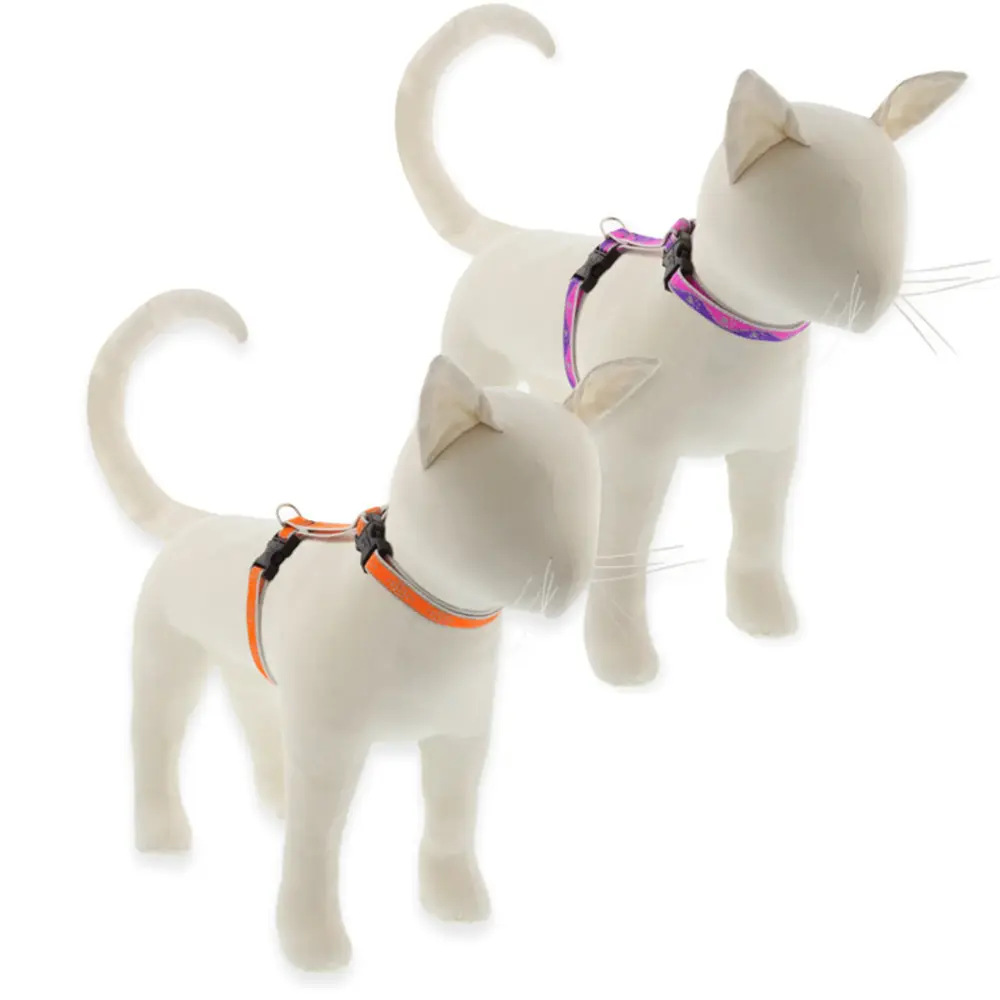
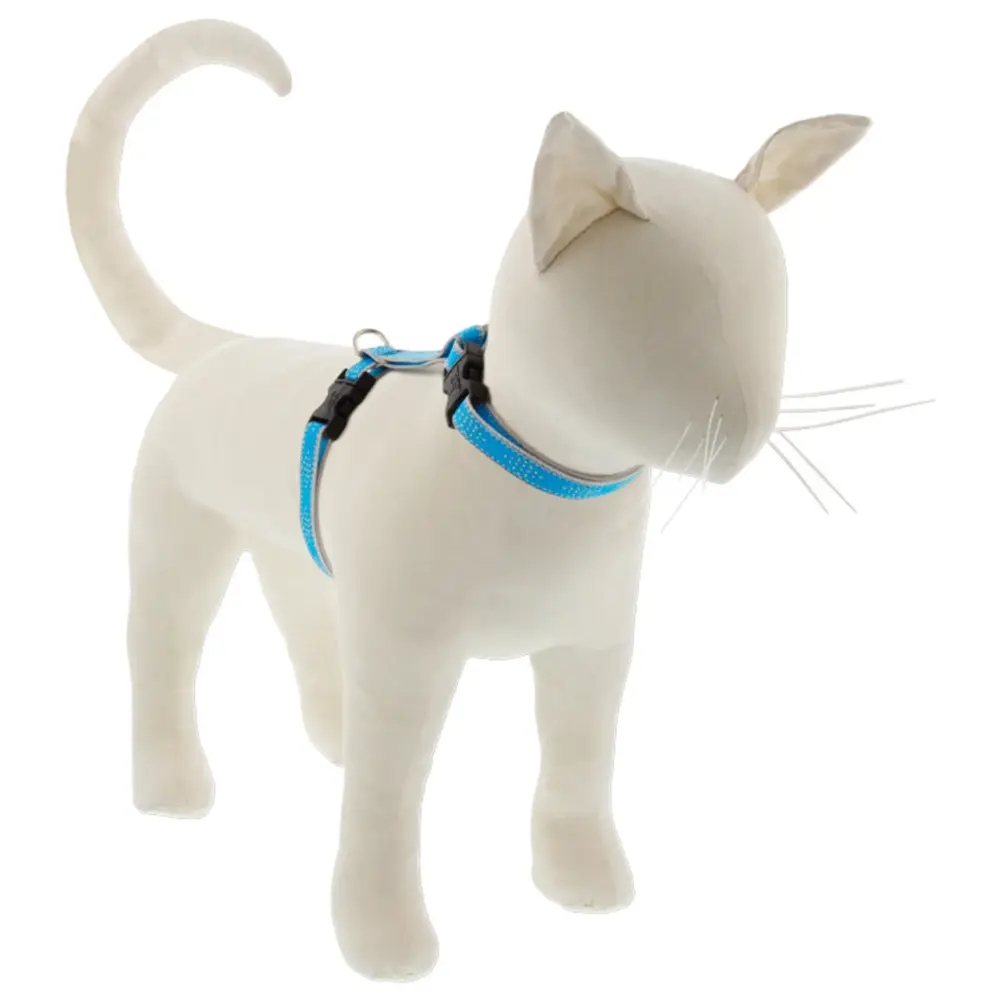
If you’re starting with a harness, the one we carry is the Lupine Pet Reflective H-Style Cat Harness, a cat-specific design made in the USA with adjustable neck and girth straps, quick-release buckles and a reflective weave. Before you order, measure around your cat’s chest just behind the front legs and match it to one of the two girth ranges, 9–14 in or 12–20 in. Torn between an H-style and a vest? Our comparison of H-style and vest cat harnesses covers fit and escape risk, and the harness sits with the rest of our cat essentials.
Safety note
Use the harness only while you’re holding the other end of the leash; a cat left harnessed alone or tied up outside can tangle, panic or back out of it. And don’t expect outings to stop door dashing: some cats ask to go out more once they know what’s out there.
Moving an outdoor cat indoors
Some cats settle into indoor life easily; others protest by scratching at doors, yowling and trying to slip out. Humane World for Animals, in its guide to bringing an outdoor cat indoors, recommends making the change gradually and suggests winter as a good time to start, when a warm, dry bed is a strong argument for staying in. Plan on weeks, not days.
- Start with a vet visit. Update vaccines and parasite control, neuter if needed and check the microchip details, and ask whether any health issue makes indoor life the better choice.
- Set up the basics first. Put out a litter box, a scratcher and a hiding spot well before the switch, especially for a cat who has always used the yard.
- Move meals indoors. Feed at set times inside and keep your cat in a little longer after each meal, instead of opening the door as soon as the bowl is empty.
- Start with nights. Bring her in before dusk and keep her in until morning, then shorten daytime trips over the following weeks.
- Replace what the outdoors gave. Play at the times she used to go out, and add a high perch by a window with a secure screen.
- Don’t answer the yowl. Opening the door for meowing teaches that meowing works. Wait for a quiet moment, then offer a game or a treat away from the door.
- Offer a managed outlet. If she keeps asking, start harness training or plan a catio, so outdoor time happens on your schedule.
If the switch isn’t going well
- Spraying or missing the litter box. See your veterinarian to rule out a medical cause; stress can show up this way too.
- Constant crying at the door. Add a play session at that time of day, and keep greetings and meals away from the entry.
- Still distressed after several weeks. Talk to your veterinarian about next steps, which may include a referral to a behavior specialist.
Skip punishment such as squirt bottles, shaken cans or yelling, even though some guides still suggest them. It adds fear to a cat who is already unsettled and gives her one more reason to want to be somewhere else.
Verdict by cat and by home
- Indoor only is the safer fit for the cats iCatCare singles out: cats with FIV, cats who are blind, deaf or unsteady on their feet, older cats showing signs of confusion, hairless breeds such as the Sphynx (sensitive to cold and sun) and white cats (at greater risk of skin cancer). It also suits homes beside busy roads and apartments with no safe outdoor space, as long as indoor life is properly enriched.
- Supervised time wins for a confident, curious indoor cat who spends hours at the window, and as an outlet for many cats moving from outdoor to indoor life. It needs an owner willing to train, supervise and stick to a schedule.
- Daytime access wins for a healthy, neutered, vaccinated and microchipped adult who is used to going out, in a quiet area away from heavy traffic, especially when a busy or multi-cat home makes indoor-only life hard. The FelineVMA notes that young and male cats take more risks and need closer watching.
- Free access around the clock carries the most risk. If your cat already has it, bringing her in from dusk to dawn is the simplest step down.
Whichever you choose, keep asking two questions: is she safe, and is she content? A cat who plays, climbs and sleeps well is doing fine; one pacing at the door needs more to do, a safe outdoor outlet or a check with your veterinarian.
Related guides
-
Comparison
H-Style vs Vest Cat Harness: Which Is Harder to Slip and Easier to Fit
An H-style harness is two light, adjustable loops; a vest wraps more of the body in fabric. See which is harder to slip out of and why fit matters more than style, how each goes on, which suits kittens, nervous cats and warm days, and how to check the fit of either.
-
Comparison
Should a Cat Wear a Collar or a Harness? ID, Outings and Safety
A collar and a harness do different jobs for a cat: a snap-open collar carries an ID tag, and a harness is the only safe place to clip a leash. Compare their safety rules and fit, see why a registered microchip is the ID every cat needs, and find out whether an indoor-only cat needs either.
-
How-to
How to Stop a Cat From Running Out the Door
Indoor cats dash for the door because it offers more smells and movement than anything else in the house, and often because that is where they get greeted. Learn a household door routine, how to teach a rewarded spot away from the entry, how to handle guests and moving day, and what to do if your cat gets out.