How to Get a Cat to Use a Scratcher Instead of the Sofa or Carpet
Scratching can’t be stopped, only moved. Here’s how to get a cat to use a scratcher instead of the sofa or carpet: copy what your cat already scratches (the same angle, a similar texture and the same spot), put the scratcher right there, and draw your cat to it with catnip, play and treats. Cover the old spot for a few weeks and skip the scolding, which won’t teach a cat where to scratch.
Short answer: put the right kind of scratcher right where your cat already scratches
Match the scratcher to the damage you’re seeing:
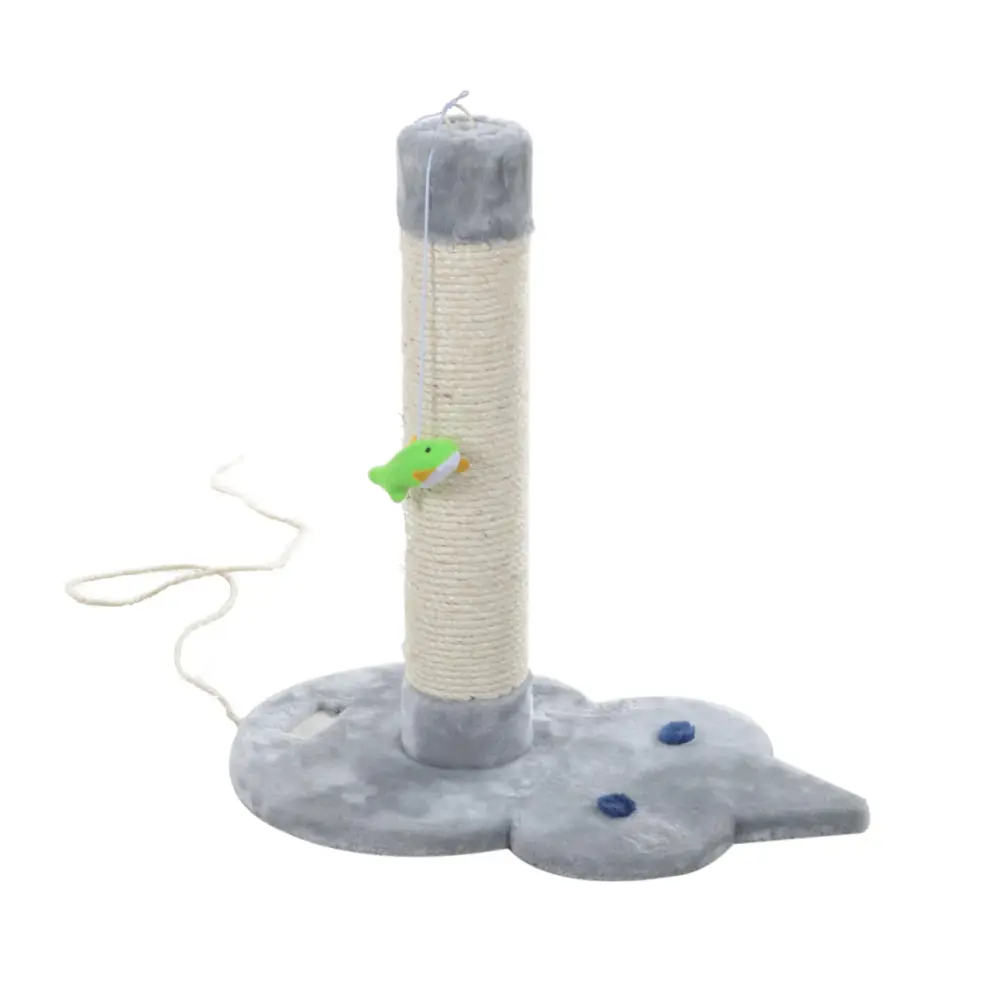
- Sofa arm, mattress side or door frame (reaching up): a tall, heavy vertical post in front of the spot.
- Carpet, rug or doormat (scratching flat): a floor-level scratcher on or beside the patch.
- The bottom stair: a flat scratcher at the foot of the stairs.
- Many spots around doors and windows: scratchers at the main ones, and a word with your veterinarian (see the FAQ).
Why cats scratch, and why the sofa wins
Scratching is normal, necessary behavior. International Cat Care’s guide to scratching on furniture and carpets explains that it removes the worn outer layer of the claws, exercises the front legs and spine, and leaves a mark: visible scratches plus scent from glands between the paw pads.
From your cat’s point of view, the sofa is hard to beat:
- It doesn’t wobble or slide when a cat hangs its weight on it.
- It’s tall enough for a full stretch, and its fabric gives claws something to hook into.
- It sits where the family spends time, often beside your cat’s favorite nap spot, and many cats scratch as soon as they wake.
- It’s already marked, so every visit tops up the scent.
If your cat keeps scratching the couch instead of the scratcher you bought, the scratcher is probably losing on one of these points: too short, wobbly, smooth or tucked away in a spare room.
Horizontal or vertical? Match the angle and texture your cat chooses
Watch a few scratching sessions first. Does your cat stand on its hind legs and reach up, or stretch out low and drag the carpet toward itself? That settles the horizontal vs vertical scratcher question.
Vertical posts for cats that stretch up
Cats that go for sofa arms, chair legs or door frames want to scratch upright. The post should be as tall as your cat at full stretch on its hind legs: measure from the floor to the highest scratch marks on the sofa or door frame, and choose a scratching surface that reaches at least that high.
A heavy or wide base matters as much as height: a post that rocks gives too little resistance, and one that tips can put your cat off it. Short on floor space? A scratching panel fixed securely to the wall at that height works too.
Floor-level scratchers for cats that scratch flat
Cats that rake the carpet, a rug, a doormat or the bottom stair are horizontal scratchers, and many lie down to do it. Kittens and older cats may prefer softer surfaces too, such as a flat or angled cardboard scratcher. Kittens start scratching at around five weeks old, according to International Cat Care, so a scratcher belongs on your new kitten checklist.
Texture: cardboard, sisal, carpet or wood
- Corrugated cardboard: easy to sink claws into and satisfying to shred, but it wears out and sheds bits, so a replaceable insert makes sense.
- Sisal: a tough natural fiber, common on tall posts, that lasts longer and resists more.
- Carpet or wood: familiar to cats that already scratch rugs, stairs or door frames.
Choose the surface closest to what your cat scratches now. If you’re not sure, offer both angles in different places. In a multi-cat home, International Cat Care recommends one per cat, plus one extra for choice, in different spots.
How to get a cat to use a scratcher, step by step
- Note the target. Where, at what angle and when: after naps, when you come home, during play?
- Choose a matching, stable scratcher. Same angle, similar texture, and solid enough that it doesn’t slide or tip when your cat pulls.
- Put it at the scene. Directly in front of the scratched sofa corner, or on the worn patch of carpet, not across the room. A second one near your cat’s bed catches the after-nap stretch; see how to choose a cat bed your cat will actually use.
- Make it interesting. Rub a pinch of catnip into the surface, drag a wand toy across it so your cat pounces and its claws catch, or set a few treats on and around it.
- Reward every use with a treat or quiet praise, especially in the first couple of weeks.
- Cover the old spot at the same time (see below), and never hold your cat’s paws on the scratcher; forcing it can frighten your cat.
- Move it slowly, if at all. Once your cat uses it reliably for a couple of weeks, shift it a few inches a day toward where you’d rather have it. Often it’s simpler to leave it where it works.
End wand-toy sessions with a pounce onto the scratcher to keep the habit going; our indoor cat enrichment ideas fit scratching into the rest of the day.
Making furniture less appealing, without punishment
While your cat learns, make the sofa or carpet a less rewarding place to scratch, never a frightening one. As VCA Animal Hospitals points out, deterrents only work when an appealing scratcher is close by.
- Cover the scratched area with a thick throw or heavy blanket, tucked in so it doesn’t shift.
- Put double-sided tape or sticky protective film made for furniture on the targeted corner. Test it on a hidden patch first.
- Lay aluminum foil over a small area; many cats dislike the feel.
- Consider a synthetic feline pheromone product, which International Cat Care says makes scratching for territorial reasons less likely; follow the label.
- Keep claws trimmed to reduce damage. If you’re wondering how to trim a cat’s nails when your cat won’t let you, start with one or two nails per session while they’re relaxed.
Skip the water spray bottle, shouting and scruffing. Punishing a normal behavior confuses your cat, and if stress is part of the reason, it adds to it. If you catch your cat mid-scratch, calmly toss a toy toward the scratcher and reward them when they use it.
Scratching aimed at you is the exception: if it starts the moment you sit down or look away, any reaction can reward it. Stay quiet and save your attention for the scratcher.
A new sofa or a real Christmas tree can draw claws too, so put a scratcher beside it from day one; see how to keep a cat out of the Christmas tree.
How to stop a cat scratching the carpet: a flat scratcher on the spot
If the damage is on the carpet, especially by a door or along the edge of a rug, put a floor-level scratcher on that exact spot, so the motion your cat already makes lands on cardboard instead.
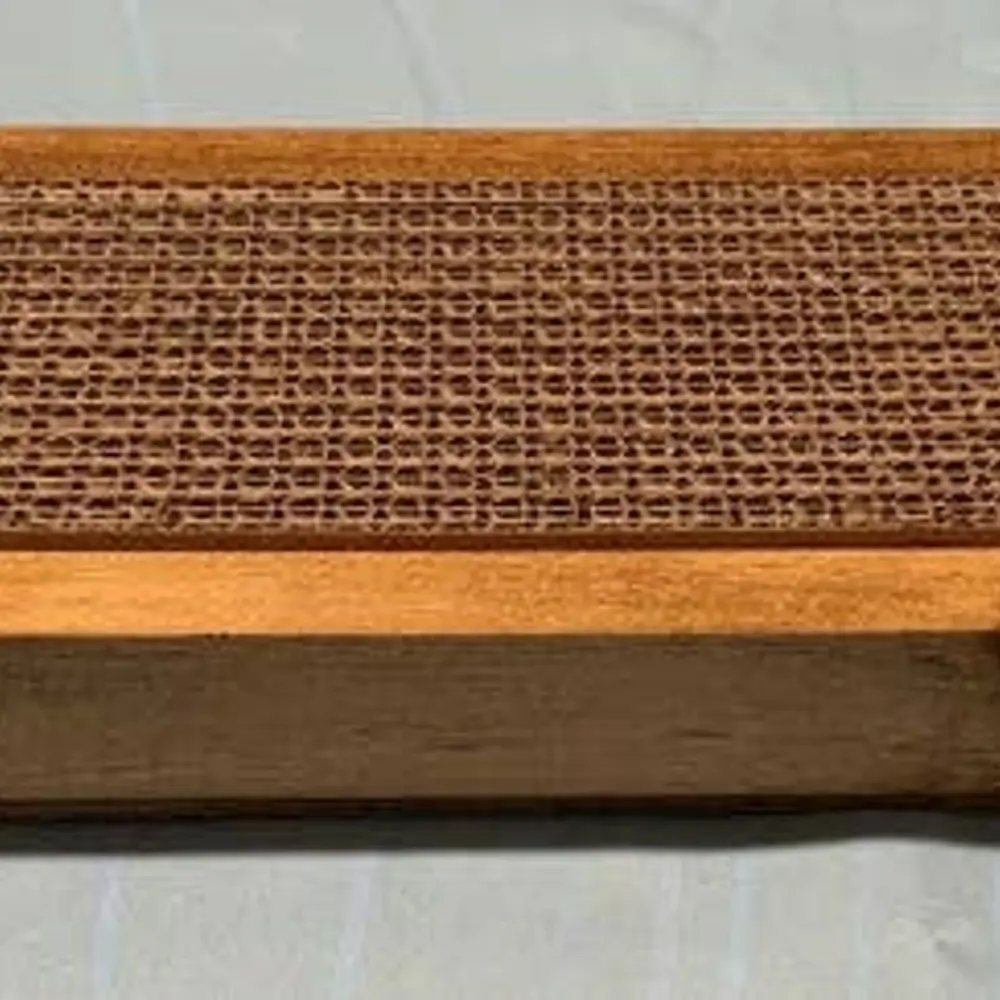
The Cat Scratcher Guy Wooden Cat Scratcher with Reversible Insert suits this job. It measures about 19.5 × 5.5 × 2 inches: a wooden frame around a reversible cardboard insert, with felt pads underneath to help protect the floor. The frame supports the insert and helps contain loose pieces, and catnip is included to help introduce your cat to it.
A cat that stands up and drags its claws down the sofa arm needs a tall, sturdy vertical post instead, which we don’t sell. Set the scratcher on a stable, level floor; if it shifts when your cat pulls, rest one end against a wall or heavy furniture.
-
Cat Scratcher Guy
Wooden Cat Scratcher with Reversible Insert
$32.95

It’s made by Cat Scratcher Guy and listed with our other indoor cat essentials.
Keeping it appealing: flipping and replacing the insert
A shredded scratcher is a used one. Its scratch marks and scent are part of the appeal, so don’t replace it the moment it looks messy.
How often to replace a cardboard cat scratcher depends on how hard your cat uses it, so skip the fixed schedule and look it over once a week. A side is done when:
- The surface is flattened or worn smooth, so claws slide instead of catching.
- The cardboard is so deeply shredded that pieces break away at every use.
- Your cat starts drifting back to the carpet next to it.
Flip the insert to its fresh side first. When both sides are worn, replace the insert and keep the wooden frame; replacement inserts are sold separately. Add a pinch of catnip to each fresh surface.
Cardboard sheds a little as it wears, so a quick vacuum around the scratcher fits into a weekly routine; see our checklist for keeping a house clean with cats.
Catnip helps a new scratcher get used, for the cats who respond to it. Does catnip work on all cats explains why a large minority never do, and what to use instead.
Cat scratching FAQ
How long does it take a cat to use a new scratcher?
Some cats use one within minutes; others take a few weeks. If your cat still ignores it after a couple of weeks of catnip, play and rewards, recheck the scratcher itself: its angle, texture, steadiness and placement.
Do cats prefer cardboard or sisal?
It varies from cat to cat. Cardboard is easier to dig into and suits flat scratchers, kittens and older cats, while sisal is tougher and common on tall posts. If you can’t tell, offer both.
Should I put catnip on a scratcher?
Yes, a little rubbed into the surface for the first few days draws many cats to a new scratcher. Not every cat reacts to catnip, and young kittens often show little interest, so use play and treats as well.
Why does my cat scratch the carpet by the door?
Doorways are a natural place to leave a mark, and many cats scratch there when excited, when you come home or when they want the door opened. A flat scratcher on that spot usually redirects it. Scratching spread around several doors and windows can mean your cat feels insecure, perhaps because of a new pet or a cat outside, so talk to your veterinarian, who can refer you to a feline behavior specialist.
Related guides
-
Buying guide
Cat Furniture for Small Apartments: Vertical Space Without the Clutter
Cat furniture advice assumes a spare room. This is for people without one: using vertical and window space instead of floor, choosing items that do two jobs, which pieces fold away, and what to skip entirely when square footage is the constraint.
-
Buying guide
Types of Cat Scratchers: Posts, Pads, Angles and Furniture
Cats scratch in a particular direction, on a particular texture, in a particular place. Watching yours for a week tells you which scratcher to buy. This guide covers the types, the materials and why stability decides everything.
-
How-to
Working From Home With a Cat: Fewer Paws on the Keyboard
A home-office plan for cat owners: a warm bed beside the desk instead of on it, cables and coffee out of reach, play before calls, midday puzzle and lick-mat jobs, a kind fix for keyboard walkers and a gentle switch back to office days.