How to Keep a House Clean With Cats: A Daily, Weekly and Monthly Checklist
To keep a house clean with cats, work in three rhythms: a few minutes every day, a reset once a week and a short list of jobs once a month. Scoop the litter box and wash the bowls daily; brush your cat, wash bedding and change all the litter weekly (brush a long coat every few days); and each month check the box and the scratcher, wash toys and clean where hair drifts.
Short answer: four sources of mess, each with its own habit
Most advice on how to keep a house clean with pets is written for dogs and muddy paws. Cat mess comes from four places, and a good cleaning schedule for cat owners gives each one a habit:
- The litter box: daily scooping, a weekly full change and a mat at the exit.
- The coat: regular brushing, so loose hair ends up on the brush, not the sofa.
- The feeding spot: bowls washed daily.
- Fabrics and rugs: weekly washing, plus a rake for hair caught in the pile.
If you only manage one job a day, make it the litter box. A clean box keeps odor down and keeps your cat using it.
Daily: litter, bowls and a two-minute sweep
- Scoop at least once a day. That is the baseline in the ASPCA’s advice on litter box care. Remove every clump and all solid waste, then top up the litter.
- Sweep the litter area. Keep a small broom or handheld vacuum by the box and sweep along your cat’s path out of the room.
- Wash the bowls. The CDC’s guidance on cleaning pet supplies is to clean wet-food bowls after every use, and dry-food and water bowls every day.
- Clean up hairballs and accidents promptly. Lift solids with a paper towel, blot rather than rub, then use an enzymatic cleaner made for pet messes. If your cat brings up hairballs often or vomits more than occasionally, see your veterinarian.
Wear disposable gloves for litter and wash your hands with soap and water afterward. The CDC also advises that anyone who is pregnant or has a weakened immune system let another household member clean the litter box. If granules turn up rooms away, see how to stop cat litter tracking.
Weekly: brushing, bedding, fresh litter and the rugs
Pick one day and work in this order: brush first, so less hair lands on clean surfaces, and do the floors last to catch anything the litter change scattered.
- Brush your cat. Short coats usually need it once or twice a week, long coats every few days or daily; see how often to brush a cat, by coat length.
- Wash bedding and throws. The CDC suggests cleaning pet beds and blankets every week; follow each care label.
- Change all the litter. The ASPCA recommends emptying every box once a week, washing it with warm water and unscented soap, and refilling it with fresh litter. Keep the box out of the kitchen sink: the CDC suggests a laundry sink, a bathtub or a tub kept for pet items, cleaned and disinfected afterward.
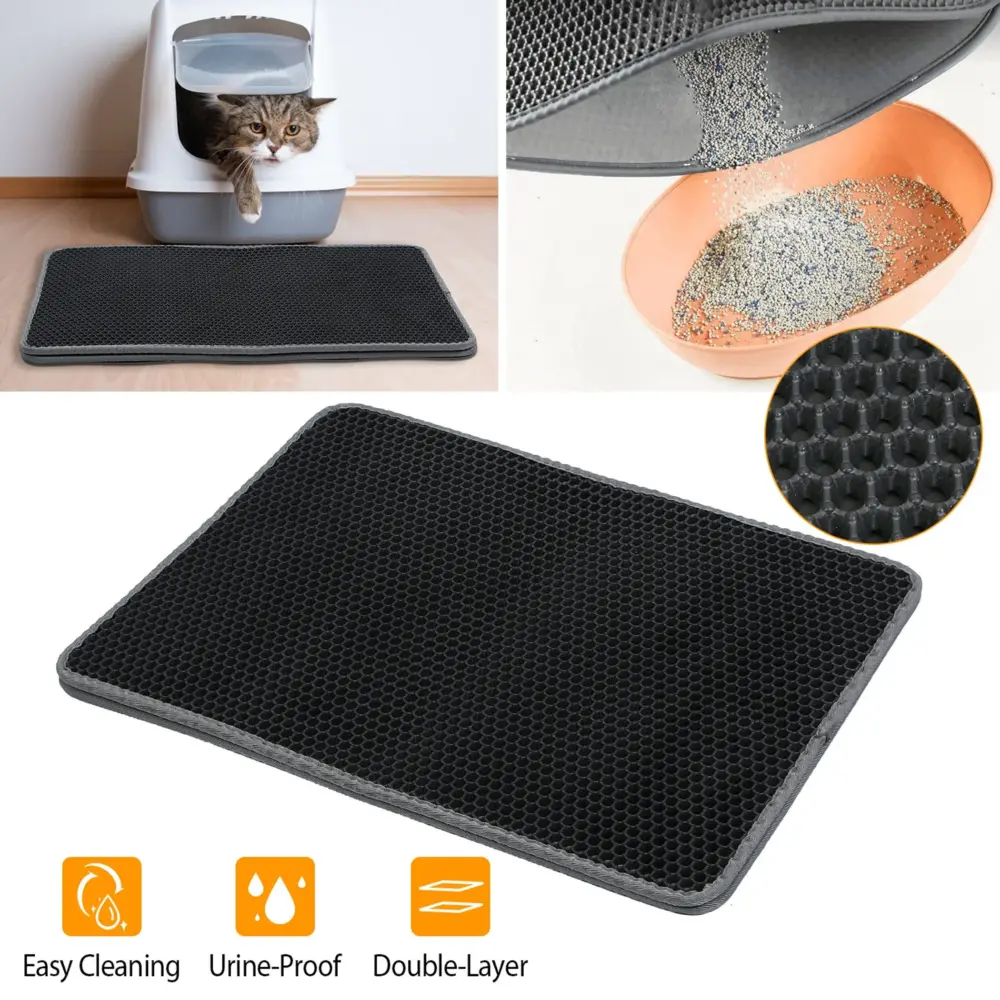
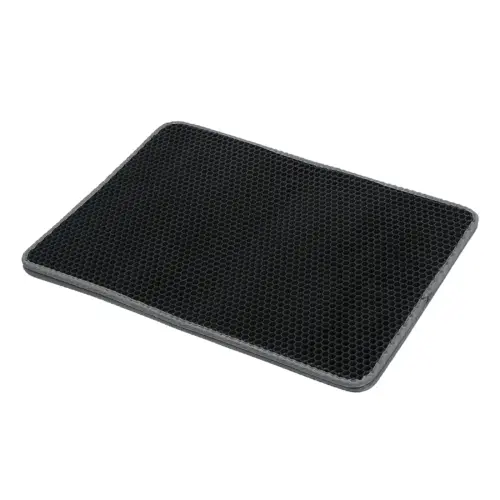
- Shake out the litter mat. Our Double-Layer Honeycomb Cat Litter Trapping Mat holds caught litter in its lower layer and opens like an envelope, so between washes you can pour it back into the box. Once a week, shake or rinse it, let it dry completely and lay it flat against the box exit; its waterproof base protects the floor.
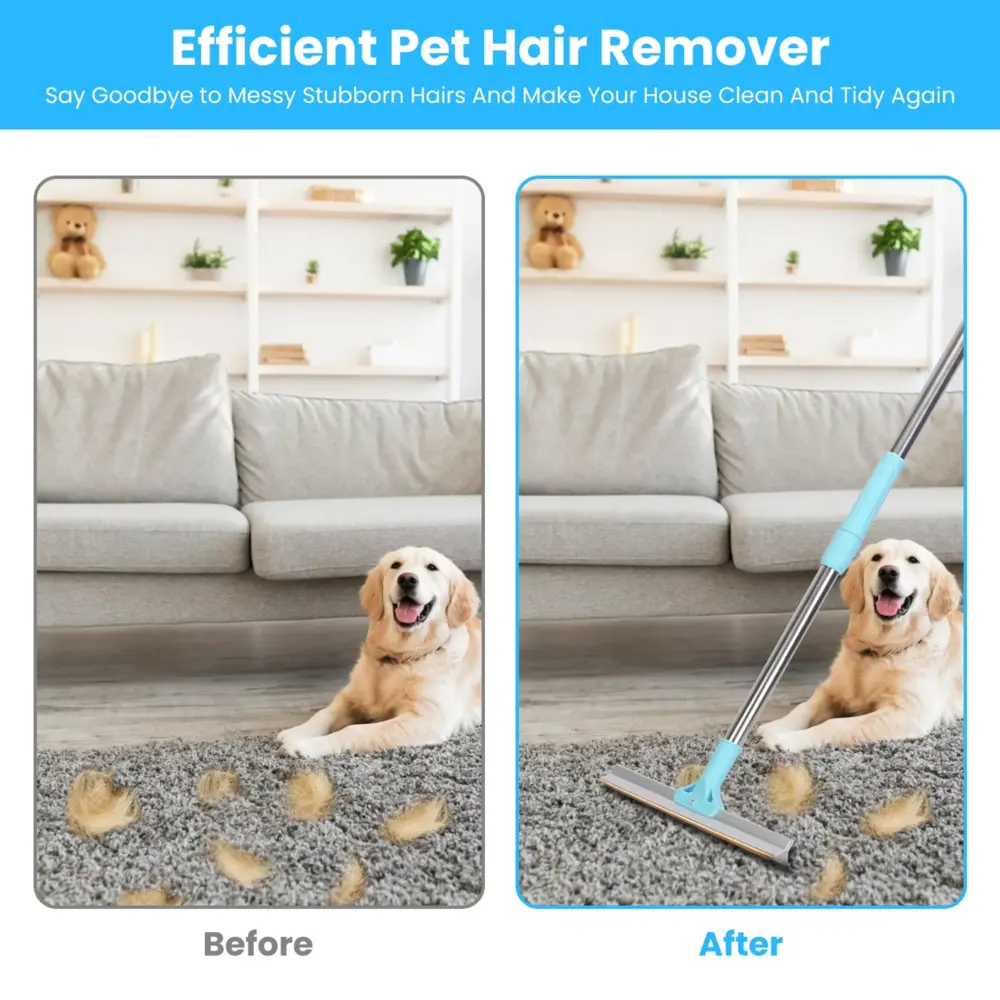
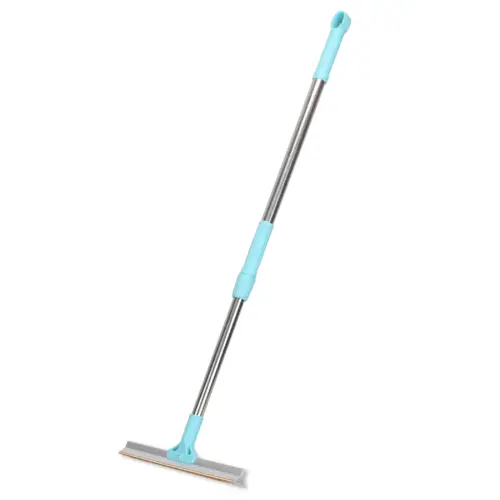
- Vacuum, rake, then vacuum again. Fine cat hair works into rug pile, where a vacuum skims over it. The firm rubber teeth of our Telescopic Pet Hair Removal Rake drag it to the surface, and the telescopic handle lets you work standing up. Test a hidden corner of wool, shag or delicate rugs first; the full method is in how to get hair out of carpet, rugs and car mats, cat hair included.
Monthly: the box, the scratcher and the hidden corners
- Inspect the litter box. Claws and scoops scratch plastic, and the scratches hold odor. If a freshly washed box still smells, replace it. Wash the scoop, and wipe the wall and floor around the box.
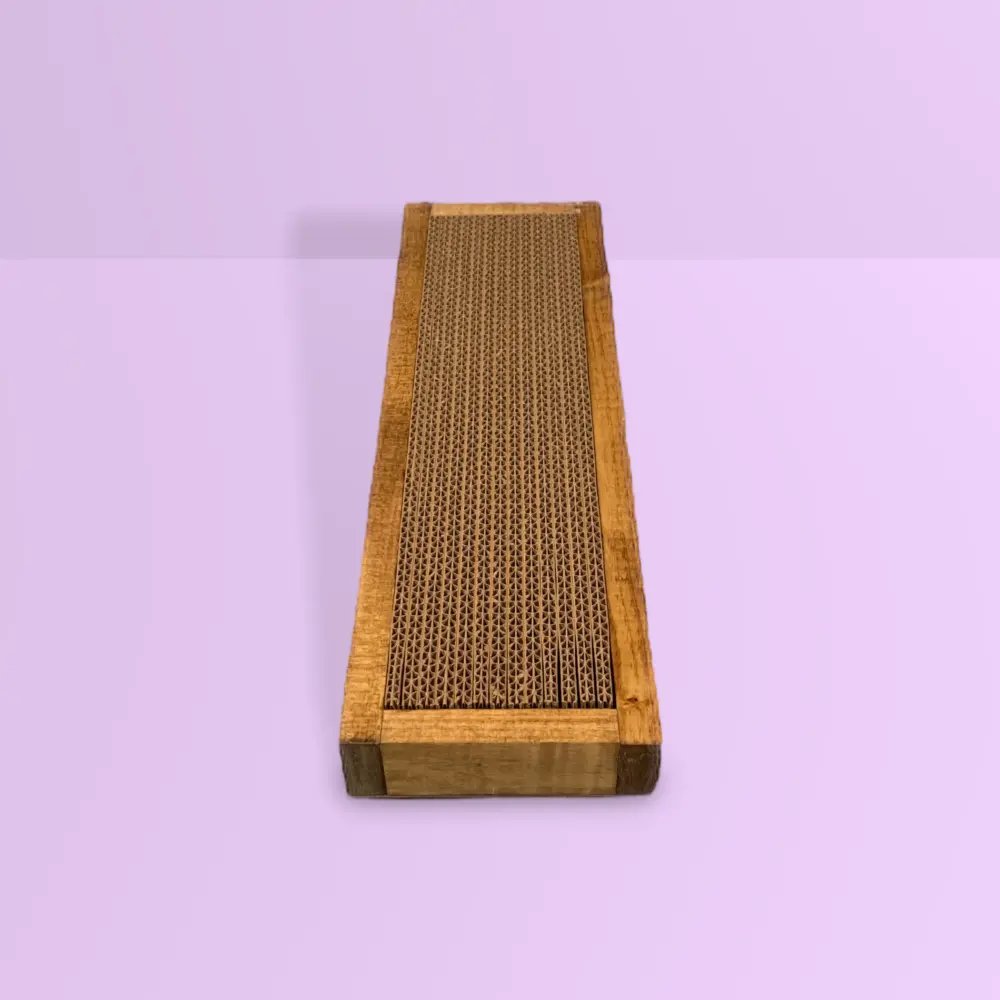
- Check the scratcher. A shredded surface means your cat uses it; once claws slide instead of catching, it is worn out. The Cat Scratcher Guy Wooden Cat Scratcher has a reversible cardboard insert: flip it first, then replace it (inserts are sold separately). Its wooden frame helps contain loose pieces, and felt pads underneath help protect the floor.
- Wash toys. The CDC suggests cleaning toys monthly: fabric ones in a laundry bag in the machine, hard ones in hot soapy water. Throw out frayed toys and any with loose parts.
- Clean where hair drifts: under sofa cushions, beneath beds, along baseboards and on windowsills.
- Check air filters. Hair clogs them faster; replace them as the filter maker recommends.
If your cat ignores the scratcher in favor of the sofa, see how to get a cat to use a scratcher.
-
Cat Scratcher Guy
Wooden Cat Scratcher with Reversible Insert
$32.95
-
Double-Layer Honeycomb Cat Litter Trapping Mat
$53.95

Seasonal: shedding peaks and holiday guests
Shedding peaks
Some cats, especially those who spend time outdoors, shed heavily in late spring and fall, while indoor cats more often shed at a lower level all year. When tufts come away in your hand, add a brushing session or two a week, rake the busiest rugs twice a week and wash throws more often.
Before holiday guests
- Two days before: brush your cat, wash throws, rake the rugs and lint-roll the sofa.
- On the day: scoop, sweep and empty the litter mat.
- Give your cat a quiet room away from the front door, with its box, water and bed.
- Keep a lint roller by the door, and tell guests you have a cat so anyone with allergies can plan.
- In December, sweep up tinsel, ribbon and string daily. If string hangs from your cat’s mouth or rear, don’t pull it; call your veterinarian. For safer decorating, see how to keep a cat out of the Christmas tree.
Cat hair everywhere? Start with the cat
When there is cat hair everywhere in the house, cleaning more often only goes so far while the loose hair is still on your cat. Brushing catches it before it reaches the sofa and your clothes.
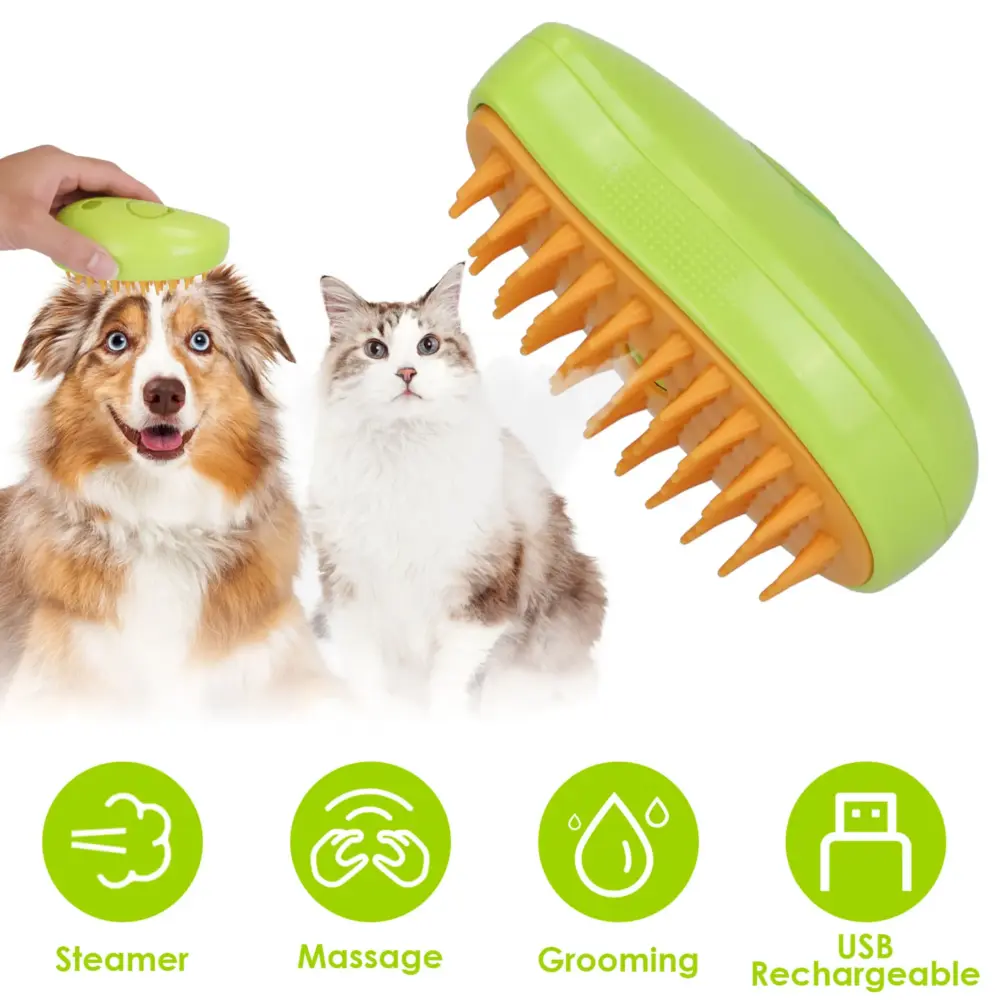
For short-haired cats, our 3-in-1 Steam Grooming Brush releases a fine mist from a small refillable tank as you brush, weighing down loose hair and dander so more of it collects on the soft silicone pins instead of floating around the room. Fill it with clean water, brush with the lie of the coat in short strokes and keep the mist away from your cat’s face; if the spray worries your cat, start without it. Long, tangle-prone coats need a slicker brush as well.
Then clear what has already escaped:
- Furniture: a barely damp rubber glove or a lint roller lifts fine hair; for methods by fabric, see how to get pet hair off a couch, fabric by fabric.
- Rugs and stairs: vacuum, rake, then vacuum again; see our pet hair removal tools.
- Clothes: lint-roll dark fabrics and put clean laundry away before your cat finds it.
If your cat suddenly sheds in clumps, grooms constantly or develops bare or irritated patches, ask your veterinarian.

Keeping the litter box and the house from smelling
Odor usually means waste left too long, a box that has soaked it up or an old accident you have not found. Before you reach for an air freshener, check these:
- Offer enough boxes: the ASPCA suggests one per cat plus one extra, so two cats need three.
- Use unscented litter and cleaners. The ASPCA warns that a cat can develop an aversion to a scent.
- Skip ammonia-based cleaners. Urine contains ammonia, so the smell can draw a cat back to the same spot.
- Treat accidents outside the box with an enzymatic cleaner made for pet odors.
A sudden change in litter habits, such as going outside the box, straining or frequent trips with little result, is a reason to call your veterinarian. A cat straining with little or nothing coming out, especially a male, needs a veterinarian or emergency clinic right away.
How to keep a house clean with cats: a printable checklist
For more help room by room, browse our home and cleaning guides.
Every day
- Scoop the box and top up the litter
- Sweep around the box
- Wash bowls and refresh water
- Spot-clean hairballs and accidents
Every week
- Brush your cat (more often for long coats)
- Wash bedding and throws
- Empty, wash and refill the litter box
- Shake or rinse the litter mat
- Vacuum, rake and vacuum the rugs again
Every month
- Inspect the litter box; replace it if it smells after washing
- Flip or replace the scratcher insert
- Wash toys
- Clean under cushions and beds
- Check air filters
Each season
- Extra brushing and raking in spring and fall
- A pre-guest clean before the holidays
Cat home cleaning FAQ
How do I get rid of cat hair in the house?
Brush your cat regularly, then work surface by surface: a damp rubber glove or lint roller on furniture, a vacuum and a rubber-toothed rake on rugs, and weekly washes for throws and bedding. Check air filters monthly, since hair clogs them faster.
How often should I clean the litter box?
Scoop at least once a day, and more often with several cats. Once a week, empty the box, wash it with warm water and unscented soap and refill it with fresh litter, as the ASPCA recommends.
Why does my house smell like cat when the litter box is clean?
Usually something else has soaked up urine: an old accident on a rug, bedding, the floor under the box or a scratched plastic box. Wash fabrics, treat stains with an enzymatic cleaner and replace an old box. If your cat has started going outside the box or spraying, ask your veterinarian, since a health problem can be the cause.
How often should I wash my cat’s bed?
About once a week, as the CDC suggests, and sooner if it is soiled or smells; follow the care label. If your cat avoids the bed after a wash, rotate two blankets so one always smells familiar.
Related guides
-
Checklist
How to Protect an Apartment From Pet Damage: A Renter’s Checklist
A renter’s checklist for living with a dog or cat: photos and lease questions at move-in, prevention for carpet, doors, floors and odor while you live there, and a room-by-room deep clean before you hand back the keys.
-
Buying guide
Practical Gifts for Cat Owners: Litter, Shedding, Nails and Vet Trips
Useful gifts that take work off a cat owner's list: a trapping mat for tracked litter, a mist brush or slicker for shedding, a rake for hair in rugs, a quiet nail grinder and a top-opening carrier for vet trips, plus what to find out before you buy.
-
Guide
What to Get Your Cat for Christmas: Gifts for Hunters, Scratchers, Nappers and Snackers
Choose a Christmas gift by instinct: a chase toy for the hunter, a floor scratcher for the rug clawer, a warm cave bed for the napper and a lick mat for the fast eater. Plus safe unwrapping, gifts for cat owners and what to skip in a home with cats.