How Often Should You Brush a Cat? A Schedule for Short and Long Coats

How often should you brush a cat? Once or twice a week is enough for most short-haired cats. Long-haired cats need brushing every few days at the very least, and every day if the coat is silky, curly or quick to knot. Plan on about 5 minutes a session for a short coat and 5 to 15 for a long one, and add sessions during heavy shedding and as your cat ages and grooms less.
Short answer: the longer the coat, the closer to daily
Two well-known sources set the range. The ASPCA’s cat grooming tips suggest one or two brushings a week, and grooming sessions every few days for long-haired cats who live indoors. VCA Animal Hospitals’ guide to grooming and coat care for cats recommends daily brushing for long, silky or curly coats and says short coats may need it less often.
Read together: the longer, finer and denser the coat, the closer you move to daily. Start at the low end for your cat’s coat and add sessions when you see the signs below.
How often should you brush a cat? A schedule by coat length
If your cat’s fur forms a ruff around the neck or fluffy “britches” on the back legs, use the long-coat schedule, even if the rest of the coat looks easy. Not sure whether a short coat is plush? Part the fur to the skin: a soft, dense underlayer means more undercoat to clear.
Short, sleek coats: once or twice a week
A short coat that lies flat, as on most domestic shorthairs and Siamese cats, rarely tangles. A brush once or twice a week lifts loose hair before it lands on the sofa and, as VCA notes, spreads natural skin oils along the hair. Beyond that, how often to brush a short-haired cat depends on how much loose hair you want around the house; more is fine if your cat enjoys it.
Medium-length and plush coats: two or three times a week
Semi-long coats and thick, plush short coats, such as a British Shorthair’s, hold more loose undercoat than a sleek coat and can clump on the backs of the thighs and behind the ears. Two or three short sessions a week usually keep them smooth.
Long, silky or curly coats: every few days to every day
Persians, Maine Coons and other long-haired indoor cats shed all year, and their soft undercoat knots behind the ears, in the armpits, along the belly and on the backs of the hind legs. Every few days is the minimum. Daily is often easier on both of you: sessions stay short, and small tangles never tighten into mats. A fine, silky coat like a Persian’s usually needs it.
For the full routine, including how to ease out a small mat, see how to groom a long-haired cat at home, mats included.
How long a brushing session should take
There is no fixed timer for how long to brush a cat, and most cats prefer short sessions. As a rough guide:
- Short coat: about 5 minutes for a full brush-down.
- Medium or plush coat: 5 to 10 minutes.
- Long coat, brushed daily: 5 to 10 minutes on one or two areas, plus a quick check of the knot-prone spots.
- Long coat, brushed every few days: 10 to 15 minutes, split into two sittings if your cat gets restless.
A section is done when the brush slides from root to tip without snagging and each stroke brings out only a few hairs. If your cat loses patience after a minute, stop while they are calm, give a treat and do another area tomorrow. For a cat who allows only a few strokes, start with our guide to brushing a cat that hates being brushed.
Shedding seasons, older cats and cats who groom less
Shedding season
VCA notes that some cats in cooler climates, particularly those who often go outdoors, have two heavy sheds a year, in late spring and late fall. Cats who live indoors more often shed at a low level all year.
When the undercoat starts coming out in tufts, add a session or two a week. A double-coated cat, with a soft, dense undercoat under longer guard hairs, can finish with a few light strokes of a de-shedding tool, two or three times a week at most in shedding season. Skip it on thin or single coats.
Older cats
Many cats groom less thoroughly as they age, and the ASPCA points out that regular brushing is especially helpful then. VCA adds that arthritis or extra weight can keep a cat from reaching parts of its body, so loose hair and small clumps build up first on the lower back, the base of the tail and the back legs.
Brush those areas a little more often, with lighter pressure, in several two- or three-minute sessions rather than one long one. If your cat flinches or cries out when you touch the back or hips, stop and ask your veterinarian; it can be a sign of pain.
A cat who stops grooming
A cat who suddenly stops grooming, or whose coat turns greasy, dull or unkempt, may be unwell rather than overdue for a brush; VCA notes that coat appearance can be the first sign of a health problem. Book a visit with your veterinarian.
Signs it’s time to brush more often
Move up a step on the schedule if you notice any of these:
- Stroking your cat leaves hair on your hand or your clothes.
- Tufts gather in corners and on your cat’s favorite blanket within a day or two of cleaning.
- The brush catches partway through a stroke.
- Small knots appear behind the ears, in the armpits, in the groin or on the backs of the hind legs.
- Soft undercoat pokes out through the topcoat.
For the hair that has already escaped, see how to keep a house clean with cats, with a daily, weekly and monthly checklist.
Some changes call for your veterinarian, not more brushing: bald patches, scabs, red or flaky skin, constant licking or scratching, or a coat that turns greasy or matted quickly. Tight mats go to a groomer or veterinarian, never to scissors: cat skin is thin and easy to nick, and VCA advises removing mats with clippers only.
Which brush for which coat, in brief
Whichever brush you use, keep the pressure light.
- Short-haired cats: the 3-in-1 Steam Grooming Brush is rechargeable, with soft silicone pins and a small refillable water tank. Despite the name, pressing it releases a fine mist that settles loose hair and dander onto the pins. Brush with the lie of the coat in short strokes, keep the mist away from the face, and skip the mist at first if your cat is wary of the spray.
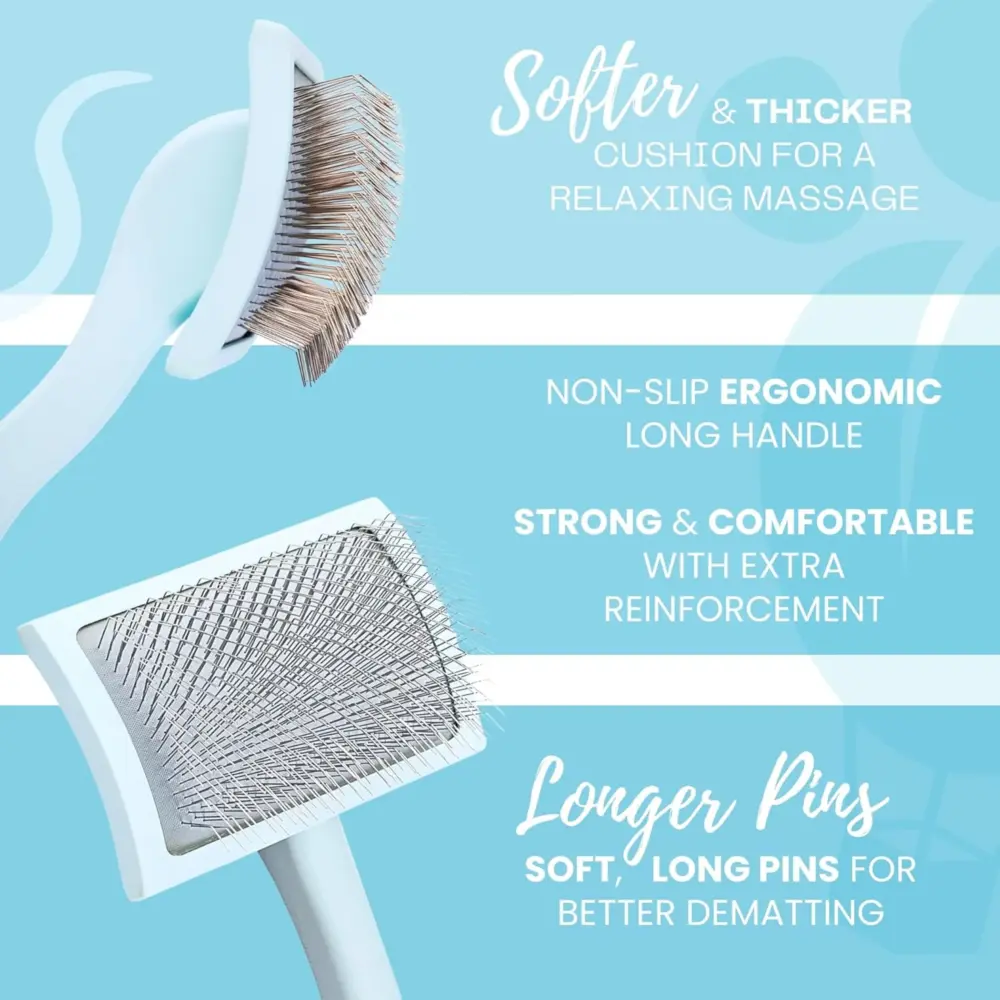
- Medium and long-haired cats: the Sakabase Curved Slicker Brush has a curved head with fine, firm pins that reach the undercoat on long and thick coats. Work in sections; on a small tangle, hold the hair at the base and brush from the ends inward.
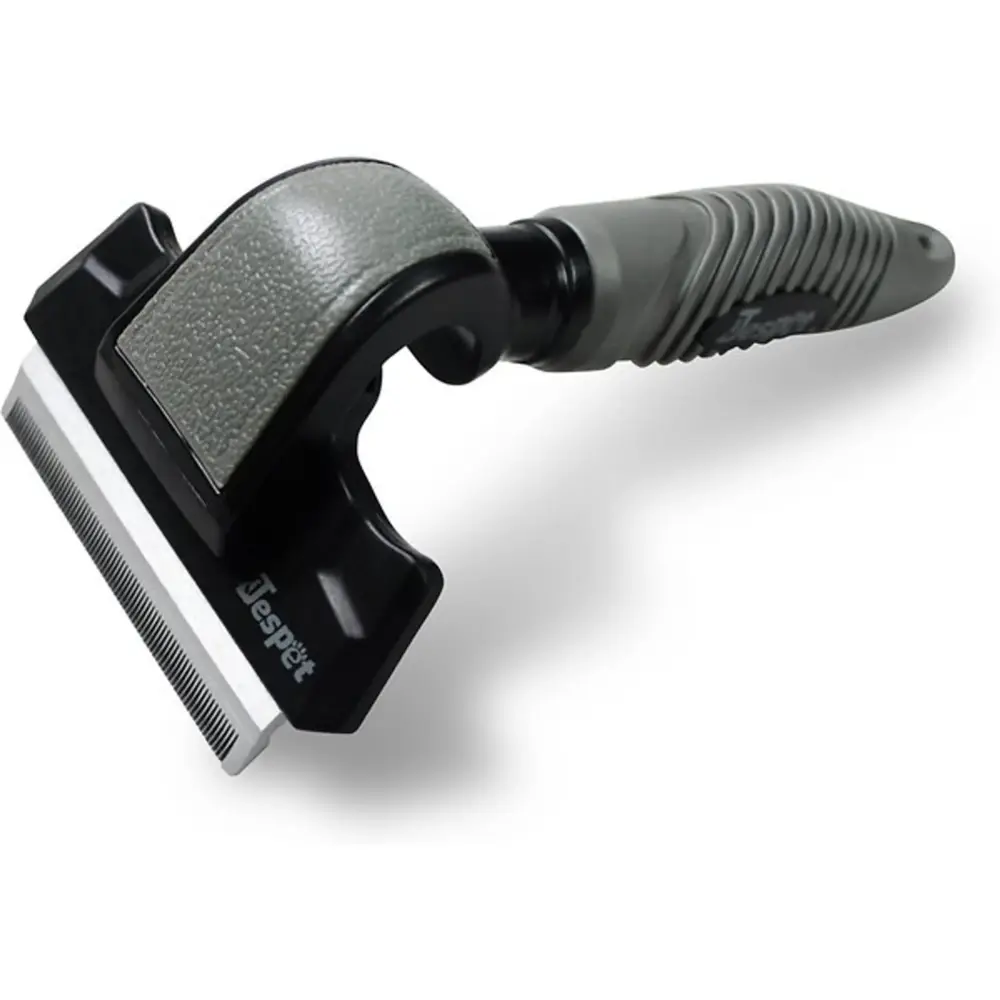
- Double-coated cats: the JESPET De-Shedding Tool, in Small or Large, has a stainless-steel edge that lifts loose undercoat. Use it after the regular brush, never over a mat, with light, short strokes in the direction the hair grows, and clear the edge as you go.
For a fuller comparison, read slicker brush vs deshedding tool: which one your cat needs, or browse our dog and cat grooming tools.
-
3-in-1 Steam Grooming Brush for Cats & Dogs
$36.95
-
JESPET
De-Shedding Tool for Dogs & Cats
Price range: $27.95 through $29.95
-
Sakabase
Curved Slicker Brush
$39.95



A simple weekly plan
Tie brushing to something that already happens daily, such as the evening meal, and keep the brush in sight.
For a short-haired cat
- Two set days, say Sunday and Wednesday: about 5 minutes with the brush, ideally when your cat is relaxed after eating.
- Once a week: run your hands over the whole body to feel for knots, bumps, scabs or sore spots.
- In shedding season: add a third session, and finish with a few strokes of the de-shedding tool if the coat is plush and double.
For a long-haired cat
Rotate through the coat over four days, with a 30-second check behind the ears and in the armpits every day:
- Day one: back and sides, 5 minutes.
- Day two: chest, belly and armpits, a few strokes at a time.
- Day three: back legs, the “britches” and the tail.
- Day four: a full, light brush-through, then start again at day one.
If a silky coat still knots between turns, add a quick, light brush-through on the other days. Fell behind? Spread the catch-up over several short sessions, and leave tight knots to a groomer.
Brushing a dog as well? See how often to brush a dog, by coat type, or find more grooming and shedding guides.
Cat brushing FAQ
Do cats need to be brushed?
Yes, though how much depends on the coat. Cats groom themselves, but brushing removes loose hair before it reaches your furniture, catches tangles before they turn into mats and gives you a regular look at the skin. Short-haired cats need little; long-haired cats can mat without it.
Is it OK to brush your cat every day?
Yes, for most cats, with a suitable brush, light pressure and a few minutes at a time. You can overdo it, though: pressing hard, going over one spot repeatedly or overusing a de-shedding tool can leave the skin pink or the topcoat thin. Stop at the first redness, and ask your veterinarian about skin that stays irritated.
Should you brush a cat with or against the fur?
With it. The ASPCA advises working along the lie of the fur, in the direction the coat grows; brushing against it tugs at the roots, and most cats dislike it. To reach the layer next to the skin on a thick, long coat, part the fur with your free hand and brush beneath it instead.
Do indoor cats need to be brushed?
Yes. Indoor cats tend to shed a little all year rather than in two seasonal bursts, so the schedule for their coat length still applies.
Related guides
-
Buying guide
Types of Dog Brushes: Which Brush Suits Your Dog’s Coat
Slicker, de-shedding tool, pin, bristle, rubber curry, comb or rake: what each type of dog brush does, a coat-by-coat table of the ones your dog needs, the three tools we stock and the ones we don’t, and the signs a brush is wrong for the coat.
-
Comparison
Should You Shave Your Dog in Summer? What to Do by Coat Type
A shaved double coat doesn’t cool a dog and can grow back patchy. See which coats can take a summer trim, when a shave-down is the right call, a hot-weather brush-out routine, what to do if your dog is already shaved, and how lion cuts work for cats.
-
How-to
How to Use a De-Shedding Tool on a Dog or Cat Without Overdoing It
Use a de-shedding tool on a dry, detangled double coat, in light strokes with the grain, on the body only. Here’s how to pick a size, run a session step by step, which areas to skip, how often to de-shed, the signs you’re overdoing it and how to use one on a cat.