Grooming & Shedding Buying guide
Types of Dog Brushes: Which Brush Suits Your Dog’s Coat
Short answer
The coat decides which type of brush you need; your dog’s size only changes the head size. Long, curly and wire coats need a slicker and a metal comb, smooth coats a rubber or bristle brush, and double coats add a de-shedding tool or undercoat rake when they shed. Pin brushes are finishing tools for long coats.
Our picks at a glance
- Curved Slicker BrushOur detangling brush for medium to long coats
- De-Shedding Tool for Dogs & CatsOur undercoat tool for double coats in a shed
Match the brush to the coat, not the dog’s size
A Chihuahua and a Saint Bernard need different-sized brushes, as the AKC’s guide to choosing the right dog brush points out, but size only changes the head you buy. The type of brush comes from the coat, and four things decide it:
- Length. Short hair lies flat and rarely tangles. Medium and long hair knots behind the ears, in the armpits and along the backs of the legs.
- Undercoat. A double coat has a soft, dense layer under the longer guard hairs, and that layer does most of the shedding. Not sure? See how to tell if your dog has a double coat.
- Texture. Curly coats hold on to shed hair and mat close to the skin. Wire coats are harsh and springy, and that texture is usually kept by hand-stripping, a groomer’s job.
- Skin and temperament. Older, thin-skinned or touch-shy dogs need softer tools and a lighter hand, whatever the coat.
If your dog’s coat sits between two types, as many doodles’ and mixed breeds’ coats do, buy for the one that tangles more.
Slicker brushes: fine wire pins for tangles
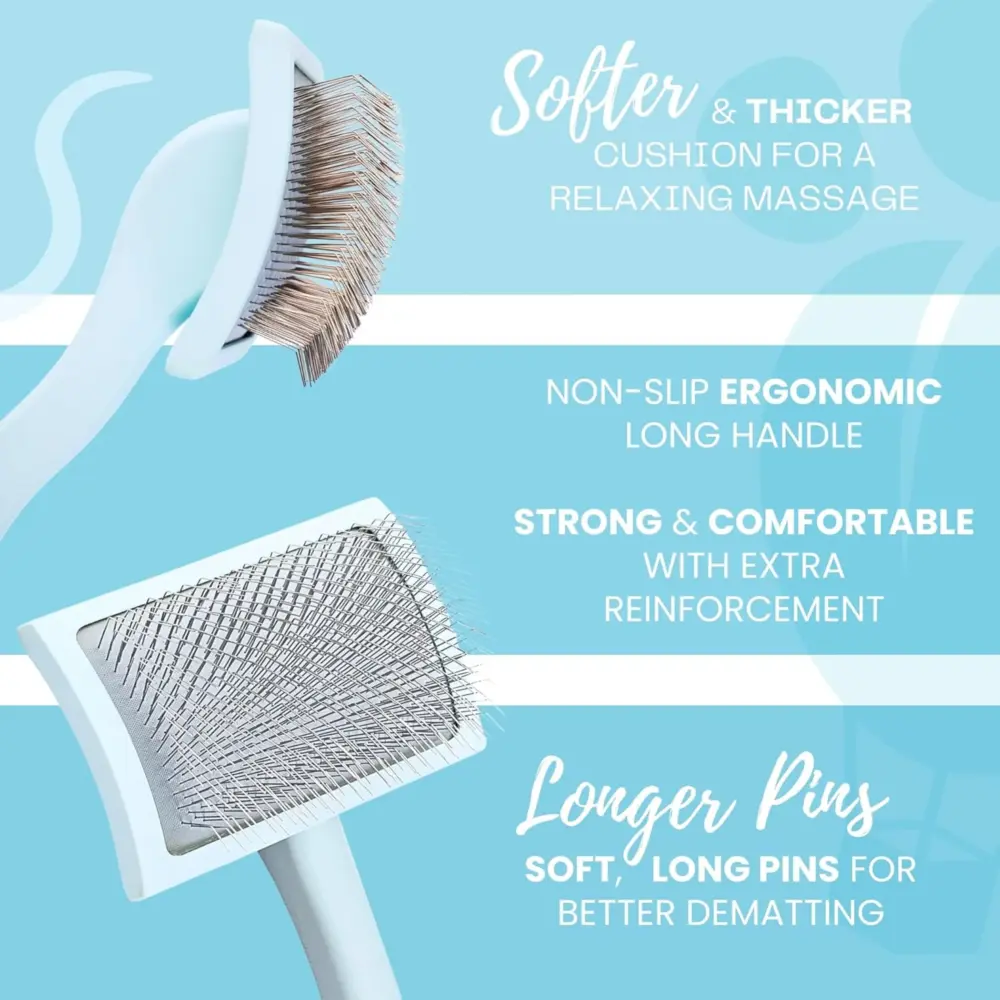
A slicker has a dense bed of short, fine wire pins, usually angled, on a flat or curved head. The pins separate tangles and catch loose hair as they go, and on a long or thick coat they reach down to the undercoat. The AKC recommends slickers for medium, long, wire and curly coats, so for most dogs with anything longer than a short coat, this is the brush that does most of the work.
Suits: Golden Retrievers, Collies, Yorkies, Poodles, doodles, terriers and long-haired mixes. Doesn’t suit: smooth, short coats like a Boxer’s, where the wire pins have little to grip and can feel scratchy on thin hair.
The tradeoff is pressure. The AKC advises a light touch, because pressing down hard can make your dog uncomfortable; the pins should glide through the coat rather than drag across the skin. Grip, pressure and brushing in sections are covered in how to use a slicker brush without scratching the skin.
De-shedding tools: a steel edge for loose undercoat
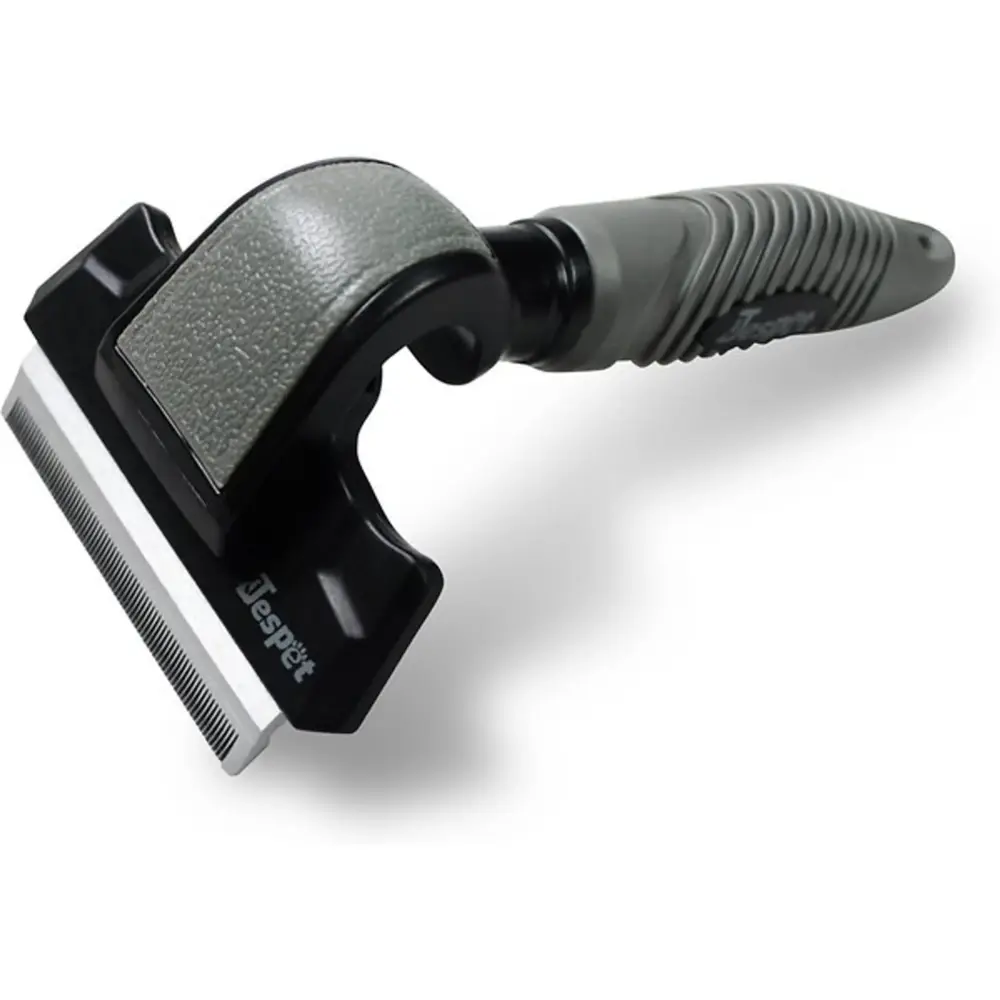
A de-shedding tool has a short, fine-toothed steel edge instead of pins. It slips under the guard hairs and catches loose undercoat, the soft hair that ends up on the sofa when a double-coated dog sheds. It copes with light tangles at most: knots catch and pull on the edge, so on a longer coat the slicker goes first.
Suits: double coats, short or long, such as a Labrador’s, a German Shepherd’s or a Husky’s, mostly during seasonal sheds. Doesn’t suit: single, curly or long, silky coats, where there is little undercoat to catch and the edge can snag or thin the hair. Weighing it against a slicker? Our slicker brush vs deshedding tool comparison explains which coats need one, the other or both, and in what order.
Safety note
Keep a de-shedding tool off mats, the face and any red, sore or broken skin, and keep sessions short: overuse can thin the topcoat and leave the skin pink. Our guide to using a de-shedding tool without overdoing it covers pressure, timing and the warning signs. Bald patches, or irritation that doesn’t settle, are a question for your veterinarian, not a reason to brush harder.
Pin and bristle brushes: finishing and smoothing
Pin brushes
A pin brush looks like a human hairbrush: spaced-out wire pins, often with rubber or plastic tips so they don’t scratch. The AKC rates it a finishing brush for long-coated breeds rather than an all-rounder. That is the real difference from a slicker: a slicker’s short, dense pins work into tangles, while a pin brush’s longer, spaced pins smooth and lift hair that is already tangle-free. It does little against tight knots or loose undercoat, so a pin brush follows the slicker rather than replacing it.
Bristle brushes
A bristle brush has tightly packed natural or synthetic bristles. It sweeps away loose hair, dust and dander and spreads the skin’s natural oils through the coat, which helps a short coat shine. In the ASPCA’s dog grooming tips, a bristle brush is the second step for each coat type it lists: after a rubber brush on smooth coats, and after a slicker on short dense, long and matting coats.
Where it falls short: bristles don’t get through a thick undercoat. On a Golden or a Husky, a bristle brush polishes the surface while loose hair stays packed underneath, so on a double coat it is a finishing brush at most.
Rubber and silicone brushes for short coats
Rubber curry brushes, rubber grooming mitts and soft silicone-pin brushes all work the same way: short, flexible nubs grip loose hair and dirt and bring them to the surface while they massage the skin. They are the main brush for smooth, short coats. VCA Animal Hospitals’ guide to grooming and coat care for your dog names flexible grooming gloves or short-bristled brushes as ideal for smooth-coated dogs such as pointers and Boxers.
Most rubber brushes work wet as well as dry, the AKC notes, which makes them handy for working shampoo into the coat at bath time. The nubs are too short to get through a long or thick coat, though, so they won’t stand in for a slicker.
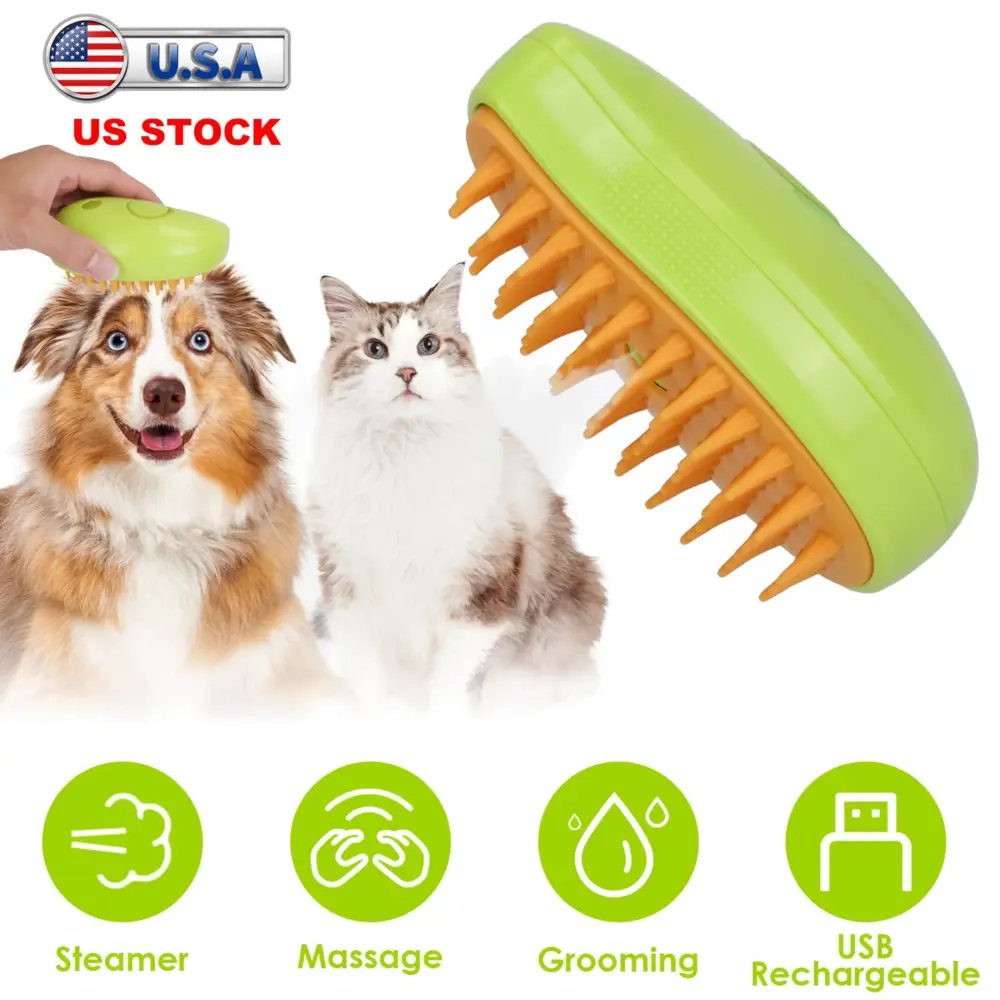
A steam or mist brush is a silicone-pin brush with a small water tank. Despite the name, it releases a fine water mist rather than steam, which weighs down loose hair and dander so more of it collects on the pins instead of floating around the room. It suits the same short coats as a rubber brush, with less hair in the air.
Combs and undercoat rakes
Metal combs
A metal comb, usually with wide teeth at one end and finer teeth at the other, is how you check a brush-out. A slicker can leave the surface smooth over a knot at the skin; a comb drawn from root to tip snags exactly where the brush missed. The AKC notes that wide-toothed combs can help remove mats and tangles, and VCA suggests long-toothed combs for long-haired dogs such as Collies. For long, curly and feathered coats, a comb is worth adding to any brush, and how to brush a long-haired dog shows the comb check section by section.
Undercoat rakes
An undercoat rake has one or two rows of long metal teeth that reach through the topcoat and comb out loose undercoat. The AKC says rakes work on double coats of any length, as long as the tooth length matches the coat. On a double coat a rake does a similar job to a de-shedding tool, so most dogs need one or the other, not both.
The difference is in the teeth. A rake’s long, separate teeth reach deep into a long or very thick coat and, the AKC notes, also help remove and prevent mats. A de-shedding tool’s short, fine edge catches on knots and can thin the topcoat if overused, so it suits a coat that is already tangle-free.
Tools best left to a groomer
Dematting combs and mat splitters have blades, and stripping knives are used to hand-strip wire coats; all of them are easy to get wrong at home. VCA warns that removing mats risks cutting the skin, says to use clippers and never scissors, and recommends a groomer or veterinarian for severe mats. Hand-stripping is worth booking with a groomer too.
Which brushes each coat type needs
Find the row closest to your dog’s coat. The main brush does most of the work, and the last column is what that coat needs on top.
| Coat | Main brush | Add |
|---|---|---|
| Smooth, short | Rubber brush, mitt or mist brush | Bristle brush for shine |
| Short double | Rubber or bristle brush | De-shedding tool or rake in a shed |
| Long double | Slicker brush | Metal comb; rake or de-shedding tool |
| Long, silky | Slicker, with a light hand | Metal comb; pin brush to finish |
| Curly | Slicker, down to the skin | Metal comb for every section |
| Wire | Slicker brush | Comb; a groomer for stripping |
For reference: Boxers and pointers have smooth coats; Labradors, short double coats; Golden Retrievers and rough Collies, long double coats; Yorkshire Terriers and Maltese, long, silky coats; Poodles, Bichons and many doodles, curly coats; Schnauzers and many terriers, wire coats.
How many brushes does a dog need?
Fewer than a pet-store aisle suggests: one main brush and, at most, one or two helpers. A smooth coat can manage with a single rubber brush or mitt, and a long, silky, curly or wire coat with a slicker and a metal comb. A long double coat needs the biggest kit: a slicker, a comb and one undercoat tool. How often each tool comes out depends on the coat; how often to brush a dog sets out the schedule.
Tip
Buying for a puppy? The adult coat can look quite different from the puppy fluff. The AKC suggests a soft brush on a puppy coat to build the habit; buy the coat-specific tools once you can see what the adult coat is doing.
What we stock, and what we don’t
Nilosi carries three brushing tools for dogs, so the picks here are limited to our own catalog, not chosen from every brush on the market. Between them they cover the three main jobs: detangling, de-shedding and a gentle brush-down for short coats.
For coats that tangle or shed undercoat
-
Sakabase
Curved Slicker Brush, View product
$39.95
Why it fits: Our detangling brush for medium to long coats; fine, firm pins on a curved head work out tangles and reach down to the undercoat.
-
JESPET
De-Shedding Tool for Dogs & Cats, Choose size
Price range: $27.95 through $29.95
Why it fits: Our undercoat tool for double coats in a shed; its stainless-steel edge lifts loose undercoat out through the topcoat. In Small and Large.


The Sakabase slicker comes in one size, Medium, and its pins are firm, so go lightly on the belly, armpits and inner legs. The JESPET tool comes in Small and Large, so pick the one closer to your dog’s size, and leave it out of the routine for curly, silky and single coats.
For smooth and short coats
The 3-in-1 Steam Grooming Brush has soft silicone pins rather than wire, a small refillable tank for the mist, and it’s rechargeable; its listing names cats and short-haired dogs. It won’t detangle a long coat or reach a dense undercoat, and it needs charging and filling where a plain rubber brush doesn’t.
What to buy elsewhere
We don’t sell pin brushes, bristle brushes, rubber curry brushes or mitts, metal combs, undercoat rakes or stripping tools. If you add just one, make it a metal comb for a long, curly or feathered coat, or a rubber curry brush for a smooth coat, which earns its keep at bath time too. Everything we do carry, from the brushes to the nail grinder, is in our grooming tools.
Signs a brush is wrong for the coat
- The brush comes away almost clean, yet hair keeps turning up on the floor: it isn’t reaching the undercoat.
- The coat looks smooth but a comb catches near the skin: you are brushing the top layer only.
- The skin turns pink or your dog flinches: the pins are too firm for that coat, or the pressure is too heavy.
- The topcoat looks thin or patchy after de-shedding: ease off, or switch to a gentler tool.
- Your dog accepts one brush but walks away from another: use the one they tolerate and build from there.
Some coat changes aren’t a brushing problem at all. Ask your veterinarian about bald patches, sores, scabs, constant scratching or redness that doesn’t settle.
Related guides
-
Buying guide
Best Brush for Cats: Choosing by Coat, Undercoat and Temperament
Which brush suits your cat: soft silicone pins, a slicker or a de-shedding tool? Match the tool to coat length, undercoat, skin, age and temperament, see which brush we stock for each coat, and spot the signs that a brush is the wrong one.
-
Comparison
Should You Shave Your Dog in Summer? What to Do by Coat Type
A shaved double coat doesn’t cool a dog and can grow back patchy. See which coats can take a summer trim, when a shave-down is the right call, a hot-weather brush-out routine, what to do if your dog is already shaved, and how lion cuts work for cats.
-
How-to
How to Use a De-Shedding Tool on a Dog or Cat Without Overdoing It
Use a de-shedding tool on a dry, detangled double coat, in light strokes with the grain, on the body only. Here’s how to pick a size, run a session step by step, which areas to skip, how often to de-shed, the signs you’re overdoing it and how to use one on a cat.