Grooming & Shedding Guide
Does My Dog Have a Double Coat? How to Tell and Why It Matters
Short answer
Part the fur against the grain at the neck or rump and look at the skin. Shorter, fluffy hair packed under the outer coat means a double coat; the same hair from skin to tip means a single coat. The answer changes which brushes work, how much seasonal shedding to expect and how long baths take to dry.
Single coat vs double coat: what each layer does
A double coat has two layers that do different jobs. The outer coat of longer, coarser guard hairs repels dirt and water and protects the skin. Underneath sits the undercoat: shorter, softer hairs packed close together. It insulates against cold and, according to the AKC’s guide to double-coated dog breeds, helps regulate temperature in warm weather by trapping cooler air near the skin. It is also the layer that comes out in bulk when the seasons change.
A single coat has one layer. It can be short and sleek, long and silky or tightly curled, but there is no second, woolly layer at the base. In its guide to grooming and coat care for your dog, VCA Animal Hospitals notes that many short-haired breeds lack a distinctive undercoat and shed lightly all year, while undercoated breeds such as Siberian Huskies, German Shepherds and many retrievers often go through two heavy sheds a year, in late spring and late fall.
Two other labels turn up on breed pages. Many wire coats are double too: the Miniature Schnauzer’s breed standard calls for a hard, wiry outer coat over a close undercoat, and that harsh texture is kept by hand-stripping, usually a groomer’s job, so the everyday double-coat routine only partly applies. And some northern breeds are described as triple- or arctic-coated, which the AKC counts among the thickest coats of any dogs. At home, treat those as very dense double coats.
The part-and-look test, step by step
All you need is good light, your fingers and, if you have one, a fine-toothed comb. Try it after a walk, while your dog is lying down and relaxed.
- Pick a thick spot. Start at the back of the neck, then try the shoulders, rump, backs of the thighs and base of the tail. Skip the face, ears and lower legs, where even double coats stay short.
- Part against the grain. Push the hair backward with your fingertips, or blow gently into the coat, until you can see a line of skin.
- Look at the base. A double coat shows a second layer of shorter, finer, fluffy hair packed around the roots, sometimes paler than the outer coat. In a single coat, the same hair runs from skin to tip.
- Feel it. Pinch a little hair at the base and roll it between your fingers. Undercoat feels cottony or woolly; a single coat feels smooth, slick or silky all the way down.
- Comb the hips. Draw a fine comb gently through the rump with the lie of the coat. A soft, pale puff of fluff in the teeth points to undercoat; a few strands like the rest of the coat do not.
- Check two or three spots. Undercoat can be thicker in some places than others. Clear fluff in even one or two areas means there is undercoat to manage there.
Safety note
While the coat is parted, look at the skin too. Redness, flakes, scabs, bumps, bare patches or anything moving in the coat are not something to brush around; ask your veterinarian to take a look.
Checking a puppy
A young puppy can’t really be tested yet. The AKC explains that puppies are born with a single coat of soft, fluffy fur, and double-coated breeds grow their two adult layers as that coat is shed, usually between four and six months of age. Until then, go by the breed or the parents and repeat the test once the adult coat is in; when puppies lose their puppy coat covers the timing and how to brush through the change.
Tip
Testing right after a big shed, or a dog who lives somewhere warm? The undercoat can be thin then: the Rottweiler’s breed standard, for one, notes that the amount of undercoat is influenced by climate. If the result is unclear in summer, check again in late fall or early winter, once the winter coat has grown in.
Other clues, and the ones that mislead
The part-and-look test is the one to trust, but a few everyday signs usually back it up:
| Clue | Double coat | Single coat |
|---|---|---|
| At the skin | Short, soft fluff under the topcoat | The same hair from root to tip |
| To the touch | Plush and dense; springs back | Flat, sleek, silky or curly |
| Shedding | Heavy bursts in spring and fall | Low and steady, or very little |
| After a bath | Stays damp near the skin | Dries faster at the skin |
| In the brush | Soft, pale tufts of fluff | Loose strands like the coat |
And these clues lead people astray:
- Length. A short coat can be double, as on a Labrador, and a long one can be single, as on a Maltese.
- The floor. Hair on the floor doesn’t prove an undercoat, since short single coats shed lightly all year. A clean floor doesn’t rule one out either, since long or curly coats can trap loose hair instead of dropping it.
- Texture alone. Not every double coat is coarse on top. The Havanese standard describes both the outer coat and the undercoat as soft and light, so look for two lengths and extra density rather than rough-over-soft.
- The breed label. A breed tells you what to expect, not what your dog has. Mixes land in between, and the amount of undercoat shifts with season and climate.
Short double coats and long single coats
These two are the cases that catch owners out, so here is what the AKC breed standards call for.
Short coats with an undercoat
- Labrador Retriever: a short, straight, very dense coat that feels fairly hard to the hand, over a soft, weather-resistant undercoat.
- Shiba Inu: a stiff, straight outer coat over a soft, thick undercoat that is cream, buff or gray, so a parted Shiba coat often shows two colors.
- Pembroke Welsh Corgi: a short, thick, weather-resistant undercoat under a coarser, longer outer coat.
- Rottweiler: a coarse, flat outer coat, with undercoat on the neck and thighs.
Compare a smooth single coat such as the Vizsla’s, which its standard describes as short, smooth and close-lying, without woolly undercoat. Part a coat like that and the skin shows almost at once, with nothing fluffy at the roots.
Long coats without one
- Maltese: the standard says plainly that the coat is single, without undercoat, hanging long, flat and silky.
- Papillon: long, fine, silky and flowing, with no undercoat.
- The reverse: the Shih Tzu, just as long and flowing, is meant to be double-coated, and a Golden Retriever’s feathered coat sits over a good undercoat.
Long single coats don’t blow coat in spring and fall, but they tangle easily: VCA advises daily brushing for long, silky and curly coats to keep them from matting.
Mixed breeds and doodles: when it’s in between
A mixed-breed dog can inherit either parent’s coat or something between the two, and littermates don’t always match. Rather than going by the label, test the dog in front of you at several spots once the adult coat is in. If a parent breed is a retriever, shepherd, husky or corgi, give the neck and hips an extra close look.
Doodles are the classic in-between case. A Golden Retriever carries a dense coat with a good undercoat; a Poodle has curly hair that keeps growing and sheds very little. A Goldendoodle or Labradoodle can land anywhere from one to the other, so groom for what the test shows:
- Straight or flat coat, clear fluff at the skin: treat it as a double coat, with regular brushing and extra sessions in a shed.
- Wavy or curly coat, nothing woolly at the roots: treat it as a curly single coat, brushed to the skin with a slicker and checked section by section with a comb.
- Wavy or curly coat with soft fluff underneath: brush it as a curly coat anyway, because the waves trap loose undercoat close to the skin, where it mats. Leave the de-shedding tool out, since its edge catches and pulls curls.
The full routine for curly and wavy doodle coats, from mat hot spots to groomer timing, is in how to groom a Goldendoodle.
Why it matters for brushing, shedding and drying
Brushing
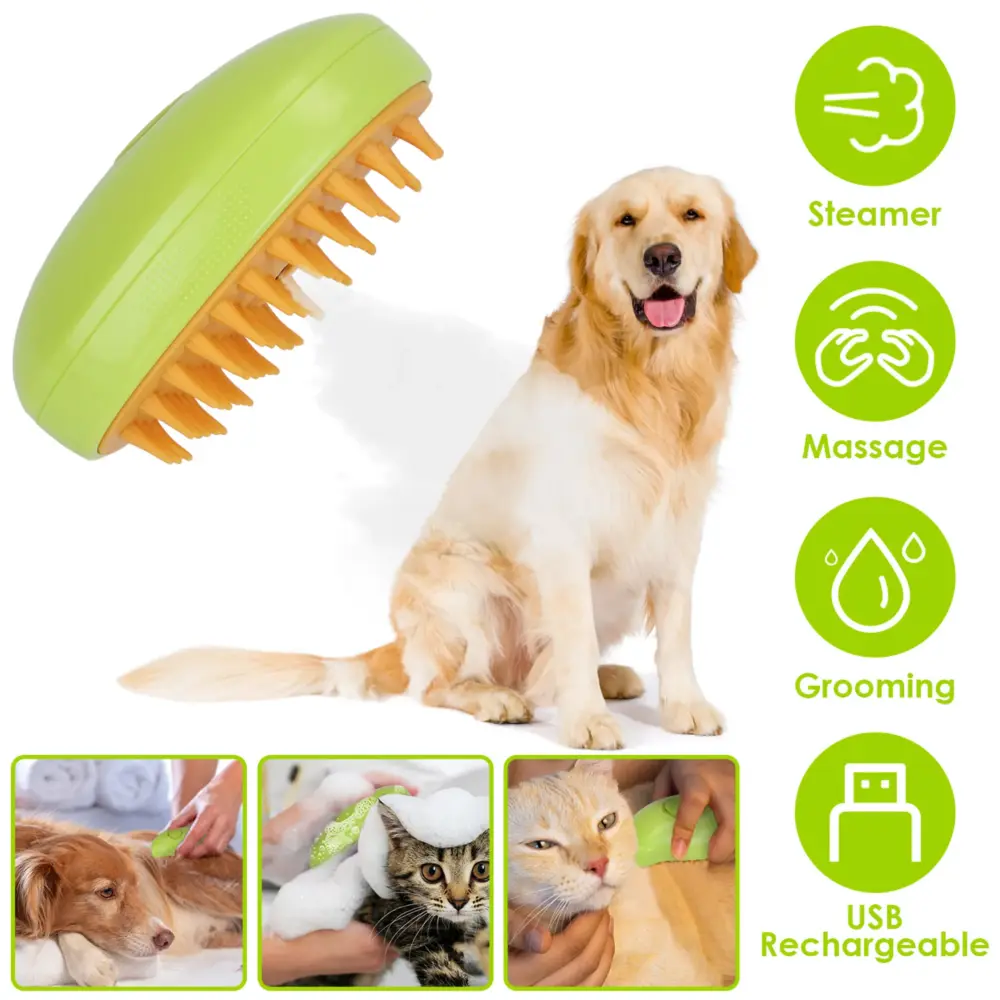
A double coat needs a tool that reaches the undercoat. A single coat doesn’t: a de-shedding edge on a coat with nothing underneath to catch can snag or thin the top layer, so long single coats get a slicker and a comb instead. Long double coats get a slicker first to clear tangles, then an undercoat tool in shedding season; short double coats rarely tangle, so they can usually go straight to the undercoat tool when tufts appear. A smooth single coat usually needs only a soft brush; our 3-in-1 Steam Grooming Brush has soft silicone pins and suits short-haired dogs as well as cats.
Our guide to types of dog brushes matches each brush type to the coats it suits, and how to use a de-shedding tool covers pressure, the areas to avoid and how often is too often. If the test turns up a double coat, these are the two tools from our grooming range that fit it:
-
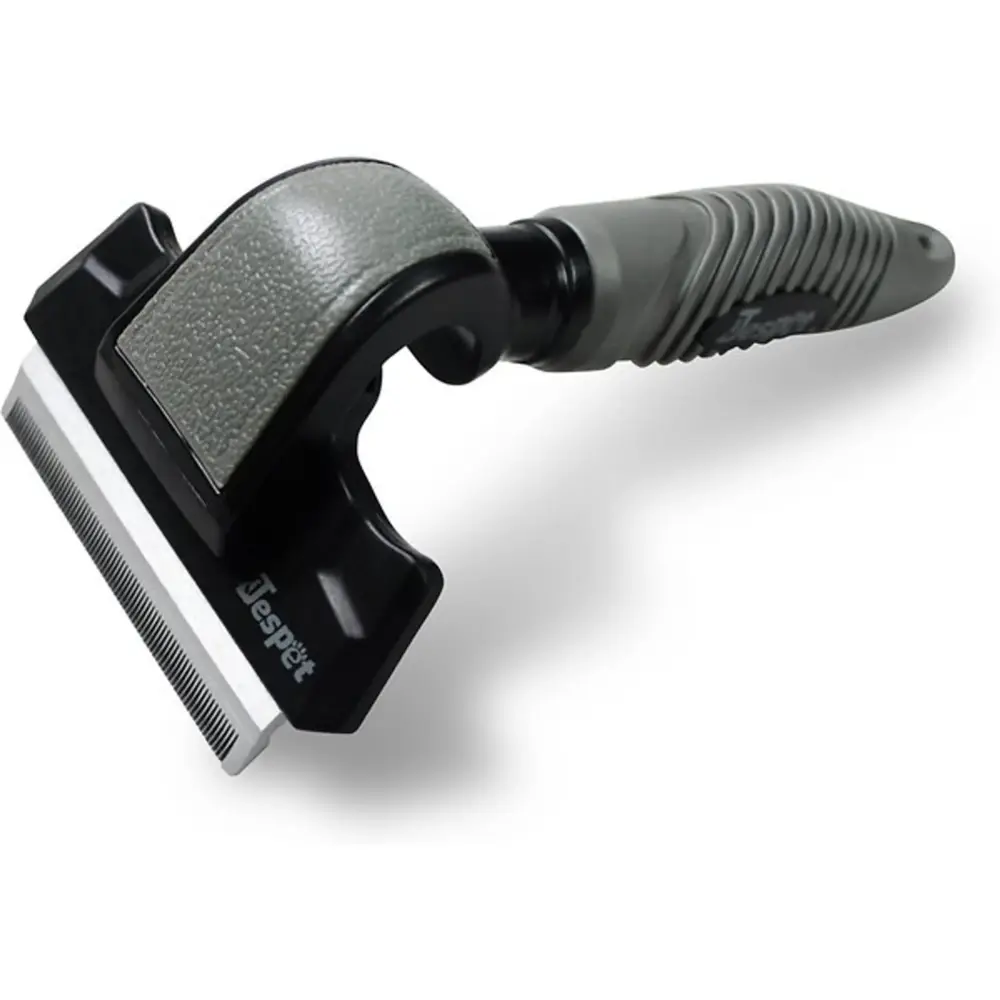
JESPET
De-Shedding Tool for Dogs & Cats, Choose size
Price range: $27.95 through $29.95
Why it fits: Lifts loose undercoat once the test confirms a double coat; its stainless-steel edge reaches through the topcoat. In Small or Large.
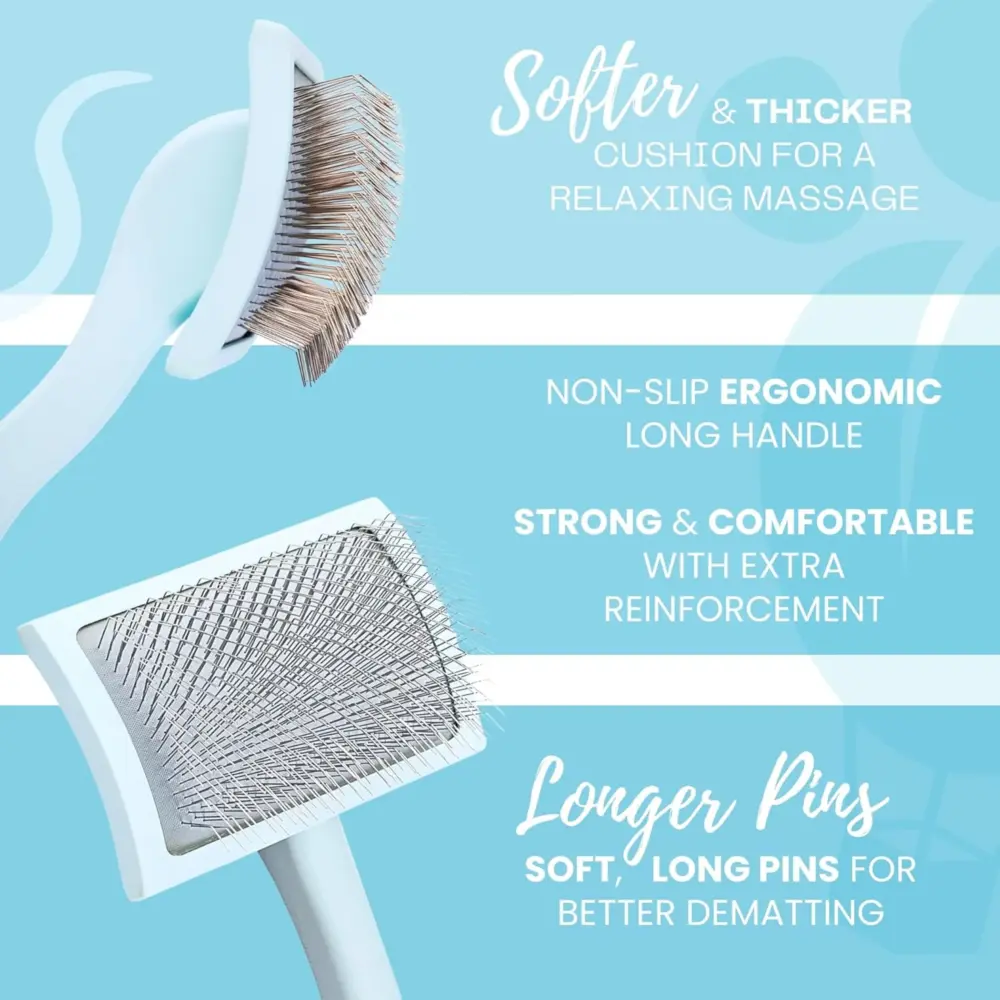
-
Sakabase
Curved Slicker Brush, View product
$39.95
Why it fits: Clears tangles on a long double coat before the undercoat tool; fine, firm pins on a curved head reach undercoat on medium to long coats.


Shedding
With a double coat, expect two heavy sheds a year, when the undercoat comes out in tufts; dog shedding season covers the timing and how long a coat blow lasts. A single coat sheds lightly year-round, or barely at all. Whatever the coat, a sudden jump in shedding with no seasonal reason, or bare or sore skin, is worth a call to your veterinarian.
Drying
Dense undercoat holds water. After a bath or a swim, the outer coat can feel dry while the hair at the skin is still damp, so part the coat at the chest, neck, armpits and base of the tail before you call it done, and let your dog finish drying somewhere warm. Loose undercoat left to pack down is where mats start, and VCA Animal Hospitals notes that matted fur keeps the skin wet after a swim or rain, which sets the stage for hot spots. A single coat has no dense layer to hold water, but blot long hair with a towel rather than rubbing it, which tangles it.
The shaving question
Because the two layers grow back at different rates, the AKC warns that a shaved double coat can return uneven; should you shave your dog in summer weighs shaving against brushing out, coat type by coat type.
Related guides
-
Guide
Do Steam Brushes Work for Cats? What They Do and How to Use One
A cat steam brush is a soft-pinned brush with a built-in water mister. It works well for loose hair on short coats but does little for tangles, mats or thick undercoat. Learn which cats it suits, how to use and clean one, and how to get a wary cat used to the spray.
-
Buying guide
Types of Dog Brushes: Which Brush Suits Your Dog’s Coat
Slicker, de-shedding tool, pin, bristle, rubber curry, comb or rake: what each type of dog brush does, a coat-by-coat table of the ones your dog needs, the three tools we stock and the ones we don’t, and the signs a brush is wrong for the coat.
-
Comparison
Should You Shave Your Dog in Summer? What to Do by Coat Type
A shaved double coat doesn’t cool a dog and can grow back patchy. See which coats can take a summer trim, when a shave-down is the right call, a hot-weather brush-out routine, what to do if your dog is already shaved, and how lion cuts work for cats.