Grooming & Shedding How-to
How to Groom a Goldendoodle at Home: Brushing, Mats and Trims
Short answer
Brush your Goldendoodle to the skin in small sections with a slicker every day or two, then comb each section until the comb glides from root to tip. Check behind the ears, the collar and harness lines and the armpits every time. Brush out before baths, dry fully, and book a groomer every four to eight weeks.
Doodle coat types and why they mat at the skin
A Goldendoodle is a Golden Retriever and Poodle cross rather than an AKC-recognized breed, so coats vary, even within one litter. Most fall into one of three types:
- Curly: ringlets closest to a Poodle’s coat. It sheds the least and mats the fastest.
- Wavy, often called shaggy or fleecy: soft, loose waves. Once grown out, it tangles almost as readily as a curly coat.
- Straight, or flat: closer to a Golden’s coat. It sheds more, tangles less and may carry a soft undercoat.
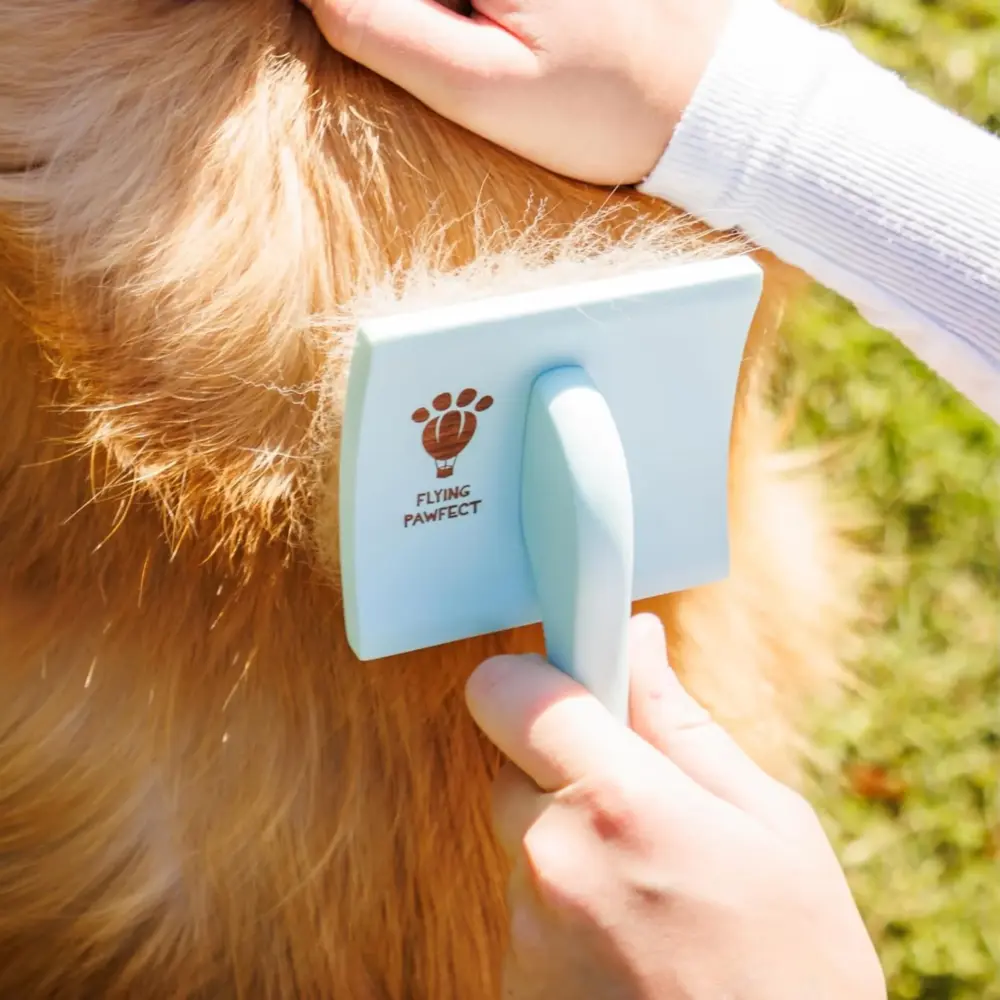
Low shedding is the catch. Hairs that fall out stay caught in the curls and twist around the hair still growing, and friction and damp felt the tangle down near the skin, under a top layer that still looks fluffy. Reaching that hair is a slicker’s job: VCA Animal Hospitals notes that slicker brushes work well for curly, non-shedding coats like a Poodle’s.
Expect a tangly stretch in the first year. The AKC notes that puppies lose their puppy coat between four and six months of age, though the timing varies widely and can wait until about a year. While the adult coat comes in, shed puppy hair tangles into it fast, so brush more often then.
If your doodle’s coat is straight, part it at the hip. A soft, woolly layer under longer hair means a double coat, brushed two or three times a week as in our brushing schedule by coat type. If the coat is wavy or curly anywhere, brush it as a curly coat.
What you need: a slicker, a metal comb and a light mist
- A slicker brush with fine, firm pins that reach the skin through a dense coat.
- A metal comb with wide and fine teeth, for the comb check.
- A spray bottle of water, or a dog detangling spray. A light mist helps the brush glide and cuts static.
- Large pet wipes for the beard, around the eyes and muddy feet.
- A nail grinder or clippers, plus styptic powder or cornstarch.
- For baths: a dog shampoo, a stack of old towels and a dryer that runs cool or low.
Leave the de-shedding tool out of a curly or wavy routine: its edge is made to lift loose undercoat from double coats, and it catches and pulls curls. We don’t carry combs, clippers, shampoo or detangling spray, so the picks below are limited to the three items from our grooming tools that suit a doodle routine.
-
Sakabase
Curved Slicker Brush, View product
$39.95
Why it fits: Made for medium to long coats: the curved head puts more fine, firm pins on the coat with each stroke, so line brushing a thick doodle coat takes fewer passes.
-
Mr. Peanut’s
Naturals Pet Wipes
$26.95
Why it fits: Large, thick 6 x 10 in wipes for a beard that is sticky after meals, gentle wiping around the eyes and outer ears, and muddy doodle feet between baths.
Currently out of stock
-
Quiet Rechargeable Pet Nail Grinder, View product
$50.95
Why it fits: Takes nails down a little at a time, with two speeds and a quiet motor that bothers nervous dogs less, and USB charging for regular short sessions.



Brushing a Goldendoodle to the skin, step by step
Allow 10 to 15 minutes for a coat in good shape and longer while you work through a backlog; splitting the coat into zones across the day is fine. The method is line brushing, explained row by row in how to brush a long-haired dog; here is how it applies to a doodle coat. The goal, in the AKC’s Poodle grooming guide, is to brush all the way down to the skin without scratching it.
- Mist, don’t soak. Lightly spray the section you are about to brush. A coat still wet from a bath or a swim tangles and pulls.
- Feel for felt. Run your fingers through the hot spots listed below. A patch that feels thicker than the coat around it is a mat starting.
- Start low and at the back. Begin at a hind foot and work up and forward. Hold the hair above your row up with one hand and brush the row down in short, light strokes until you can see skin at the part.
- Comb-check every row. Slide the comb in at the skin and draw it out to the tips. If it snags, slicker that row again; if it glides, move up a row.
- Work knots from the ends. Hold the hair between the knot and the skin so your hand takes the pull, then brush the tips first and work inward. For a mat you can’t slide a fingertip under, see how to get mats out of dog hair before going further.
- Finish with the face, ears and tail. Lighten your strokes, and use the comb rather than the slicker on the beard and near the eyes.
- Stop while your doodle is relaxed. End with a treat, even if only one side is done, and finish tomorrow.
Tip
The fluff fools everyone: a brushed surface looks finished long before the hair at the skin is clear. Trust the comb, not the look of the coat.
Mat hot spots to check every session
Mats start where hair rubs, folds or stays damp. Check these every session, and on a busy day brush only these:
- Behind and under the ears, and along the edges of the flaps, where scratching and head shaking twist the fine hair.
- Collar and harness lines on the neck, the chest and just behind the front legs. Take the harness off indoors.
- Armpits and elbows. Lift each front leg forward to reach the fold.
- Legs, inner thighs and belly, easiest with your doodle lying on one side. The skin there is thin, so go gently, and leave the hygiene trim under the tail to the groomer.
- The tail. Brush the underside from the base outward.
- The beard, which water and food keep wet and sticky.
- Between the toes, where foot hair collects burrs, mud and snow.
Face, ears and feet between groomer visits
Face and eyes
Comb the beard every day or two and dry it after drinking. Wipe gently outward around the eyes with a soft, damp wipe, and leave trimming the hair over and between the eyes to your groomer. See your veterinarian if an eye looks red, cloudy or swollen, runs more than usual, or your doodle squints or paws at it.
Ears
Doodles have hairy drop ears, and many grow hair inside the ear canal, as Poodles do. Lift each flap once a week: the skin inside should look clean and pale, with no strong smell. After baths and swims, pat the inside of the flap and the outer opening dry with a cotton ball. VCA Animal Hospitals’ guide to ear cleaning in dogs warns against cotton-tipped swabs, which risk injuring the canal or eardrum, and cautions that over-cleaning can irritate the canal and lead to infection. Before you start using an ear cleaner, or before you or a groomer pluck hair from the canal, ask your veterinarian whether your doodle’s ears need it.
Safety note
A smell, discharge, redness or swelling, or a doodle who keeps shaking their head or scratching one ear, means a veterinary visit before any cleaning.
Feet
Hair over the toes and between the pads picks up burrs and mud and costs your doodle grip on smooth floors. Comb the top of each foot and check between the toes after walks in long grass. If your doodle holds still, small, round-tipped scissors can even the hair on the underside of the foot with the pads; keep the points out of the gaps between them. Otherwise, it is a quick job for the groomer.
Baths and drying: brush out first, dry completely
The AKC’s Poodle guidance puts the average bath at every four to eight weeks, depending on how often you brush. If your groomer bathes at each visit, you may rarely need to at home.
- Brush and comb out the whole coat first. VCA Animal Hospitals warns that tangles can become impossible to remove after a bath. If a patch is already matted, let the groomer handle the mats and the bath together.
- Wet the coat to the skin. Work lukewarm water in with your fingers; a dense coat can stay dry underneath.
- Squeeze the shampoo through. Use a shampoo made for dogs, keep it away from the eyes and ears, and press it through the coat rather than scrubbing in circles.
- Rinse until the coat no longer feels slick at the skin. Leftover shampoo in a thick coat can irritate.
- Squeeze, then blot with towels. Rubbing back and forth knots the hair you just brushed out.
- Dry in sections on a cool or low setting. Brush lightly as the air moves through each section until the skin feels dry on the chest, in the armpits, behind the ears and on the backs of the legs.
- Comb-check once dry to catch any tangle the bath tightened.
Safety note
Skip the hot setting entirely, stay in the room while the dryer runs, and don’t leave a thick doodle coat to air-dry. VCA Animal Hospitals explains that matted fur stays wet after a swim or rain, which keeps the skin damp and invites hot spots. Any red, damp or sore patch is worth a call to your veterinarian.
Nails and paw pads
The AKC’s rule of thumb for Poodles fits doodles too: nails are too long if you can hear them clicking on the floor. Doodle feet add one risk with a grinder: long foot hair can wrap around the spinning head, so hold it back from each nail with your fingers first, or grind soon after a groomer has tidied the feet. Don’t forget the dewclaws, higher up the leg. For the paw hold, finding the quick on dark nails and a slow introduction for a wary dog, see how to use a dog nail grinder.
Check the pads while you are there. Cracks or cuts, red skin between the toes, a limp, or a paw your doodle won’t stop licking all call for your veterinarian.
Groomer timing, and when a coat is past brushing
For trims, the AKC’s Poodle guide suggests the same interval as baths, about every four to eight weeks. Where your doodle lands in that range depends on the length you ask for and the brushing you really do at home:
| Coat as kept | Home brushing | Groomer visits |
|---|---|---|
| Short all over | Every other day, then daily as it grows | Toward the 8-week end |
| Medium, teddy-bear length | Daily, or close to it | Middle of the range |
| Long and fluffy | Daily, with a full comb check | Toward the 4-week end |
| Straight, shedding coat | 2 or 3 times a week | Face, feet and hygiene tidies as needed |
These are starting points. Tell your groomer honestly how often you brush, since a length you can comb through beats a fluffy cut that mats long before the next visit, and book that visit before you leave.
When brushing can’t fix it
Book a groomer if the comb can’t reach the skin in a patch, mats have joined into a felted sheet or sit tight against the skin, or your doodle cries out when you touch a mat. Don’t reach for scissors: skin gets pulled up into a tight mat, close to the blades. The ASPCA warns that even mild mats can irritate the skin and progress to infected sores, and that a severely matted pet may need sedation and a full-body clip. Red, raw or smelly skin beneath a mat is a reason to see your veterinarian.
A shave-down for a matted coat is the groomer’s call, and often the kindest one, since the coat grows back. Clipping short for the heat is a separate question, covered in should you shave your dog in summer, and dog grooming at home vs a groomer sorts the other jobs between home and salon.
Mistakes that end in a shave-down
- Brushing only the top layer. Felt keeps building at the skin under a coat that looks done.
- Bathing before brushing out. Water tightens every tangle the brush missed.
- Asking for a longer cut than you brush for. The extra length mats first.
- Saving the brushing for the groomer. Mats that form between visits are what turn a trim into a shave-down.
Troubleshooting doodle grooming
Mats keep coming back in one place
Find what rubs that spot: a collar that slides around, a harness strap that sits in the armpit or a favorite sleeping side. Make sure you can slip two fingers flat under every strap, brush the spot daily, and ask your groomer to keep the hair there a little shorter.
The skin looks pink after brushing
Pink skin right after brushing often means brush burn, from pressing down or going over one spot too often. Hold the slicker loosely so the pins skim the skin, test your pressure on your own forearm, and have your veterinarian look at redness that lasts.
A young doodle mats faster than you can brush
That is usually the coat change described above. Keep sessions short and daily, comb-check the hot spots, and ask your groomer about a shorter, even trim to see your doodle through it.
Related guides
-
How-to
How to Groom a Yorkie at Home: Brushing, Baths, Nails and Trims
A Yorkie’s silky coat keeps growing and knots close to the skin. This routine covers a misted brush-out with a comb check, baths every week or two, eye, ear and teeth care, nails every two weeks, and which trims to do at home or leave to your groomer.
-
How-to
How to Groom a Golden Retriever at Home: Brushing, Baths and Nails
A Golden’s double coat and feathering need at least a weekly brush, a daily one in a heavy shed, and a full brush-out before every bath. Here is the routine zone by zone, how to rinse and dry to the skin, nails, ears and paws, and which trims to leave to a groomer.
-
Checklist
Dog Grooming Checklist: The Essentials by Week, Month and Season
Every home grooming job sorted by how often it comes around: brushing by coat, a weekly nose-to-tail check, teeth, nails and paw fur, after-walk cleanups, baths and shedding season, plus what to skip and which jobs to hand to a groomer or veterinarian.