Grooming & Shedding How-to
How to Groom a Yorkie at Home: Brushing, Baths, Nails and Trims
Short answer
Brush a Yorkie most days, and daily in a long coat or between about 6 and 18 months, when the adult coat grows in. Bathe every week or two and book a trim every four to six weeks. Brushing, baths, face and teeth care and nails are home jobs; leave haircuts and anything near the eyes to a groomer.
Why a Yorkie’s silky coat tangles
A Yorkshire Terrier’s coat is closer to human hair than to fur. The AKC’s Yorkshire Terrier grooming guide describes silky hair that keeps growing and sheds very little, and its list of things to know about Yorkies adds that the breed has no undercoat. So a Yorkie leaves little hair on the sofa yet needs more brushing than most dogs: fine hair twists into small, tight knots close to the skin, often under a surface that still looks smooth.
With no undercoat, there is no seasonal shed to manage; the job is keeping the hair untangled and protecting it from breakage while you brush. The hardest stretch is adolescence. Between about 6 and 18 months, the AKC notes, the fluffy puppy coat changes to the adult texture and mats more easily, so brush daily through that period even if a few times a week keeps up later.
How long you keep the coat sets the rest of the routine:
| Coat as kept | Brushing | Baths |
|---|---|---|
| Long coat | Daily, with a comb check | Weekly |
| Pet trim | Several times a week to daily | Every two weeks |
| 6 to 18 months | Daily, through the coat change | By coat length |
The tools a silky coat needs
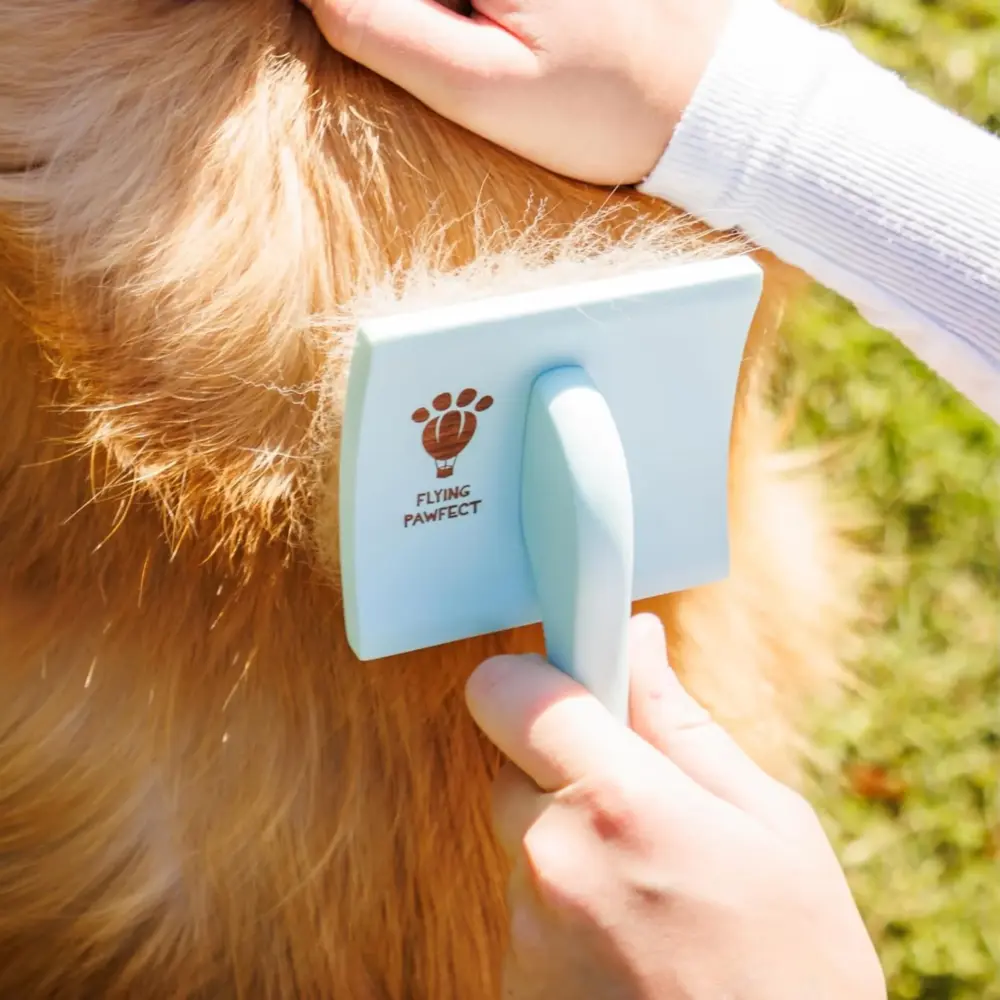
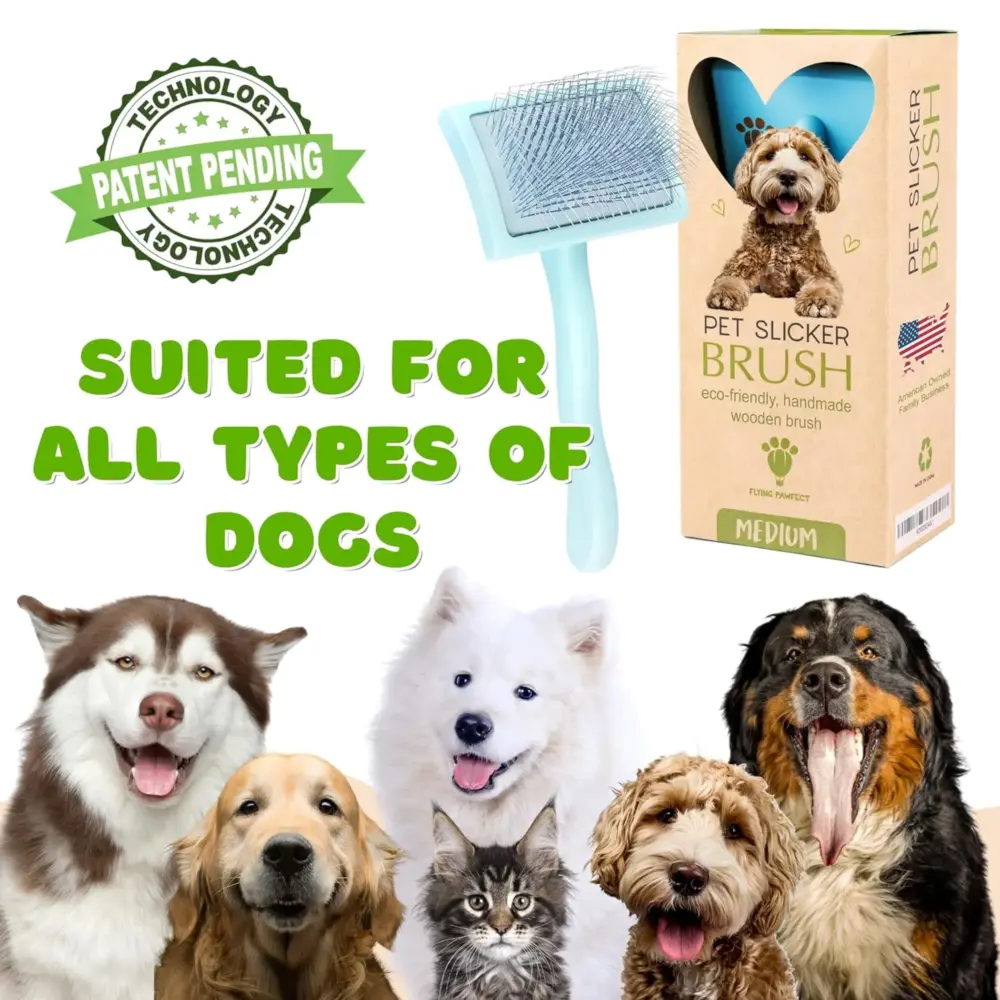
- A slicker brush, used with a light hand, to work tangles loose.
- A metal comb, ideally with both wide and narrow teeth, to check each section to the skin and to groom the face.
- A pin brush, the third tool on the AKC’s Yorkie list, often used on a long coat.
- A conditioning spray made for dogs, which the AKC recommends while brushing to protect the coat from damage and breakage. Plain water in a spray bottle is a fallback.
- For bath day: a shampoo and conditioner made for a silky coat, a dog ear cleaner, cotton balls and a dryer you can set to cool or low.
- Soft pet wipes or a damp cloth, plus a nail grinder or small clippers.
Skip the de-shedding tool. It is made to lift loose undercoat, which a Yorkie doesn’t have, and its edge can catch and pull silky hair.
Tip
Our catalog has no pin brush, comb, conditioning spray, shampoo or ear cleaner. The four picks below are what we do stock for a Yorkie: three of our grooming tools and a small-dog coat.
-
Sakabase
Curved Slicker Brush, View product
$39.95
Why it fits: Loosens the small tangles a silky coat picks up each day; the curved head and fine, firm pins suit medium to long hair, used lightly.
-
Mr. Peanut’s
Naturals Pet Wipes
$26.95
Why it fits: Handles the daily wipe around the eyes, the long muzzle hair and the paws after walks; each thick wipe is 6 x 10 in, 150 to a container.
Currently out of stock
-
Quiet Rechargeable Pet Nail Grinder, View product
$50.95
Why it fits: Keeps up with nails every two weeks in short sessions; two speeds for small and large nails, and a guard with openings sized for small pets.
-
Doggie Couture NY
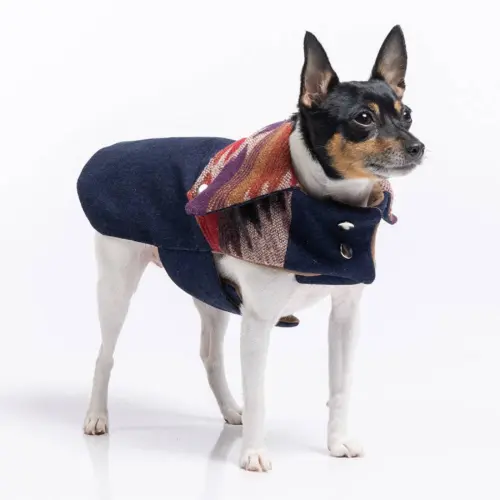
DCNY Ranch Dog Coat, Choose size & color
$72.95
Why it fits: Made for small dogs in XXS to Medium only; wide hook-and-loop closures at the chest and belly make dressing a wriggly toy breed quicker.



A daily brushing routine, step by step
Line brushing is the technique, and how to brush a long-haired dog covers it row by row. A Yorkie adds two twists: a natural part down the back, and a face that gets only the comb.
- Groom low, with a hand on your dog. Use your lap or a non-slip mat on a low, steady surface, so a wriggle can’t turn into a fall.
- Wipe, then mist. The AKC advises against brushing a dirty Yorkie coat, so wipe off mud or food first, then lightly spray each section before the brush goes in.
- Brush out from the part. The coat falls to each side of a line from skull to tail. Starting low on a hind leg, brush one side in thin rows, holding the hair above out of the way.
- Untie knots tip first. Pinch the hair between knot and skin to anchor it, then brush from the ends toward the roots, as the AKC advises.
- Prove it with the comb. Draw the comb from root to tip through each finished row; where it snags, return to that row with the slicker.
- Comb the face and topknot last. Use the comb alone on the muzzle hair and the long hair on top of the head, then hand over a treat.
Hair rubs or folds behind the ears, under the front legs, along the harness or coat line, on the belly and inside the hind legs, so go over those spots twice. The skin is thin there; lighten your stroke. A knot sitting tight against the skin is a mat, and how to get mats out of dog hair covers what to do next.
Baths every week or two, and drying
AKC guidance is a bath every two weeks for a Yorkie in a pet trim and every week for one in a long show coat, using a shampoo and conditioner made for a silky coat. A kitchen or laundry sink is often easier than a full tub for a dog this size.
- Detangle before any water goes on. A knot that gets wet tightens.
- Set up the sink. Lay a non-slip mat, run lukewarm water and put everything within reach, so one hand stays on your dog.
- Shampoo the way the hair falls. Work it down from the part with flat hands, clear of the eyes; circular scrubbing knots long hair.
- Condition, then rinse thoroughly, until no product is left near the skin.
- Wrap and press. Fold your Yorkie into a towel and press the water out instead of rubbing.
- Dry on low, one section at a time, brushing as the air moves through, until the hair is dry right down to the skin.
Safety note
Don’t leave a Yorkie to air-dry in a cool room, and never use the dryer’s hot setting. VCA Animal Hospitals’ Yorkshire Terrier breed page lists the breed as sensitive to cold because of its small size. Test the airflow on your wrist and stay in the room until the dryer is off.
Face, eyes, ears and teeth
Hair over the eyes
The long hair on top of a Yorkie’s head falls into the eyes unless you manage it. The AKC breed standard describes it tied up with one bow at the center of the head, or parted and tied with two, and many pet owners do the same with a small topknot. Gather it loosely in a soft band, never tight enough to pull at the skin, and take it down to comb every day. The simpler option is asking your groomer to keep the hair over the eyes short.
Around the eyes and muzzle
The AKC recommends cleaning around a Yorkie’s eyes every day with an eye wash pad made for dogs. For the routine wipe, a soft damp cloth or a gentle pet wipe drawn outward from the inner corner, never across the eye, also works; comb the hair beside it afterward. Wipe and comb the long muzzle hair after meals, too. For crusts and drying, see how to clean a dog’s face.
Safety note
A red, cloudy or swollen eye, more discharge than usual or discharge that changes color, squinting or pawing at the face all need your veterinarian. Leave any trimming close to the eyes to your groomer.
Ears
Yorkies have small, upright ears, and the breed standard calls for short hair on the tips, a job for the groomer. The AKC suggests cleaning the ears at bath time with a dog ear cleaner and cotton balls, never cotton swabs. Don’t overdo it: the VCA guide to cleaning a dog’s ears cautions that cleaning too often can itself irritate the ear canal, which may lead to infection, so ask your veterinarian how often your Yorkie needs it. Redness, swelling, discharge, a smell or a sore ear call for a veterinary visit, not a cleaning.
Teeth
The AKC suggests brushing a Yorkie’s teeth once a day, and the VCA breed page notes that Yorkies are especially prone to dental disease because of crowded teeth. Use a finger brush or a small toothbrush with a toothpaste made for dogs, and ask your veterinarian how often to book dental checkups. We don’t sell dental supplies.
Nails every couple of weeks
The AKC advises checking and trimming a Yorkie’s nails at least every two weeks. Nails that tap on a hard floor are already overdue.
Small, thin nails suit a grinder in short sessions: one or two nails, a treat, then the next. Start on the lower speed and pull the long foot hair back with your thumb before each nail, since a spinning grinder can catch loose strands. If your Yorkie has dewclaws higher up the front legs, include them; they never touch the ground. For holding a paw, locating the quick and easing a nervous dog into the noise, see how to use a dog nail grinder. The quiet rechargeable grinder we carry has guard openings for small pets as well as dogs.
Trims: at home or at the groomer
The AKC suggests a trim every four to six weeks, by a professional groomer or by owners themselves. Many breeders suggest keeping a pet Yorkie in a short puppy cut because it is easier to maintain, the AKC notes, while the breed standard allows a long coat to be trimmed to floor length for ease of movement.
Our comparison of grooming at home vs a groomer sets out the split for every coat type. For a Yorkie, it looks like this.
What you can tidy at home
- Hair between the paw pads, with small round-tipped scissors held flat and the points away from the skin.
- The outline of the feet, so long hair doesn’t collect dirt or cost your dog grip on smooth floors.
- The topknot, banded loosely and redone each day.
What to leave to the groomer
- Anything close to the eyes, and the short hair on the ear tips.
- The sanitary trim under the tail and on the belly.
- The all-over cut, unless a groomer has shown you how to clip your own dog.
- Tight mats or a coat felted at the skin, which call for clippers.
Arrive with the coat brushed out: a groomer faced with mats may have to go shorter than the cut you wanted. Booking the next visit on your way out keeps you on the four-to-six-week rhythm.
A coat for cold walks
The small size that makes a wet Yorkie chill quickly matters on winter walks too, and there is no undercoat to help. The AKC’s guide to dog winter coats notes that smaller breeds often benefit from a coat in cold weather and that clipped dogs lack the insulation a longer coat provides, so a Yorkie in a short puppy cut has even less between skin and wind. For when to shorten a walk, see how cold is too cold to walk a dog.
A coat adds one grooming job: hair rubs under the straps and closures. Take the coat off indoors, brush along the chest and belly closures after walks, and dry the hair underneath if the coat came home wet.
We carry one small-dog coat, the DCNY Ranch Dog Coat, in XXS to Medium only. Its two smallest sizes come with a leash clip built in, while Small and Medium have a harness opening instead. Measure your Yorkie and decide how you walk them before you pick a size.
Mistakes and troubleshooting
- Treating a pet trim as low upkeep. Short hair still knots behind the ears and in the armpits, so keep brushing most days.
- A tight or forgotten topknot. A band that pulls is uncomfortable, and hair left banded for days knots around it.
- Reaching for your own shampoo. The AKC recommends pet shampoos and conditioners made for a long, silky coat.
- Cutting out a knot or trimming near the eyes yourself. One flinch puts the blade in the wrong place; leave both to a groomer.
Snapped hairs on the brush
A few whole hairs on the slicker are normal. Short, broken pieces are a cue to slow down: mist every section with conditioning spray, which the AKC recommends to protect against breakage, brush tips first and ease off the pressure. If the coat turns dry, brittle or thin despite gentle care, mention it to your veterinarian.
Tangles everywhere in a young Yorkie
Expect it between about 6 and 18 months, while the adult coat replaces the puppy fluff. Split the daily brush-out into two or three short sessions, and if the coat still outpaces you, ask the groomer for a shorter pet trim until the adult hair settles.
A small dog who squirms
Try your lap instead of a table, brush right after a walk, and do one zone per session with a treat after each. A Yorkie who yelps or reacts sharply to one spot being touched should see a veterinarian before you keep working there.
Related guides
-
How-to
How to Groom a Goldendoodle at Home: Brushing, Mats and Trims
Curly and wavy doodle coats shed little and mat close to the skin, so brushing has to reach the roots. Here is the section-by-section routine, the spots that mat first, face, ear and foot care, bathing and drying, nails, and how often to book the groomer.
-
How-to
How to Groom a Golden Retriever at Home: Brushing, Baths and Nails
A Golden’s double coat and feathering need at least a weekly brush, a daily one in a heavy shed, and a full brush-out before every bath. Here is the routine zone by zone, how to rinse and dry to the skin, nails, ears and paws, and which trims to leave to a groomer.
-
How-to
How to Get Snowballs Out of Dog Fur and Paws, and Stop Them Forming
Pulling ice balls off your dog’s paws hurts. Melt them with lukewarm water, dry between every toe and brush the feathering once it’s dry. See why some coats collect snow, how trimming paw fur and keeping nails short help, and the frostbite signs that need a veterinarian.