Grooming & Shedding Comparison
Dog Grooming at Home vs a Groomer: What to Do Yourself, What to Book
Short answer
Brushing, de-shedding, nail trims, baths and wipe-downs are home jobs for most dogs. Book a groomer for haircuts, hand-stripping, tight mats and sanitary trims; coats that keep growing, like a Poodle’s, need one regularly, while smooth and double coats need one now and then at most. Anything sore, smelly or bleeding goes to your veterinarian.

Home grooming vs a groomer: job by job
Grooming isn’t one job, so the choice isn’t all or nothing. Jobs you’d do every week belong at home, because tangles form in days, far faster than any appointment schedule. Jobs that put blades close to the skin, or need a grooming table and practiced hands on a wriggling dog, come up less often and suit a booking.
| Job | At home | Book a groomer | See your vet |
|---|---|---|---|
| Brushing | On your coat’s schedule | To catch up on a neglected coat | Sore spots, skin changes |
| De-shedding | Weekly, more in a shed | A bath and dry in a heavy shed | Bald patches, sudden heavy loss |
| Nail trims | Once you know where to stop | Dog fights the paw hold | Split, bleeding or ingrown nails |
| Baths | Most dogs, most of the time | Big, dense or skunked coats | Itchy, flaky or smelly skin |
| Eyes and ears | Wipe around eyes and ear flaps | Hair over eyes, ear tips | Discharge, smell, head shaking |
| Haircuts and clipping | Only after training | Yes | Clipping under sedation |
| Hand-stripping | Upkeep, if shown how | Yes, by a groomer who strips | Skin that stays red |
| Mats | Small, loose ones | Tight or widespread mats | Red or broken skin underneath |
| Hygiene trims | Hair between the pads | Sanitary trim, under the tail | Scooting, licking, soreness |
What you can do well at home with a few tools
Brushing and de-shedding
Brushing is the one job a groomer can’t do for you, because tangles start long before the next appointment. The pace runs from once a week for a smooth coat to daily for long and curly ones; our brushing schedule by coat type sets it, and the picks below cover the tools.
Nail trims
The AKC’s dos and don’ts of at-home grooming say to avoid clipping nails until you’ve been taught the technique and have something on hand to stop bleeding, so ask your groomer or veterinarian to show you the first time. A grinder takes the nail down in thin layers, which helps on dark nails where the quick is hidden; how to use a dog nail grinder covers the technique and a slow introduction. If your dog fights every paw hold, a trim at the salon or clinic is a fair trade while you work on handling.
Baths, wipe-downs and small mats
Most dogs can be bathed at home, as long as you brush out tangles first and dry the coat to the skin. Between baths, a brush and a large pet wipe deal with dust, mud and doggy smell; how to clean a dog without a bath has the zone-by-zone routine. A small, loose mat you can slide a fingertip under can come out at home too, following how to get mats out of dog hair and stopping where it says to.
As you go, check the ears, eyes, toes and skin: you see your dog daily and a groomer doesn’t, so mention anything new to your veterinarian.
These picks are limited to Nilosi’s catalog. We don’t sell clippers, scissors, combs or shampoo, so those come from elsewhere if your dog’s coat needs them.
-
Sakabase
Curved Slicker Brush, View product
$39.95
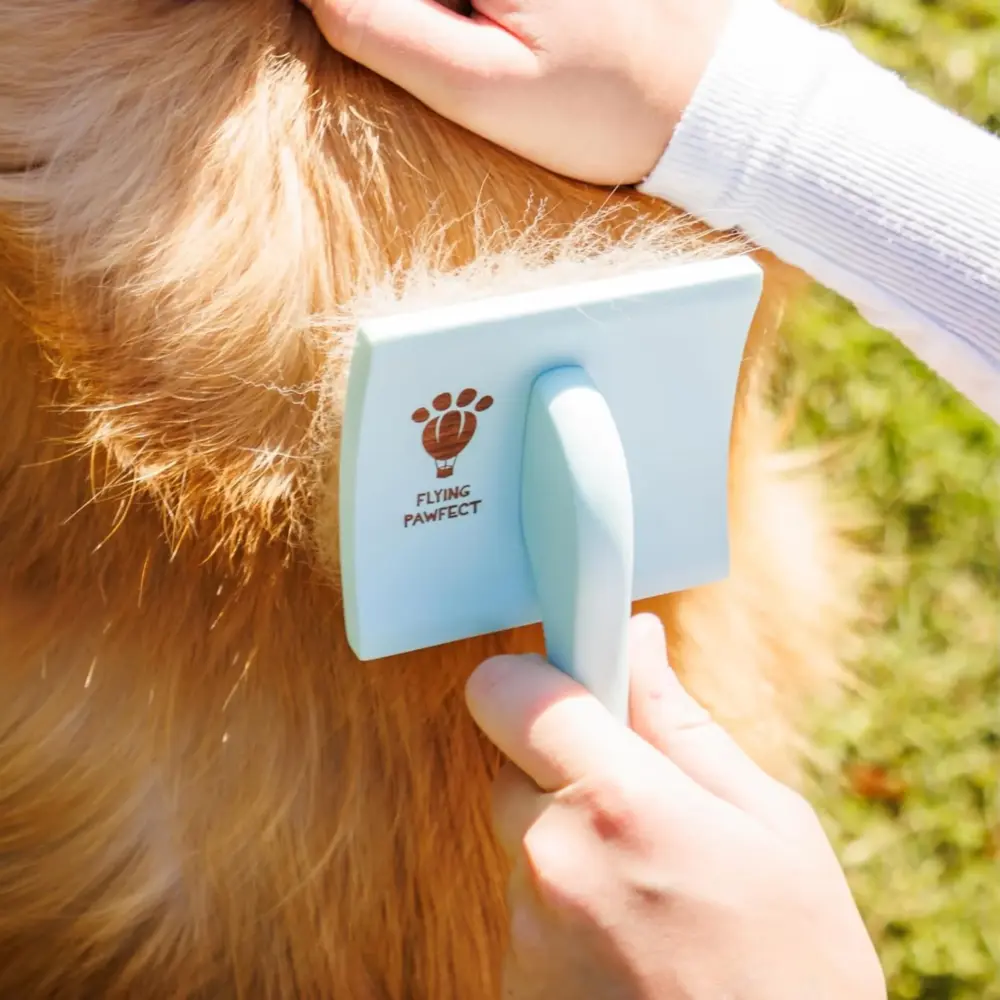
Why it fits: Keeps a medium or long coat brushed to the undercoat between appointments: the curved head and fine, firm pins work through tangles before they tighten into mats.
-
JESPET
De-Shedding Tool for Dogs & Cats, Choose size
Price range: $27.95 through $29.95
Why it fits: Takes the shedding-season work home for double coats, which need brushing out rather than a haircut: the stainless-steel edge lifts loose undercoat through the topcoat.
-
Quiet Rechargeable Pet Nail Grinder, View product
$50.95
Why it fits: Turns nail care into a home job between visits: it takes nails down a little at a time, runs quietly and has two speeds, so a nervous dog can do one or two nails per session.
-
Mr. Peanut’s
Naturals Pet Wipes
$26.95
Why it fits: Handles the between-bath cleanups that never need a salon: large wipes for muddy paws, the coat, tear stains and the outer ears after a walk.
Currently out of stock




Jobs worth booking with a groomer
The AKC’s case for having your dog groomed professionally points to the kit, from clippers and rounded scissors to an adjustable grooming table, and to the breed knowledge it takes to cut a coat correctly.
Haircuts and clipping
The AKC’s home-grooming advice is plain: don’t clip or shave your dog without proper training. Loose skin moves under the blade, and a dog who turns at the wrong moment can be nicked. If you’d like to learn, ask your groomer to show you how to tidy the feet and face between full cuts.
Hand-stripping a wire coat
Many terriers, and a few other breeds such as the German Wirehaired Pointer, have a harsh coat that keeps its texture when dead outer hairs are pulled out rather than cut. The AKC’s guide to hand-stripping dog coats explains that clipping a wire coat can change its color, sheen and texture over time. Not every groomer strips, so ask when you call, and ask them to show you how to roll the coat between visits.
Tight or widespread mats
A mat tight to the skin, or a coat matted into sheets, is past brushing. VCA Animal Hospitals’ advice on grooming and coat care is to use only clippers on mats, never scissors, and to see a groomer or veterinarian when tangles are severe or extensive. A badly matted coat usually has to be clipped short; it grows back, and a short clip is often kinder than a long dematting session.
Safety note
Skin gets pulled up into a mat, so it sits closer to any blade than you think, however small the mat looks. If the skin underneath is red, raw or broken, or a mat has tightened around a leg, toe or the tail, book your veterinarian rather than the salon.
Sanitary trims, faces and feet
A sanitary trim clips the hair short around the genitals and under the tail so urine and stool don’t collect in a long coat: blade work on your dog’s most sensitive skin. Hair over the eyes and at the ear tips is close work too, and the AKC lists both among groomers’ jobs; if eye hair needs tidying between visits, ask the groomer to show you how. Many owners manage the hair between the paw pads, which the AKC suggests keeping even with the pads or slightly shorter: hold the paw flat, use small, blunt-tipped scissors and never dig between the toes.
Anal glands and teeth: two add-ons to think twice about
Many salons offer to express anal glands, and the AKC advises against doing it yourself. VCA’s guide to anal sac disease in dogs explains that the sacs normally empty when a dog passes stool, and that dogs with recurring problems may benefit from routine emptying by veterinary professionals; scooting or licking at the tail base is a reason to call your veterinarian. Salon tooth brushing is a freshen-up, and VCA’s guide to dental disease in dogs notes that scraping tartar off an awake dog is cosmetic: a real cleaning, above and below the gum line, needs general anesthesia at your veterinarian’s.
Which coats need a professional groomer, and how often
How often to book depends on the coat. The AKC’s own examples run from every six weeks to three times a year, with some grooming at home either way. Go by the coat your dog actually has, not the breed on the paperwork. These coats need a groomer regularly:
- Coats that keep growing (Poodle, Bichon Frise, Shih Tzu, Yorkshire Terrier, Lhasa Apso, most doodles). VCA lists Yorkies, Lhasa Apsos and Shih Tzus among breeds whose hair grows continuously and needs regular haircuts, and the AKC’s Standard Poodle grooming guide puts trims at about every four to eight weeks. For a doodle’s routine between visits, see how to groom a Goldendoodle at home.
- Wire coats (many terriers and Schnauzers). Weekly brushing at home, plus hand-stripping by a groomer, or clipping if you accept a softer coat.
- Long coats kept long (Maltese, or a Yorkie or Shih Tzu in full coat). Daily brushing at home and a groomer for the face, feet and sanitary area. A short all-over cut is the alternative, and the AKC notes it might mean several months before you need to go back, with home care in between.
Two coat types rarely need one:
- Smooth coats (Boxer, Boston Terrier, smooth Chihuahua). Weekly brushing, nails and the occasional bath cover nearly everything.
- Double coats (Labrador, Golden Retriever, German Shepherd, Siberian Husky). No haircut, just brushing and de-shedding at home, with a groomer’s bath and dry in a heavy shed or for a big dog you can’t dry yourself. Ask for a tidy, not a shave: the AKC’s advice on shaving dogs explains that a shaved double coat can grow back with a different texture and color, and that fur helps protect against sunburn.
Which dogs do better at home, and which at a salon
Temperament, size and age count as much as coat, and so do your own back and schedule.
- Often easier at home: dogs who panic in new places or around other dogs, since you can stop the moment they’ve had enough; smooth and short double coats; puppies still learning to be handled; and older dogs who tire quickly.
- Often easier at a salon: dogs who need regular cuts or stripping; big, heavy-coated dogs you can’t lift into a tub or dry to the skin; dogs who wriggle for their owners but stand quietly for a calm stranger; and owners with back or mobility limits, since, as the AKC notes, a groomer takes over the lifting and handling.
If a busy salon is too much, ask about a mobile groomer who works from a van at your door, the first or last appointment of the day, or a groomer trained in low-stress handling. For a dog who can’t be groomed safely while awake, VCA notes that clipping the coat down may need to be done under sedation at a veterinary clinic.
Safety note
Don’t push a dog who growls, snaps or panics through a grooming session, and don’t give any calming product or medication for grooming without your veterinarian’s advice. A sudden dislike of being handled can come from pain, so have it checked.
Keeping your dog groomer-ready between appointments
A dog who arrives brushed out and used to handling gets a quicker, gentler appointment, and is more likely to keep the length you asked for than be clipped short to get under mats.
- Brush to the skin on your coat’s schedule, with extra passes behind the ears, in the armpits and along collar and harness lines.
- Brush the whole coat out a day or two before the appointment, and mention any mat you couldn’t shift.
- Handle the paws, ears, muzzle and tail for a few seconds most days, with a treat.
- Keep nails short between visits, and clean muddy legs before dirt dries into the coat.
- At drop-off, mention lumps, sore spots, skin problems, recent surgery or anything your veterinarian asked you to watch.
Tip
Ask your groomer to call you before shaving a matted coat, and to show you where the mats were. Those are the spots to brush more often before the next visit.
For the whole home routine by week, month and season, see our dog grooming essentials checklist.
Questions to ask a new groomer
The AKC’s list of questions to ask potential groomers is a good place to start. Ask before the first appointment:
- Can I see where dogs are groomed and kept? Look for a clean, ventilated room, sturdy tables and tubs, and a crate or secure area for each dog not on the table.
- Have you groomed my dog’s coat type? Ask about the cut you want, or hand-stripping for a wire coat.
- What training do you have? The AKC calls voluntary programs such as AKC S.A.F.E. Grooming a good sign; Fear Free also certifies groomers in low-stress handling.
- What happens if my dog is matted? A good answer includes a call before any shave-down.
- How will my dog be dried, and will someone stay with them while a dryer runs?
- Do you keep a first aid kit, carry liability insurance and have an emergency plan?
- Can I stay and watch the first time?
- What will the whole appointment cost, including extra charges for mats or handling?
- Will you tell me if you find something? A lump, a sore ear or a skin problem is your cue to call the veterinarian.
At pickup, look for a relaxed dog with no nicks or red patches. If you find broken skin or a limp, or your dog suddenly balks at the salon door, raise it with the groomer, and see your veterinarian if the skin is hurt.
Verdict: a split that works for most dogs
For most dogs the answer is both: you handle the frequent, everyday jobs, and a groomer takes the occasional ones that need blades and practice.
- Smooth coats: almost everything at home; a groomer is optional.
- Double coats: brushing, de-shedding, nails and baths at home, plus a groomer’s bath and dry in a heavy shed if it helps. No shave.
- Coats that keep growing: brushing at home most days, and cuts on a regular schedule.
- Wire coats: weekly brushing at home and a groomer who hand-strips.
- Every dog: tight mats, clipping and sanitary trims to the groomer; anything sore, smelly or bleeding to your veterinarian.
Start with the home tools your dog’s coat needs from our dog and cat grooming tools, and leave the rest to a groomer you trust.
Related guides
-
How-to
How to Groom a Golden Retriever at Home: Brushing, Baths and Nails
A Golden’s double coat and feathering need at least a weekly brush, a daily one in a heavy shed, and a full brush-out before every bath. Here is the routine zone by zone, how to rinse and dry to the skin, nails, ears and paws, and which trims to leave to a groomer.
-
Checklist
Dog Grooming Checklist: The Essentials by Week, Month and Season
Every home grooming job sorted by how often it comes around: brushing by coat, a weekly nose-to-tail check, teeth, nails and paw fur, after-walk cleanups, baths and shedding season, plus what to skip and which jobs to hand to a groomer or veterinarian.
-
How-to
The Weekly At-Home Health Check for Dogs
Five minutes a week, done in the same order, catches most problems while they are still small. This guide walks through a nose-to-tail check for dogs, what normal feels like, and the findings worth a phone call.