Grooming & Shedding How-to
How to Groom a Golden Retriever at Home: Brushing, Baths and Nails
Short answer
Brush a Golden Retriever at least weekly, down to the skin and through the feathering, and daily in a heavy shed. Brush out the coat before each bath, rinse twice and dry to the skin. Trim nails about monthly, check ears weekly and dry them after swims; feet and feathers need only a light tidy, not a haircut.
A Golden Retriever grooming schedule at a glance
These intervals follow the AKC’s guide to grooming a Golden Retriever, set for a family dog rather than a show dog. Once a week is the minimum for brushing: a Golden with heavy feathering, a muddy yard or a love of swimming stays tangle-free more easily with two or three shorter sessions, the pace our brushing schedule by coat type sets for long double coats. For teeth, VCA Animal Hospitals’ guide to brushing your dog’s teeth calls three times a week the minimum and warns against human toothpaste.
| Task | How often | What you use |
|---|---|---|
| Brushing | At least weekly; daily in a heavy shed | Slicker or pin brush, metal comb |
| De-shedding | 2–3 times a week in a shed, body only | De-shedding tool |
| Bath | About monthly, or when dirty | Dog shampoo, towels, cool dryer |
| Nails | About monthly | Grinder or clippers |
| Ears | Check weekly; dry after swims | Cotton balls or a soft cloth |
| Feet and feathers | When hair covers the pads or ends look ragged | Small scissors, or a groomer |
| Teeth | 3 times a week at minimum; daily is better | Dog toothbrush and dog toothpaste |
The Golden Retriever coat: a double coat with feathering
A Golden has two layers: a soft, dense undercoat against the skin and longer, firmer outer hairs on top that shed water. Most grooming is about keeping that undercoat moving, because loose undercoat left in the coat packs down, holds moisture and knots into the growing hair.
Then there is the feathering, the longer fringe that sets a Golden apart from a Lab. The breed standard describes moderate feathering on the backs of the forelegs and under the body, and heavier feathering on the front of the neck, the backs of the thighs and the underside of the tail. Those are the places to slow down, along with the fine, soft hair behind the ears, which tends to tangle first.
Goldens shed some hair all year and far more during a seasonal shed, when the undercoat comes out in tufts. Clipping the coat short doesn’t stop that or keep a Golden cooler; should you shave your dog in summer explains why a double coat is better brushed out than shaved.
What you need: a slicker, a de-shedding tool and a comb
The AKC’s kit for a Golden starts with a pin brush and a metal comb with medium to wide teeth, and it warns against a bristle brush, which won’t get through the thick coat. A slicker brush also reaches the skin, and its fine pins work through tangles, which suits the feathering. A de-shedding tool does a different job: it lifts loose undercoat out of the body coat during a shed, and stays off the feathers.
- A slicker brush and a metal comb for the weekly brush-out.
- A de-shedding tool for the body during a heavy shed.
- A nail grinder or clippers, with styptic powder or cornstarch within reach.
- Dog shampoo, plenty of towels and a dryer with a cool or low setting.
- Small, round-tipped scissors if you will tidy the feet at home.
- Pet wipes for muddy paws and feathers between baths.
The picks below are limited to what Nilosi carries, so the comb, shampoo, dryer and scissors will come from elsewhere.
-
Sakabase
Curved Slicker Brush, View product
$39.95
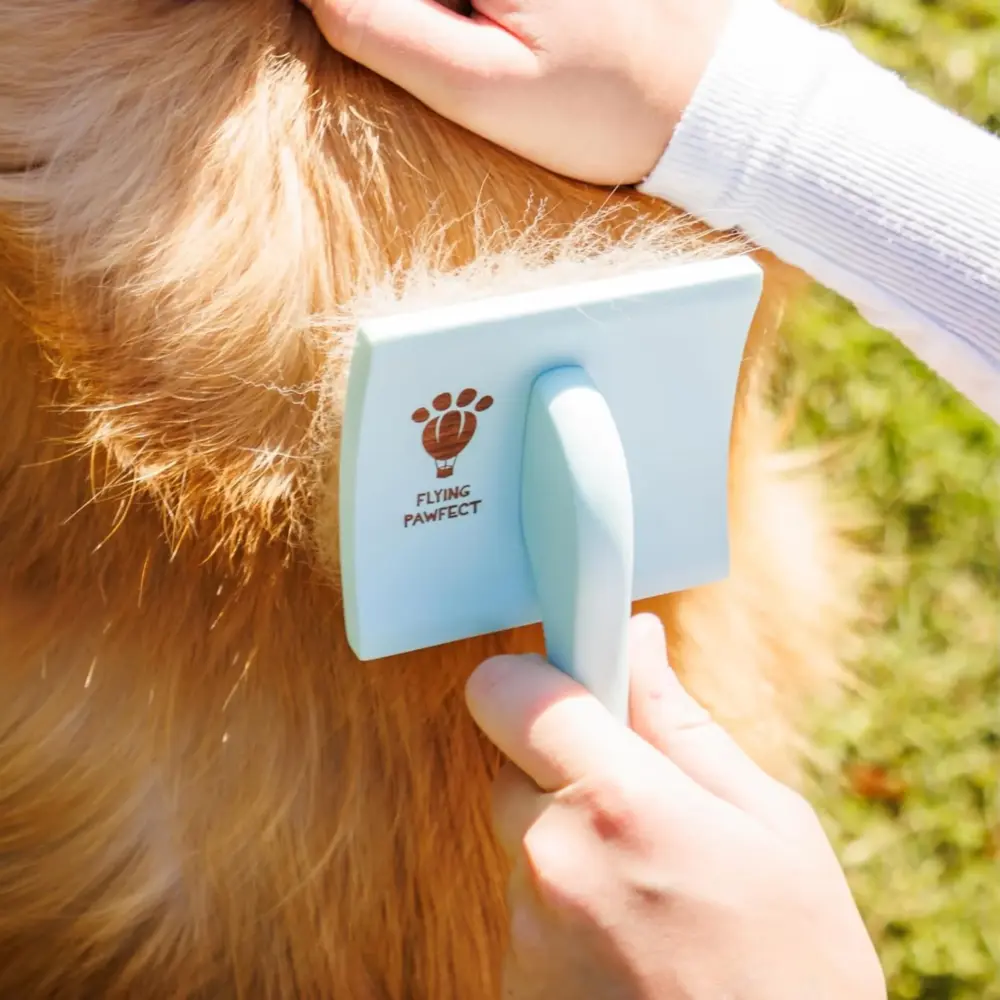
Why it fits: The curved head and fine, firm pins are made for medium to long coats, so it reaches through a Golden’s ruff and feathering to the undercoat with fewer strokes.
-
JESPET
De-Shedding Tool for Dogs & Cats, Choose size
Price range: $27.95 through $29.95
Why it fits: Its stainless-steel edge lifts loose undercoat through the topcoat on a Golden’s back, sides and hindquarters during a heavy shed. Comes in Small and Large.
-
Quiet Rechargeable Pet Nail Grinder, View product
$50.95
Why it fits: Takes nails down in thin layers, which helps on dark nails where the quick is hard to see. Two speeds and USB charging for the monthly trim.
-
Mr. Peanut’s
Naturals Pet Wipes
$26.95
Why it fits: Large, thick wipes for muddy feet, leg feathers and the outer ear flaps on the days between a Golden’s monthly baths.
Currently out of stock




A weekly brushing routine: feathers, ruff and britches
Set aside 15 to 20 minutes, or split the coat over two evenings, with your Golden lying on its side for the belly and legs and standing for the back and ruff. The parting technique itself, brushing one row at a time down to the skin, is covered step by step in how to brush a long-haired dog; here is how it applies to a Golden.
- Check with your hands first. Feel behind the ears, under the collar and between the toes for knots, burrs, grass seeds, lumps and sore spots. Skip anything sore, and mention new lumps to your veterinarian.
- Brush the body in rows. Start at the hindquarters and work forward, brushing each parted row with the slicker in short, light strokes with the lie of the hair.
- Work through the ruff. The heavy feathering on the front of the neck and chest hides tangles along the collar line, so take the collar off and brush it in layers from the bottom up.
- Do the feathers with your dog lying down. Brush the backs of the front legs, the belly fringe and the britches on the backs of the thighs, holding the hair near the skin so a snag pulls on your fingers, not your dog. Then comb each fringe from root to tip.
- Finish with the ears and tail. Go slowly behind and under the ears and follow the slicker with the comb; small knots there can be worked loose as described in how to get mats out of dog hair. Brush the underside of the tail from the base outward.
- Comb-check and reward. If the comb glides to the skin through the ruff, feathers and ears, you are done; where it catches, go back with the slicker. End with a treat.
Tip
Starting with a Golden puppy? A few minutes of brushing, lifting the ears and holding each paw several times a week makes the adult routine far easier, and it is best learned before the feathering grows in.
A Golden mix with a curlier or shorter coat should be brushed for the coat it has, not the breed name; the coat-type schedule linked above covers curly and short coats too.
Shedding season: daily sessions
When a Golden starts dropping tufts, the AKC suggests moving from weekly brushing to once a day. Daily doesn’t have to mean long: ten minutes on one or two zones keeps up better than one marathon session on the weekend. How long a coat blow lasts, and the signs that shedding isn’t normal, are covered in our guide to dog shedding season; on a Golden, the routine changes like this:
- Slicker first, every day, starting with the ruff, the britches and behind the ears, where loose undercoat knots first.
- De-shedding tool two or three times a week on the neck, back, sides and hindquarters, in light strokes with the growth; the JESPET product page calls that plenty in shedding season. Finish a zone once a stroke brings out only a little hair, and skip any patch that looks pink.
- Keep the edge off the feathering. A de-shedding edge can snag and thin the long fringe, so the legs, belly, thighs and tail get the slicker and comb only.
Bathing and drying a Golden
The AKC suggests a monthly bath for a family Golden; in between, wipes can handle muddy paws and feathers. A bath in the middle of a shed also helps, because washing and drying loosen undercoat that is ready to come out. If your Golden’s skin seems dry or itchy after baths, ask your veterinarian before changing the routine or the shampoo.
- Brush out the whole coat first. Water tightens tangles into mats, which is why the AKC says to brush before every bath.
- Wet the coat right to the skin. The outer coat sheds water, so work the water in with your fingers until the undercoat is soaked, not just the surface.
- Shampoo and condition. Use a shampoo made for dogs, away from the eyes and ears. A conditioner, the AKC notes, cuts down on static and flyaway hair.
- Rinse twice. A Golden’s double coat holds on to shampoo, so rinse until the water runs clear, then rinse again; residue left in the undercoat can irritate the skin.
- Blot, don’t rub. Squeeze water out of the feathers and press towels into the coat; rubbing in circles twists the feathering into knots.
- Dry to the skin. Keep the dryer on a cool or low setting and moving, pointed against the direction of hair growth so the air reaches the undercoat, as the AKC describes. Before you stop, feel at the skin on the chest, behind the ears and in the britches.
- Brush again once dry to lift out the undercoat the bath loosened.
Safety note
Never use a dryer’s hot setting on a dog, and don’t leave your Golden alone with a running dryer. A coat left damp at the skin is a problem of its own: VCA Animal Hospitals notes that matted fur holding water after a swim or rain keeps the skin wet, which sets the stage for hot spots. Ask your veterinarian about any red, moist or sore patch.
Nails, ears and paws
Nails: about once a month
The AKC suggests trimming a Golden’s nails about once a month, and nails clicking on hard floors are a sign the next trim is due. A grinder takes the nail down a little at a time, which helps when the nails are dark and you can’t see the quick; how to use a dog nail grinder covers the technique and a slow introduction for a wary dog. On a Golden, hold the long hair on the foot back with your fingers so it can’t catch on the spinning head. Do any dewclaws too, since they sit off the ground and don’t wear down on walks.
Ears: a weekly look, and drying after every swim
A Golden’s ears hang over the ear canal and are covered in soft hair, so they hold moisture after a swim or a bath. Once a week, lift each flap and look inside: the skin should look clean and pale, without a strong smell. After swimming, the AKC suggests drying the inside of the ears with cotton balls; wipe only the flap and the opening you can see. VCA Animal Hospitals’ guide to ear cleaning warns against cotton-tipped swabs and notes that over-cleaning can irritate the canal, so ask your veterinarian whether your Golden needs an ear cleaner at all, and how often.
Safety note
See your veterinarian if an ear smells, has discharge, looks red or swollen, or if your Golden keeps shaking its head, scratching at an ear or pulling away when you touch it. Don’t clean a sore-looking ear before it has been checked.
Paws: grass seeds and mud
Feathered feet pick up burrs and grass seeds. After walks through long grass, spread the toes and check between the pads, as the AKC recommends. A seed that has worked into the skin, or a Golden who keeps licking one paw or starts limping, needs your veterinarian. For mud on the feet and leg feathers, a large pet wipe often saves a full wash.
Tidying feathers and feet: home trims or the groomer
The AKC advises against shaving or clipping a Golden’s coat, feathers included. What a family Golden benefits from is a light tidy:
- Feet. Hair that grows past the pads can make a Golden slip on smooth floors. With the paw held flat, trim it level with the pads using small, round-tipped scissors, and never dig down between the pads. A snip around the edge of the foot neatens the outline.
- Feathers. Leave them long. If the ends look ragged, thinning scissors soften them, which is how the AKC suggests tidying the fringe on a dog that isn’t shown.
- Under the tail. A short tidy of the hair around the rear helps keep it clean, and it is a sensible job to leave to a groomer.
Book a groomer for tight mats, the area under the tail, shaping the feet, or a full bath and dry for a Golden who won’t stand for the dryer, and ask for a tidy that keeps the feathering rather than a clip.
Mistakes to avoid
- Brushing only the top layer. The outer coat can look smooth while the undercoat mats underneath.
- Bathing before brushing. Water tightens every tangle you missed.
- Stopping the dryer too soon. The surface dries first while the undercoat stays damp.
- Cutting out mats with scissors. Skin gets pulled up into a mat and is easy to nick; a tight mat is a groomer’s job.
Troubleshooting Golden grooming
Your Golden won’t lie still for the feathers
Brush after a walk, do one leg per session, and have a helper feed small treats or hold a lick mat at nose level. If your Golden flinches, growls or snaps when one spot is touched, stop and have that area checked by your veterinarian.
Knots keep coming back behind the ears
Give that spot a quick slicker-and-comb pass every day or two, and check that the collar isn’t shifting and twisting the hair. A groomer can also thin the hair there.
The skin looks pink after brushing
That usually means too much pressure or too many passes over one spot. Lighten your strokes, let the skin settle, and ask your veterinarian about redness that doesn’t fade.
Find the slicker brush, de-shedding tool, nail grinder and wipes in our grooming range, or browse more grooming and shedding guides.
Related guides
-
Checklist
Dog Grooming Checklist: The Essentials by Week, Month and Season
Every home grooming job sorted by how often it comes around: brushing by coat, a weekly nose-to-tail check, teeth, nails and paw fur, after-walk cleanups, baths and shedding season, plus what to skip and which jobs to hand to a groomer or veterinarian.
-
Comparison
Dog Grooming at Home vs a Groomer: What to Do Yourself, What to Book
Brushing, de-shedding, nails, baths and wipe-downs are home jobs for most dogs; haircuts, hand-stripping, tight mats and sanitary trims belong with a groomer. Compare the two job by job, see which coats need a professional, and get the questions to ask a new groomer.
-
How-to
The Weekly At-Home Health Check for Dogs
Five minutes a week, done in the same order, catches most problems while they are still small. This guide walks through a nose-to-tail check for dogs, what normal feels like, and the findings worth a phone call.