Dog Shedding Season: When Dogs Blow Their Coat and How to Keep Up
Dog shedding season comes twice a year for most double-coated dogs: in spring, when the dense winter undercoat lets go, and in fall, when the summer coat clears out ahead of a thicker winter one. If tufts of fluff started appearing as the days got shorter, that is the fall shed, and it is usually normal. Two or three short brushing sessions a week, plus a quick rake of the rugs, will keep the hair under control until it passes.
Short answer: spring and fall are the big sheds, and short, regular brushing gets you through
- Is it normal? Usually, if your dog has a double coat, it is spring or fall and the skin under the tufts looks healthy.
- How long will it last? The heaviest phase often takes a few weeks; the whole season can stretch to a couple of months.
- What helps? A slicker for tangles, a de-shedding tool two or three times a week, then a rake over the rugs.
- What to skip? Shaving the coat, and long sessions on one spot.
- When should you worry? Bald patches, red or flaky skin, sores or constant scratching are not part of a normal shed; ask your veterinarian.
When is dog shedding season?
So when do dogs shed the most? In spring and fall, as the coat changes over for the season ahead. The spring shed often looks the more dramatic of the two, because it removes the thickest coat of the year, but a fall shed can be just as heavy.
Changes in day length and temperature set the timing, so the calendar shifts with where you live and how much time your dog spends outdoors. As a rough guide, the spring shed tends to arrive between March and May and the fall shed between September and November, though your dog may run a few weeks early or late.
Dog shedding in fall often catches owners off guard, because the clumps show up just as the weather cools. The hair coming out is the old summer coat; the new, thicker undercoat is already growing in underneath.
What “blowing coat” means, and which dogs do it
A double coat has two layers: a soft, dense undercoat close to the skin and longer, coarser guard hairs on top. When a dog blows its coat, much of the old undercoat loosens over a short stretch and comes out in tufts and clumps rather than strand by strand. Typical signs:
- Soft, pale tufts poking out along the sides, hindquarters and behind the ears
- Fluff that comes away when you run your fingers through the coat
- A patchy look, while the guard hairs stay in place and the skin stays covered
Coat blowing is typical of double-coated breeds such as Siberian Huskies, Samoyeds, German Shepherds, Golden and Labrador Retrievers, Pembroke Welsh Corgis and Pomeranians, and of many mixes with these breeds in the family tree.
Single-coated dogs, such as Poodles, Maltese and Yorkshire Terriers, do not blow coat. They lose hair a little at a time all year, and some shed very little. Not sure which coat your dog has? Push the fur backward against its growth on the back or rump. A soft, cottony layer packed under the outer hairs means a double coat.
How long a coat blow usually lasts
How long does a dog blow its coat? The heaviest phase, when hair comes out by the handful, often lasts a few weeks. Counting the slow start and the tapering end, the AKC’s guide to managing dog shedding puts a typical shedding season at a few weeks to a couple of months.
Thick, plush coats usually take longer to clear, and every dog keeps its own calendar, so compare this season with your dog’s last one. Brushing won’t change the timing of the shed, but it gets loose undercoat out in a few sessions instead of letting it drift onto your floors for weeks.
The shed is winding down when a full session brings out only a little hair and the coat lies smooth again. If the shedding keeps getting worse or leaves thin or bare areas, ask your veterinarian rather than waiting it out.
A shedding-season routine: slicker, de-shedding tool, then the rugs
Plan on about 15 minutes, two or three times a week at the peak of the shed; split it into two sessions if your dog gets fidgety. Brush outdoors or over an old sheet on a hard floor, with a trash bag and treats within reach.
- Check the coat with your hands. Feel for knots, burrs and any sore, pink or scabby spots, and skip sore spots entirely.
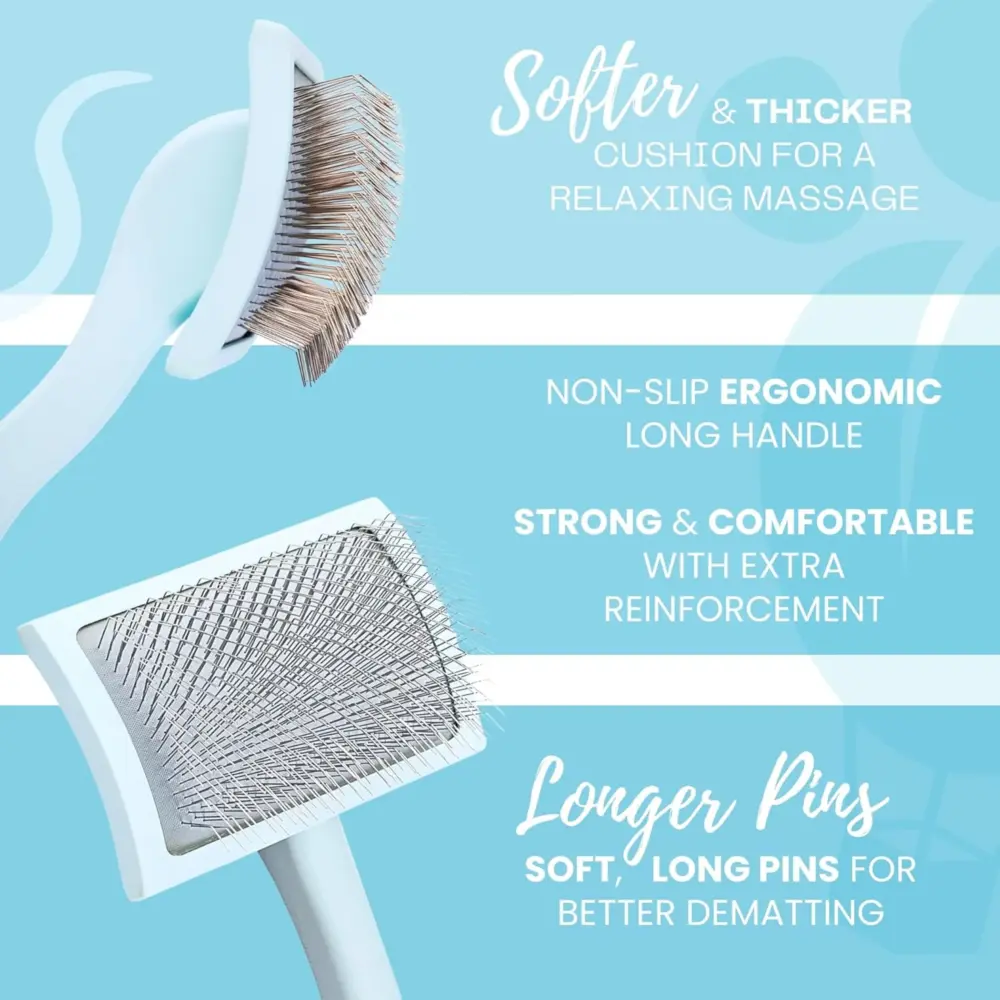
- Detangle with a slicker. Loose undercoat tends to knot first behind the ears, in the neck ruff, on the backs of the thighs and around the tail, so start there with the Sakabase Curved Slicker Brush, in short, light strokes with the lie of the coat. Tight mats against the skin are a job for a groomer. A short double coat, such as a Labrador’s, rarely knots, so you can usually skip to the next step.
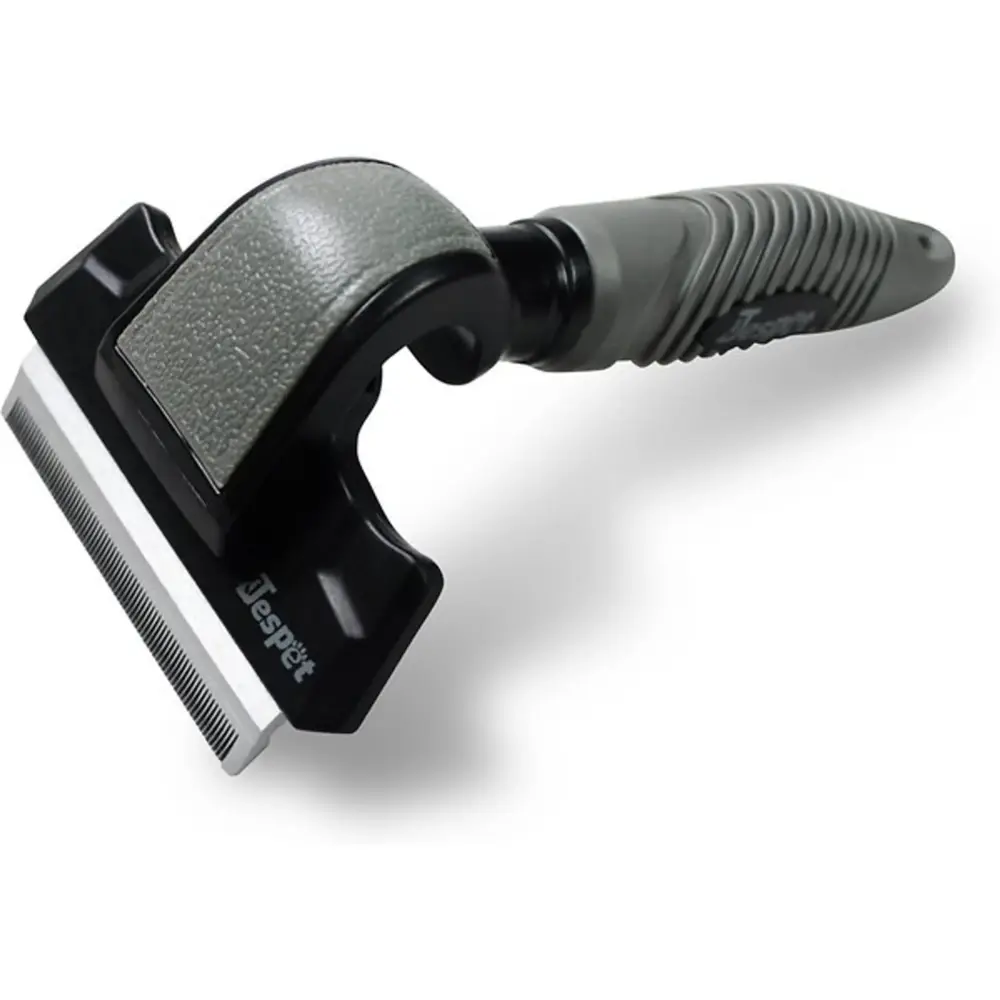
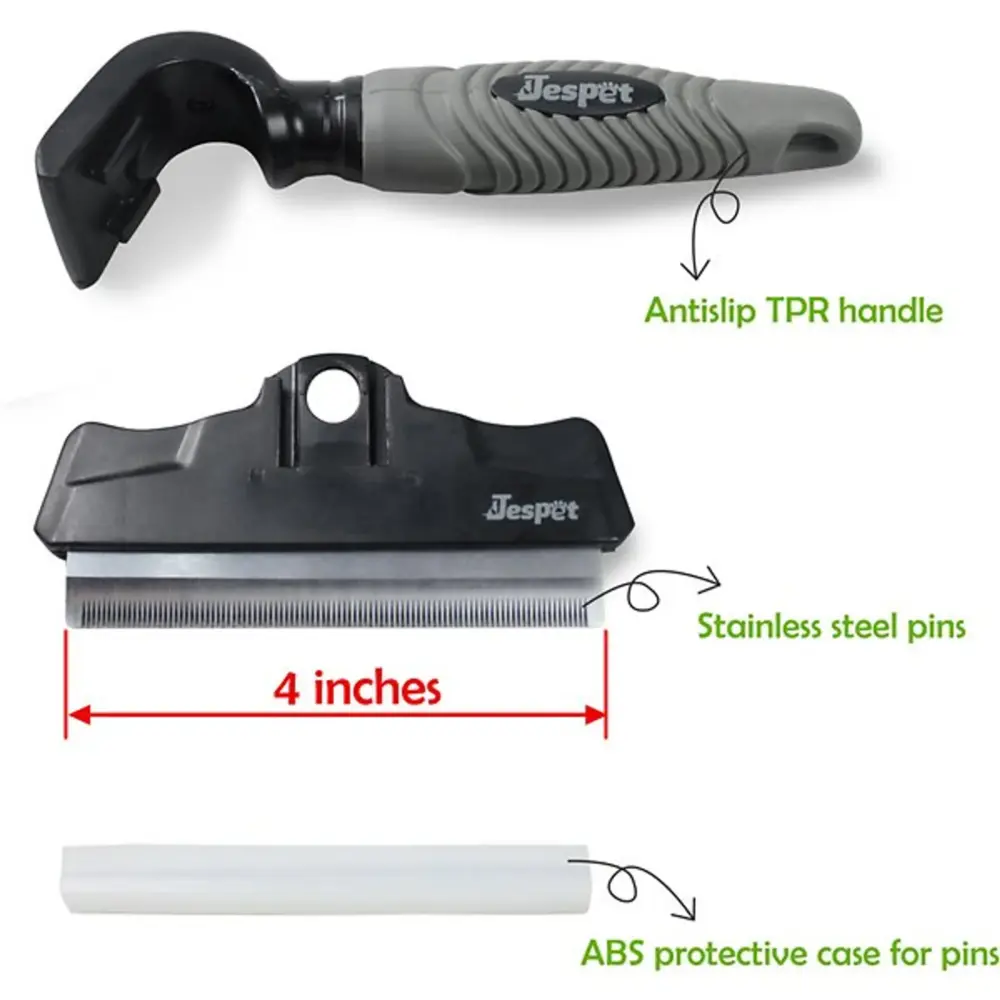
- Lift the loose undercoat. Switch to the JESPET De-Shedding Tool (Small or Large), whose stainless-steel edge reaches through the topcoat and catches loose undercoat. Use light, short strokes in the direction of hair growth over the neck, back, sides and hindquarters, and pull the hair off the edge every few strokes.
- Stop in time. Finish when each stroke brings out only a little hair, when the skin looks red or when your dog has had enough; going over one spot again and again can irritate the skin. A dog in a full blow won’t be cleared in one session, and doesn’t need to be.
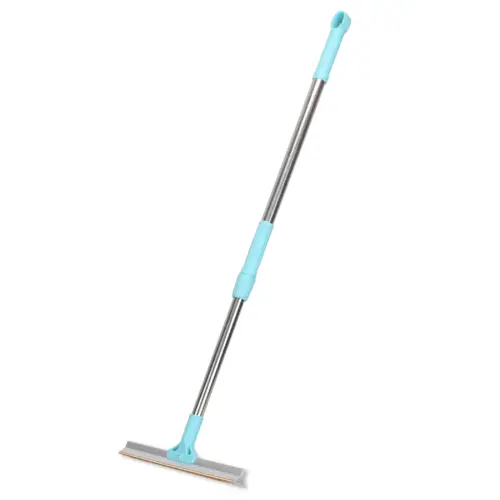
- Rake the rugs. On the rug your dog uses most, vacuum, pull the Telescopic Pet Hair Removal Rake across it in short strokes in one direction, lift off the hair and vacuum again.
Adjust the rhythm as the shed progresses:
- First tufts: add one de-shedding session a week to your usual brushing.
- Peak, when hair comes out by the handful: the de-shedding tool two or three times a week, a quick slicker pass in between if the coat tangles, and the busiest rugs raked once or twice a week.
- Tapering: once a session brings out only a small amount, drop to one de-shedding session a week.
- After the shed: return to your year-round brushing schedule by coat type.
Not sure your dog needs both brushes? Our comparison of a slicker brush and a deshedding tool explains which coats need one, the other or both.
-
JESPET
De-Shedding Tool for Dogs & Cats
Price range: $27.95 through $29.95
-
Sakabase
Curved Slicker Brush
$39.95
-
Telescopic Pet Hair Removal Rake for Carpets, Rugs & Car Seats
$46.95


Keeping up with the hair on floors and furniture
During a full coat blow, some hair always gets past the brush. A few habits stop it from building up:
- Rugs and carpet: rake the busiest rugs through the peak rather than saving them for one big clean; our guide to getting dog hair out of carpet, rugs and car mats covers stairs and delicate rugs.
- Hard floors: a vacuum or a dry microfiber mop gathers drifts of undercoat; a broom tends to push them around.
- The couch: lay a washable throw over your dog’s favorite spot and shake it out outdoors every few days. For hair already in the fabric, see how to get dog hair off a couch, fabric by fabric.
- Beds and blankets: shake them out outside and wash them more often while the shed lasts, following the care label.
- The car: brush before a ride, not after, and cover the back seat; see our tips on keeping dog hair and mud off car seats. A cover keeps the seat clean but is not a crash restraint.
Browse our hair removal collection and dog and cat grooming range, or find more grooming and shedding guides.
When shedding isn’t normal: signs to ask your veterinarian about
A seasonal shed thins the undercoat but leaves the skin covered and calm. Ask your veterinarian to take a look if you notice any of these:
- Bald patches, or areas where you can see bare skin
- Red, flaky, greasy or scabby skin, sores, bumps or a bad smell from the coat
- Constant scratching, licking or chewing at one area
- A sudden jump in shedding that doesn’t match the season or your dog’s usual pattern
- Shedding that keeps getting worse after several weeks instead of tapering off
- Hair loss alongside other changes, such as low energy, weight change or a change in appetite or thirst
Signs like these have many possible causes, from parasites and allergies to hormonal conditions, and only an exam can sort them out. Until then, keep the de-shedding tool away from any sore or irritated area.
Dog shedding FAQ
Why is my dog shedding so much all of a sudden?
In spring or fall, the most likely reason is a seasonal coat blow, especially in a double-coated dog. If the timing doesn’t fit the season, or the shedding comes with bare spots, itching or skin changes, ask your veterinarian to check for other causes.
Should I bathe my dog during shedding season?
A bath can help, because washing and thorough drying loosen undercoat that is ready to come out. Brush out tangles first, since they are harder to remove once wet, then rinse well, dry your dog completely and brush again. Don’t bathe more often than usual, because frequent baths can dry out some dogs’ skin.
Can I shave a double-coated dog to stop shedding?
Generally, no. A shaved dog still sheds, just shorter hairs, and the double coat helps regulate temperature in heat as well as cold and protects the skin from sunburn. The AKC’s article on whether it is OK to shave your dog’s coat notes that the undercoat can grow back faster than the guard hairs and crowd them out, leaving the coat patchy or changed in texture.
Do indoor dogs still shed seasonally?
Usually, yes, but often less dramatically. Artificial lighting and steady room temperatures blur the seasonal cues, so many house dogs shed lightly all year with smaller peaks in spring and fall. Keep a weekly brushing habit and step it up when the hair starts to pile up.
Related guides
-
How-to
How to Use a De-Shedding Tool on a Dog or Cat Without Overdoing It
Use a de-shedding tool on a dry, detangled double coat, in light strokes with the grain, on the body only. Here’s how to pick a size, run a session step by step, which areas to skip, how often to de-shed, the signs you’re overdoing it and how to use one on a cat.
-
Guide
Slicker Brush vs Deshedding Tool: Which Does Your Dog or Cat Need?
A slicker brush detangles and a deshedding tool lifts loose undercoat. Learn which coats need which, the right order for using both, and how often to brush dogs and cats.
-
Guide
When Do Puppies Lose Their Puppy Coat? What to Expect and How to Brush
Most puppies trade the soft puppy coat for an adult one between 4 and 6 months, though some start at 12 weeks and some coats take well past a year to finish. See the change coat by coat, why the puppy uglies are normal, how to brush through it and which hair loss needs a vet.