Grooming & Shedding How-to
How to Use a De-Shedding Tool on a Dog or Cat Without Overdoing It
Short answer
Work on a dry, detangled double coat in short, light strokes with the lie of the hair; the edge should glide, never dig. Keep it to the neck, back, sides and hindquarters, away from the face, legs, belly, feathering and sore skin. Once a week suits most coats; in a heavy shed, two or three short sessions a week.
Is a de-shedding tool right for your pet?
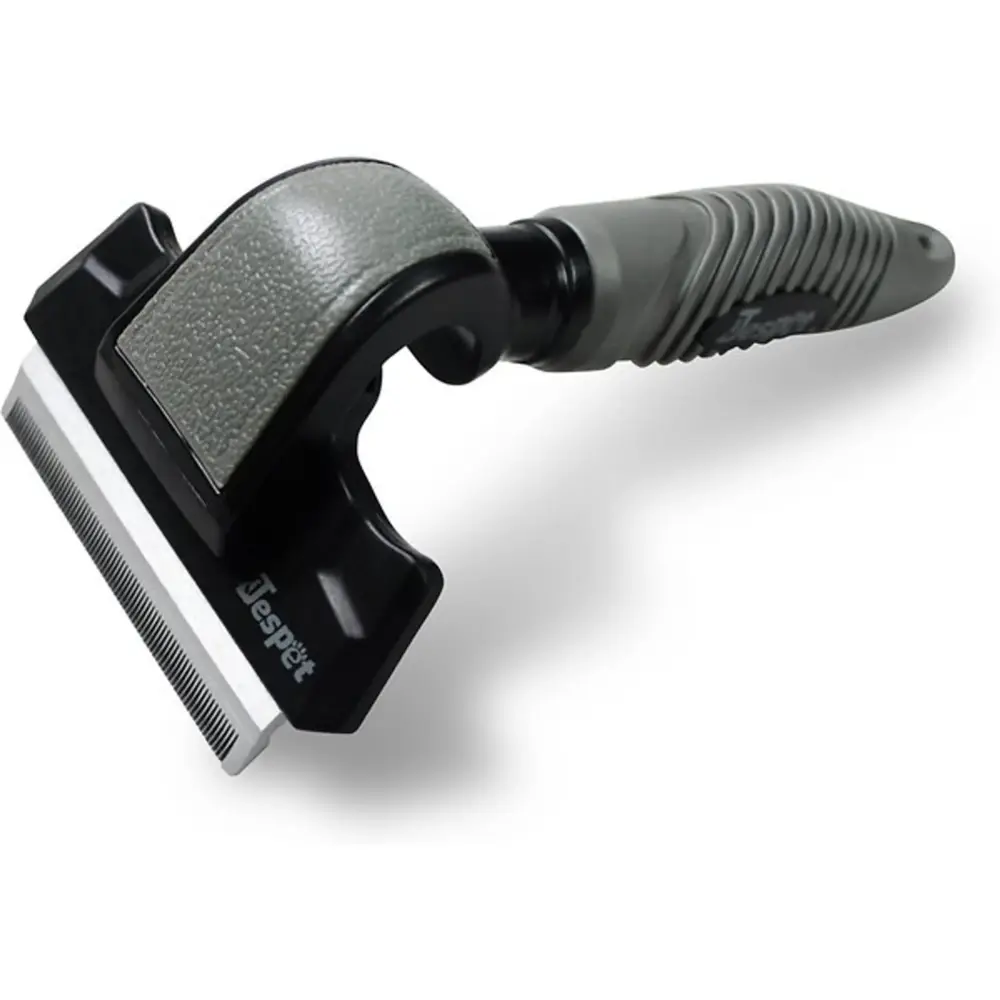
A de-shedding tool is built for one kind of coat: a double coat, with a soft, dense undercoat beneath longer guard hairs. Its stainless-steel edge slips through the guard hairs and catches undercoat that has already come loose. On a coat without that soft layer there is little for it to catch, so the edge scrapes the skin or breaks the hair instead.
- Good candidates: double-coated dogs such as Labradors, Golden Retrievers, German Shepherds, Siberian Huskies and Corgis, and cats with a plush, dense undercoat.
- Leave it out: smooth single coats like a Boxer’s or a Greyhound’s, curly and wavy coats like a Poodle’s or most doodles’, and long, silky coats like a Yorkie’s or a Maltese’s.
- Puppies: wait until the adult coat grows in; a soft brush is enough until then.
Not sure which coat you’re working with? The part-and-look test in how to tell if a dog has a double coat takes a minute, and our slicker brush vs deshedding tool comparison matches each coat type to the right tool.
Small or large: choosing the size
The JESPET De-Shedding Tool comes in Small and Large. The listing doesn’t give a weight range for each size, so choose by your pet’s size and build rather than by how much they shed: the edge works best when its whole length rests on the coat at once.
- Small: cats, toy and small dogs, and a slim medium dog whose back curves away quickly.
- Large: medium and large dogs with a broad back and sides, where a wider edge covers the coat in fewer strokes.
Tip
A quick fit check: lay the edge across your pet’s back. If both ends touch the coat, the width is right. If one end lifts away as the body curves, the corner ends up doing the work, and a corner digs in where a flat edge would glide.
Before you start: a dry coat with no mats
Wet or damp hair clumps together and drags against the edge, so wait until the coat is completely dry after a bath, a swim or a rainy walk. If a bath is coming up anyway, de-shed first, while the coat is dry, and less loose hair ends up in the drain.
The edge also catches on knots and pulls them, so detangle before you begin. Go over a medium or long double coat with a slicker brush first (our guide to using a slicker brush without scratching the skin covers grip and pressure); a short coat like a Lab’s needs only a quick pass or a run of your fingers. A de-shedding tool won’t break up a mat, so for knots that won’t brush out, see how to get mats out of dog hair.
While you detangle, run your hands over your pet from head to tail and note any scab, lump, hot spot or tender area, so you can steer around it later.
What you need
- A de-shedding tool in the right size
- A slicker brush, for medium and long coats
- Small treats, and a helper to feed them if your dog fidgets
- An easy-to-clean spot: outdoors, a hard floor or an old sheet
- A bag for the hair you pull off the edge
- Good light, so you can see the skin as you work
Our picks are limited to what Nilosi stocks (the full dog and cat grooming range has the rest), and each covers one part of the routine:
-
JESPET
De-Shedding Tool for Dogs & Cats, Choose size
Price range: $27.95 through $29.95
Why it fits: Sized Small or Large to match your pet, with a stainless-steel edge that lifts loose undercoat from the neck, back, sides and hindquarters.
-
Sakabase
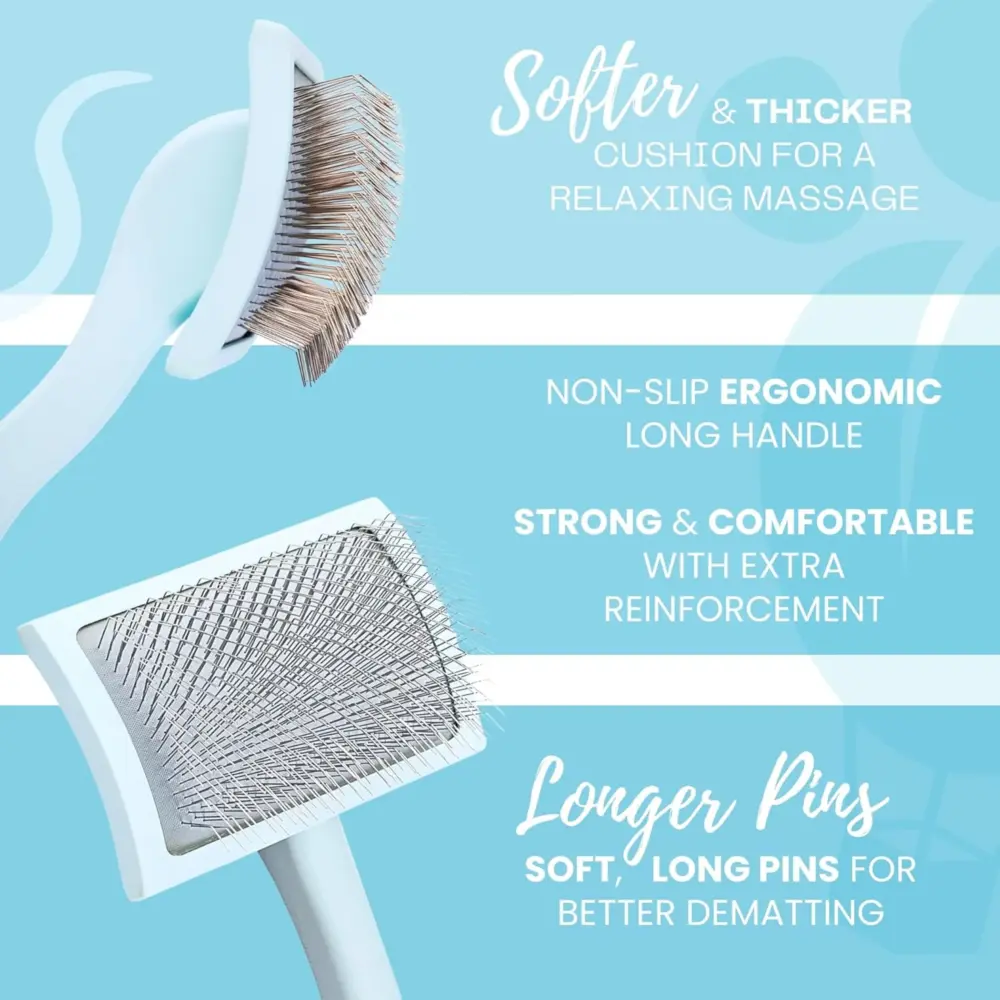
Curved Slicker Brush, View product
$39.95
Why it fits: Clears the knots an edge tool would catch on, with a curved head and fine, firm pins that reach the undercoat on medium to long coats.
-
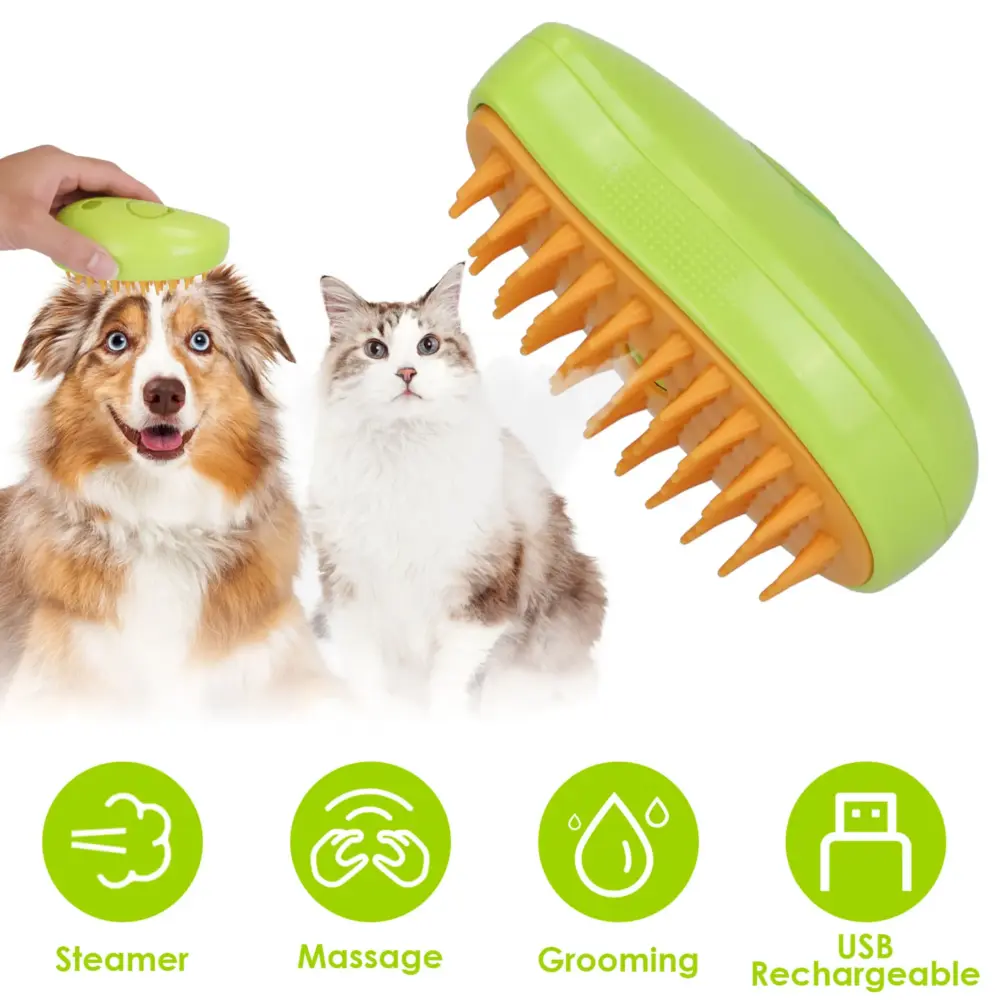
3-in-1 Steam Grooming Brush for Cats & Dogs, View product
$36.95
Why it fits: A gentler brush for coats the edge does not suit, with soft silicone pins and a fine mist that settles loose hair on cats and short-haired dogs.
-
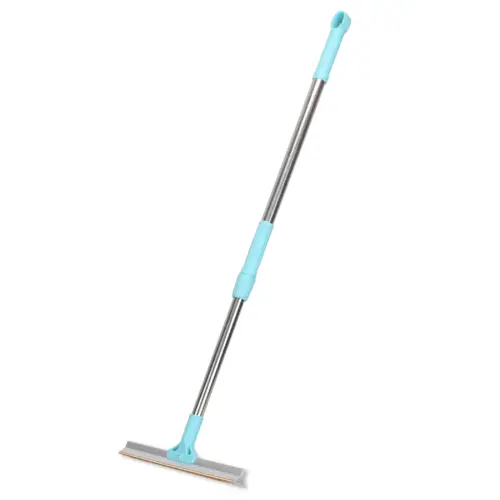
Telescopic Pet Hair Removal Rake for Carpets, Rugs & Car Seats, View product
$46.95
Why it fits: Picks up the undercoat that escapes the session, lifting embedded hair from rugs, stairs and car mats on a telescopic handle.



How to use a de-shedding tool, step by step
The AKC’s advice on managing shedding sums up the technique: work in the direction of hair growth, use gentle pressure, especially with bladed tools, and remove tangles first. Plan on about 10 to 15 minutes for a medium or large dog and a few minutes for a small one. Split a thick coat in full shed over two sessions rather than pushing on once your dog gets restless.
- Settle your dog on your chosen spot at a calm moment, such as after a walk, standing or lying on their side.
- Start at the back of the neck, below the ears, and work toward the tail: shoulders, back, sides, then hindquarters.
- Hold the handle loosely, with the whole edge resting on the coat rather than tipped onto one corner. A relaxed grip keeps you from pressing harder without noticing.
- Stroke in the direction the hair grows, a few inches at a time, and lift the tool off at the end of each stroke instead of dragging it back against the coat.
- Keep the pressure light. The edge should slide through the topcoat and bring up soft, fluffy undercoat. If it catches or scrapes, or your dog flinches, ease off.
- Steady loose skin with your free hand. On the neck and flanks, rest it flat just ahead of each stroke, on the side nearer the head, so the skin doesn’t slide along with the edge.
- Clear the edge every few strokes. Pinch the hair off into your bag; a packed edge skims over the coat and tempts you to press harder.
- Move on after a handful of strokes. When the edge comes up with only a few wisps, that patch is done, even if a little more would come out.
- Finish with a check. Smooth the coat with a light slicker pass or your hand, look over the skin you worked, and end with a treat.
Where not to use a de-shedding tool
The edge belongs on the body coat, where the undercoat is thickest. Elsewhere the skin is thinner, the hair is different or bone sits close under the surface, so skip these areas or use a soft brush or your fingers:
- Face, head and ears. The skin is thin, and the edges of the ear flaps scrape easily.
- Legs and paws. Short hair over bone, with little undercoat to catch.
- Belly, armpits, groin and inner thighs. Thin, sensitive skin that reddens quickly.
- Feathering. The long fringe on the legs, belly and tail of a Golden or a setter snags and thins under an edge; use a slicker and comb there.
- Bony spots on a lean dog. Go lighter, or skip, where the spine, hip bones and shoulder blades sit just under the skin.
- Short or clipped coats. On hair clipped short, or growing back after a shave, there is nothing for the edge to lift, so it runs on the skin.
Safety note
Never run the edge over a scab, wound, rash, hot spot, wart or lump; it can catch a raised spot and make it bleed. Brushing is a good time to notice these, so ask your veterinarian about anything new, growing or sore.
How often to de-shed, and signs you’re overdoing it
For most double coats, one session a week keeps loose undercoat under control. In a heavy shed, when tufts come out by the handful, the JESPET listing calls two or three sessions a week plenty; more than that risks thinning the topcoat and irritating the skin. Once a session brings out only a little, drop back to weekly. Our guide to dog shedding season explains when coats blow and how long a shed lasts.
Older dogs may have thinner skin, so give a senior shorter sessions and an even lighter touch.
What overuse looks like
- Pink or red skin, or flakes, after a session.
- Your dog scratches, licks or chews a spot you de-shed.
- The topcoat looks thin, patchy or choppy, with broken ends.
- Your dog walks away, flinches or mouths the tool when it comes out.
Tip
Look at what collects on the edge. Loose undercoat is soft, fine and fluffy, and often a shade paler than the outer coat. If you’re pulling off long, straight, glossy hairs instead, the edge is catching guard hairs: lighten your touch, use fewer strokes or end the session.
If you notice any of these signs, put the tool away and let the skin and coat recover; a soft brush is fine in the meantime. The same AKC guide lists thinning fur, bald patches and irritated skin among the changes that can point to an underlying problem, so ask your veterinarian about redness that isn’t clearly fading within a day or two, any broken skin or bald patch, or shedding that seems heavy for the time of year.
Using a de-shedding tool on a cat
Most short-haired cats never need one; a soft or mist brush does the job. The tool earns its place on cats with a plush, dense undercoat, and on long-haired cats with a thick, woolly undercoat once a slicker has cleared any knots. Use the Small size, and expect sessions measured in minutes.
- Choose a relaxed moment, such as when your cat is already settled on your lap, and let them sniff the tool first.
- Stay on the back and sides, with a few light strokes along the lie of the fur, then pause and stroke with your hand.
- Avoid the armpits and the area between the hind legs, where iCatCare’s grooming advice says the skin is very thin and extremely sensitive. Skip the belly, face and tail, too.
- Stop at the first sign of discomfort. The signs iCatCare lists include rippling or twitching skin, a swishing or thumping tail, ears flicking or turning back, and growling or hissing. End before your cat has had enough.
- Keep it occasional: two or three times a week at most in a heavy shed, and only now and then the rest of the year.
If your cat won’t accept the edge at all, don’t push it. A soft-pinned brush removes less undercoat per stroke, but a cat who stays relaxed lets you brush more often.
Mistakes and quick fixes
Mistakes to avoid
- Going over one patch again and again because it keeps producing hair. Move on and come back next session.
- Brushing against the grain to get more out, which pulls at the skin and breaks guard hairs.
- Catching up with one marathon session after weeks off. Spread it over several short sessions instead.
- Keeping up shedding-season frequency all year.
- Tilting the tool onto a corner to reach tight spots such as behind the elbows, which are off-limits anyway.
If it isn’t working
- The edge snags or pulls. There’s a tangle or damp hair underneath. Stop, dry or detangle that patch, then continue.
- Hardly any hair comes out. The coat may not be shedding right now, or it may be a single coat with no undercoat to lift. Pressing harder won’t change that.
- Your dog won’t stand still. Do one zone per session, after a walk, with a helper feeding treats. Five calm minutes beat fifteen tense ones.
- Hair drifts everywhere. Work outdoors or on a hard floor, and drop the hair straight into your bag each time you clear the edge.
- The skin looks pink afterward. Rest the tool for a week or two, then return with lighter pressure and fewer strokes. Ask your veterinarian if the redness doesn’t fade within a day or two.
Cleaning and storing the tool
Pinch the hair off the edge after every session, and look along it before the next one: a bent, nicked or rough edge can scratch, so replace a damaged tool rather than work around it. Store it where nothing knocks against the edge, and out of reach of a puppy who might chew the handle. Washing, drying and a cleaning schedule for the whole kit are in our guide to cleaning a dog brush and de-shedding tool.
Related guides
-
Guide
Slicker Brush vs Deshedding Tool: Which Does Your Dog or Cat Need?
A slicker brush detangles and a deshedding tool lifts loose undercoat. Learn which coats need which, the right order for using both, and how often to brush dogs and cats.
-
How-to
How to Brush Your Dog Without Getting Hair Everywhere
Hair all over the room after every brushing? Groom outdoors or over an old sheet on a hard floor, mist the coat lightly and empty the brush every few strokes. Here's where and when to brush, and a five-minute cleanup for the hair that escapes.
-
Guide
When Do Puppies Lose Their Puppy Coat? What to Expect and How to Brush
Most puppies trade the soft puppy coat for an adult one between 4 and 6 months, though some start at 12 weeks and some coats take well past a year to finish. See the change coat by coat, why the puppy uglies are normal, how to brush through it and which hair loss needs a vet.