Slicker Brush vs Deshedding Tool: Which Does Your Dog or Cat Need?

A slicker brush works out tangles and collects loose hair as it goes, while a deshedding tool is built to reach through the topcoat and pull out loose undercoat. So the slicker brush vs deshedding tool choice comes down to coat type: long or tangle-prone coats need a slicker, and double-coated dogs and cats usually do well with both, slicker first.
Short answer: different jobs, and many double coats need both
Use this quick check to decide:
- Long, curly or tangle-prone coat: start with a slicker brush.
- Thick double coat that sheds in clumps: slicker first, then a deshedding tool.
- Short, smooth single coat: skip the deshedding tool and use a soft or mist brush.
- Long-haired cat: a slicker, used gently, plus a deshedding tool for a thick undercoat.
- Short-haired cat: a mist brush, with a deshedding tool only if the coat is dense and plush.
How a curved slicker brush works
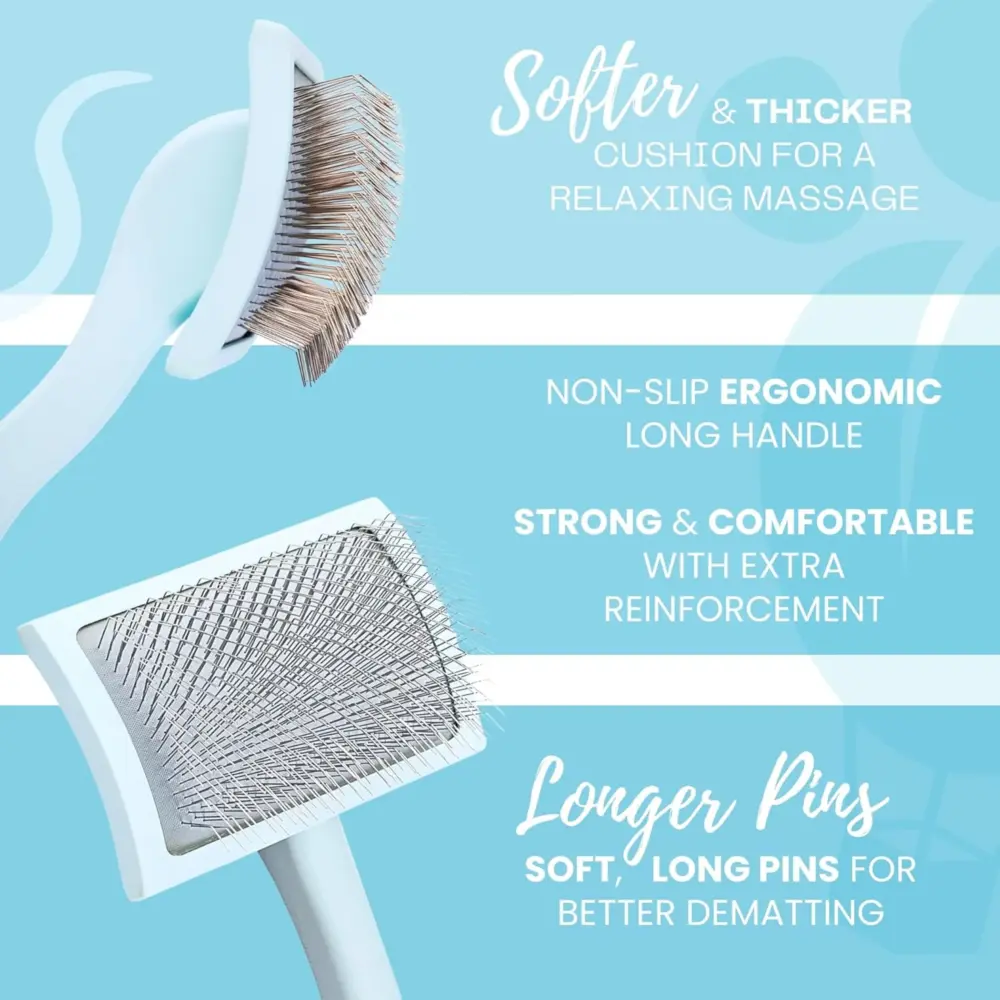
A slicker has rows of fine, firm wire pins. As you brush, the pins separate tangles and catch loose hair, and on long and thick coats they reach into the undercoat. A curved head follows the shape of the body, so more pins touch the coat on each stroke.
Slickers suit medium and long coats. Use light pressure and let the pins glide; pressing hard drags them across the skin. For a small mat, hold the hair at the base so the skin is not pulled, then brush from the ends inward. Tight mats close to the skin are a job for a professional groomer.
How a deshedding tool works, and which coats it is not for
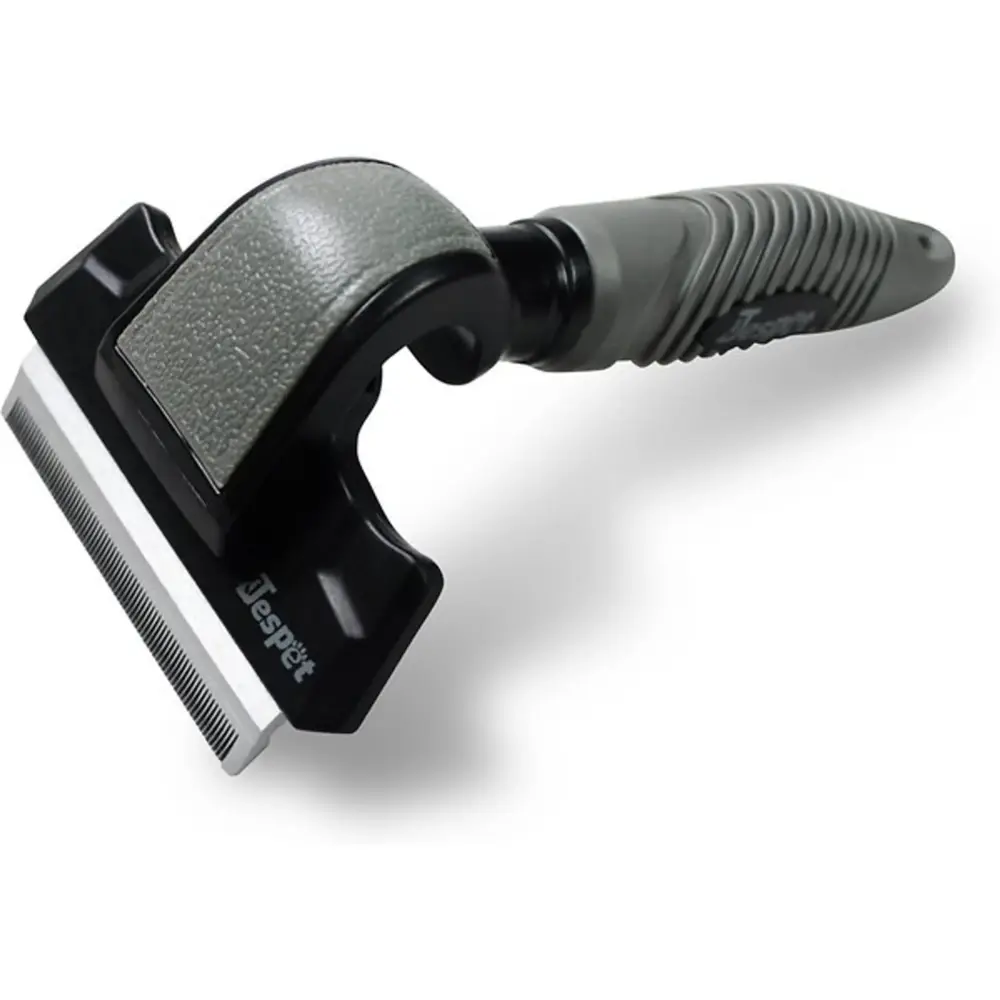
A deshedding tool has a stainless-steel edge rather than pins. It slides through the longer guard hairs and hooks the soft, loose undercoat underneath, which is where most shed hair comes from in a double coat.
It is made for double coats. On a short or silky single coat there is little undercoat to catch, so the edge scrapes the skin or snags and thins the hair. Do not use it over mats, sores or skin that looks pink or irritated.
Slicker brush vs deshedding tool side by side
The main difference between a slicker brush and a deshedding tool is the job: one detangles and collects loose hair, the other pulls out loose undercoat.
- Main job. Slicker: detangles and collects loose hair. Deshedding tool: pulls out loose undercoat.
- Coat types. Slicker: medium, long, curly and double coats. Deshedding tool: double coats only.
- How often. Slicker: most days for long coats, a few times a week for double coats. Deshedding tool: about once a week, more often in heavy shedding.
- Pressure. Slicker: light; let the pins glide. Deshedding tool: light, short strokes; never dig.
- Watch for. Slicker: pink, scratchy skin from pressing too hard. Deshedding tool: thinned topcoat or redness from overuse.
Which tool for which coat
Not sure which coat your pet has? Part the hair down to the skin. A double coat has a soft, dense underlayer beneath longer, coarser outer hairs; a single coat looks much the same from root to tip.
Short single coats
Smooth coats with no real undercoat do not need a deshedding tool, and a slicker can feel scratchy on thin hair. A soft-pinned or mist brush once a week picks up loose hair and is gentle on the skin.
Double coats
The right brush for a double-coated dog’s undercoat is a deshedding tool, used after the slicker. Dogs with a dense undercoat under coarser guard hairs shed heavily, especially when the seasons change.
Long or silky coats
Long coats tangle behind the ears, under the legs and on the belly. A slicker is the main tool here, worked in small sections. If the coat is long and silky with little undercoat, leave the deshedding tool out.
Short-haired cats
Most short-haired cats need only a weekly pass with a soft brush. A plush, dense coat may benefit from a few light strokes with a deshedding tool during heavy shedding. Keep sessions brief and stop when your cat has had enough.
Long-haired cats
A slicker brush for long-haired cats keeps the armpits, belly and the fluff behind the ears from knotting. Cat skin is thin, so use very light pressure and short strokes. A few minutes most days is easier on both of you than a long weekly session. If the undercoat is thick and woolly, add a few light strokes with a deshedding tool during heavy shedding.
Using both: slicker first, then the deshedding tool
Order matters. A deshedding edge catches on tangles and pulls, so detangle first.
- Run your hands over the coat to find knots and burrs, which you will work out gently with the slicker, and any sore or pink spots, which you should skip.
- Brush with the slicker in sections, following the lie of the coat in short strokes.
- Switch to the deshedding tool and use light, short strokes in the direction of hair growth.
- Clear hair from the edge every few strokes.
- Stop when each stroke brings out only a little hair, or sooner if your pet gets restless.
- Finish with a light pass of the slicker and a reward.
How often to brush
Long coats and long-haired cats do well with brushing most days. Double coats need the slicker a few times a week. As for how often to use a deshedding tool, once a week is a sensible baseline, rising to two or three short sessions a week during seasonal shedding. Short single coats and short-haired cats need about one session a week.
More is not better with a deshedding tool. Stop if the skin looks red, flaky or irritated, and give it time to settle. Ask your veterinarian about skin changes, bald patches, or shedding that seems unusual for your pet.
Where a mist brush fits for cats and short-haired dogs
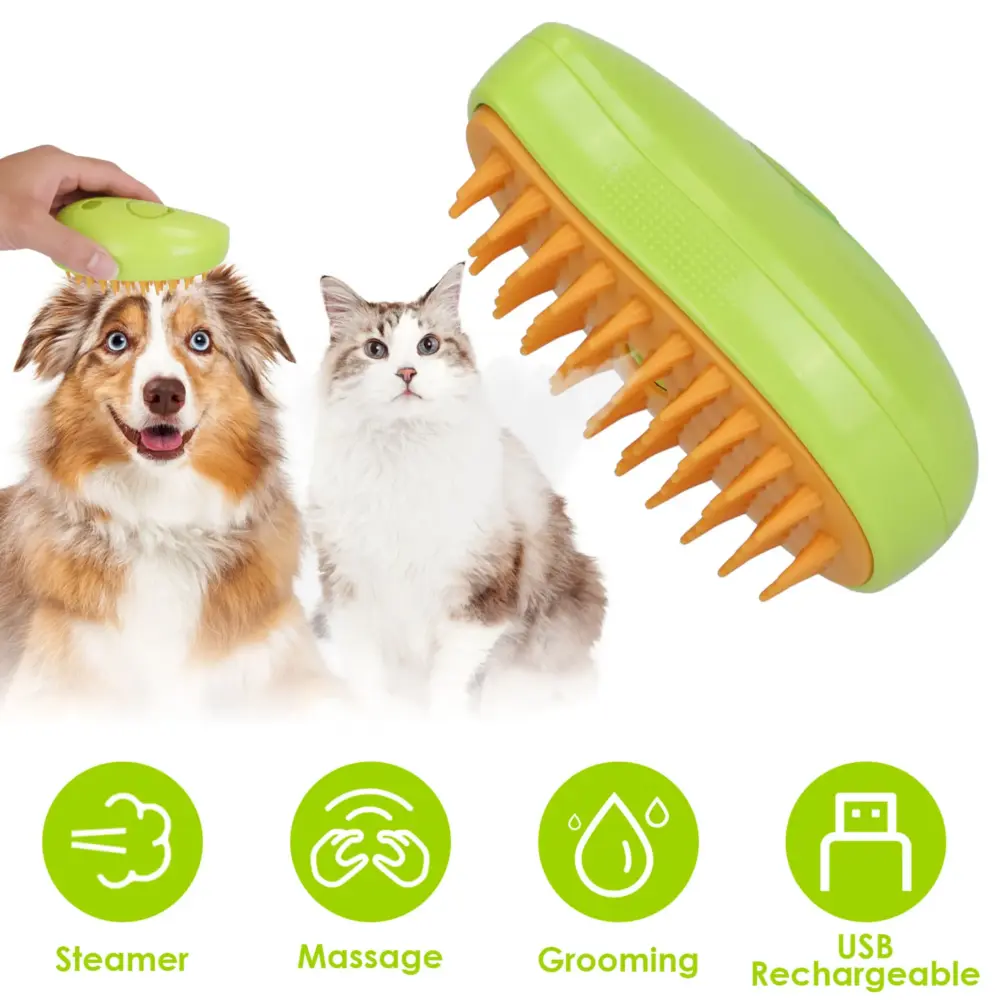
Do steam brushes for cats work? Yes, for loose hair and dander on short coats. Despite the name, a steam or mist brush releases a fine water mist from a small tank as you brush, which weighs down loose hair and dander so more of it collects on the pins. Soft pins make it a gentle option for cats and short-haired dogs.
It is not a detangler for long coats or a substitute for a deshedding tool on a thick undercoat. Fill the tank with clean water only, and keep the mist away from your pet’s face and eyes. If your cat dislikes the spray, brush without the mist at first.
After brushing: rake up the hair that already reached the rug
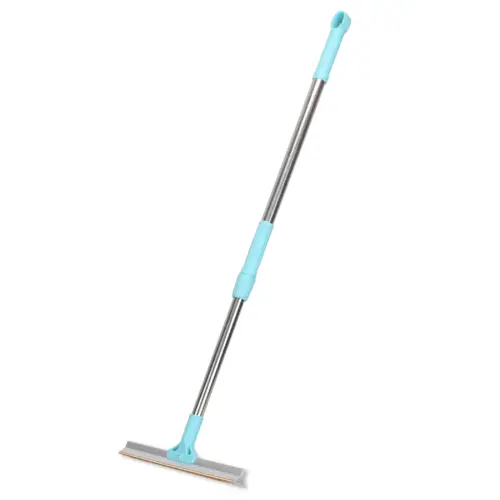
Brushing removes hair at the source, but some has already worked into carpet, where a vacuum skims over it. A rubber-toothed rake grips the fibers and drags embedded hair to the surface. Read our guide on how to get dog hair out of carpet, rugs and car mats, and browse our pet hair removal tools.
The tools we stock, and who each one suits
- Sakabase Curved Slicker Brush: for dogs and cats with medium to long hair. The curved head and fine, firm pins work through tangles and mats and reach the undercoat on long and thick coats.
- JESPET De-Shedding Tool: for double-coated dogs and cats. A stainless-steel edge lifts loose undercoat, and it comes in Small and Large to match your pet’s size.
- 3-in-1 Steam Grooming Brush: for cats and short-haired dogs. Rechargeable, with soft silicone pins and a refillable mist tank that settles loose hair as you brush.
- Telescopic Pet Hair Removal Rake: for any home with a shedding pet. A wide head with firm rubber teeth lifts embedded hair from carpets, rugs, stairs and car mats, and the telescopic aluminum handle lets you do a whole room standing up.
-
3-in-1 Steam Grooming Brush for Cats & Dogs
$36.95
-
JESPET
De-Shedding Tool for Dogs & Cats
Price range: $27.95 through $29.95
-
Sakabase
Curved Slicker Brush
$39.95
-
Telescopic Pet Hair Removal Rake for Carpets, Rugs & Car Seats
$46.95



See the full dog and cat grooming range, or shop cat essentials. Long-haired cats leave hair wherever they nap, so a washable bed helps too; see our guide to choosing a cat bed your cat will actually use.
Slicker brush and deshedding tool FAQ
Should I use a slicker brush before a deshedding tool?
Yes. The slicker clears tangles so the deshedding edge can glide through the coat instead of catching and pulling.
Can I use a deshedding tool on a single-coated dog?
Usually not. Without an undercoat to catch, the edge mostly scrapes the skin or thins the topcoat. A soft or mist brush suits single coats better.
How often should I use a deshedding tool?
About once a week for most double coats, and two or three short sessions a week during heavy seasonal shedding.
Is a slicker brush good for cats?
Yes, especially for medium and long-haired cats. Use very light pressure, because cat skin is thin, and keep sessions short.
Can a deshedding tool irritate my dog’s skin?
It can if you press hard, brush one spot repeatedly or use it too often. Keep strokes light and stop if you see redness. Ask your veterinarian about any skin changes that do not settle.
Related guides
-
How-to
How to Use a De-Shedding Tool on a Dog or Cat Without Overdoing It
Use a de-shedding tool on a dry, detangled double coat, in light strokes with the grain, on the body only. Here’s how to pick a size, run a session step by step, which areas to skip, how often to de-shed, the signs you’re overdoing it and how to use one on a cat.
-
Guide
When Do Puppies Lose Their Puppy Coat? What to Expect and How to Brush
Most puppies trade the soft puppy coat for an adult one between 4 and 6 months, though some start at 12 weeks and some coats take well past a year to finish. See the change coat by coat, why the puppy uglies are normal, how to brush through it and which hair loss needs a vet.
-
Guide
How to Reduce Cat Shedding: A Brushing Plan and What’s Normal
You can't stop a healthy cat from shedding, but you can brush out more of the loose hair before it lands on the sofa. Why indoor cats shed all year, how to tell shedding from overgrooming, a brushing plan by coat and the right tool for each.