Cat Care Guide
How to Reduce Cat Shedding: A Brushing Plan and What’s Normal
Short answer
You can’t stop a healthy cat from shedding, but extra brushing catches loose hair before it reaches the sofa: two or three times a week for a short coat, up from the usual once or twice, and daily for a long one. Shedding from an even coat is normal; bald patches, sores or constant licking are reasons to call your veterinarian.

Short coats are no exception. Fine, short hairs weave into upholstery and dark clothes and go unnoticed until they pile up, which is why a sleek shorthair can seem to shed more than a fluffy cat. The fix is the same for both: remove loose hair on your schedule, before it falls out on your cat’s.
Why cats shed, and why indoor cats shed all year
Shedding is how a cat replaces old hair. Each hair grows, rests and then loosens as a new one comes in, and because hairs keep their own timetables, a healthy coat always holds some loose hair. Your cat swallows some of it while grooming; the rest ends up on your furniture.
Season and lifestyle set the volume. VCA Animal Hospitals’ guide to cat grooming and coat care says outdoor-going cats in cooler climates may have two heavy sheds a year, one in late spring and one in late fall, whereas cats who live indoors with us tend to shed lightly all year round. Indoor lighting and steady temperatures probably blur the seasonal cues, so instead of two big sheds you get a steady trickle, often with small peaks as the seasons turn.
Why one cat sheds more than another
- Undercoat. A plush coat, like a British Shorthair’s, packs a soft, dense layer under the guard hairs, and that layer does most of the shedding. Push the fur backward on the rump: a pale, cottony layer at the base means plenty to lose.
- Breed. VCA names the Maine Coon among the heavy shedders, and the Sphynx and the Rex breeds among cats that shed very little.
- Coat length. Long coats leave longer, more visible hairs and form clumps where loose hair stays trapped. Short coats drop fine hairs that disappear into fabric.
- Age and mobility. VCA notes that arthritic or overweight cats can have trouble grooming themselves. Loose hair then stays in the coat over the lower back, hindquarters and tail until it rubs off on the bed.
Normal shedding or a problem worth a vet visit?
VCA describes a healthy coat as shiny, free of dandruff and greasiness, and not shedding excessively, and it points out that coat appearance can be the first sign of a health problem. Use these two lists to sort what you’re seeing.
Usually normal
- Hair on furniture, bedding and clothes, and a light layer on the brush after each session
- More hair than usual for a few weeks in spring or fall, especially if your cat goes outdoors
- A burst of loose hair after a fright, such as a vet visit or a car ride
- A coat that thins slightly but stays even, with the skin underneath covered and calm
Worth asking your veterinarian about
- Bald or thinning patches, or places where you can see skin
- Short, stubbly or broken hair, a sign the hair is breaking or being licked off rather than shed
- Round patches of hair loss, scaling or crusts
- Red, flaky, greasy or scabby skin, bumps or sores
- Constant licking, chewing or scratching, at one spot or all over
- A sudden jump in shedding that doesn’t fit the season or your cat’s usual pattern
- A coat that turns dull, greasy or unkempt, or a cat who stops grooming
- Hair loss alongside changes in appetite, thirst, weight, energy or litter box habits
Shedding or overgrooming?
Shed hair falls out whole and the coat stays even. Licked-off hair breaks along the shaft, leaving stubble or thin, bristly areas, often on the belly, inner thighs, flanks or the base of the tail. Because cats groom so much anyway, the Cornell Feline Health Center’s article on cats that lick too much notes that owners usually don’t notice a problem until the hair loss or skin damage is significant. It names fleas, allergies, pain and stress among the causes, and licking focused on the base of the tail may point to fleas. Only an exam can sort these out.
Safety note
Round patches of hair loss, scaly skin or broken, stubbly hair can also be signs of ringworm, a fungal skin infection that, as Cornell’s ringworm overview explains, can pass from cats to people. Wash your hands after touching the area, keep that cat’s brush separate and call your veterinarian before you groom there again.
A brushing plan to reduce cat shedding, by coat
Our guide to how often to brush a cat sets the baseline for a healthy coat. To cut the hair around the house, aim for the top of each range in short sessions, which most cats accept far more readily than long ones. Frequent brushing catches hair as it loosens, and VCA notes that daily brushing greatly reduces the loose hair and dander floating around a home.
| Coat | How often to cut shedding | Main tool |
|---|---|---|
| Short, sleek | Twice a week, about 5 minutes | Mist brush or other soft pins |
| Short, plush | 3 times a week | Soft pins; de-shedding tool weekly |
| Medium | 3 times a week | Slicker, very light pressure |
| Long | Daily, 5 to 10 minutes | Slicker, then a wide-toothed comb |
In a heavy shed, when tufts come away as you stroke your cat, add a session or two a week, and use the de-shedding tool on a plush coat two or three times a week at most. Once the brush comes back light again, return to the plan above.
A five-minute shedding session
- Pick the spot. Brush on a hard floor or over a towel you can shake outdoors, and use the same place every time so the hair stays in one room.
- Choose the moment. Wait until your cat is relaxed, after a meal or a nap, and keep a few small treats within reach.
- Check with your hands. Run your fingers over the whole body first, feeling for knots, scabs, bumps or sore spots, and leave any you find alone.
- Brush with the coat. Use short, light strokes in the direction the hair grows, over the back, sides and chest first, where most cats are happiest to be touched.
- Clear the brush often. Pull the hair off every few strokes and drop it straight into a bag, so it can’t drift back onto the floor.
- Add the undercoat pass. On a plush or woolly coat, finish with a few light strokes of the de-shedding tool over the back and sides, avoiding knots and sore skin. Once a week is enough outside a heavy shed.
- Stop while it’s going well. End when each stroke brings out only a few hairs or your cat starts to fidget, then give a treat.
Older and heavier cats need extra, gentler attention on the lower back, the base of the tail and the back legs, the places they struggle to reach; our guide to grooming a senior cat who can’t keep up explains why a vet check comes first. If your cat walks off after a few strokes, start with our plan for brushing a cat that hates being brushed.
Tip
Keep a rough baseline. Once a week, brush over a dark towel and notice how much hair an ordinary session brings out. If that amount jumps for weeks outside the usual season, or the coat starts to thin, you’ll have something concrete to tell your veterinarian.
Mist brush, slicker or de-shedding tool?
For shedding, the right tool reaches the loose hair in your cat’s coat without scratching the skin. Most cats need one main brush, and our guide to the best brush for cats, by coat and temperament covers the full choice, combs and sensitive cats included. In brief:
- Mist brush, for short coats. Soft silicone pins lift loose hair, and a fine water mist weighs it onto the pins so less floats off as you brush. It won’t reach through long fur. Keep the mist away from the face, and brush dry if the spray worries your cat.
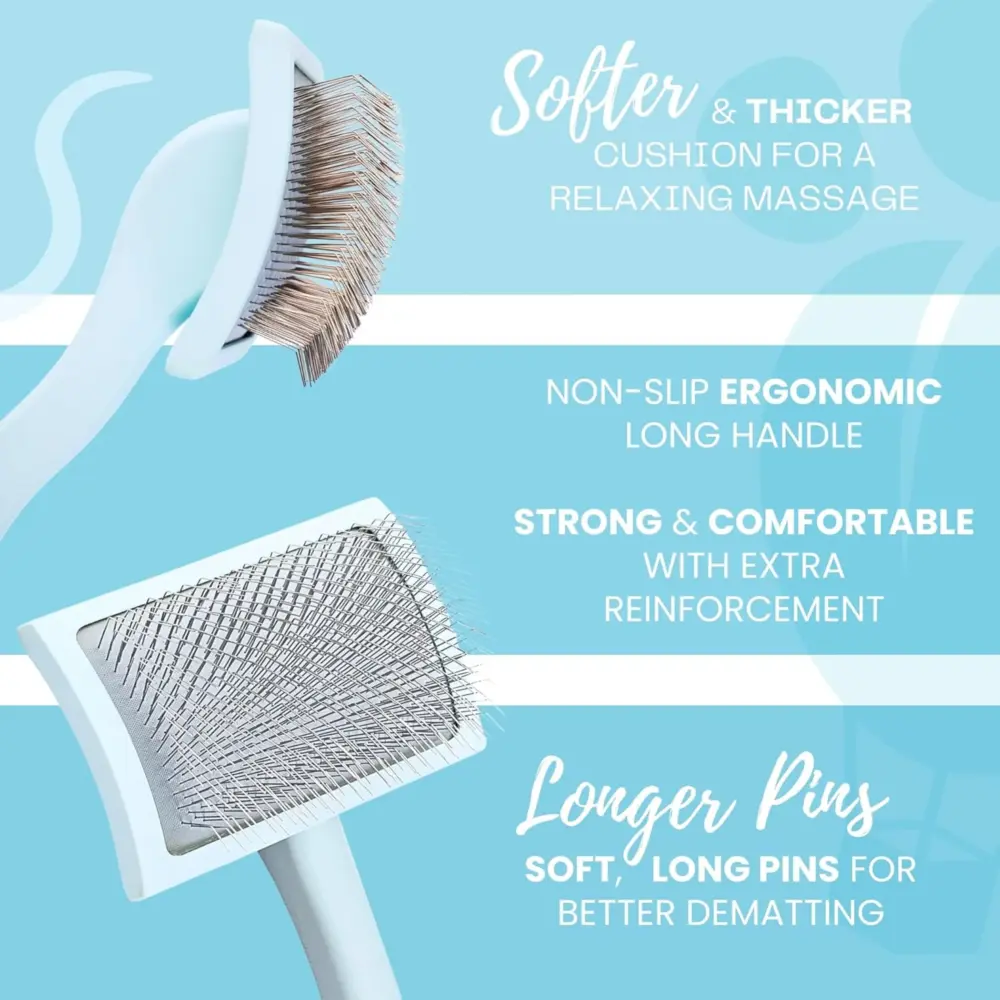
- Slicker, for medium and long coats. Fine, firm pins reach down into a long coat, where loose hair gets trapped, and ease out small tangles in the same stroke. Keep the pressure feather-light, because cat skin is thin.
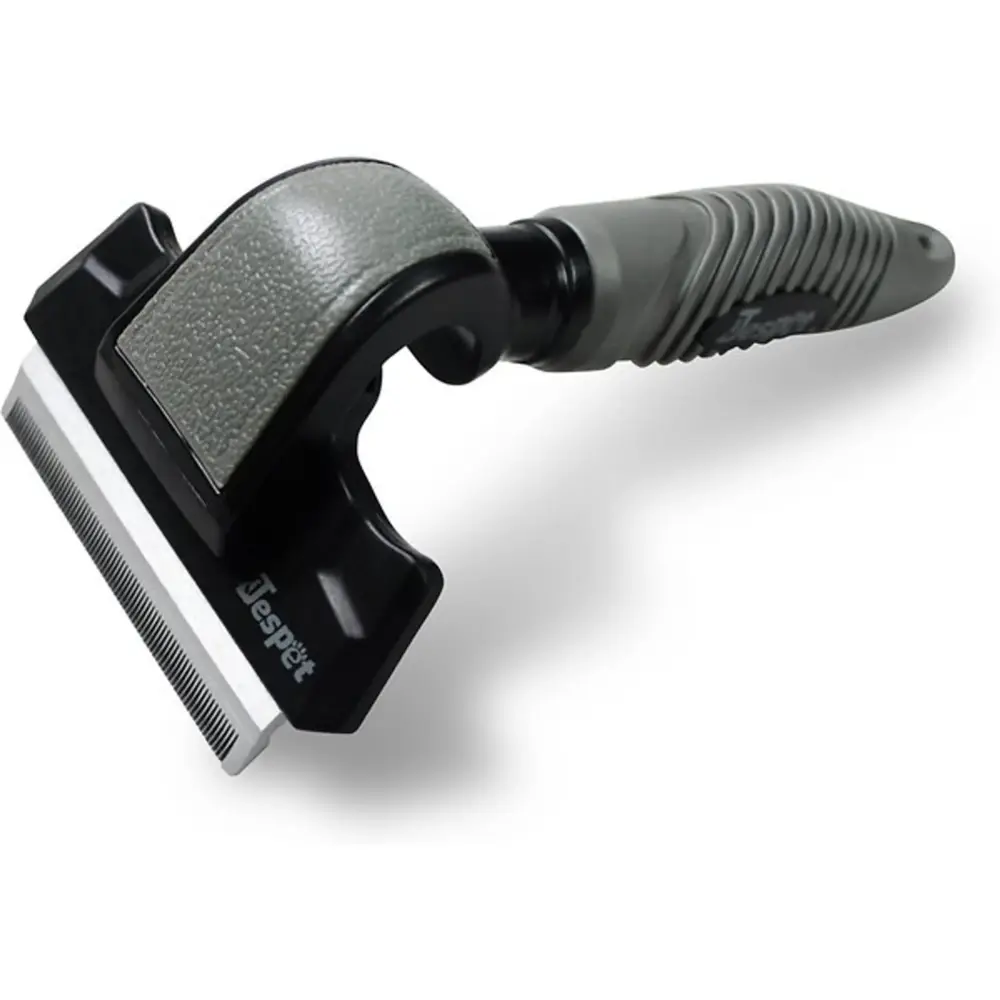
- De-shedding tool, for plush undercoats. A stainless-steel edge slips through the topcoat and lifts loose undercoat. It pulls out a lot of hair quickly, which makes it easy to overdo, so keep to a few light strokes after the regular brush.
More tools don’t mean less hair. A sleek single coat gives a de-shedding tool almost nothing to catch, and overusing one on any coat can thin the topcoat and irritate the skin, which can look like the very hair loss you were trying to prevent. Our guide to using a de-shedding tool without overdoing it covers size, pressure and the areas to skip.
These are the shedding tools we stock. The picks are limited to Nilosi’s own catalog, and the last one is for the hair that has already escaped.
-
3-in-1 Steam Grooming Brush for Cats & Dogs, View product
$36.95
Why it fits: Catches loose hair from short coats before it floats away, since the mist weighs it onto the soft pins; you can brush dry at first.
-
Sakabase
Curved Slicker Brush, View product
$39.95
Why it fits: Reaches the loose hair trapped deep in medium and long coats, where soft pins skim over it; keep each stroke feather-light on thin skin.
-
JESPET
De-Shedding Tool for Dogs & Cats, Choose size
Price range: $27.95 through $29.95
Why it fits: Lifts the loose undercoat that plush coats leave on the sofa; use a few light strokes after the regular brush, and skip it on sleek coats.
-
Telescopic Pet Hair Removal Rake for Carpets, Rugs & Car Seats, View product
$46.95
Why it fits: Drags embedded cat hair up out of rug pile, where a vacuum tends to skim over it; the telescopic handle lets you work standing up.




Browse the full grooming range or our hair removal tools.
Shedding and hairballs: what brushing can do
Most hairballs are shed hair swallowed during grooming: hair is indigestible, and what doesn’t pass through collects in the stomach until it comes back up. VCA says daily brushing reduces the hair a cat swallows and so the number of hairballs, and the Cornell Feline Health Center’s hairball advice encourages owners to brush and comb their cats daily. Cornell adds that hairballs are more frequent in the seasons when cats normally shed.
Brushing lowers the odds; it can’t promise that hairballs stop. Cornell notes that bringing up a hairball every week or two isn’t uncommon on its own, and it’s cautious about remedies: don’t give a laxative, or rely on a diet that claims to prevent hairballs, without your veterinarian’s approval and supervision.
Safety note
Cornell advises having a cat examined without delay if they seem lethargic, refuse to eat for more than a day or two, or have repeated bouts of unproductive retching or true vomiting. A sudden rise in hairballs is worth mentioning too, since Cornell’s overgrooming article calls licking that produces a lot of hairballs abnormal.
Diet, skin and coat: questions for your vet
VCA notes that health and nutrition shape a coat’s shine and texture from the inside, while grooming keeps it clean and tangle-free from the outside. That makes diet a fair question, but not a do-it-yourself fix: skin and coat problems have many possible causes, and switching foods or adding supplements on a hunch can make the real cause harder to find.
If your cat sheds heavily or the coat looks dull, bring questions like these to the next appointment:
- Is my cat’s food complete and balanced for their age and health?
- Would a diet change or a supplement, such as fish oil, help my cat’s skin, and how should we start it?
- Could fleas or other parasites be involved, even if I haven’t seen any?
- Could this be an allergy, and how would we find out?
- Is this hair loss from shedding or from overgrooming?
Photos of any thin areas, and a note of when the extra shedding started, make the visit more useful.
Shortcuts that don’t reduce shedding
- Shaving the coat. A clipped coat still sheds, just in shorter hairs. VCA says a periodic clip can help a long-haired cat who mats badly, but leave it to a groomer or veterinarian, since cat skin is thin and easy to nick; for mats, VCA advises clippers, never scissors.
- Regular baths. VCA notes that most healthy adult cats rarely need a bath, and brushing handles loose hair without the stress. An arthritic or overweight cat who can’t groom may need an occasional one, with a shampoo made for cats.
- Harder, longer sessions. A brush only collects hair that is already loose; pressing harder or working one spot over and over scrapes the skin instead.
- Products promising a shed-free cat. No brush, spray or supplement stops a healthy cat from shedding, so be wary of any listing that promises one will.
Catching the hair that gets away
Even a well-brushed cat leaves some hair behind, and most of it lands where your cat spends time. Cats return to the same perches, such as a sofa arm, a window seat or the foot of your bed, so a washable throw on each one catches hair before it works into the fabric underneath. Shake the throws outdoors every few days and wash them weekly.
Fine cat hair also weaves into rug pile, where a vacuum tends to skim over it: vacuum, rake, then vacuum again. For upholstery, clothes, air filters and the rest, follow the daily, weekly and monthly routine in how to keep a house clean with cats.
Related guides
-
Guide
When Do Puppies Lose Their Puppy Coat? What to Expect and How to Brush
Most puppies trade the soft puppy coat for an adult one between 4 and 6 months, though some start at 12 weeks and some coats take well past a year to finish. See the change coat by coat, why the puppy uglies are normal, how to brush through it and which hair loss needs a vet.
-
How-to
How to Use a De-Shedding Tool on a Dog or Cat Without Overdoing It
Use a de-shedding tool on a dry, detangled double coat, in light strokes with the grain, on the body only. Here’s how to pick a size, run a session step by step, which areas to skip, how often to de-shed, the signs you’re overdoing it and how to use one on a cat.
-
Guide
Can Dogs and Cats Share Water Bowls, Beds and Brushes?
A healthy dog and cat can share a water bowl, beds, cooling mats and grooming tools if you clean them between pets; food, the litter box and small toys stay separate. Here's the item-by-item guide, plus when to stop sharing and the dog flea products that can poison cats.